Recently, Interlude spoke with conductor Christophe Rousset about the première recording of Nicola Porpora’s Ifigenia in Aulide on Aparté, releasing on 20 November 2026. Following its acclaimed performance at the Bayreuth Baroque Opera Festival in 2024, Rousset reflects on casting decisions, vocal textures, and the famous 18th-century “Opera War” between Porpora and Handel in London.
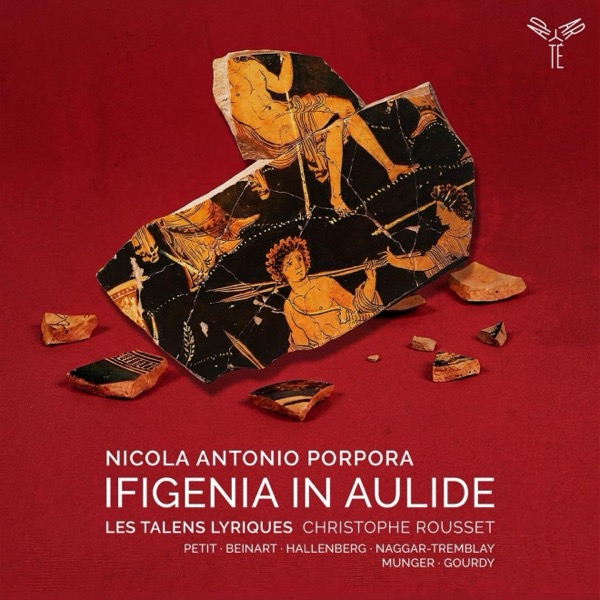
Interlude: Two years ago, you conducted Nicola Porpora’s Ifigenia in Aulide at the Bayreuth Baroque Opera Festival. Why was this particular work chosen in the first place?
Christophe Rousset: We were the festival’s resident orchestra at the time, and the festival’s artistic director, Max Emanuel Cenčić, originally proposed the staging. Opera Seria is obviously the focus of the festival. Before that, Porpora’s Polifemo had already been performed there. For this CD recording, however, I chose an entirely new lineup of singers.
Interlude: We noticed that female voices have replaced all the countertenor roles.
CR: I have nothing against modern countertenors singing roles originally written for castrati, but in terms of artistic effect and vocal texture, female voices can be a very reasonable choice. According to historical documents, in Handel’s opera house, when a castrato fell ill, it was quite common for a female singer to step in.
Interlude: Speaking of the rivalry between Porpora and Handel in London, people often love to talk about the “Opera War.” How do you view this competition?
CR: In my opinion, the competition between the two opera houses objectively boosted the development of opera in London. Both sides pulled out all the stops to attract audiences: Handel introduced brilliant magical scenes in Alcina and incorporated French ballet elements—both novel at the time. Meanwhile, Porpora was reinforced by the greatest superstar of the Western world, Farinelli, and successfully poached top star singers like Senesino and Francesca Cuzzoni from Handel’s company. Both were constantly seeking unique selling points to boost the box office.
Interlude: Did London really have a large enough market back then to sustain two competing opera houses?
CR: London at that time was an enormous opera market, much like Paris is today. Audiences might have been dissatisfied with a particular performance, but that didn’t stop them from buying tickets and walking back into the theatre the very next day. It is much the same with London today—brimming with all kinds of performances that never stop.
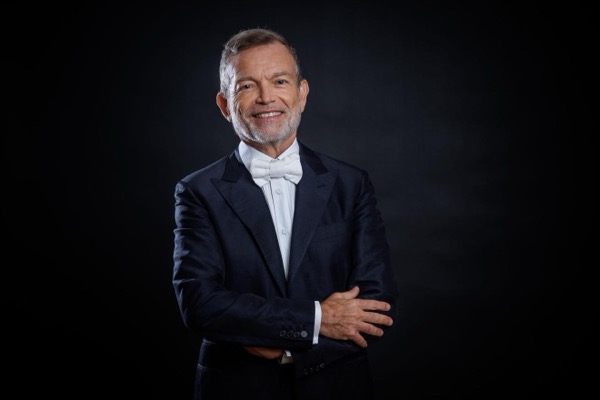
Christophe Rousset (Credit: Nathanael Mergui)
Interlude: Was Porpora’s choice of Ifigenia in Aulide also driven by commercial considerations?
CR: That is certain. Unlike the court opera house in Dresden, London’s commercial opera houses relied on the box office, and Handel was no exception. As you may know, the Opera of the Nobility’s initial choice for music director was not Porpora, but Johann Adolf Hasse, who felt he could not directly compete with Handel in London. Consequently, Porpora needed to prove himself on the London stage. Choosing this specific libretto was clearly a commercial strategy. Because educated audiences were already familiar with this ancient Greek myth, they could instantly resonate with it, which strongly guaranteed box-office appeal.
Interlude: To broaden the perspective a bit, as a conductor, how do you view the creative differences between Handel and Porpora?
CR: Handel’s music naturally carries a very profound German tradition; he was exceptionally skilled at counterpoint, resulting in tightly structured works with immensely rich orchestral colours, such as his use of the horns.
Porpora, by contrast, understood intimately how to write sensitive lines for the human voice. Let us not forget that he was, at his core, a master vocal teacher—Caffarelli, Farinelli, and even a young Joseph Haydn were all his students! He knew precisely how to show the beauty of the human voice. Perhaps owing to his Neapolitan background, his vocal lines have a special clarity; everything is direct, beautiful, and immediately accessible to the listener.
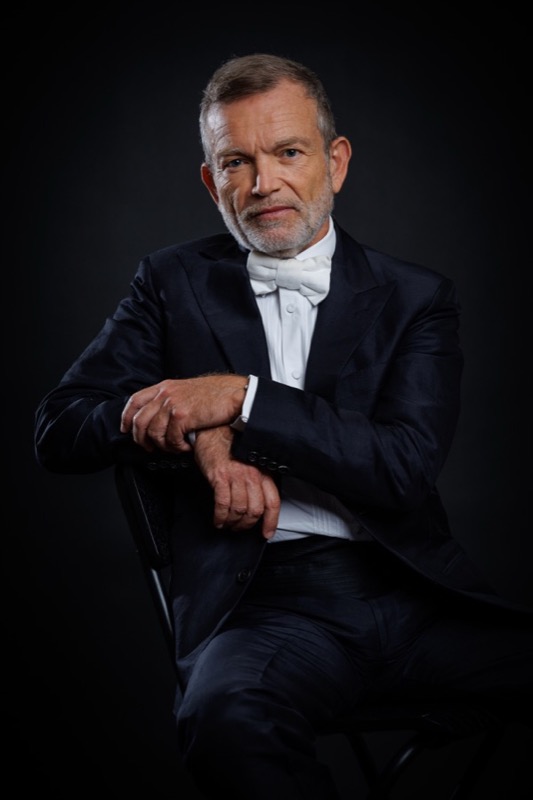
Christophe Rousset (Credit: Nathanael Mergui)
Interlude: Would it be fair to say that Porpora’s focus was primarily vocal, whereas Handel’s was primarily dramatic?
CR: Porpora’s opera has intense dramatic tension as well! For instance, the brilliant duet at the end of Act II, where Achilles has a fierce argument with the high priest. There, you can witness a fundamental clash between two different worldviews: Achilles believes a more modern, enlightened, and humanitarian view, opposing the blind sacrifice of the innocent Ifigenia, whereas Calcante represents cruel and uncompromising ancient religious dogma.
Interlude: Do we know how the two giants viewed each other?
CR: Unfortunately, history has left behind little definitive records. But one thing is certain: we all know Handel was strong-willed and had a big ego. And I can offer another perspective: in his own opera house, Handel even staged works adapted from Leonardo Leo. Leo’s works, like Porpora’s, belonged to the Neapolitan school, extending from the Galant style to early Mozart. Handel was very sensitive to new trends, always observing the latest musical fashions in continental Europe and bringing them to London.
Interlude: If Handel and Porpora were to time-travel to the present day and direct an opera house, who would be more successful?
CR: In my view, Handel would win! Just look at the astonishing adaptability he showed later in life when he transitioned to composing English oratorios. Not many composers of the Neapolitan school expanded their vision beyond their own specific geographical and cultural sphere.
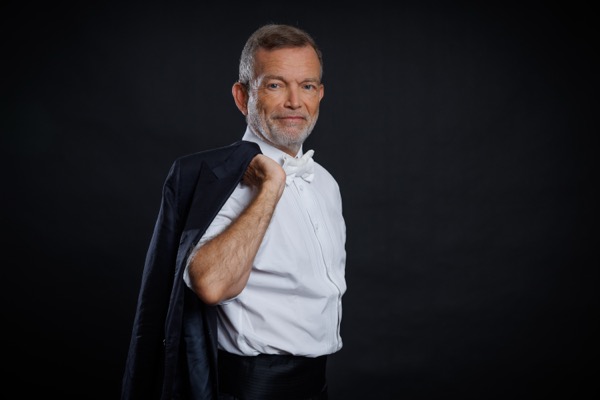
Christophe Rousset (Credit: Nathanael Mergui)
Interlude: Over thirty years ago, you recorded the soundtrack for the legendary film Farinelli (1994), which included Porpora’s “Alto Giove” from Polifemo. Over these past three decades, has your understanding of Porpora changed?
CR: To be honest, my view of Porpora hasn’t changed that much. But thanks to that film, Porpora has been brought back into the wider classical music landscape. Although I haven’t counted how many videos of that aria exist on YouTube—some of which may not be sung particularly well—I am deeply delighted to see Porpora’s works returning to active stages today.
Interlude: While browsing through the manuscript scans of Porpora’s Ifigenia in Aulide, I noticed that the very first page explicitly lists the names of all the premiere singers. Was that a common practice in the Baroque period?
CR: I feel that is more likely a copy used for performance rather than the composer’s autograph manuscript!
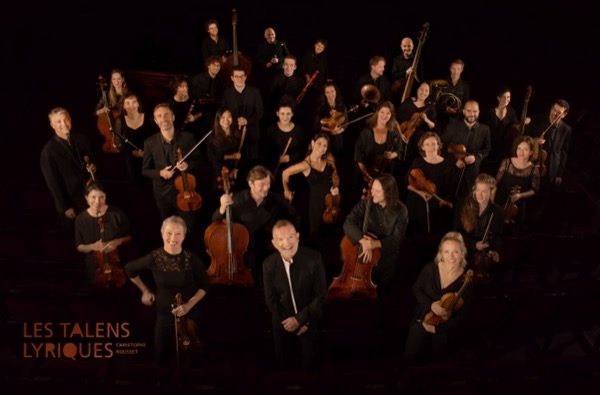
Les Talens Lyriques (Credit: Eric Larrayadieu)
Interlude: Porpora left behind a famous practice method known as the famoso foglio di Porpora. Is this still relevant in Baroque vocal training today?
CR: As far as I know, it is not used much anymore. While Porpora and later composers like Giambattista Mancini recorded methods for training ornaments and trills, modern Baroque vocal pedagogy no longer directly practices from ancient methods.
Interlude: Compared with today, how long were Baroque singers’ careers?
CR: Given the shorter life expectancy of the 18th century, I believe their overall careers were probably shorter than today’s, lasting perhaps around 15 to 20 years on average. However, singers who truly mastered the essence of bel canto could have artistic longevity. Just like Pietro Metastasio’s librettos, which had long-lasting appeal, we know some exceptional singers were even able to sing all the way from the high Baroque era into Gluck’s opera reform period!
Interlude: What are your upcoming opera plans?
CR: This CD serves as a conclusion and a page-turning project for our efforts until now. Next up, I will conduct Handel’s Theodora on tour with the Monteverdi Choir and Orchestras in South America, Rome, and London, coinciding with our new release of Handel’s Messiah.
Handel: Messiah | Christophe Rousset, Monteverdi Choir & English Baroque Soloists (harmonia mundi)
As for Les Talens Lyriques, we have an exciting season ahead. We will take Pergolesi’s Stabat Mater to Brussels, make our debut at the Zurich Opera House with Mozart’s Ascanio in Alba, and bring Rameau’s Hippolyte et Aricie back to Paris, Milan, and London.
For more of the best in classical music, sign up for our E-Newsletter