
Every decade of the 19th century had a pianist who, more than the others, clicked with audiences.
This list isn’t about who wrote the greatest music for the instrument. (If it were, Chopin would be on the list, despite the fact he rarely performed in public.) Instead, it’s about who took the concert stage by storm, and how each of the era’s touring virtuosos built on each other’s work to redefine what the piano could do.
Taken together, the names below trace something more than individual careers: they create an unbroken chain of teachers, students, rivals, and mentors that runs from Beethoven to the dawn of the 20th century.
1800s: Ludwig van Beethoven
Beethoven’s Piano Sonata No. 14, “Moonlight”
When Ludwig van Beethoven first arrived in Vienna in 1792, he worked more as a pianist than a composer. Over the following years, he gained a reputation as a fierce performer in Viennese salons. Aristocrats found his improvisations shocking – and irresistible.
Around the turn of the century, his deteriorating hearing became increasingly noticeable. He performed less and less, turning his focus to composition instead.
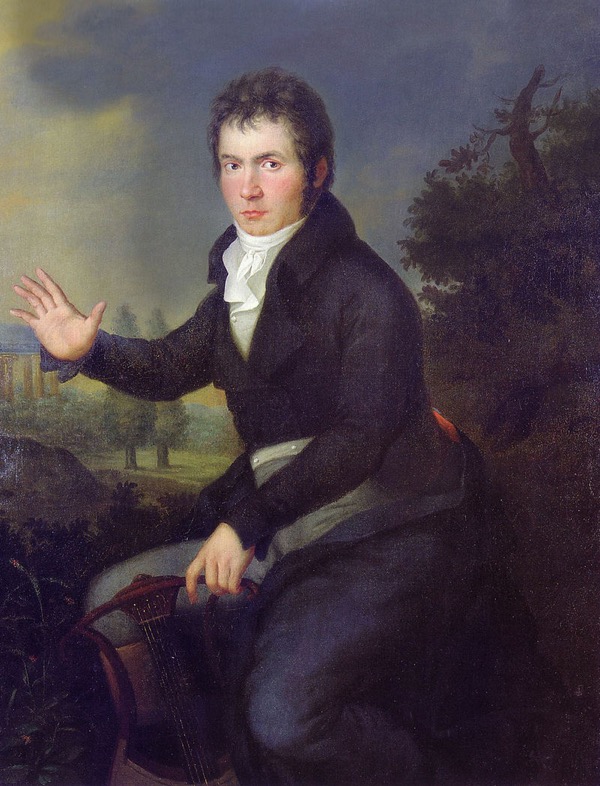
Joseph Willibrord Mähler: Beethoven, 1804 (Vienna Museum)
Between 1800 and 1810, Beethoven wrote 14 of his 32 piano sonatas, as well as his three final piano concertos. He infused them all with his revolutionary spirit – and they pushed the instrument’s technical and expressive limits further than any composer before him.
The next generation of pianists, from Hummel to Liszt, would spend the rest of the century reacting to how Beethoven had changed pianism.
1810s: Johann Nepomuk Hummel
Hummel’s Fantasie in E-flat major, Op. 18
Johann Nepomuk Hummel was born in present-day Bratislava, Slovakia, in 1778, seven years after Beethoven.
He was a child prodigy who began studying with Mozart when he was eight. (He even lived in the Mozart household for a while.)
He later studied with Beethoven’s teacher Joseph Haydn, and even succeeded Haydn as Kapellmeister at the Esterházy court.
Hummel pushed back (politely) against Beethoven’s theatrical style, prioritising clarity, precision, and refinement. That contrast made him attractive to the more conservative listeners in Vienna.
After Beethoven withdrew from the stage in 1815 due to his worsening deafness, Hummel graciously stepped into the spotlight.
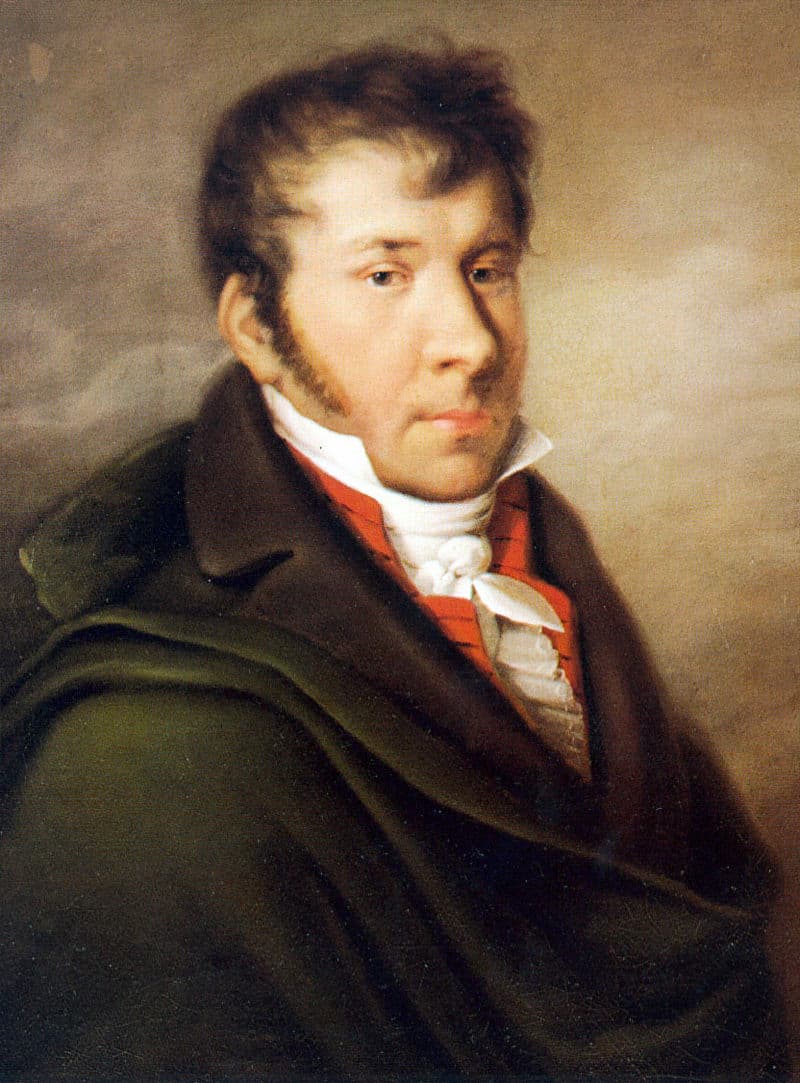
Johann Nepomuk Hummel, 1814
Hummel’s music has fallen out of the modern canon, likely because it was old-fashioned even in his own lifetime. But his Fantasy was a major inspiration to Franz Schubert, and his Piano Sonata in F-sharp minor was admired by Robert Schumann.
1820s: Ignaz Moscheles
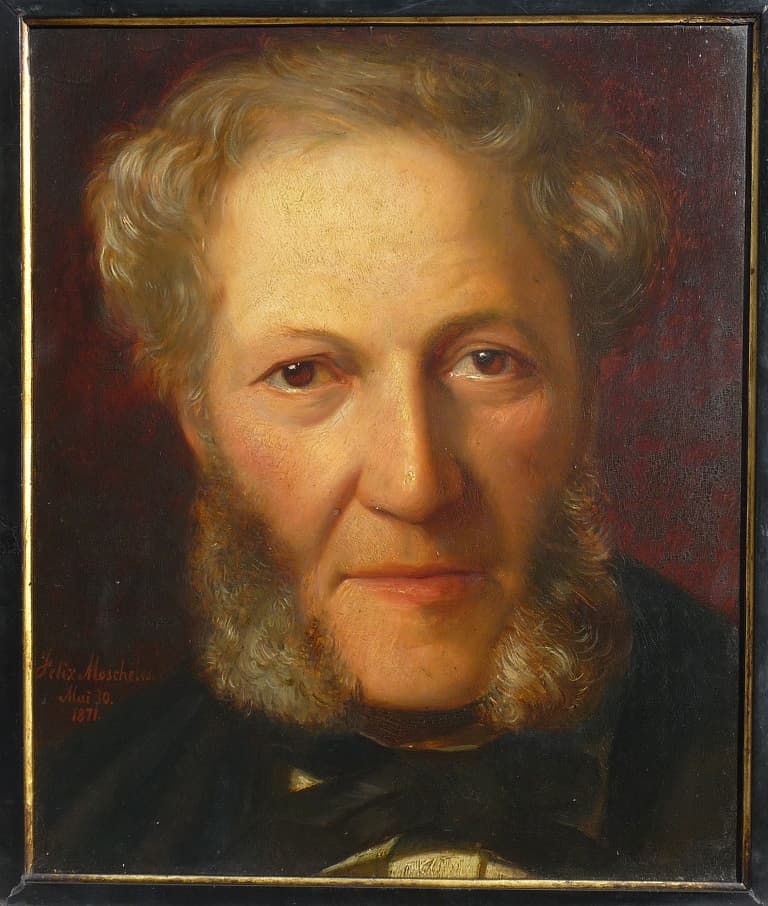
Ignaz Moscheles
Ignaz Moscheles: Piano Concerto No. 3 in G Minor, Op. 58 (Michael Ponti, piano; Philharmonia Hungarica; Othmar Mága, cond.)
Ignaz Moscheles was born to a wealthy family in Prague in 1794. From an early age, he loved Beethoven’s piano music. His teacher tried to restrict him to the Classical repertoire by composers such as Mozart and Clementi – in vain. As an adult, he would be one of the primary advocates for Beethoven in Britain.
After becoming a fully fledged virtuoso in Vienna, he moved to London in 1825 and became that city’s leading pianist.
Over the course of his career, and especially during the 1820s, he had a profound impact on Romantic giants. He mentored Felix Mendelssohn and his sister Fanny; his playing also inspired Robert Schumann to pursue a career as a piano virtuoso.
Historians disagree whether Moscheles or Franz Liszt was the first man to invent the concept of a solo recital. But regardless of who was first, Moscheles helped to define and refine the idea, changing piano performance forever.
1830s: Friedrich Kalkbrenner
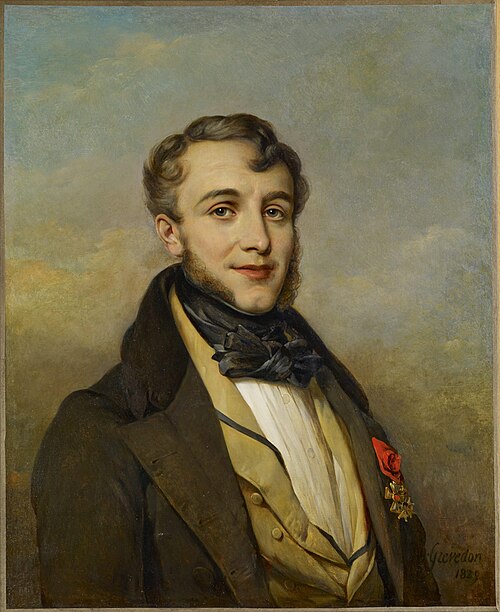
Friedrich Kalkbrenner
Frédéric Kalkbrenner: Piano Concerto No. 1 in D Minor, Op. 61 (Hans Kann, piano; Hamburg Symphony Orchestra; Heribert Beissel, cond.)
Friedrich Kalkbrenner built on Moscheles’s successes, helping to create the Romantic-era archetype of the celebrity pianist.
He was born in 1785 in a carriage somewhere between Kassel and Berlin. A child prodigy, he lived in Vienna in his late teens, meeting both Haydn and Beethoven. He also played duets with Hummel and became a friendly rival of his younger contemporary, Ignaz Moscheles.
Between 1814 and 1823, Kalkbrenner came to prominence as a performer, composer, and teacher. He hit peak popularity in the 1830s, spurred by his travels around Europe.
In his teaching, he popularised a device known as the chiroplast, which set pianists’ arms and fingers in a particular position. He even opened an academy with the device’s inventor in 1817, and also wrote a method book to propagate his pedagogical ideas. A few years later, in 1824, he joined the Pleyel and Co. piano-making company. These activities outside of performing made him a fortune.
By the end of the decade, he’d laid the groundwork for a new kind of musician: the celebrity pianist.
1840s: Franz Liszt
Liszt’s Piano Concerto No. 1
The career of Franz Liszt, born in 1811, was a culmination of influences from all the pianists on this list so far.
Through his teacher, Carl Czerny (a former Beethoven student), Liszt met and played for Beethoven as a child.
Czerny had himself studied with Hummel. In fact, Liszt’s father originally wanted Hummel to teach his son, but Hummel’s fees were too high – so Liszt ended up with Czerny instead.
Meanwhile, Moscheles was a Liszt fan and even bailed him out in 1841 after a disastrous British tour, and Kalkbrenner often appeared on programs with him in Paris.
After absorbing all of these influences (and countless others), Liszt went on the road, conquering Europe over an eight-year period that lasted for much of the decade.
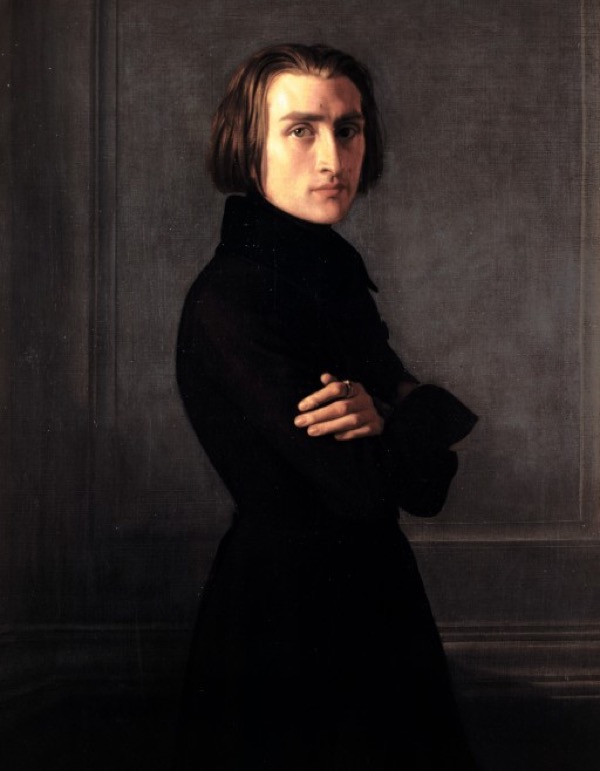
Franz Liszt
In doing so, he popularised the idea of the solo recital, as well as playing by memory – and even orienting the piano perpendicular to the audience, so they could see his dramatic side profile. He also had the greatest technique of any pianist of the century, as evidenced by his piano music.
In 1847, at the height of his fame, he retired from public performance to settle in Weimar. There he focused on composition, conducting, teaching, and supporting the musicians who would shape the second half of the century. But the impact of his 1840s tours has reverberated to the present day.
1850s: Anton Rubinstein
Rubinstein’s Piano Concerto No. 4
Anton Rubinstein was born in present-day Moldova in 1829. Since the Russian Empire of the time lacked infrastructure for music education, he trained and toured in Berlin and Paris as a child, meeting Chopin, Liszt, and Mendelssohn.
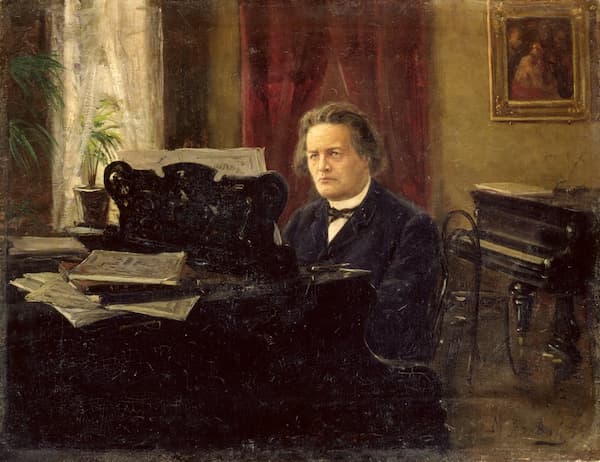
Portrait of Composer Anton Rubinstein by Michail Michailovich Yarowoy
During the first half of the 1850s, after escaping the revolutions of 1848, he became a fixture in the Imperial court in Russia. In the second half of the decade, he spent touring Europe to acclaim. His predecessor Moscheles paid credit to him in 1855, writing, “In power and execution he is inferior to no one.”
However, arguably the most important contribution that Rubinstein made to the piano happened offstage in 1862, when he founded the St. Petersburg Conservatory. It would soon become one of the most prestigious institutions in the world, training dozens of the greatest pianists who ever lived.
1860s: Clara Schumann
Schumann’s Piano Trio
Clara Wieck Schumann was born in 1819 in Leipzig. She was one of the most celebrated child prodigies of the 1820s and 1830s, and was a major inspiration to her husband, Robert Schumann.
After he died in 1856, driven by both grief and the need for money to support her children, Clara ramped up her touring schedule, resulting in a career she famously treated with the seriousness of a priestess.
During the 1860s and 1870s, she championed her husband’s works and inspired new ones by Brahms. She also drew audiences away from flashy but empty virtuoso pieces toward more challenging repertoire by Bach, Beethoven, and Schubert, helping solidify what we think of today as the canon. At every concert, she prioritised fidelity to the score over her own whims. It was a departure from the showmanship of Liszt – and her immense influence meant that her male colleagues took notice.
She was also among the first pianists to play from memory.
1870s: Hans von Bülow
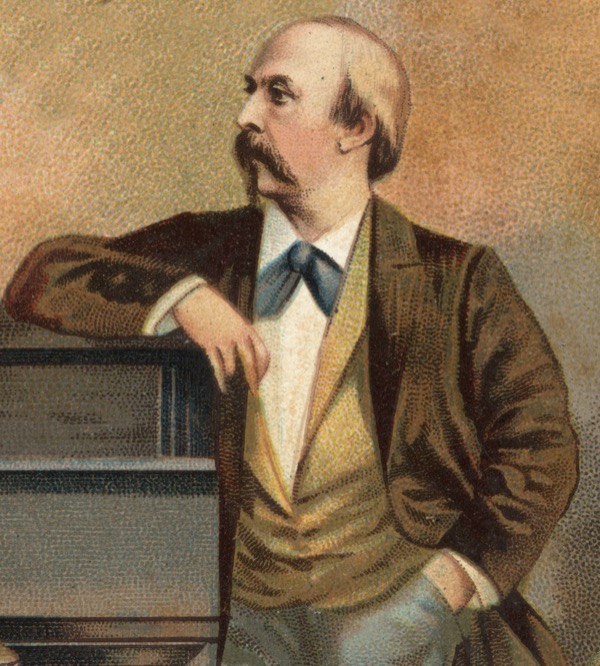
Hans von Bülow
Hans von Bülow: Ballade, Op. 11 (Mark Anderson, piano)
Hans von Bülow was born in Dresden in 1830. Early on, he studied with Clara Schumann’s father. After a stint studying law, he was drawn back into the musical world by Wagner‘s work. In 1851, he began studying piano with Liszt and even married Liszt’s daughter, Cosima, in 1857 – the same year he premiered Liszt’s B-minor piano sonata in Berlin.
In the early 1860s, Cosima fell in love with von Bülow’s idol Wagner. He resisted granting her a divorce for a few years, but after she had three children with Wagner, he finally agreed to one.
He was best known as a conductor, but also made major contributions to 19th-century pianism. In 1875, he premiered Tchaikovsky’s first piano concerto, among the most famous in the repertoire. He also made an important edition of Beethoven’s complete piano sonatas, and became the first pianist to perform all 32 sonatas.
Hans von Bülow’s piano career offered an intriguing new career model for up-and-coming pianists: a holistic one that mixed conducting, composing, editing, and interpreting others’ music – one that some modern touring pianists embrace today.
1880s: Eugen d’Albert
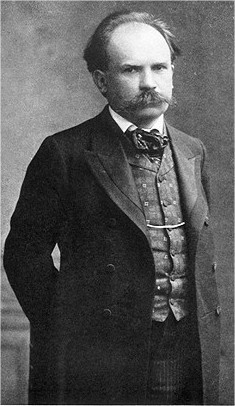
Eugen d’Albert in 1904
Eugen d’Albert: Piano Concerto No. 1 in B Minor, Op. 2 (Joseph Banowetz, piano; Moscow Symphony Orchestra; Dmitry Yablonsky, cond.)
Eugen d’Albert was born in Glasgow in 1864 to an English mother and a French-Italian father from Germany.
As a young man, d’Albert emigrated to his father’s homeland and began taking lessons from the elderly Liszt in Weimar. This made him one of the youngest links between Liszt, his teacher Czerny, and Czerny’s teacher Beethoven. Not surprisingly, Beethoven became a d’Albert speciality.
In 1882, at the age of seventeen, he became the youngest pianist (up to that point) to perform a solo with the Vienna Philharmonic. He also published his first piano sonata and first piano concerto in 1883 and 1884, respectively, kicking off a long composing career that ran in tandem with his performing career.
Excerpts of his 1930 performance of Beethoven’s Emperor Concerto are among the earliest broadcast recordings we have of a classical pianist.
He was also famous for his love life: he married six wives and divorced five – including our pick for the greatest pianist of the 1890s, Teresa Carreño.
1890s: Teresa Carreño
Carreño’s Romance for Violin and Piano
Teresa Carreño was born in Venezuela in 1853.
Her career – begun when she was a young girl – intersects with nearly every name on this list.
Beethoven was a vital part of her repertoire. She played Hummel at her debut concert at the age of eight. Her teacher Georges Mathias had studied composition with Kalkbrenner. She performed for Liszt in the 1860s and then declined to take lessons from him – but did study with Anton Rubinstein. Clara Schumann had proved that a woman could have a long-lasting career as a solo pianist. She played under von Bülow, who called her “the most interesting pianist of the present age.” And of course, she married Eugen d’Albert (then, a few years later, divorced him).
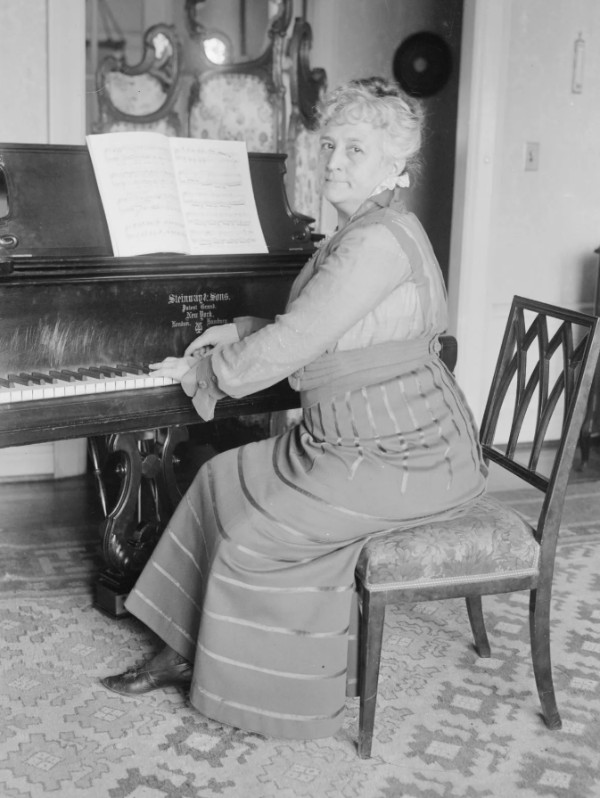
Teresa Carreño
Her connections to these men didn’t define her career. But their presence in her biography does serve to illustrate how she became the culmination of an entire century’s worth of pianistic inspirations and trends.
At the end of the 19th century, she pointed toward the next hundred years and beyond, proving that women and non-European pianists could become global superstars, too.
For more of the best in classical music, sign up for our E-Newsletter





A truly excellent series of articles on 10 of the most famous pianists! Please continue with articles are less-known pianists of the past!
God what a boring pianist Barenboim is . Everything so flat. No color, no imagination, nothing.