When Hollywood is looking for star power in terms of piano playing, they call Jean-Yves Thibaudet. His renowned poetic interpretation and technical brilliance, paired with personal charm and cinematic flair, have made him one of the premier pianists for the silver screen.
According to his official biography, Thibaudet appeared on six film scores. This includes films in which he performed music, appeared on screen, or is otherwise credited.
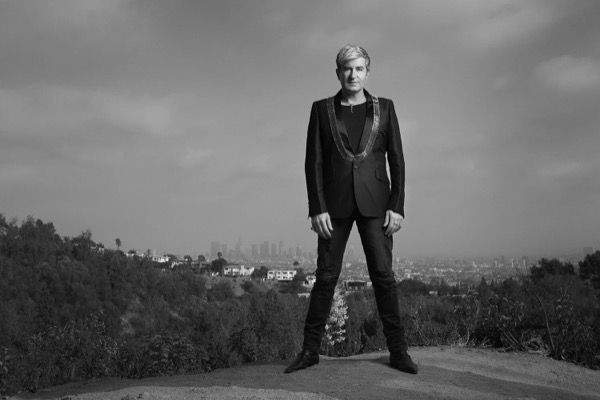
Jean-Yves Thibaudet
To celebrate his birthday on 7 September, let us feature four films in which Thibaudet brought music to the movie drama: Pride & Prejudice, Atonement, Extremely Loud & Incredibly Close, and The French Dispatch.
Franz Schubert: 4 Impromptus, Op. 90, D. 899: No. 3 in G-Flat Major (Jean-Yves Thibaudet, piano)
Pianist for the Silver Screen
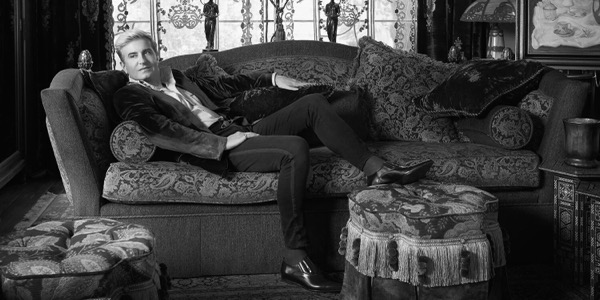
Jean-Yves Thibaudet
Thibaudet’s first venture into cinema came with Jane Campion’s The Portrait of a Lady of 1996, in which he recorded two of Schubert’s Impromptus, Op. 90. For this project, Thibaudet was not the pianist for Wojciech Kilar’s entire score, but was brought in specifically to record the Schubert works required for the film.
In Pride & Prejudice, a 2005 adaptation of Jane Austen’s novel, Thibaudet was hired to become the principal piano voice for a newly composed film score. As such, he collaborated with composer Dario Marianelli and director Joe Wright.
As Thibaudet explained in an interview, “The good composers of soundtracks, I admire them as much as I do classical composers. I don’t make a difference between them; a composer is a composer. The movies are the opera of modern times. Had there been movies back then, Puccini and Wagner would have certainly written film scores.” (Taylor, Los Angeles Times, 2012)
For composer Dario Marianelli, the early Beethoven piano sonatas became the principal reference point for his score. Beethoven offered a historical connection to the novel, and the piano became the emotional voice of the principal character, Elizabeth Bennet.
Austen’s novels are famously verbal, and Marianelli uses the piano extensively to communicate what Elizabeth cannot or will not say. For director Joe Wright, the choice of pianist to undertake this job was obvious. Apparently, he regarded Thibaudet as the perfect pianist for the project, as his nineteenth-century sensibility matched the score’s musical character.
The soundtrack featuring Thibaudet and the English Chamber Orchestra, conducted by Benjamin Wallfisch, was released by Decca in 2005. Marianelli received his first Academy Award nomination for Original Score.
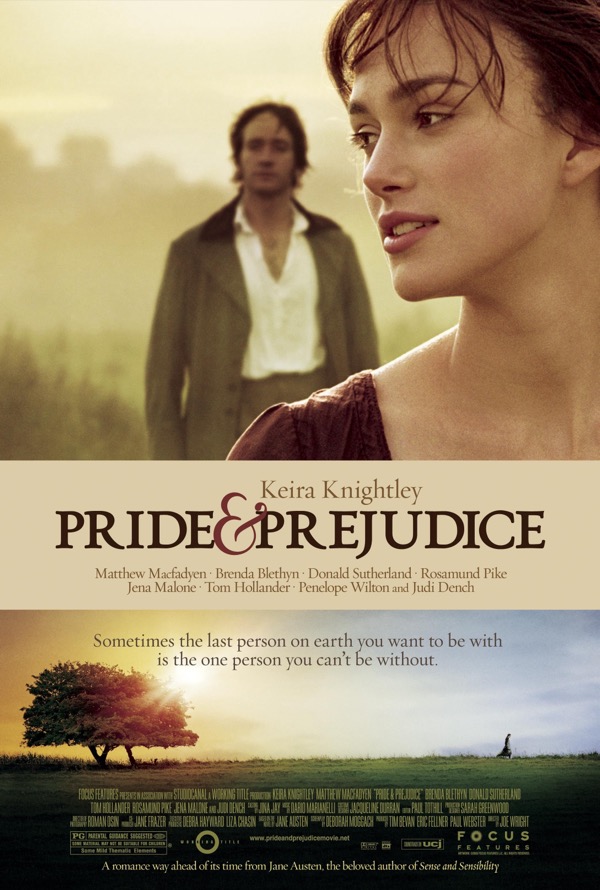
Pride & Prejudice (2005)
Dario Marianelli: Pride and Prejudice (excerpts) (Jean-Yves Thibaudet, piano)
When Piano Meets Typewriter
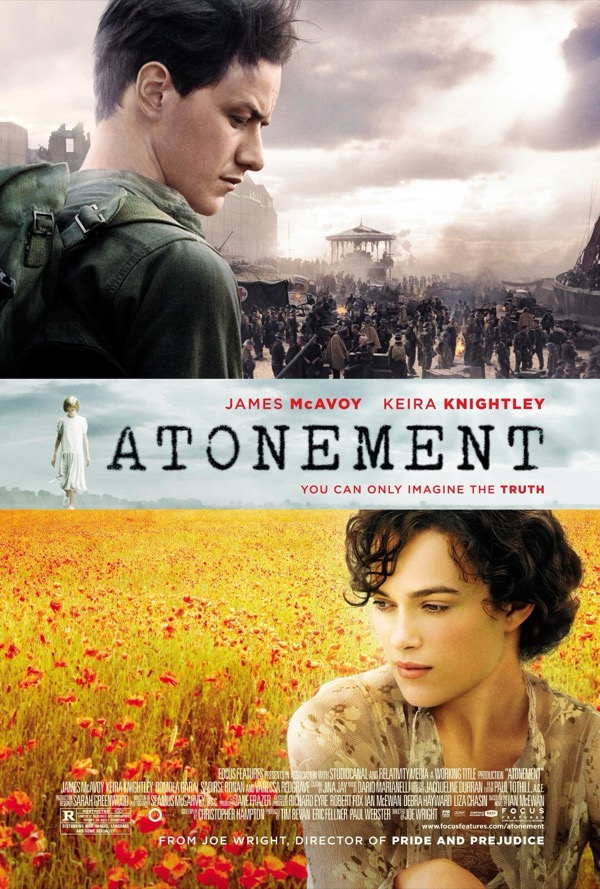
Atonement
Thibaudet, Wright, and Marianelli collaborated once more on the 2007 film Atonement. Thibaudet’s involvement changed from that of a classical pianist whose playing is used in a film to something much more integrated.
The film tells the story of the young aspiring writer Briony Tallis, who wrongly accuses her older sister Cecilia’s lover of rape. He is arrested, Cecilia breaks with the family, and Briony remains blind to the truth.
Briony only realises her mistake at the age of 18 and tries to atone for her lie. In old age, Briony writes a novel with a happy ending, even though Robbie died in the war and Cecilia died in the London Blitz.
Essentially, the entire film becomes a meditation on whether writing can ever atone for what reality has taken away. The process of writing becomes one of the central characters of the film. Marianelli incorporates the typewriter into the musical score, and hence the film is sometimes called the “Typewriter Concerto.”
The typewriter is used when Briony reads Robbie’s letter, and it becomes increasingly agitated, mirroring her excitement and anxiety. When it combines with the piano, the clicking and tapping become part of the rhythm, and the piano part is intimate and highly articulated.
The score is deeply rooted in the Romantic piano tradition, and critics have suggested that the music behaves like a series of piano and orchestra sonatas. If the orchestra tells us what is happening in the story, the piano tells us what the characters are actually feeling.
Jonathan Broxton suggests that Thibaudet brings classical delicacy to Marianelli’s score, helping to create music that is “beautiful, romantic, and filled with wistful longing.” Balancing virtuosity and restraint, Thibaudet is a central participant rather than a mere accompanist. (Broxton, Movie Music UK, 2007)
Jean-Yves Thibaudet in Marianelli: Atonement, “Briony”
The Piano of Memory and Loss
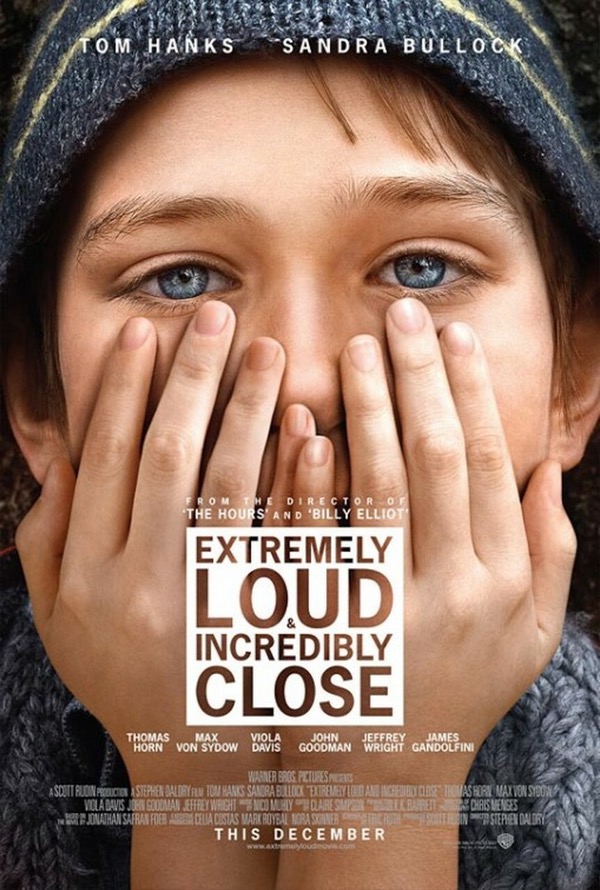
Extremely Loud & Incredibly Close
Extremely Loud & Incredibly Close is a 2011 film adaptation of Jonathan Safran Foer’s 2005 novel. It tells the story of nine-year-old Oskar, whose father dies in the attack on September 11. Oskar finds a mysterious key among his father’s belongings and sets out across New York to find the lock it opens.
The score was written by French composer Alexandre Desplat, who had already scored films like The King’s Speech and Harry Potter and the Deathly Hallows. In this film, the music is frequently written to suggest Oskar’s perspective. Rather than overwhelmingly tragic, it is restless and curious before turning reflective and deeply melancholic.
The orchestra frequently plays animated rhythmic figures, and the piano becomes part of the orchestral texture. As such, it becomes part of Oskar’s psychological landscape. In Desplat’s score, we don’t find grand Romantic gestures, but the piano is an articulated voice within the ensemble.
Desplat was looking for an emotional, haunting, and delicate sound and immediately thought of Thibaudet. He said that Thibaudet had exactly the qualities he needed for the film, namely an extraordinary range of colour, tone, dynamics, and nuance, combined with an exceptionally light touch. (Taylor, Los Angeles Times, 2012)
Commentators praised Thibaudet’s weightless playing, and the score was described as a mixture of shimmering romanticism and pulsing minimalism. The music, with Thibaudet’s participation, mirrors Oskar’s obsessive search for the meaning of the mysterious key.
Jean-Yves Thibaudet plays Desplat: Extremely Loud and Incredibly Close (excerpt)
A Piano in Wes Anderson’s France
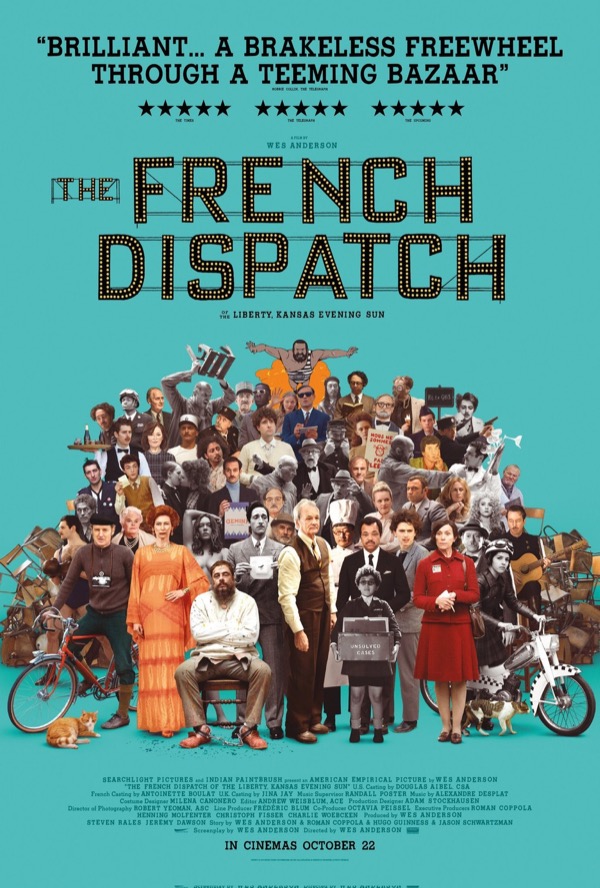
The French Dispatch
Alexandre Desplat and Jean-Yves Thibaudet were reunited in The French Dispatch in 2021, with Wes Anderson directing an anthology film constructed around the final issue of a fictional American magazine published by expatriate journalists in France.
Anderson and Desplat wanted the music to feel like a stylised version of France rather than a conventional Hollywood score. In his music, Desplat deliberately drew on Erik Satie and Thelonious Monk, pairing Thibaudet with harp, timpani, bassoon, tuba, and other instruments in a sparse and surreal musical environment.
Throughout, Thibaudet is paired with unusual instrumental combinations, resulting in unusual duets. Desplat’s music and Thibaudet’s performance mirror the film’s precise visual details, ranging from abrupt shifts in perspective to meticulously timed gestures and carefully choreographed movement.
Critics praised Thibaudet for capturing the fanciful, off-balance spirit of the film. While not everybody was enamoured with the score, Thibaudet is consistently praised for his contribution. And he truly enjoys his involvement in the process, explaining, “When music is composed specifically for a film, it’s like putting air into lungs.” (Taylor, Los Angeles Times, 2012)
For more of the best in classical music, sign up for our E-Newsletter