Classical music history remembers Mendelssohn, Schumann, Liszt, Dvořák, Wagner, Vaughan Williams, and Stravinsky as “great composers”: men who helped create the orchestral repertoire for a century, between the 1840s and 1940s.
But women composers were also composing at the same time. They were writing symphonies, tone poems, concertos, operas, and overtures in the same styles, often studying with the same teachers. And yet their work didn’t enter the repertoire in the same way, despite its obvious quality.
Here are seven connections between the orchestral works of great men composers and great women composers.
If you want a piece like a Mendelssohn symphony, try…
Louise Farrenc’s Symphony No. 3 (1847)
Louise Farrenc was born in Paris in 1804.
One of her teachers was pianist Ignaz Moscheles, who taught Felix Mendelssohn and his sister Fanny.
Farrenc also studied with Anton Reicha, Hector Berlioz’s composition teacher – giving her an impressive resume all around.
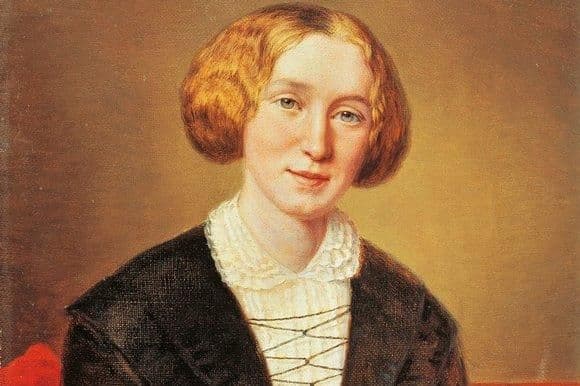
Louise Farrenc
French composers of Farrenc’s generation were encouraged to focus their highest ambitions on writing theatre music and opera, not symphonies. Even Berlioz, arguably the greatest French composer of his generation, wrote only four, none of them a conventional symphony.
Farrenc wrote three. Her elegant third symphony is perhaps her best, with its dramatic G-minor opening movement and fairy-like scherzo, reminiscent of the writing in Mendelssohn’s overture to A Midsummer Night’s Dream (at 25:15 in the video above).
If you want a piece like a Schumann symphony, try…
Emilie Mayer’s Symphony No. 4 (c. 1850)
Emilie Mayer was born in 1812 in Germany. A couple of years later, her mother died. Then, in 1840, her father died by suicide on the anniversary of her mother’s burial. He left Emilie enough money to live on, enabling her to do what she wanted with her life.
She had studied music as a young person and pursued it as a devoted amateur throughout her early adulthood. But after her father’s death, she chose to make a new start, throwing herself into studying music at a professional level.
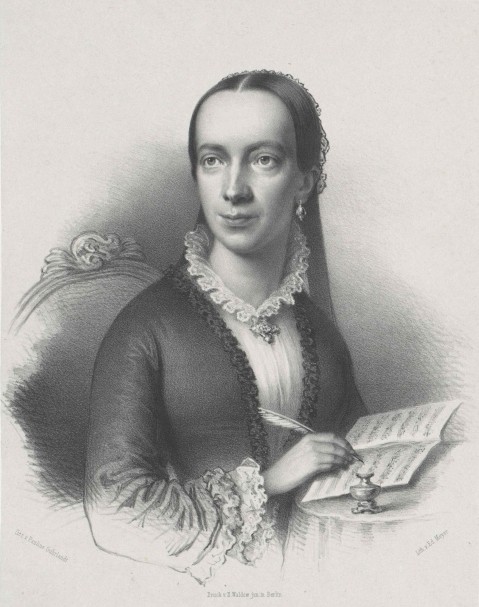
Emilie Mayer
During this time, she studied with music theorist Adolph Bernhard Marx, who was close to the Mendelssohn family and a music critic and colleague of Robert Schumann’s.
Like many Germans of her generation, she was deeply inspired by drama and literature. She later wrote an overture to Faust in 1880, echoing Robert Schumann’s fascination with the great writer and his oratorio-like work Scenes from Goethe’s Faust.
Mayer’s fourth symphony embodies this appreciation for drama and psychological complexity; it’s especially noticeable in the first movement, with its growling trills and timpani rolls.
If you want a piece like a Liszt tone poem, try…
Augusta Holmès’s Andromède (1883)
Augusta Holmès was born in 1847 in Paris to Irish parents. She was a musical child, but her gender kept her from enrolling at the Paris Conservatoire.
She became a fan of Liszt in 1861, when she was just thirteen. At 21, she travelled to Munich to see the premiere of Wagner’s Das Rheingold. While there, she met and befriended Franz Liszt, who was impressed by her work, and they began corresponding by letter.
Like Liszt, she gravitated toward big, bold tone poems over symphonies. Her symphonic poem Andromède follows the story of Andromeda, daughter of a king who is chained to a rock and sacrificed to the sea in the hope that the sea monster Cetus will stop ravaging the coastline. Holmès evokes the wind and waves in her tone poem, as well as the thrill of her eventual rescue.
She also wrote symphonic poems on nationalist themes, such as Irlande (Ireland) and Pologne (Poland), calling to mind Liszt’s Hungarian Rhapsodies.
If you want a piece like Dvořák’s New World Symphony, try…
Amy Beach’s Gaelic Symphony (1893)
Amy Beach was born in 1867 in New Hampshire. She was an impressive child prodigy, starting to compose at the age of four. She became a piano virtuoso as a teenager and was encouraged to study in Europe to take her career to the next level, but she opted to stay in America.
At 18, she married a wealthy Boston doctor. It would have been insulting to him to make money as a performer while married, so she limited her performances to charity performances and began focusing on composing instead.
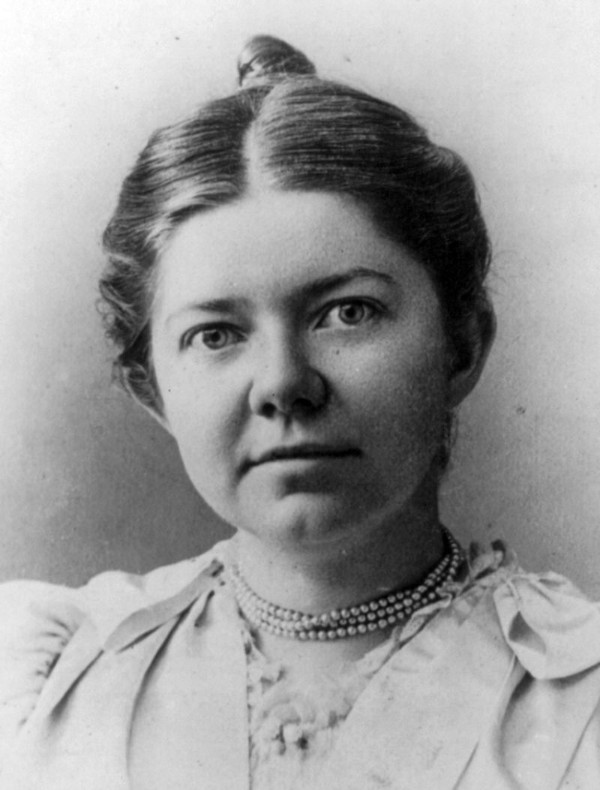
Amy Beach
In November 1892, two months after arriving in America to lead the National Conservatory of Music, composer Antonín Dvořák gave a controversial interview published in the Boston Post, claiming that women could be fine interpreters but not great creators. In December, Amy Beach wrote a rebuttal, citing dozens of great works written by women.
Shortly after this exchange, both composers soon embarked on the defining symphony of their careers.
In January 1893, Dvořák began writing his ninth symphony, later known as the New World; Beach attended the Boston premiere. She heard that Dvořák was clearly inspired by Black folk music and noted it, but, given her ancestry, she felt more drawn to use Gaelic folk music.
Within the year, she began writing her own folk-inspired symphony, which came to be known as the Gaelic Symphony. It demonstrated – pointedly – that Dvořák’s ideas about women’s inability to write music were wrong.
If you want a piece like a Wagner overture, try…
Ethel Smyth’s Overture to The Wreckers (1904)
Ethel Smyth was born in London in 1858 and became famous for being a musician and a suffragette. Against her family’s wishes, she left England to study music in Germany as a young woman and eventually became a professional composer.
In 1877, she went to see Wagner conduct, later describing him as “an undersized man with a huge head, apparently in a towering rage from start to finish of the concert.”
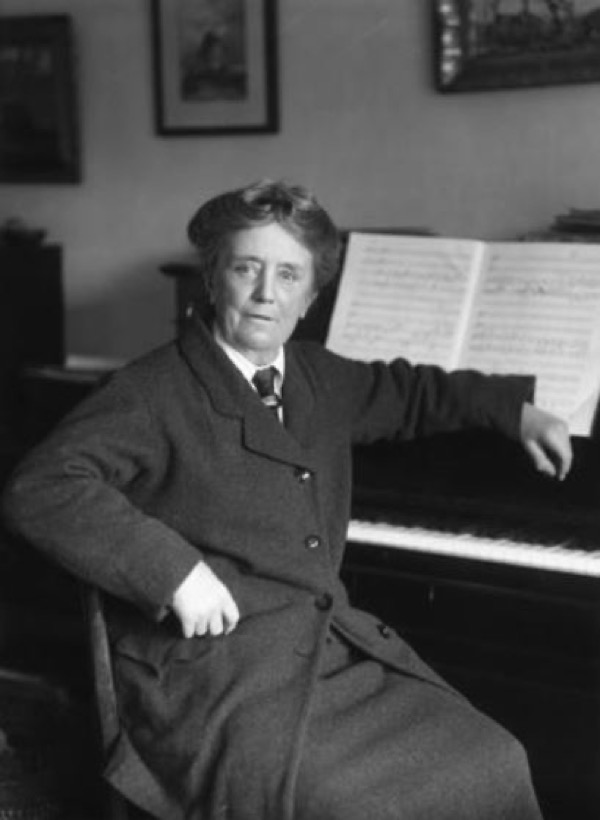
Ethel Smyth
Despite that wry description, she took inspiration from Wagner while writing opera. In her creative life, she veered away from stereotypically feminine qualities and toward stereotypically masculine ones, specialising in big, bold writing for brass sections and large, loud orchestral writing.
This emotionally expressive, Wagnerian style was on full display in her 1906 opera The Wreckers.
If you want a piece like Ralph Vaughan Williams’s Fantasia on a Theme by Thomas Tallis, try…
Ina Boyle’s Violin Concerto (1932–1933)
Ina Boyle was born in Ireland in 1889. She began studying music at home with her governess, then took composition lessons in Dublin.
In 1923, she began studying with British composer Ralph Vaughan Williams. She took sea voyages to see him and also took lessons by correspondence. She kept those letters in a folder labelled “Letters from my beloved teacher, Dr Ralph Vaughan Williams O.M., from 1923 to 1938.”
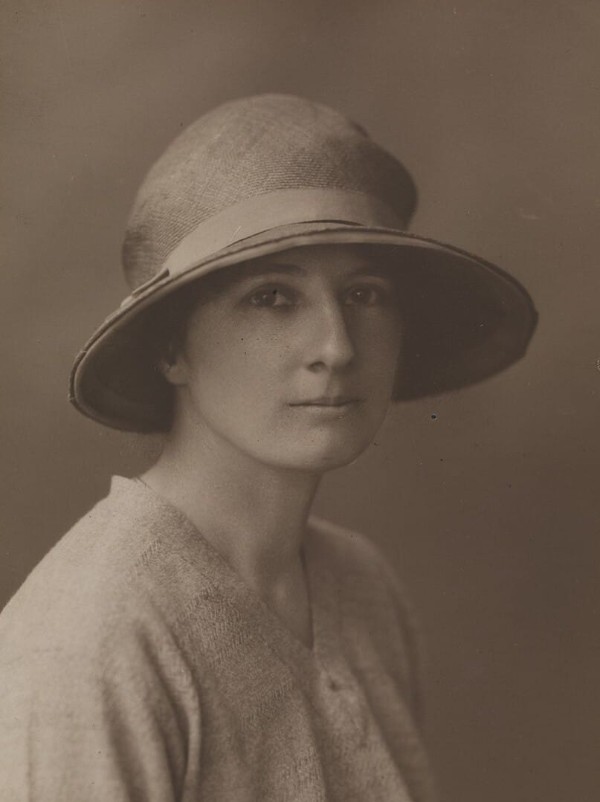
Ina Boyle
She wrote her violin concerto between 1932 and 1933. Its soaring, yearning string lines call to mind her teacher’s celebrated 1910 work for string orchestra, Fantasia on a Theme by Thomas Tallis.
Boyle’s lessons with Vaughan Williams ended when World War II began. She remained in Ireland, isolated from peers, but continued composing daily: a purity of intention and love for the art that few other composers, “great” or not, can match.
If you want a piece like Stravinsky’s Symphony in C, try…
Grażyna Bacewicz’s Concerto for String Orchestra (1948)
Grażyna Bacewicz was born in 1909 in Łódź, Poland, into a musical family. She learned to play piano and violin, and at thirteen, she began composing.
She became known for her violin playing and was named concertmaster of the Polish National Radio Symphony Orchestra in the 1930s.
She also kept composing, experimenting with the neoclassical style then in vogue. In 1932, she took composition lessons with Nadia Boulanger, the same teacher who had taught Igor Stravinsky, then famous for his own neoclassical works.
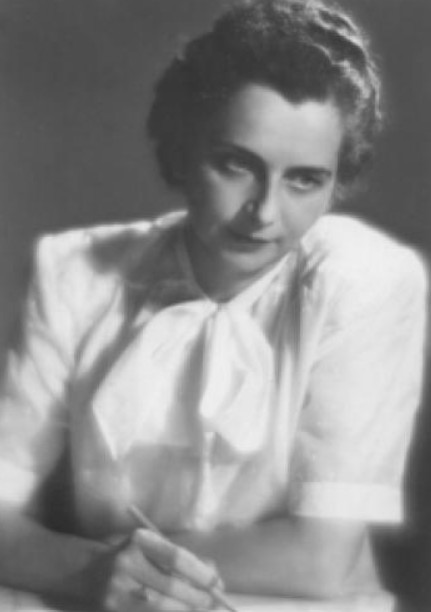
Grażyna Bacewicz
During World War II, she moved to Warsaw and performed in underground concerts there. In 1944, during the Warsaw Uprising, she fled to Lublin.
The politically restrictive environment in Poland in the mid-1940s was not conducive to aesthetic experimentation, and Bacewicz stuck close to the neoclassical style she’d first embraced in the 1930s.
Her 1948 Concerto for String Orchestra is fiercely confident, driven by propulsive rhythms that recall Stravinsky’s own carefully structured neoclassical works.
However, while Stravinsky’s neoclassicism can sometimes feel detached or ironic, Bacewicz’s approach ultimately comes across as more rooted and emotionally expressive.
Conclusion
All seven of these women created extraordinary work that should never have been dismissed or forgotten.
All of their achievements are remarkable. Farrenc wrote three symphonies in a genre the French establishment tended to dismiss, despite the symphony’s importance to music history generally. Beach not only publicly advocated for women composers but demonstrated their talent in her work. Boyle kept writing music after she was cut off from her teacher and everyone outside of Ireland.
Each of them took the same forms, the same influences, and the same historical moment, and blended those ingredients to make something distinct enough that their works still sound like their own. Listeners deserve to hear everything they did, regardless of whether historians, critics, and gatekeepers label them “great” or not.
For more of the best in classical music, sign up for our E-Newsletter