Every December, churches and concert halls the world over present programs of classical music associated with Christmas.
Today, we’re wondering: what is the most Christmas-y piece ever written by each of the great composers?

In this list, we look at over three centuries of music, from Alessandro Scarlatti’s Cantata pastorale per la Natività to Britten’s A Ceremony of Carols, exploring how composers as different as Bach, Chopin, and Tchaikovsky captured the mystery and magic of Christmastime.
A. Scarlatti: Cantata pastorale per la Natività (1695)
As its name suggests, Alessandro Scarlatti’s Cantata pastorale per la Natività (“Pastoral cantata for the Nativity”) is a charming Baroque Era depiction of the Nativity scene.
With its lilting rhythms and drone-like harmonies, the music paints a serene picture of shepherds rejoicing in Christ’s birth.
Bach: Christmas Oratorio (1734)
Bach’s six-part Christmas Oratorio, meant to be performed over six days between Christmas and Epiphany, celebrates the joy of the holiday on a massive scale.
To meet his deadline, Bach reused some of his earlier music, reimagining it in this new sacred context.
A chorus, soloists, and an orchestra boasting trumpets and timpani bring the start of the Gospel story to thrilling life.
Haydn: Nikolaimesse (1772)
Haydn’s Missa Sancti Nicolai – his “St. Nicholas Mass” – is the only mass he wrote after the age of fifty that hasn’t been lost.
It is believed he wrote this tribute to St. Nicholas because his employer at the time was Prince Nicolaus Esterhazy, who would have celebrated his name day on 6 December, the feast of St. Nicholas.
Chopin: Scherzo No. 1 in B-minor (ca. 1833)
Chopin’s Scherzo No. 1 in B-minor may not be overtly Christmas-y, but it does famously quote the Polish Christmas carol “Lulajże Jezuniu” (“Sleep, Little Jesus” in Polish).
You can hear it at around 3:20 in the recording above.
The contrast between the scherzo’s stormily virtuosic outer sections and the sweet Polish carol in the middle demonstrates Chopin’s aching homesickness, which became especially acute during the holidays.
Mendelssohn: Six Christmas Pieces (1842)
Felix Mendelssohn: Kinderstucke, Op. 72, “Christmas Pieces” (Benjamin Frith, piano)
Mendelssohn’s “Six Christmas Pieces” is a collection of warm miniature piano works meant to be played in the home, as opposed to the concert hall.
Their approachable simplicity and gentle lyricism showcase the composer at his most intimate.
If you are an amateur pianist, look into getting the sheet music to perform at your next holiday gathering. You might just start a new holiday tradition!
R. Schumann: “Weihnachtslied” from the Lieder-Album für die Jugend, Op. 79 (1849)
Robert Schumann: Lieder-Album fur die Jugend, Op. 79: No. 16. Weihnachtslied (Thomas E. Bauer, baritone; Uta Hielscher, piano)
Robert Schumann was in a similar stage of life as Felix Mendelssohn when he wrote his Lieder-Album für die Jugend (“Song Album for Young People”).
The movement “Weihnachtslied” (“Christmas Song”) captures the wonder of a child seeing a Christmas tree.
Schumann was drawing from personal experience here. At the time of this song’s composition, he and his wife, virtuoso pianist Clara Schumann, had four children under the age of eight.
Berlioz: Shepherds’ Farewell to the Holy Family from L’enfance du Christ (1850)
Hector Berlioz: L’Enfance du Christ, Op. 25 – Part II: The Flight into Egypt – The Shepherd’s Farewell to the Holy Family (Ile de France Vittoria Regional Choir; Lille National Orchestra; Jean-Claude Casadesus, cond.)
This gentle, loving, reassuring chorus from Berlioz’s massive oratorio L’enfance du Christ has become one of his best-loved pieces.
Its pure harmonies and legato lines evoke shepherds bidding a bittersweet farewell to the infant Jesus and his family.
This work has become very popular even apart from Berlioz’s oratorio and is often performed separately.
Liszt: Weihnachtsbaum (1873–1876)
Franz Liszt: Weihnachtsbaum, S186/R71 (1st version, MS-181, Bibliothèque nationale de France, Paris) (Wojciech Waleczek, piano)
Composed when Franz Liszt was in his sixties, his “Weihnachtsbaum” (“Christmas Tree Suite”) is a set of piano pieces written as a gift for his granddaughter.
He kept them technically simple so that she could perform them: no virtuoso fireworks here.
Consisting of carols, lullabies, and introspective miniatures, this gentle suite reflects both Liszt’s nostalgia and religiosity.
Saint-Saëns: Oratorio de Noël (1858)
Composed when Saint-Saëns was only twenty-three, the Oratorio de Noël marries youthful charm and the dignity of the Catholic liturgy.
The famous “Prelude” and “Tollite hostias” radiate an especially wintry warmth and serenity.
Saint-Saëns wrote this work so it could be included in worship services. He was deeply inspired by Baroque models, including Bach’s Christmas Oratorios.
Bruckner: Christus factus est (1884)
Composer Anton Bruckner’s Catholic faith was a major part of his personal and professional identity.
Bruckner’s Christus factus est (“Christ Was Made”), written when he was sixty, is a masterpiece of sacred choral writing.
It unfolds at a slow, majestic pace, encouraging listeners to pay attention to the architecture of the work.
It is often performed around Holy Week, but it also exemplifies the holiday spirit of awe and quiet self-reflection.
Tchaikovsky: The Nutcracker (1892)
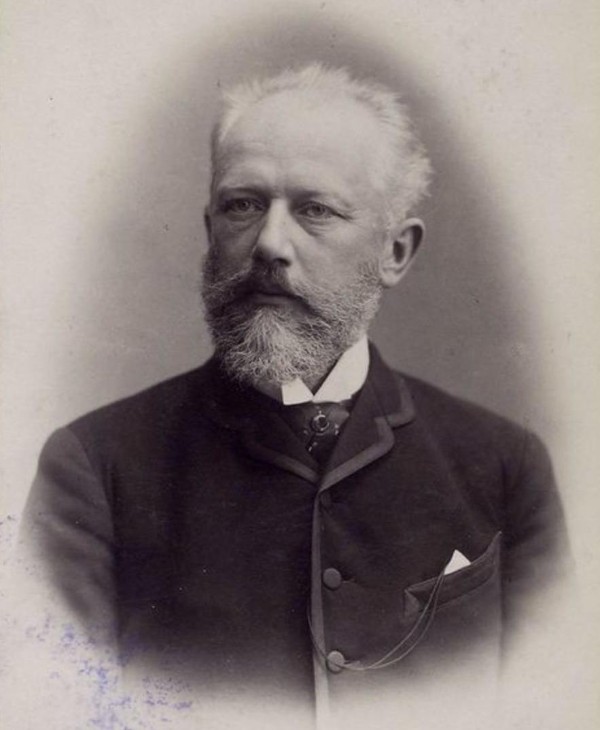
No list of classical Christmas music feels complete without mentioning Tchaikovsky’s The Nutcracker!
This ballet score brims with unforgettable melodies, from the heartfelt “Waltz of the Flowers” to the magical “Dance of the Sugar Plum Fairy.”
Beneath the whimsy of the dances lies a deep – and deeply moving – nostalgia for the innocence of childhood.
Puccini: La Bohème (1895)
Puccini’s La Bohème opens on Christmas Eve in Paris, and features unforgettable scenes of love and laughter set before the tragic plot is set into motion.
The opera’s snow-filled setting and bittersweet romance make it one of the most emotionally resonant Christmas-related works in the entire repertoire.
Sibelius: Five Christmas Songs (1897–1913)
Jean Sibelius: 5 Christmas Songs, Op. 1 (version for voice and piano) (Monica Groop, mezzo-soprano; Love Derwinger, piano)
Sibelius’s “Five Christmas Songs” were published as his Op. 1.
Combining folk-like melodies with luminous harmonies, they call to mind the snowy winter landscapes of Finland.
They also reveal a softer, more personal side to the composer, whose music turned more abstract and austere as he aged.
Grieg: Weihnacht (c. 1900)
Edvard Grieg: Weihnacht (arr. F. Jung for choir) (Orpheus Vocal Ensemble; Michael Alber, cond.)
Grieg’s “Weihnacht” (“Christmas”) is a brief, tender song filled with Nordic warmth.
Its melody is simple and direct, as if sung beside a family hearth, landing it squarely in the tradition of other simple works written for families by great Romantics like Mendelssohn and Schumann.
Ravel: Noël des jouets (1905)
Maurice Ravel: Noel des jouets (Claire Brua, mezzo-soprano; David Abramovitz, piano)
Ravel’s Noël des jouets (“The Toys’ Christmas”) is a magical miniature that imagines toys coming to life on Christmas Eve.
Its refined harmonies and precise craftsmanship blend childlike fantasy with French sophistication and sensuality.
Debussy: Noël des enfants qui n’ont plus de maison (1915)
Debussy wrote this searing Christmas song during World War I. Its title translates to “Christmas For Children Who No Longer Have a Home.”
It is sung from the perspective of orphaned children praying for peace…and, somewhat unusually for a Christmas song, advocating for revenge!
The subject matter makes this brief carol one of Debussy’s most overtly political works.
Bartók: Romanian Christmas Songs (1915)
Bartók’s “Romanian Christmas Songs” are transcriptions of folk songs that Bartók then synthesized and translated into the musical language of classical music. At a certain point, it becomes difficult to know where the folk songs end and Bartók begins!
Here you’ll hear songs boasting old-fashioned modal harmonies and spiky, irregular, unpredictable rhythms…perfect for sparking rustic joy.
Schoenberg: Weihnachtsmusik (1921)
In his “Weihnachtsmusik” (“Christmas Music”), famed enfant terrible Arnold Schoenberg (temporarily) set aside his beloved modernist dissonances in favor of warmth and tradition.
Scored for small ensemble, this piece weaves traditional carols like “Lo, how a rose e’er blooming” into rich contrapuntal textures.
The result feels like chamber music for an intimate Christmas gathering. You can practically smell the dinner cooking and the candlelight flickering against the walls of the family home.
Prokofiev: Lt. Kije Suite (1934)
Prokofiev’s five-movement Lieutenant Kije Suite came from music he wrote for the Soviet film by the same name.
The fourth movement, Troika, depicts a sleigh ride and prominently features sleigh bells in the percussion section. That instrumentation lends the whole movement a festive holiday air.
Britten: A Ceremony of Carols (1942)
Britten’s A Ceremony of Carols is one of the twentieth century’s best-known Christmas works.
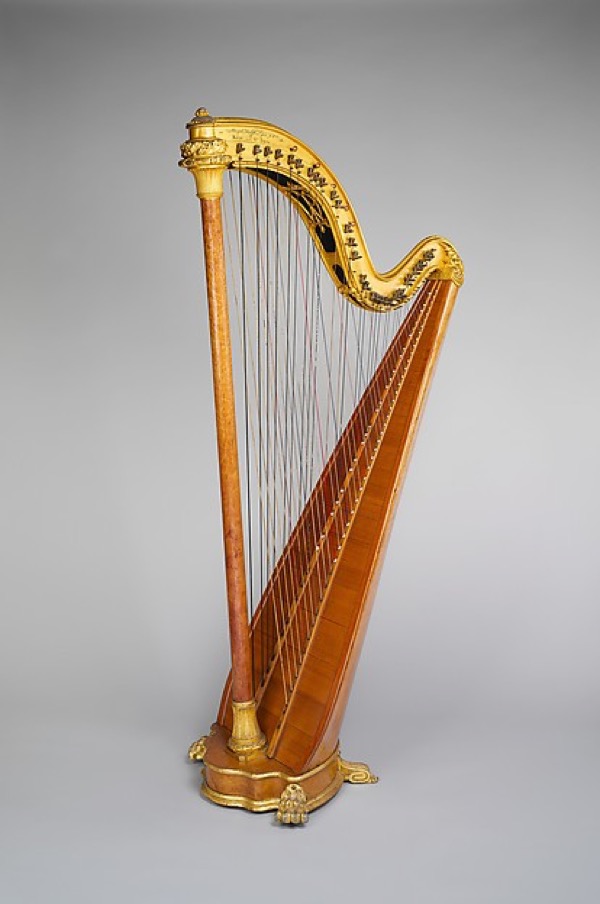
Scored for treble voices and harp, it sets medieval English texts to music and draws on musical traditions to sound older than it really is.
Britten composed it during a risky wartime ocean crossing, making the work’s themes of peace and love incarnate especially poignant.
Conclusion
Taken together, these works form a musical journey through more than two hundred years of Christmas tradition.
From Bach’s jubilant trumpets to Chopin’s homesick scherzo to Tchaikovsky’s enchanted ballet and beyond, every great composer at some point in their career found a different way to express the awe, nostalgia, and warmth of the season.
Whether you’re revisiting old favourites or discovering new ones, these timeless works from classical music history can be the perfect soundtrack for your holidays.
For more of the best in classical music, sign up for our E-Newsletter