French pianist Michel Dalberto, winner of the Clara Haskil Prize and the First Prize in the Leeds International Piano Competition, selected the music of Franz Schubert for his first commercial recording.

Michel Dalberto
His recording of two piano sonatas by Franz Schubert won the Grand Prix du Disque of the Académie Charles Cros, one of France’s most prestigious recording prizes, and it established him as one of the leading Schubert pianists of his generation.
Dalberto would subsequently record the complete piano works of Schubert on 14 CDs for the Japanese Denon label, and to celebrate his birthday on 2 June, let us highlight the playing qualities that make his Schubert a combination of stylistic freshness and poetic spontaneity.
Michel Dalberto plays Schubert: Piano Sonata No. 21 in B-flat Major, D. 960, “Scherzo”
A Unified Vision of Schubert
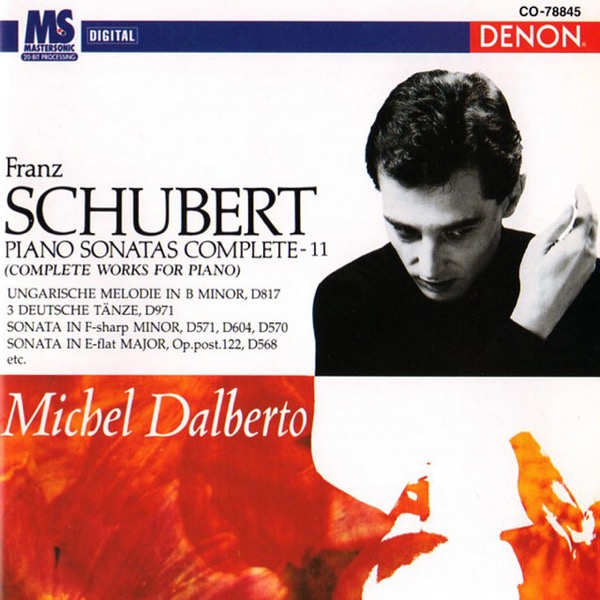
Michel Dalberto’s complete Schubert piano works recording
Recorded between 1989 and 1995, Dalberto’s complete Schubert is a showcase of consistency and songfulness. For Dalberto, Schubert is a Romantic to the core, and in his interpretations, he responds to these human undertones with warmth and flexibility.
However, the primary strength of this set is its consistency, as it was recorded over many sessions but in the same venue and on the same Steinway piano. This produces a unified sound and a consistent artistic vision throughout the set.
Reviews have been overwhelmingly positive, as the set has been praised as one of the finest and most consistent single-artist surveys of Schubert’s solo piano music. The performances are thoughtful, poetic, and consistently insightful.
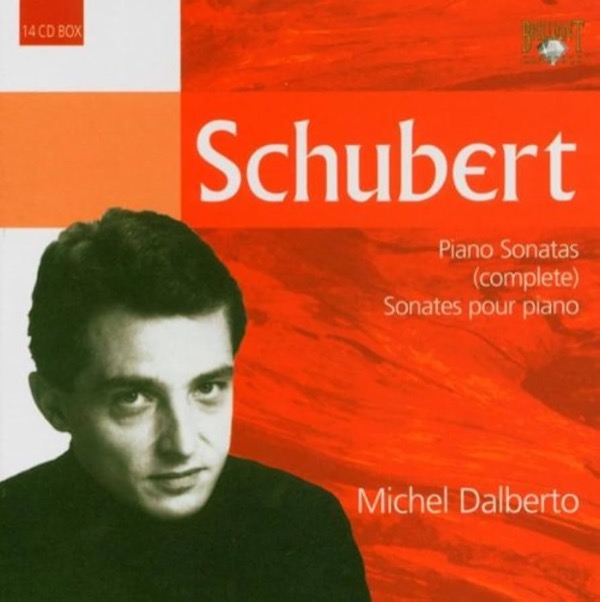
Dalberto’s Schubert box set
Franz Schubert: 3 German Dances, D. 971 (Michel Dalberto, piano)
An Intimate Schubert

Michel Dalberto
Dalberto is deeply sympathetic to Schubert’s musical language. Instead of imposing grand gestures, he prefers to let the music speak naturally. This essentially exposes a direct and appealing structural clarity that unfolds without sentimentality.
Although Dalberto is frequently called a visionary performer and prodigious narrator, his Schubert balances a singing melodic line with a light and elegant touch. In the late sonatas, Dalberto brings out the vast emotional and dynamic range of these pieces.
His approach to Schubert’s intertwined textures and harmonic depths is highly compelling, indeed. Unlike more dramatic or psychologically intense interpretations, Dalberto’s playing remains unforced and intimate throughout.
Michel Dalberto plays Schubert: Impromptu No. 3, Op. 90
Without Seeking to Overwhelm
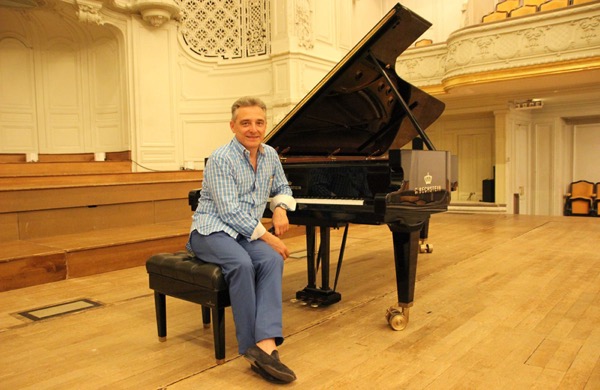
Michel Dalberto
Not everybody was entirely happy with Dalberto’s Schubert, with a recurring criticism centering on a lack of unpredictability. As such, it was viewed not as visionary music but as a strongly controlled musical narrative.
To be sure, Dalberto does prefer to look inward and is eager to avoid psychological extremes. In comparison with Richter and Lupu, it is argued that Dalberto’s performance seems slightly restrained.
In essence, Dalberto offers a modern concert-hall approach to Schubert, with a bright, modern recorded sound that delivers wonderfully dramatic immediacy. Ultimately, Dalberto’s Schubert does not seek to overwhelm, yet it remains one of the great recorded surveys of Schubert’s music.
For more of the best in classical music, sign up for our E-Newsletter
Franz Schubert: Piano Sonata No. 19 in C Minor, D. 958 (Michel Dalberto, piano)