I am a guest curator at the Sheffield Chamber Music Festival from 15 to 23 May.
In discussing what theme we might choose, various ideas have come to mind – Kurtag’s anniversary, The Northern Landscape? Perhaps unsurprisingly – given my job description – we chose to look at song. In doing so, we are tackling head-on the baffling truth of the matter: artistic directors will tell you that while string quartets of varying quality can play to consistently full audiences, even some of the most celebrated song recitalists walk out to empty seats. Are words, seemingly illuminating, more hindrance than help?
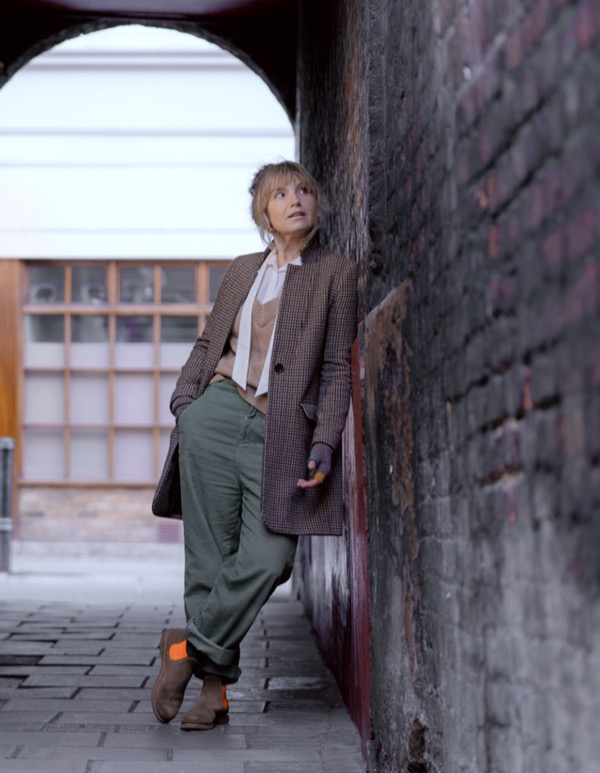
Claire Booth © Sven Arnstein
This is a problem for those of us who both sing for our supper and love the repertoire. Yet, wrestling with the idea, I can see there’s much to unpack. What constitutes a song? Why are audiences accepting of some styles and not others? Why do many composers, whose instrumental music is core orchestral fare, find that their songs are relegated to the edge of ‘standard’ repertoire? Is it a language issue? A performance issue?
Whatever the genre, music speaks directly to hearts, minds and emotions, with or without words. By the time the chorus finally enters in Bach’s St. John Passion, crying out the text ‘Herr, unser Herrscher’, the listener has already drunk deep from the emotional wellspring provided by Bach’s extraordinary introduction. The pulsating bass, plangent oboes, incessant string movement and the thrillingly minor sound world together capture the complete awe and tragedy of Passiontide. Mendelssohn‘s Songs without Words shows perfectly how one might imagine a song without a singer, while Miles Davis’ Love for Sale proves that melodies hold their own without the need for lyrics.
But, before I completely write myself out of a job – thankfully, the human voice is an instrument too, with a perhaps unparalleled capacity to speak (no pun intended) to audiences, again, words or not. Audiences access the communicative capacities not only of music, but sound world, orchestration, imagery, lighting, text, gesture and of course the human voice itself. Because, let’s face it, they don’t always hear all the words being sung but gain considerable understanding from the timbre, pitch, melisma, dynamics and emotion in a singer’s voice.
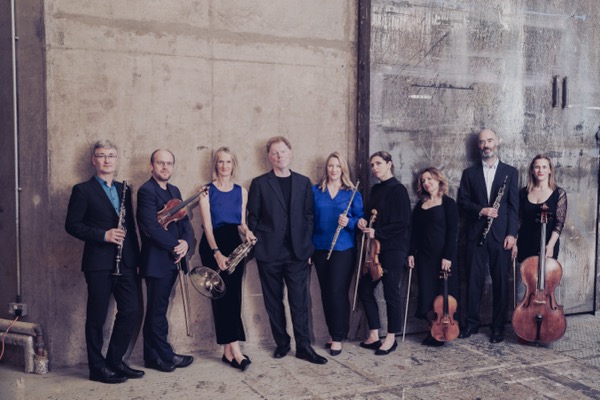
Ensemble 360 © Matthew Johnson / Music in the Round
So, what do audiences get from a song recital? Songs might rely less on theatrics but are nothing if not mini dramas, and performers are nothing if not story-tellers, and this is the theme I wanted to explore in this year’s festival, freed perhaps from the sometimes-oppressive weight of a German lieder recital. Though let’s not forget that even Kurt Weill considered his cabaret songs closer to Schubert‘s than anything else, demanding (quite rightly) that it be sung with the same care and intensity as any Winterreise. But cabaret, like folk music, has a textual immediacy which classical lieder sometimes lack.
In the right hands, a song of whatever genre is a gateway (if not a journey) into the souls of the composer, poet and singer. Grieg‘s setting of Garborg’s Haugtussa provides a window into the world of Nordic myth and national identity, which we will present within the Peak District National Park as a companion to a new commission, on a day when audiences will be encouraged to reflect on language and its role in codifying creative expression. In a series of walking concerts entitled Speak of the North around Chatworth’s ground, academic Julian Wright and the Sheffield poet Tony Williams invite audiences to consider their perceptions of the North while hearing Gavin Higgins’ breath-taking new work of the same name. Drawing on poetry from the Brontës to Michael Symmons Roberts – and evoking landscapes from the mining heartlands to Northumbrian press gangs – this exploration of ‘northness’ encompasses pride, nostalgia, anger, beauty, energy and time.
Premiere performance of ‘Speak of the North’ by composer Gavin Higgins
We’ll also be pushing the relationship of storytelling, music, silence, speech and drama perhaps to its limit with a concert exploring the deep connection between Morton Feldman and Samuel Beckett. Celebrated Irish actor Siobhan McSweeney (Derry Girls) takes on Rockaby, Beckett’s evocative monologue of memory and loss, directed by Vicky Featherstone. And ahead of a full performance of the one-woman opera, we’ll explore the many cinematic versions of Poulenc‘s La Voix Humaine about a jilted lover.
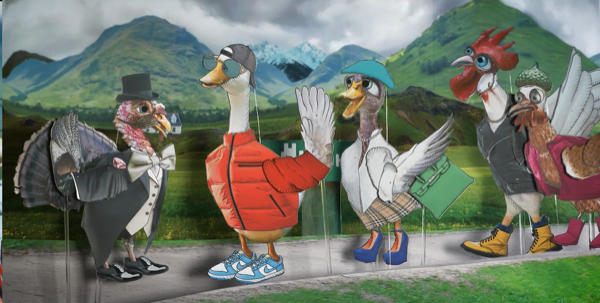
Henny Penny © Positive Note Productions
The prospect of these emotional journeys is the winning ace up the song recital’s sleeve, and one that will be at the heart of discussions and performances in Sheffield in May. So don’t be afraid to come and hear some storytelling with Ensemble 360, whether it’s for Judith Weir’s Nordic saga Harald Hardrada, Gavin Higgins’ Speak of the North or Strauss‘ iconic farewell to his wife with Four Last Songs, Julian Phillips’ chamber opera for kids Henny Penny or Prokofiev‘s Peter and the Wolf. This wide range of vocal bravura will sit alongside regular classics such as Mendelssohn’s Songs Without Words, Beethoven‘s Spring Sonata and Ravel‘s Shéhérazade. Besides, who needs an orchestra when you have Ensemble 360, especially when they are serenading songbirds at dawn?
Claire Booth: Judith Weir- King Harald’s Saga
British soprano Claire Booth has been widely acclaimed for her “radiant, rapturous, wonderfully nuanced performances” and voice of “piercing purity [and] luscious richness” (The Scotsman). She is renowned for her breadth of repertoire and for the vitality and musicianship that she brings to the operatic stage and concert platform, with a versatility that encompasses repertoire spanning from Monteverdi and Handel, through Rossini, Berg and Britten, to a fearless commitment to the music of the present day.
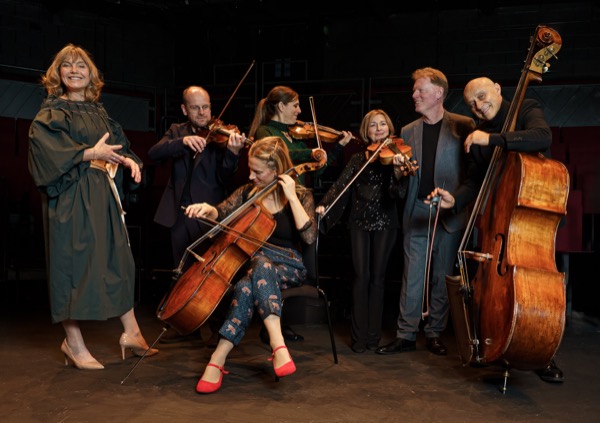
Ensemble 360 sextet with Claire Booth © Malcolm Nabarro
Recent highlights include the premiere of Helen Grime’s “Folk” with BBC Scottish Symphony, Strauss’ Four Last Songs with Boston Philharmonic and appearances at Wigmore Hall in a solo recital ‘Cabaret!’ with Jâms Coleman and concerts celebrating the 60th anniversary of the Nash Ensemble. She released two new recordings commemorating Schoenberg‘s 150th anniversary: a survey of his lesser-known song repertoire, ‘Expressionist Music’ on Orchid Classics, and ‘Portraits of Pierrot’, featuring the complete Pierrot Lunaire and works inspired by the Pierrot character from composers including Korngold, Amy Beach and Thea Musgrave, with Ensemble360 on Onyx Classics.
https://www.sheffieldtheatres.co.uk/events/festival-launch-2
For more of the best in classical music, sign up for our E-Newsletter