Most musicians love a good joke. When the puns are flying, that’s the best. Here are several new ones.
Oh no—an orchestrated attack!
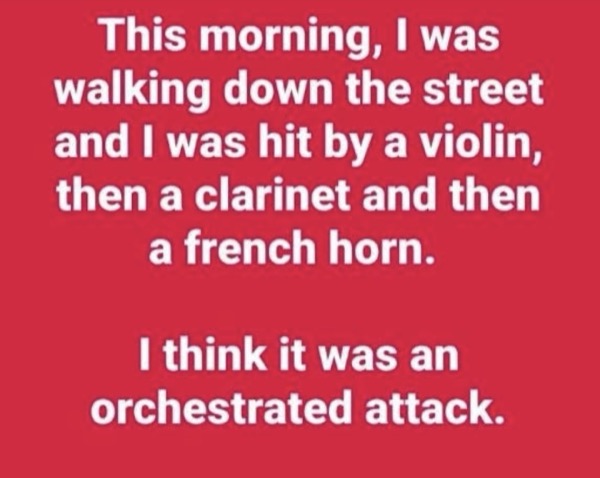
I’m so sorry that happened to you. Seems like they banded together or perhaps they played it by ear.
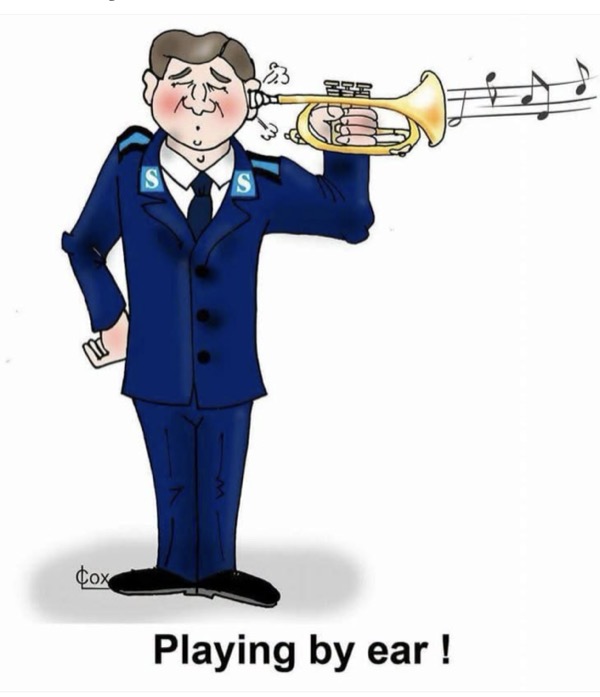
Such a lot of treble! Will you take it further? I bet there will be repercussions. Sounds to me like a concerted effort. Some people just don’t know how to conduct themselves and very likely they were strung out. Perhaps though, you should get the story straight as it’s quite full of sax and violins.
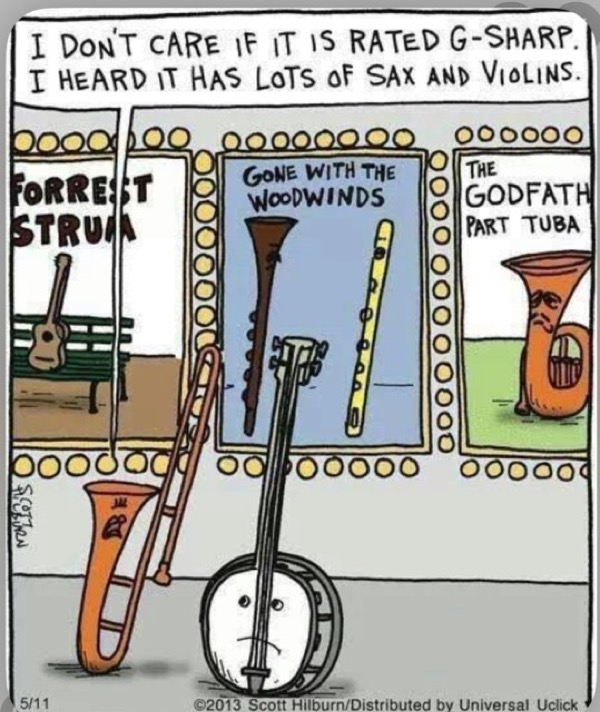
But with no saxophone, this could be thought of as a bassless accusation and without adequate proof.
I was going to offer a more measured response, but I fell off a clef. It might’ve been a bridge too far. The more I think about it, no offense, I wonder if these are trumpeted up charges. At the very least, it was arranged. Tri-tone-ing it down a bit.
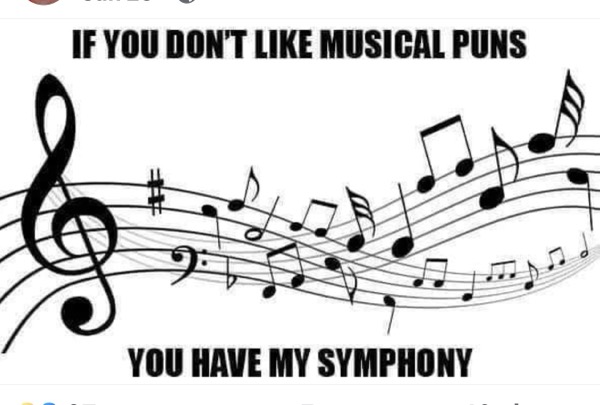
Groan…Puns like these should be band. If you don’t like musical puns, you have my symphony!
All right. Had enough? Let’s switch to a game.
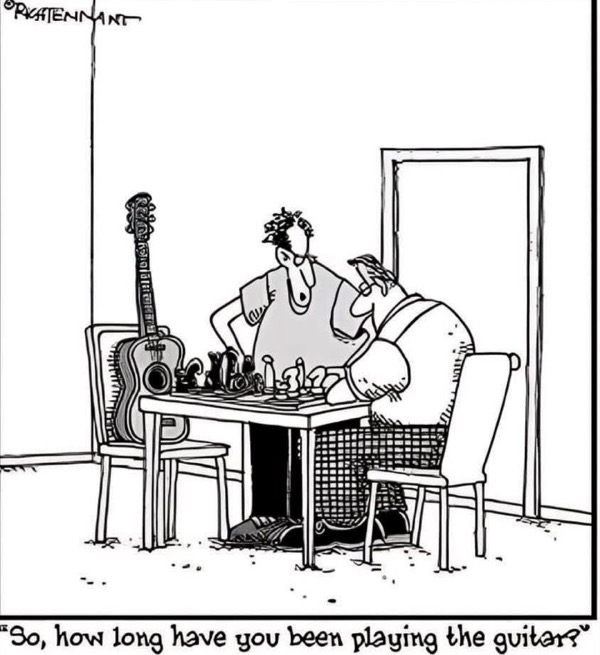
No not that kind. Here’s a puzzle. Can you solve this?
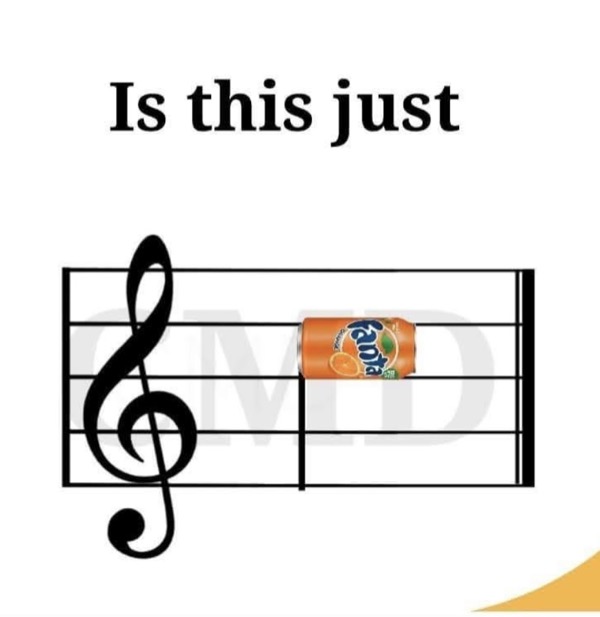
The musical Fantasy (or Fantasia or Fantasie) originally is rooted in improvisation and became popular in the Baroque era. It allowed for free rein for the performer to show off with virtuosity and invention.
Several classical composers revelled in this type of piece. Can you name the composers of these works? (Answers to the quiz are below.)
Chromatic Fantasia and Fugue in D minor BWV 903___________
Fantasia in D minor K 397___________
Fantasy Pieces (Phantasiestücke) and the Fantasia in C major_________
Wanderer Fantasy in C major, and also Fantasie in F minor for piano four hands_______
Fantaisie-Impromptu in C-sharp minor________
Fantasia on a Theme by Thomas Tallis________
Phantasy for Violin and Piano Op. 47__________
Après une lecture du Dante Sonata—Fantasia quasi Sonata _________
Romeo and Juliet Fantasy Overture_________
Choral Fantasy in C minor_________
How many of these works were you familiar with? If you’d like to know more about fantasies, please click on the link. I’ve added examples to listen to, some of the more uncommon pieces and a couple of favourites: https://interlude.hk/piano-fantasies/.
Answers to the Quiz:
Chromatic Fantasia and Fugue in D minor BWV 903—J.S. Bach
Fantasia in D minor K 397—Wolfgang Amadeus Mozart
Fantasy Pieces (Phantasiestücke) and the Fantasia in C major—Robert Schumann. We cellists love to perform the Phantasiestücke. The three movements are lovely, bonbons that feature the lyrical side of the cello.
Robert Schumann: Fantasiestücke, Op. 73: No. 1. Zart und mit Ausdruck (Emanuel Gruber, cello; Keiko Sekino, piano)
Robert Schumann: Fantasiestücke, Op. 73: No. 2. Lebhaft, leicht (Emanuel Gruber, cello; Keiko Sekino, piano)
Robert Schumann: Fantasiestücke, Op. 73: No. 3. Rasch und mit Feuer (Emanuel Gruber, cello; Keiko Sekino, piano)
Wanderer Fantasy in C major, also Fantasie in F minor for Piano Four Hands Op. 103, D. 940—Franz Schubert
Franz Schubert: Fantasie in F Minor, Op. 103, D. 940 (Duo Pleyel)
Fantaisie-Impromptu in C-sharp minor Op. 66—Frédéric Chopin
Frédéric Chopin: Fantasy-Impromptu in C-Sharp Minor, Op. 66 (Mieczysław Horszowski, piano)
Fantasia on a Theme by Thomas Tallis—Ralph Vaughan Williams
Phantasy for Violin and Piano Op. 47—Arnold Schoenberg. Composed in 1949, the piece, although intended as a work in one movement, has a complete and very short Scherzo and Trio, here performed by the great artists Glenn Gould and Israel Baker.
Arnold Schoenberg: Phantasy, Op. 47 (Israel Baker, violin; Glenn Gould, piano)
Après une lecture du Dante Sonata—Fantasia quasi Sonata S. 161—Franz Liszt. This is also a one-movement work inspired by the poem by Dante Alighieri from the Divine Comedy, and also the poem by Victor Hugo.
Liszt: Dante Sonata – Alessio Bax
Romeo and Juliet Fantasy Overture—Pyotr Ilyich Tchaikovsky
Choral Fantasy in C minor Op. 80—Ludwig van Beethoven. The 20-minute work for piano, vocal soloists, chorus, and orchestra was composed in 1808. You’ll hear a similarity and kinship with Beethoven’s Ninth Symphony.
Ludwig van Beethoven: Fantasia in C Minor, Op. 80, “Choral Fantasy” (Alfred Brendel, piano; Stuttgart Lehrergesangverein; Stuttgart Philharmonic Orchestra; Wilfried Boettcher, cond.)
And if you missed my previous articles that are full of musical puns, please read on:
https://interlude.hk/isnt-it-time-for-more-entertaining-musical-puns/
https://interlude.hk/for-the-love-of-more-musical-puns/
https://interlude.hk/for-the-love-of-musical-puns/
For more of the best in classical music, sign up for our E-Newsletter