The Italian-born French composer Jean-Baptiste Lully (1632–1687) was a dancer and instrumentalist, considered a master of the French Baroque music style. He is credited with the invention of the “French overture” and with revolutionising the style of dances at the court.
Appointed to the highest musical office at the court of Louis XIV, also known as the Sun King, Lully collaborated with the playwright Molière to produce a number of highly successful comédies-ballets, those delicious combinations of theatre, comedy, incidental music, and ballet.
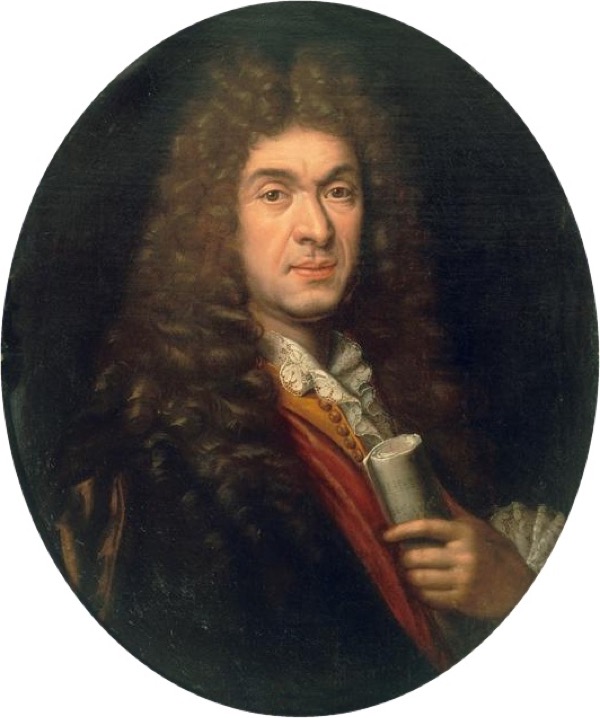
Jean-Baptiste Lully by Paul Mignard
The World of French Baroque
Perhaps his biggest claim to fame was his development of the tragédie-lyrique, a French operatic genre in five acts incorporating ballet, choruses and lavish sets. It was not uncommon to see machines that made angels fly or huge ships battling on stormy seas.
Lully lived and worked several centuries ago, and to celebrate his birthday on 28 November 1632, although some sources give 29 November, we thought it might be fun to present a listening guide for beginners.
Jean-Baptiste Lully: Le Bourgeois gentilhomme
A Very Uncourtly Gentleman
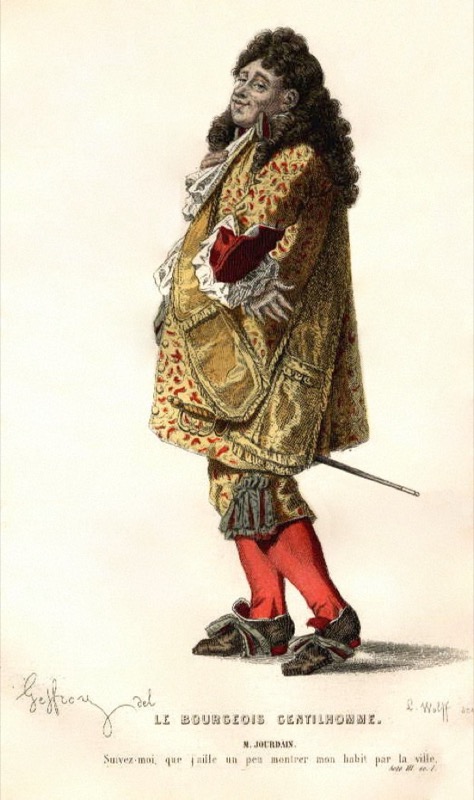
Le Bourgeois gentilhomme
As I told you earlier, Lully revolutionised the style of dances and invented the French overture. The most immediately entertaining introduction to his music is the dance suite from Le Bourgeois gentilhomme of 1670. It was written in collaboration with Molière, and this hilarious comédie-ballet combines spoken theatre, singing and dancing.
The story is simply a howler, with the middle-aged Monsieur Jourdain becoming obsessed with rising above his bourgeois background and gaining acceptance among the aristocracy. He takes lessons in music, dancing, fencing and philosophy, making a grand fool of himself at every turn.
While his wife tries to bring him back to reality, a scheming nobleman exploits his vanity for financial gain. Meanwhile, Jourdain refuses to allow his daughter Lucile to marry the middle-class man she loves. With the help of disguises and an elaborate trick involving a supposed Turkish prince, the young lovers eventually outwit him.
The featured orchestral suite opens with a stately French overture, a musical form that features a majestic dotted-rhythm introduction, followed by a quicker contrapuntal section. We then hear a succession of French Baroque dance movements, including minuets, gavottes, bourrées and other courtly dances. And don’t you just love the famous “Marche pour la cérémonie des Turcs!”
Jean-Baptiste Lully: Atys, “Dormons tous”
The King’s Opera
Atys was among the first operas of its kind, a lyric tragedy that actually ends in tragedy. It features a mythological plot based on Ovid, in which the young Atys and Sangaride love each other, but Sangaride is promised in marriage to the King of Phrygia, while the goddess Cybèle also loves Atys.
Love triangles involving gods tend to end particularly badly, and this one is no exception. Cybèle uses her powers to make Atys kill Sangaride. When Atys realises what he has done, he kills himself. Louis XIV just loved this opera because its characters are punished for their desires, and this is how it earned the nickname the “King’s Opera.”
In the third act, we find perhaps the most celebrated musical episode in the entire opera. Atys is tormented by his impossible love, and he falls asleep. The god of Sleep quickly appears, accompanied by various personifications of dreams.
Here, Lully creates a wonderful atmosphere of stillness and enchantment, almost a dreamlike musical landscape. We find plenty of hypnotic vocal passages, accompanied by delicate instrumental colours. “Dormons tous” has been called one of the most beautiful examples of French Baroque theatrical writing.
Jean-Baptiste Lully: Phaeton, (excerpts)
A Chariot and a Catastrophe
For another setting of an ancient story by Ovid, we turn to Phaeton, the son of Helios, the Sun, and Clymene, a mortal. Phaeton had always been curious about his father, and when he is bullied by a friend, he can no longer contain his anger and confronts his mother. She tells him that he is the child of the Sun and sends him to seek confirmation from his father.
Of course, this doesn’t end well, as Phaeton asks the Sun to grant him a wish. He wants to drive his father’s chariot across the heavens, but the adventure ends in catastrophe. As Phaeton guides the horses, they veer off course and threaten the Earth below. Jupiter intervenes and hurls his thunderbolt at Phaeton, who falls to his death.
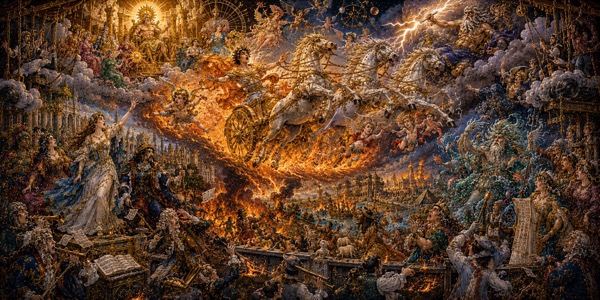
Lully: Phaéton
This is one of Lully’s most colourful and theatrically exciting operas. Just listen to the spectacular orchestral writing and the lively dance movements. It also features magnificent choruses and dramatic musical effects.
A French overture gets things started, followed by the dramatic scenes in Acts III and IV. Perhaps the most famous excerpt is the chaconne closing Act II. It is built on a recurring bass pattern and develops into an elaborate, animated sequence of variations. Phaeton is a great example of how Lully combined French courtly elegance with theatrical excitement.
Jean-Baptiste Lully: Armide, “Enfin, il est en ma puissance”
Torment of a Sorceress
Critics in the 18th century regarded Armide as Lully’s masterpiece. It continues to be well-regarded, featuring some of the best-known music in French Baroque opera and showing a psychological interest arguably ahead of its time.
Unlike most of his operas, Armide concentrates on the sustained psychological development of the character Armide, who repeatedly tries without success to choose vengeance over love. Composed in five acts to a libretto by Philippe Quinault, it is based on Torquato Tasso’s poem La Gerusalemme liberata (Jerusalem Delivered).
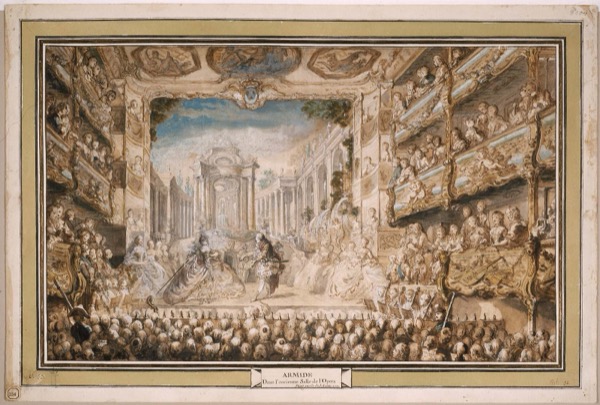
Scene from Armide by Lully, drawing by Saint-Aubin, Boston MFA
The story is set during the First Crusade; the sorceress Armida ensnares the Christian knight Renaud and holds him captive on an island. When she raises her dagger to kill him, she falls in love with him, and casts a spell to make him love her in return.
Unable to come to terms with the idea that Renaud’s love is merely the work of enchantment, she calls upon the goddess of Hate to help her overcome her passion. However, Armide cannot escape from her feelings of love, and ultimately remains unable to free herself from them. In the meantime, his fellow soldiers free Renaud, and Armide is left enraged, despairing, and hopeless.
The famous Enfin, il est en ma puissance is an extraordinary dramatic monologue. In fact, I would consider it one of the most impressive recitatives in all of Lully’s operas. Armide plans to murder Renaud while he is asleep under her magic spell. A stark sense of hesitation washes over her, and her voice grows softer and more doubtful as she unexpectedly falls in love with her sworn enemy.
Lully’s Final Bow
Lully is mainly known for his stage compositions, but he also wrote a number of religious pieces. His most famous and spectacular piece of church music is his Te Deum. It is a grand motet for a large choir, a small choir, soloists, and an orchestra including trumpets and timpani.
It was written for the baptismal ceremony of Lully’s son in September 1677, and the godfather was none other than Louis XIV, who gave the baby his own name. A contemporary listener wrote, “All sorts of instruments accompanied him; the timpani and trumpets were not forgotten. What was particularly admired was that each verse was set to different music. The King found it so beautiful that he wanted to hear it more than once.”
Two years later, the Te Deum sounded once more at Fontainebleau for the wedding of Marie-Louise d’Orléans to Charles II of Spain. The musicians were placed in the gallery above the door of the great ceremonial chapel, and the diversity of movements enchanted everybody.
On 8 January 1687, Lully conducted it for the last time, during a ceremony held in the Parisian church of the Pères Feuillants to celebrate the King’s convalescence. In the general enthusiasm, Lully struck his foot violently with the heavy staff he used to beat time. The wound became infected, and the gangrene gradually spread, eventually causing his death on 22 March.
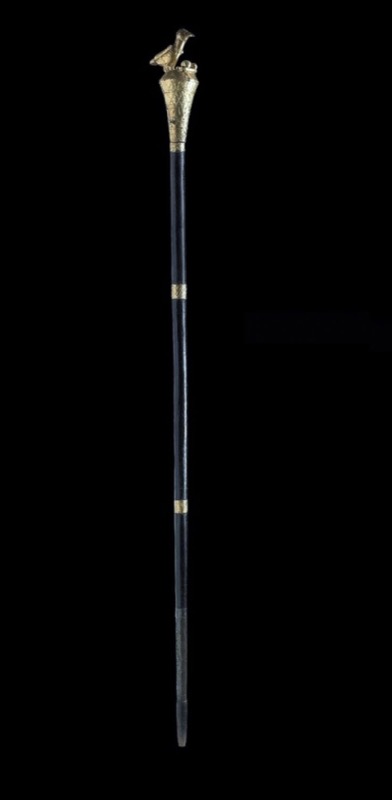
Lully’s staff
I hope you have enjoyed this little journey into the musical world of Jean-Baptiste Lully. He has plenty of infectious rhythms and theatrical humour on offer, and his music is full of life and colour. Even after more than three centuries, it has lost very little of its power to entertain and surprise. After this little introductory listening guide, you are well on your way to exploring his other theatrical and religious works.
For more of the best in classical music, sign up for our E-Newsletter