With his rise to the position of chief conductor and artistic director of the Kirov (later Mariinsky) Opera in St Petersburg in 1988, the entire world was suddenly aware of conductor Valery Gergiev. He had made his debut outside Russia in 1985, in concerts in the UK with fellow Russian stars pianist Evgeny Kissin and violinists Maxim Vengerov and Vadim Repin, but this was at the Lichfield Festival, not in London during the season. When he became the head of the Mariinsky, that same year made his first appearance as a guest conductor for the London Symphony Orchestra.
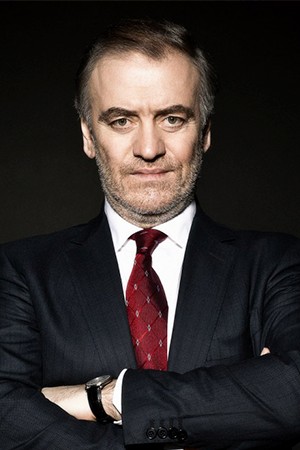
Valery Gergiev, 2026
Following his 1988 Mariinsky appointments, in 1996, he was appointed overall director of the Mariinsky and, under his directorship, has brought it into the international spotlight. Starting in December 2023, Gergiev was appointed artistic director of the Bolshoi Theatre in Moscow, the first person to direct both the Bolshoi and the Mariinsky, the leading opera companies in Russia.
As his career grew, so did his international appointments. From 1995 to 2008, he was principal conductor of the Rotterdam Philharmonic Orchestra. In 2005, the London Symphony Orchestra appointed him Principal Conductor, serving until 2015. From 2015 through 2022, he served as chief conductor of the Munich Philharmonic.
As a conductor, he is known for his active and twitchy conducting style – he’s always in motion. The surprise comes when you look at his baton. Although in his early appearances, he led with a standard-length baton, it has gotten smaller over time until now it seems to be about the size of a toothpick, and, indeed, he’s gotten the nickname of the ‘Toothpick Conductor’. It’s been credited for causing his orchestras to pay closer attention to him and for his consistency in improving the sound and focus of the orchestras he leads.
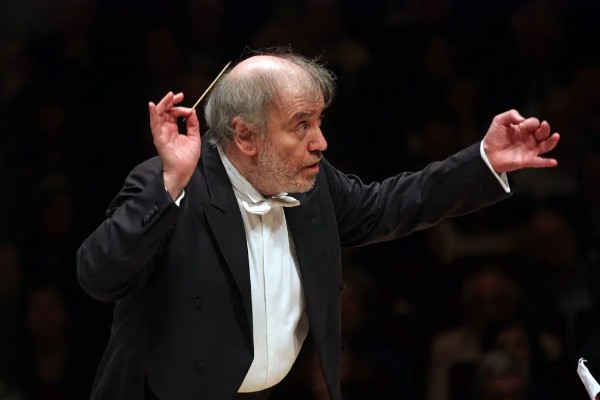
Gergiev and his baton of choice
Politically, he has been a strong, public supporter of Russian President Vladimir Putin, which has damaged his career. Following Russia’s invasion of Ukraine in February 2022, Russian arts organizations have had few international appearances, and festivals where Gergiev was to be featured started to drop him: The Rotterdam Philharmonic Orchestra dropped him from the September 2022 festival, Milan’s La Scala dropped him from conducting Tchaikovsky’s Queen of Spades, The Mariinsky’s appearances at Carnegie Hall were cancelled, and the Vienna Philharmonic dropped him from a 5-concert tour of the US. The dismissals only continued: The Verbier Festival requested his resignation as music director of the Festival Orchestra, and the Munich Philharmonic cancelled his contract.
Since 2006, Gergiev has made a decided focus on music by Russian composers, from Glinka to Stravinsky, and many of his recordings of this repertoire are considered the finest of their kind.
1. Tchaikovsky: Pique Dame (The Queen of Spades)
Praised as the ‘definitive opera recording’ of this seminal work by Tchaikovsky, this recording with the Mariinsky was part of the universal reassessment of Tchaikovsky’s work.
Pyotr Il’yich Tchaikovsky: The Queen of Spades (Pique Dame), Op. 68 – Overture (Kirov Orchestra; Valery Gergiev, cond.)
2. Prokofiev: War and Peace
In addition to being Gergiev’s authoritative recording, this was the first recording of the complete opera. Conductors such as Rostropovich had led concert productions, but this 1993 recording was of the complete opera. It has been praised for the ‘Russian sound’ that Gergiev could bring out of the orchestra.
Sergey Prokofiev: Voyna i mir (War and Peace), Op. 91 – Overture (Kirov Orchestra; Valery Gergiev, cond.)
3. Shostakovich: Symphonies
Gergiev’s complete recording of Shostakovich’s symphonies with the Mariinsky Orchestra is praised not only for its structural intensity but also for its raw power.
Dmitry Shostakovich: Symphony No. 5 in D Minor, Op. 47 – IV. Allegro non troppo (Kirov Orchestra; Valery Gergiev, cond.)
4. Stravinsky: The Firebird
Stravinsky’s most important ballet before the Rite of Spring, in Gergiev’s hands, it becomes a work of vivid orchestral colour.
Igor Stravinsky: The Firebird (original version) – Scene 1: Infernal Dance of Kastchei and his subjects under the Firebird’s magic spell (Kirov Orchestra; Valery Gergiev, cond.)
5. Prokofiev: Romeo and Juliet
As a story, it’s familiar and has been made into countless movies, but as a ballet, there’s a greater difficulty in keeping the dramatic and musical energy in line. Gergiev’s recording maintains that dramatic tension, particularly in high-drama scenes, such as the first fight scene.
Sergey Prokofiev: Romeo and Juliet, Op. 64 – Act I: The Fight – The duke’s command (Kirov Orchestra; Valery Gergiev, cond.)
6. Tchaikovsky: The Nutcracker
The very familiarity of the Nutcracker makes it difficult for a conductor to make their mark, but Gergiev’s 2016 recording with the Mariinsky is praised for its refined but thrilling production. This is from the 2012 recording, but we can hear how Gergiev is starting to refine the dramatic possibilities.
Pyotr Il’yich Tchaikovsky: The Nutcracker, Op. 71 – Act I Tableau 1: Children’s galop and entry of the parents (St. Petersburg Mariinsky Theatre Orchestra; Valery Gergiev, cond.)
7. Tchaikovsky: Symphony No. 6 “Pathétique”
In addition to recording the entirety of Shostakovich’s symphonies, Gergiev also recorded all of Prokofiev’s and Tchaikovsky’s symphonies. His recording of Tchaikovsky’s Symphony No. 6, the Pathétique, brings out an intensity in the world that is often lost in other recordings.
8. Rachmaninoff: Piano Concerto No. 2
Gergiev’s recording of one of the Russian musical pillars, Rachmaninoff’s Piano Concerto No. 2 with Lang Lang and the Mariinsky, brought out a work of unexpected colours, often dark. In the dark, intense world created by Rachmaninoff and interpreted by Gergiev, it becomes a work of intense focus.
Sergey Rachmaninov: Piano Concerto No. 2 in C Minor, Op. 18 – I. Moderato – Allegro (Lang Lang, piano; St. Petersburg Mariinsky Theatre Orchestra; Valery Gergiev, cond.)
9. Mahler: Symphony No. 5
Gergiev’s leadership of the Munich Philharmonic brought out some of their finest performances. Outside the realm of Russian music, Gergiev also had particular strengths in Mahler and Wagner, two of the 19th century’s greatest masters of the orchestra.
10. Wagner: Parsifal
This excerpt from the 2019 live recording of a concert performance is indicative of Gergiev’s mastery of Wagner’s excesses and beauty.
For more of the best in classical music, sign up for our E-Newsletter