Although it’s a practice frowned upon today due to social taboos, a surprisingly high number of great composers married their cousins.
These relationships shaped influential careers, inspired music, and in some cases even triggered familial or religious conflicts (or all three).
Assessing these partnerships today gives us a more complete – and more human – portrait of these five classical composers, as well as the cultures in which they came of age.
Today, we’re looking at the stories of five composers who married their cousins.
Johann Sebastian Bach and Maria Barbara Bach (1707)
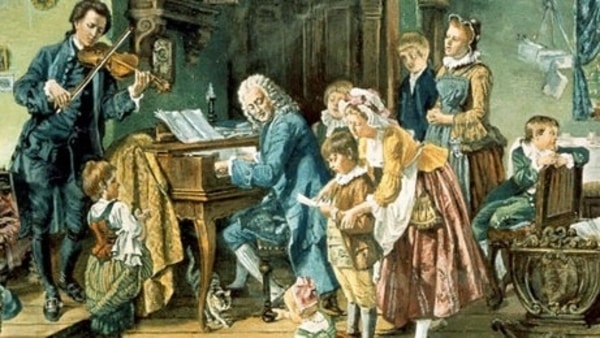
The Bach Family © Oxford Bach Soloists
The Bach family tree was one of the most musical in history, with dozens of interlinked branches of performers and composers.
Within this sprawling musical dynasty, cousin marriages were not unusual.
In fact, the most famous Bach, Johann Sebastian, married his second cousin, Maria Barbara. They’d likely known each other from childhood.
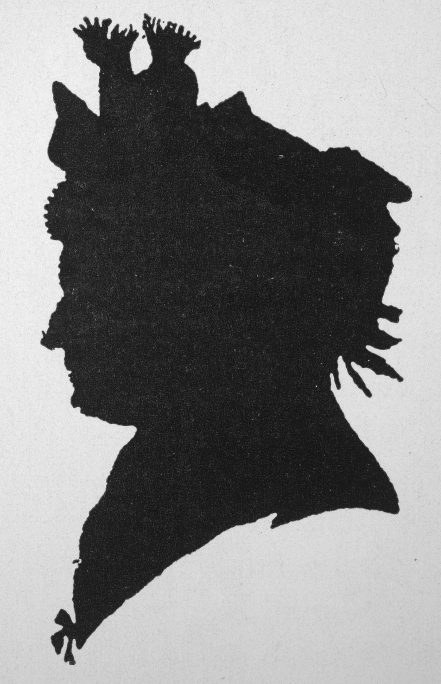
A silhouette of Maria Barbara Bach
Johann Sebastian moved to Maria Barbara’s hometown in Arnstadt in 1703, taking a job as church organist. He was just eighteen at the time.
Johann Sebastian Bach: Prelude and Fugue in C Major, BWV 531 (Walter Kraft, organ)
Not many documents survive from this period, but we know that in 1706, the 21-year-old Bach was reprimanded for bringing a maiden into the choir loft to “make music” there. Scholars believe this may have been Maria Barbara.
They married in October 1707 and had seven children together, four of whom lived to adulthood, and two of whom became famous composers in their own right.
Maria Barbara died suddenly in 1720 while Bach was on a work trip with his employer, Prince Leopold of Anhalt-Köthen. We don’t know what caused her death.
Read more about the fates of Bach’s twenty children.
Edvard Grieg and Nina Hagerup (1867)
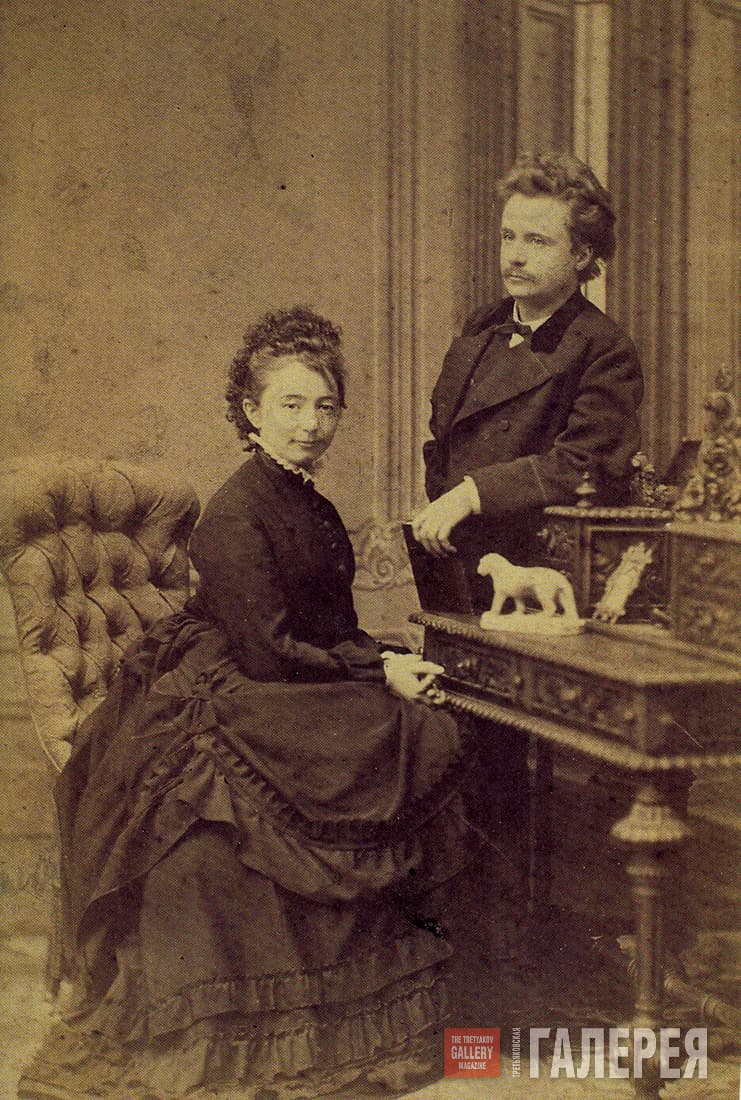
Edvard and Nina Grieg
Edvard and Nina’s mothers were sisters, which made them first cousins. As children, they were playmates in their hometown of Bergen, Norway, until Nina’s family moved to Copenhagen.
In 1863, when he was twenty, Grieg moved to Copenhagen and reunited with Nina, who was now studying to be a soprano.
By Christmas 1864, Grieg had confessed his love for Nina. The confession didn’t go over well. Both families objected because the couple was young, because Edvard had not yet established himself, and because of the cousin relationship.
However, they ignored their family and became officially engaged. They married in Copenhagen on 11 June 1867…without a single parent attending the wedding.
Wedding Day at Troldhaugen, 1897
Their decision to marry caused a rift in the family. The couple decided to strike out on their own and move to Christiania (Oslo) in search of independence and a fresh start.
Their marriage was deeply important to Grieg musically; he relied on Nina to interpret his songs, and she became famous for her performances of them.
By the 1870s, their broader family reconciled, especially as Grieg’s career took off and money worries eased.
Sergei Rachmaninoff and Natalia Satina (1902)
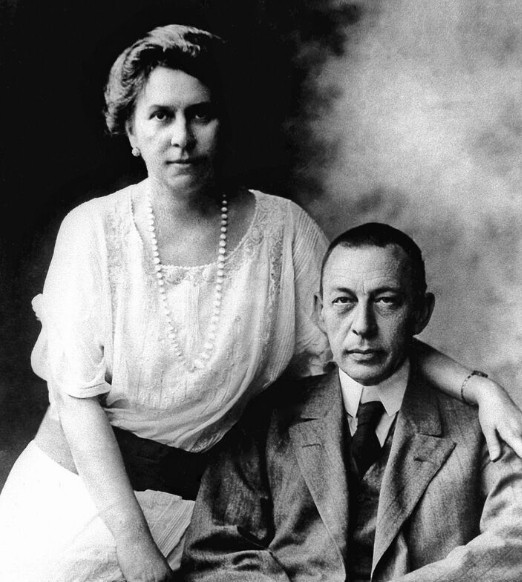
Sergei Rachmaninoff and Natalia Satina
Natalia Satina’s mother was Sergei’s paternal aunt, and both children grew up in the same extended aristocratic family.
When Sergei was sixteen, he moved in with his aunt and cousins after having a falling-out with his piano teacher over pursuing composition. By the late 1890s, they’d fallen in love.
Sergey Rachmaninov: Zdyes’ khorosho G. Galina (How Peaceful), Op. 21, No. 7 (Joanne Kolomyjec, soprano; Janina Fialkowska, piano)
However, there was an obstacle: marrying one’s first cousin in Russia was forbidden by the Russian Orthodox Church’s canon law.
The couple got formally engaged around 1899, but then had to endure a three-year engagement, waiting for permission to wed.
Leveraging the family’s connections in the military, Sergei and Natalia eventually decided to be married by an army priest rather than an ordinary parish priest.
At that time, military chaplains reported to the Army and Tsar, not to the Holy Synod, so they could perform the ceremony with less scrutiny.
However, to ensure the marriage’s legality, they still needed a dispensation from the Tsar. The reply arrived in time, and they married in the spring of 1902 at an Army barracks.
Their marriage was happy, and they had two daughters together. Natalia was a valuable partner for Sergei, given her musical training and piano-playing talent.
As a wedding gift, they were given the family countryside estate Ivanovka, where Rachmaninoff would go on to write many of his most famous works.
We wrote about their long journey to the altar.
Igor Stravinsky and Yekaterina Nosenko (1906)
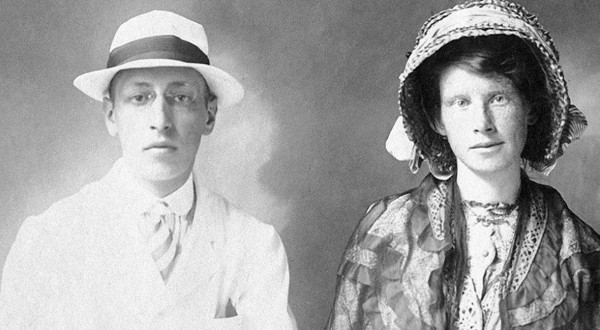
Igor Stravinsky and Yekaterina Nosenko
Igor and Yekaterina first met as children in 1890. Igor later wrote that they both knew as soon as they met that they would someday marry.
As teenagers, they spent their summers together. They separated when each pursued their studies as young adults, but they stayed in love, and in 1905, they became engaged.
Both sets of parents objected initially – not out of distaste for the match, but out of concern for the potential legal obstacles.
Igor and Yekaterina ran into the same religious issues that Sergei and Natalia had: the Russian Orthodox Church explicitly forbade first-cousin marriages and would not bless such a union.
Unlike the Rachmaninoffs, the Stravinskys did not secure a special dispensation from the law. Instead, they went ahead and married in January 1906 in St. Petersburg. Accounts differ on whether they found a sympathetic priest or strategically omitted their kinship.
He wrote the song cycle The Faun and the Shepherdess for her as a wedding present.
I. Stravinsky. Faun and Shepherdess op.2/Moscow philharmonic orchestra/Maria Barakova/Anton Shaburov
Over the course of their marriage, they had four children, and Stravinsky became one of the most celebrated composers of his generation.
Sadly, their marriage was not always happy. Yekaterina was devastated when Stravinsky began an extramarital affair with painter Vera de Bosset in the 1920s.
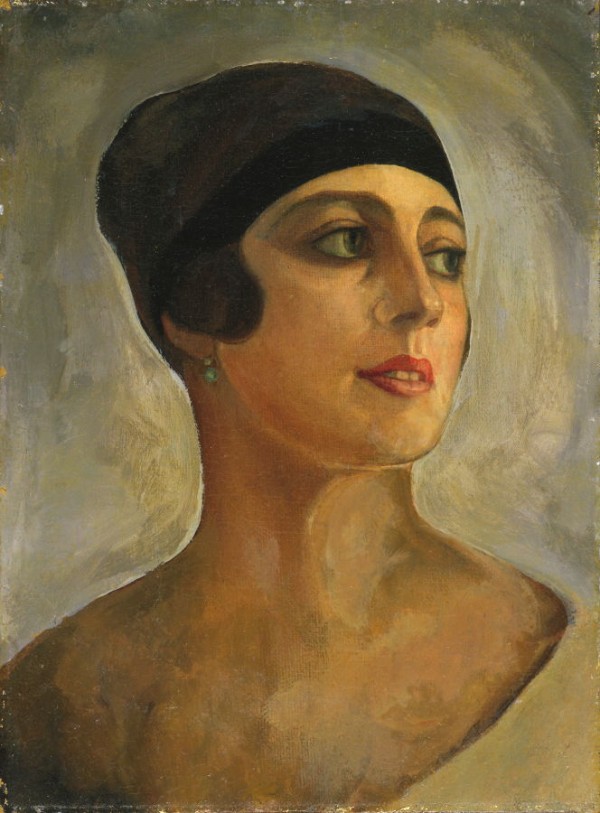
Vera de Bosset
She decided she wouldn’t leave him, but the emotional intimacy they’d enjoyed their whole lives was gone.
In the late 1930s, Yekaterina’s lifelong tuberculosis infection became terminal. She witnessed her daughter, Ludmila, dying of the disease, then died herself a few months later.
Look at the history of Stravinsky’s wives and girlfriends.
Darius Milhaud and Madeleine Milhaud (1925)
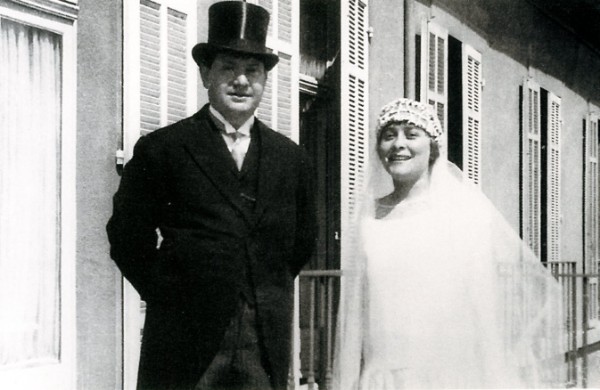
Darius Milhaud and Madeleine Milhaud
Both Darius and Madeleine Milhaud hailed from a prominent Jewish family in France. Their fathers were cousins, and their shared family line could be traced back to eighteenth-century Jewish Provencal communities.
Darius and Madeleine Milhaud had a ten-year age difference, and they likely met when Madeleine was a baby.
Darius went on to study music and worked as a cultural attaché in Brazil, while Madeleine studied acting, music, and literature. During World War I, she began acting in theatrical productions. As a young woman, she joined the famed theater workshop L’Atelier, performing on stage and even doing a bit of singing in productions.
After the war, Darius and Madeleine reconnected in Paris and began attending concerts together. Their shared love of the arts bonded them, and by 1923, they had fallen in love. They married in February 1925; Madeleine was 23, and Darius was 32.
She went on to act in productions of his work, as well as write librettos for his projects.
In 1944, he composed a piano suite titled “La Muse ménagère” (The Household Muse) and dedicated it to Madeleine.
This suite is a set of short movements depicting scenes of their daily married life, ranging from “At the Dressmaker” to “Dinner is Served.” It was an ode to the simple joys they shared.
Darius Milhaud: La muse ménagère, Op. 245 (Madeleine Milhaud, narrator; Alexandre Tharaud, piano)
Later, after Darius developed crippling arthritis, Madeleine became his caretaker.
He died at the age of 81 in 1974; she lived until 2008, when she died at the remarkable age of 105. She spent her long widowhood promoting her husband’s work.
Interview with Madeleine Milhaud, 2004
Conclusion
Seen through a modern lens, the idea of these cousin marriages can feel strange or even unsettling.
But within their own cultures – in worlds of large but tight-knit family networks, with rigid class structures and deeply intertwined artistic circles – cousin marriages made a certain kind of sense, especially for musicians, who often lived within tightly interconnected artistic and family circles.
These love stories, complicated as they may be, remind us how these composers were shaped by broader social trends and taboos, just as we are today.
For more of the best in classical music, sign up for our E-Newsletter