I am sure that everybody knows at least a couple of symphonies by Antonín Dvořák. In all, he composed nine such pieces, with the “Symphony from the New World” probably the most famous.
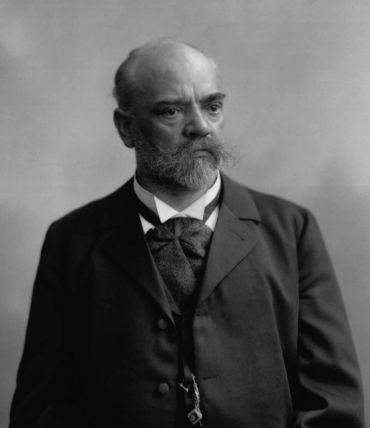
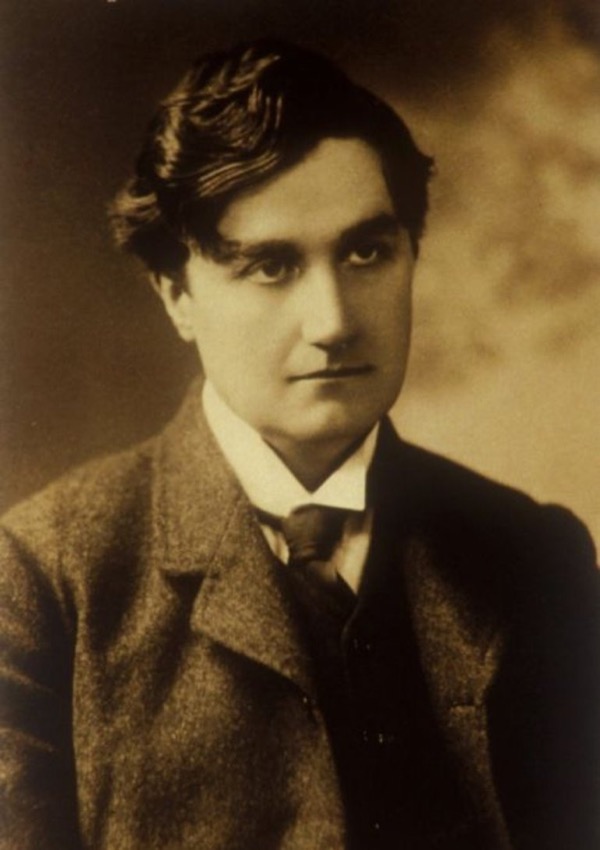
Antonín Dvořák, 1904
All of his symphonies are wonderfully warm and engaging pieces, full of charming melodies in rustic dance rhythms and the sounds of the Czech countryside. The music can be dramatic, noble, and sometimes nostalgic. And it is full of beautiful orchestral colour and irresistible charm.
Hanslick in Full Support
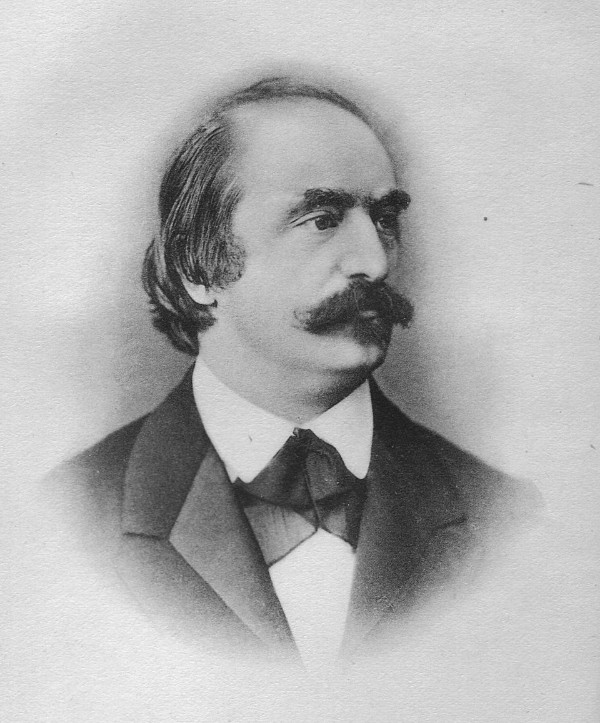
Eduard Hanslick
The music critic Eduard Hanslick was seriously important in furthering Dvořák’s career, and he took a lively interest in all the composer’s new works. He loved the Slavonic Dances and couldn’t get enough of Dvořák’s early symphonies.
As he writes, “I cannot think of setting Dvořák on the same level as Richard Strauss. Dvořák is a genuine musician who has proved a hundred times that he requires no program and no epigraph in order to delight us with pure, independent music. He arouses in us thoughts and feelings, showers of joy and sadness, without the need of the swindle of false erudition.”
Antonín Dvořák: Slavonic Dances, Op. 46
From Praise to Fury
But when Dvořák turned his attention towards program music in his symphonic poems, Hanslick was not amused. As he fumed, “I cannot remain silent regarding the dangers of Dvořák’s latest tendency.”
“Dvořák has no cause to go begging before literary texts, that they might bolster his composition. His rich musical invention needs no loans, crutches or instruction. It is with a strange passion that Dvořák now indulges in ugly, unnatural and ghastly stories which correspond so little to his amiable character and to the true musician that he is.”
Goodness me, somebody really got out of bed on the wrong side! Let’s have some fun on Hanslick’s account and listen to the five symphonic poems by Dvořák. Four are based on actual poems by the Czech poet Karel Jaromír Erben, especially from his collection of ballads titled Kytice. His final symphonic poem is not based on a specific text, and it might well be autobiographical.
Antonin Dvořák: The Water Goblin, Op. 107
The Water Goblin
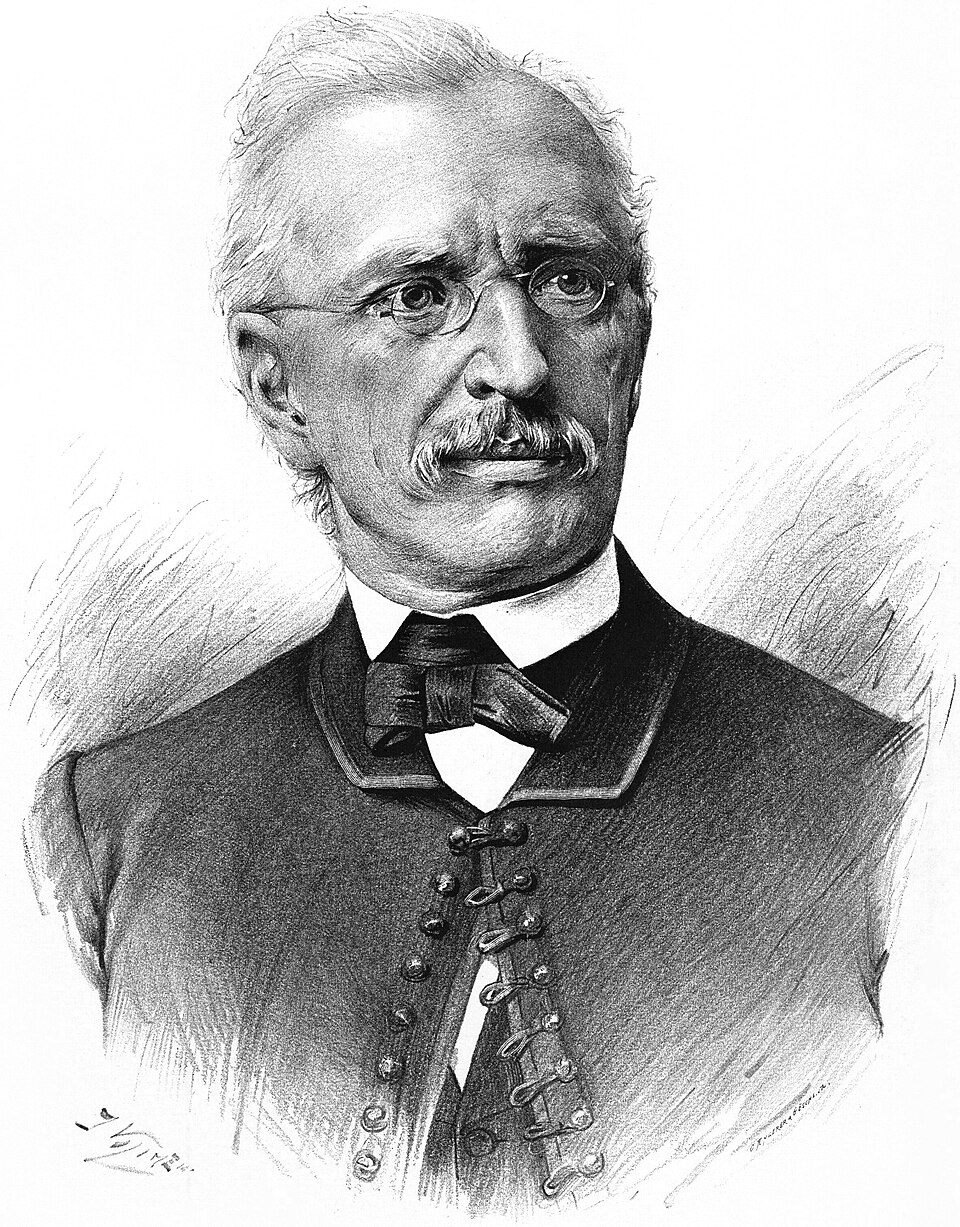
Karel Jaromír Erben
The five symphonic poems date from the final period of Dvořák’s career. For a long time, he had been setting the iconic poems of Karel Jaromír Erben, and he was constantly looking for new inspirations. In 1896, Dvořák decided to write musical settings to several of Erben’s ballads in the form of symphonic poems.
The story of “The Water Goblin” is a rather nasty affair. Essentially, the water goblin snatches a girl who is washing clothes on the lake shore, takes her to his kingdom and makes her his wife. After she has borne him a child, she asks to be allowed to visit her mother for a day.
The water goblin agrees, but he keeps the child as a guarantee that she will return. At the end of the day, he impatiently appears and demands the return of his wife. But her mother scornfully turns him away. Full of rage, the water goblin unleashes a terrible storm and tears off the head of the child, hurling the child’s body onto the threshold of the cottage.
The music unfolds as a free rondo, with the main opening associated with the water goblin returning throughout. The secondary themes describe the scenes with the mother, daughter, and child. After the murder, Dvořák adds an epilogue to heighten the tragic atmosphere.
Antonin Dvořák: The Noon Witch, Op. 108
The Noon Witch
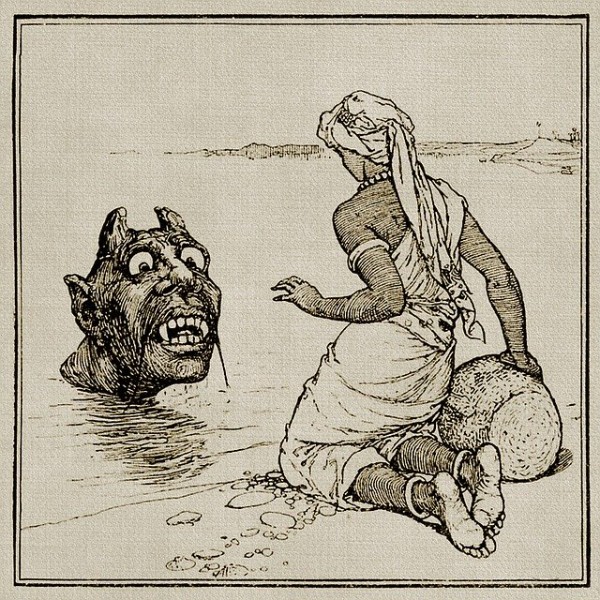
The Water Goblin
The ballads of Erben all create a highly original atmosphere and carry moral principles. The heroes in these stories must pay dearly for violating them. And Dvořák came up with a way to tie his musical material directly to the rhythmical base of Erben’s verse.
In “The Noon Witch,” we find another grisly tale. As a mother is trying to prepare lunch, the child is screaming for attention. She gives it some toys, but nothing helps. So, the mother decides to scare the child with a story about the Noon Witch, who comes after naughty children.
When the church bell rings at twelve o’clock, the door opens and the Noon Witch stands in the doorway. She hobbles across the room with her arms reaching out for the child. The mother grabs the child and then faints in shock. When the father comes home, he finds the mother lying on the floor, the child in her arms. He manages to revive the mother, but the child is dead.
The poem is rather short, so Dvořák had to expand the structure. He adds an intro to suggest a domestic idyll, and he repeats the entire conflict between mother and child. In the bass clarinet, we hear the arrival of the terrifying Noon Witch. I think Leoš Janáček said that the setting is so faithful that one could actually touch that terrible shadow in those strange, limping, extraordinary and unimagined harmonic steps.
Antonin Dvořák: The Golden Spinning Wheel, Op. 109
The Golden Spinning Wheel
As you can already tell, Dvořák’s symphonic poems focus on details of the poetry. I’ve heard it said that Dvořák takes a magnifying glass to Erben’s text. Some commentators claim that this approach fragments the form by giving disproportionate attention to detail.
The Golden Spinning Wheel is yet another cruel story. At a hunting party in the forest, a young king meets a beautiful young lady, Dornička, and immediately falls in love with her. Her stepmother, who wants her own daughter to become queen, kills Dornička with her daughter’s help, and hides her dismembered body in the forest, keeping the feet, hands and eyes.
Dornička’s half-sister, who resembles her, tricks the king into marrying her instead. A week later, the king goes to war and asks his new wife to spin constantly until he returns. Meanwhile, an old magician discovers Dornička’s mutilated body. He manages to restore the missing parts of the poor girl, acquiring them from the new queen in exchange for a magic spinning wheel of gold, and then brings Dornička back to life.
The king returns, victorious, and the spinning wheel now starts to tell the tale, revealing the whole truth about the horrible crime and the deception to which the king has fallen victim. The king hurries into the forest and finds his beloved, alive.
The ballad is 300-strophe long, so Dvořák did not adapt the storyline to fit a traditional form. Instead, the music corresponds literally word by word to the text. He uses themes and motifs to develop the story. Actually, there are only three groups of thematic material. The first depicts the forces of good and evil, the second features Dornička’s motif and the spinning wheel, while the third expresses the king’s feelings for the beautiful, pure girl.
Antonin Dvořák: The Wild Dove, Op. 110
The Wild Dove

The Wild Dove
Dvořák’s musical settings aim for a precise characterisation of the moods of individual points in the plot. And he brings them to the foreground with his masterful instrumentation. In his symphonic poems, he exceeds the traditional Beethoven and Brahms tradition and adds dabs of French Impressionism.
The story of “The Wild Dove” is another Erben classic. A young woman poisons her husband and feigns utter grief at his funeral. Her deception, however, cannot last long. She falls in love with a young man and, within a month, they are married in flamboyant style.
One day, a wild dove lands on the grave of the dead man, and its piteous cooing constantly reminds the woman of her guilt. Finally, unable to bear the weight of her conscience, the murderess takes her own life.
Always flexible in his musical imagination, Dvořák develops the melodic material for the entire work from a single idea, specifically, the “guilt theme.” We immediately hear this idea in the opening funeral march, and this opening mood returns at the very end of the piece. In between, he paints completely different moods, like in the encounter between the widow and the youth, and the wedding scene. And can you hear the widow’s false weeping during her husband’s funeral?
A Hero’s Song
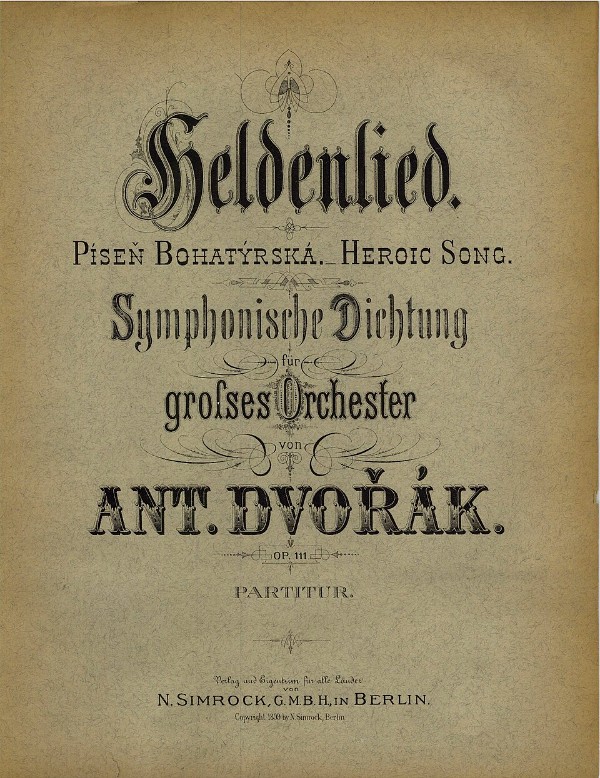
Dvořák’s A Hero’s Song
The four symphonic poems of 1896 are all based on Erben’s poetry, but in 1897 Dvořák composed a completely new tone poem, which he initially called “Ein Heldenleben” (A Hero’s Life). That, of course, is exactly the same title as the heroic work by Richard Strauss.
When Dvořák finished the score in October 1897, he changed it to “A Hero’s Song.” It was the last of his purely instrumental orchestral works, as he went on to write only opera and vocal music thereafter. But undeniably, it manifests some autobiographical traits.
Dvořák provided the music critic Robert Hirschfeld with a personal account. “It is truly difficult for me to describe to you in a letter everything that was going through my mind during the writing of A Hero’s Song. I could express myself in many words, or just a few…”
“What naturally came to mind was more a kind of spiritual hero, an artist, and so I think that the hero would be suggested by the very first theme. It expresses energy, resolve and strength (Molto vivace). The second theme (Adagio, quasi marcia) in B flat minor introduces pain, lamentation etc.; D flat major indicates hope, solace etc. Then comes the first struggle. The E major passage in 2/4 time brings new joy and hope in a happier future; at the end come the storm and the final victory of the idea.”
Magical Late Masterpieces
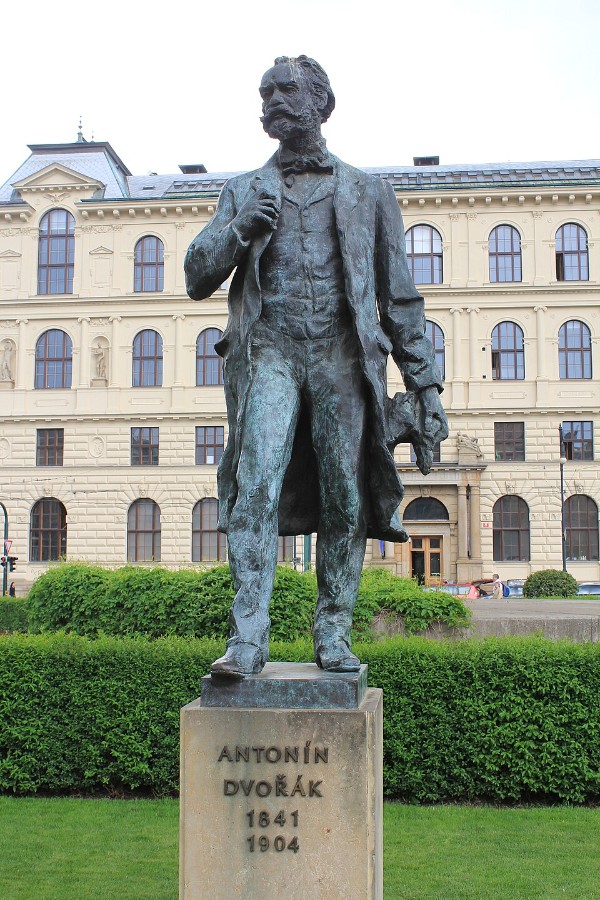
Statue of Antonín Dvořák in Prague
We get the idea that Dvořák’s objective was to describe his own artistic pilgrimage through life, and to declare his life attitude through music. The poem follows the typical four-part structure of a classical symphony, but all parts are integrated to express determination and Dvořák’s faith in his own abilities.
The work premiered on 4 December 1898 with the Vienna Philharmonic conducted by Gustav Mahler. Dvořák attended not only the premiere but also the preceding rehearsals. The atmosphere at these rehearsals was probably quite lively with enthusiasm, since Mahler informed Dvořák that he was “wholly delighted” with the composition. Additional performances took place in Prague, London, Hamburg, Berlin, Boston, and Leipzig in 1899.
In his five symphonic poems, Dvořák proves that he is a master of melody. We follow him into dark forests and haunted lakes, and from guilty consciences to hard-won triumphs. Yet even in the grisly tales of witches, goblins and murder, we find music of warmth, colour, and humanity.
Full of invention, psychological insight and orchestral brilliance, we find a composer who beautifully transforms stories into symphonic dramas. Sadly, they are not as famous as his symphonies, but for a delightful visit to shadowy and magical landscapes, they are unbeatable.
For more of the best in classical music, sign up for our E-Newsletter