A cadenza is one of classical music’s most thrilling traditions. It’s a moment near the end of a concerto movement where the orchestra falls silent, and the soloist plays alone.
Originally, these passages were improvised on the spot, giving the performer a chance to display their virtuosity and put their personal stamp on the work.
But over time, as music grew more complex, composers began writing cadenzas out, seeking more control over the final product.
Despite the evolution of the tradition, the best violin cadenzas still carry that original, improvisatory spirit of risk and revelation.
The eight cadenzas below span four centuries of approaches to the form – from Baroque showpieces to jazz-inflected improvisations to accompanied orchestral reveries.
Pietro Locatelli
Il Labirinto Armonico
In 1733, Italian Baroque composer Pietro Locatelli (1695-1764) published a collection of twelve violin concertos named L’arte del violino.
He named the final concerto “Il Labirinto Armonico” (The Harmonic Labyrinth). In the score, he wrote: “facilis aditus, difficilis exitus” (easy to enter, difficult to escape).
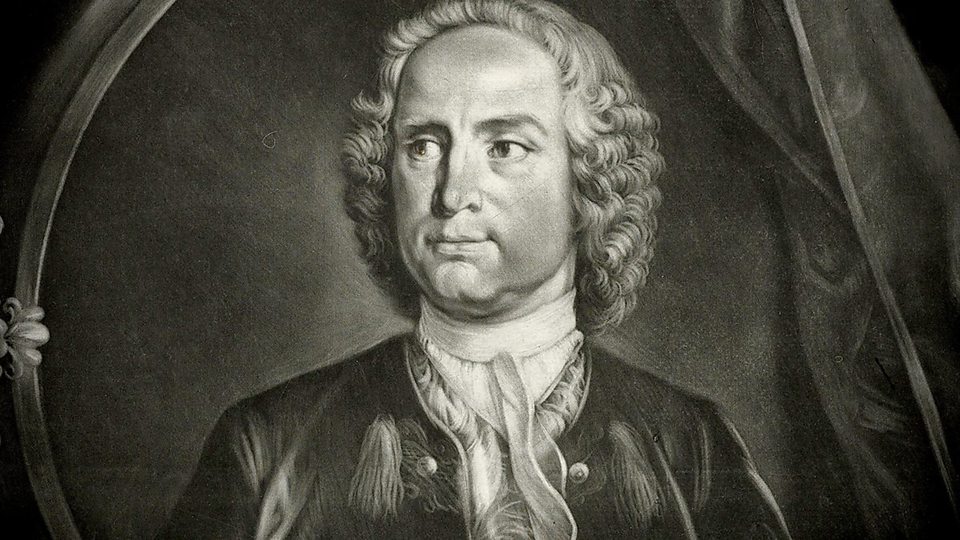
Pietro Antonio Locatelli
Standard Baroque notation practice was to leave a space for the performer to improvise, but Locatelli didn’t want to leave the cadenza to chance, so he wrote everything out in full.
The result is some of the most technically difficult music of the Baroque era. Locatelli forces the violinist to play at the very top of the instrument’s range: a technique that wouldn’t become standardised for another few generations.
This concerto was ahead of its time – especially its cadenza.
Fritz Kreisler
Devil’s Trill Sonata
Giuseppe Tartini (1692-1770) was another Italian violinist with a flair for the dramatic. He claimed the devil once appeared to him in a dream and played a sonata of otherworldly brilliance.
When Tartini woke up, he transcribed everything he could remember, but bemoaned that his transcription fell short of the devil’s brilliance.
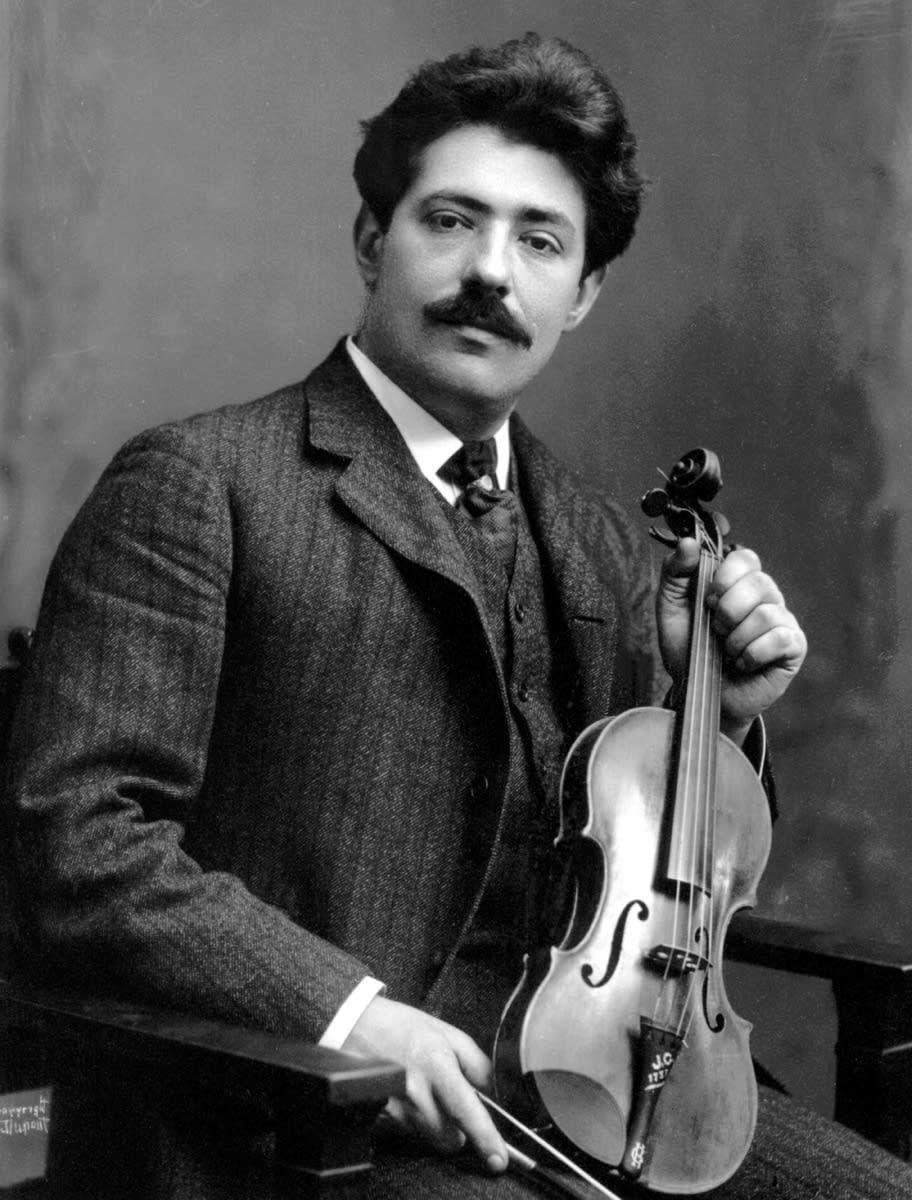
Fritz Kreisler, 1912
Fast-forward nearly two hundred years to 1905. Violinist Fritz Kreisler (1875-1962) was at the height of his career.
In a spirit of mischief, he wrote numerous works in the Baroque style, passing them off as belonging to obscure composers.
Around the same time, he arranged Tartini’s sonata for modern violin and piano, adding a devilishly difficult, trill-filled cadenza in the final movement.
This cadenza is so perfectly suited for a modern instrument that the original Baroque arrangement is rarely played anymore.
Gilles Apap
Mozart Violin Concerto No. 3
Mozart didn’t write out cadenzas for his five violin concertos; like his contemporaries, he expected performers to provide or improvise their own.
The blank space poses a philosophical question to modern violinists: how far should a player stray from Mozart’s refined, relatively restrained style?
Violinist Gilles Apap has his own answer.
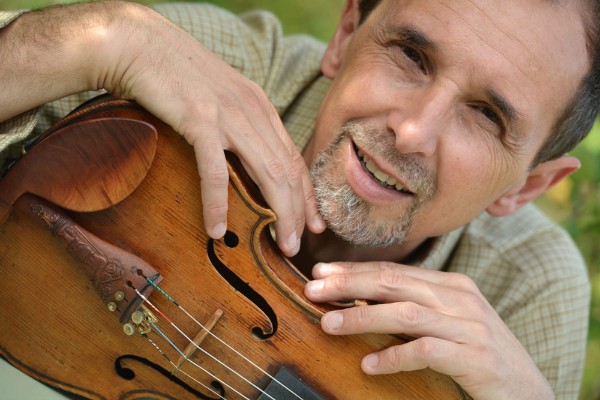
Gilles Apap
Born in 1963 in Algeria and trained at the Lyon Conservatory, he has studied folk music, jazz, and improvisation. When Apap performed Mozart’s third violin concerto, he arrived at the cadenza and threw the kitchen sink at it.
Over the course of eight minutes (keep in mind that a standard recording of this entire movement lasts only six), listeners hear influences ranging from bluegrass to Jimi Hendrix to Indian classical music. There’s even a quotation from the Mendelssohn violin concerto, which was written seventy years after the Mozart concerto.
The soloist is also asked to whistle, tap on the violin, and even invite orchestra members to join in.
Is this approach inspired or anarchic? That depends on your perspective. But there’s no denying this cadenza is one of the most creative in the repertoire.
Dmitri Shostakovich
Shostakovich Violin Concerto
Soviet composer Dmitri Shostakovich (1906-1975) spent a large part of his career trying to stay in the good graces of Joseph Stalin, who found Shostakovich’s more uncompromising work threatening.
As a survival strategy, Shostakovich composed his darker works in secret, publicly sharing only those he knew aligned with the Soviet aesthetic agenda.
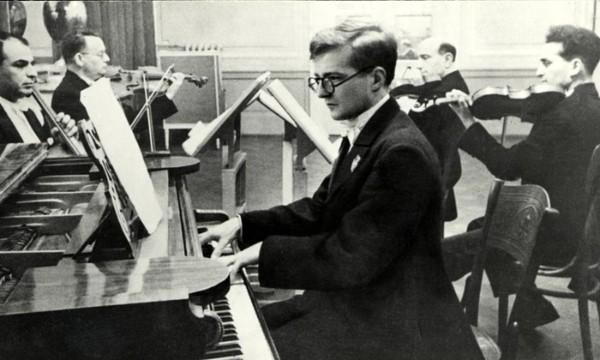
Dmitri Shostakovich, 1940
His first violin concerto was written between 1947 and 1948, but he withheld it until after Stalin died in March 1953.
The premiere, given by leading Soviet violinist David Oistrakh in 1955, was a major success.
The cadenza is one of the concerto’s most unusual features, bridging a despairing passacaglia and a frenetically joyful finale. It is also unusually long, clocking in at just under five minutes.
It is one of the most physically, mentally, and emotionally demanding challenges in the 20th-century repertoire. After the premiere, Oistrakh pleaded with Shostakovich to give him eight bars of orchestral playing to start the last movement so he could at least wipe his brow before jumping back in.
The video above features Oistrakh’s version of the cadenza.
Edward Elgar
Elgar Violin Concerto
Most cadenzas follow a certain convention. The orchestra stops, and the soloist plays alone.
Edward Elgar had another idea. For his sprawling, fifty-minute-long violin concerto, premiered in 1910, he wrote an accompanied cadenza with deliberately sparse orchestration.
When the final movement starts, Elgar seems to be writing a fairly conventional, triumphant ending to a Romantic violin concerto. Instead, he pulls the rug out from listeners and steps into a hazy, gauzy dream world. The effect is one of otherworldly nostalgia.
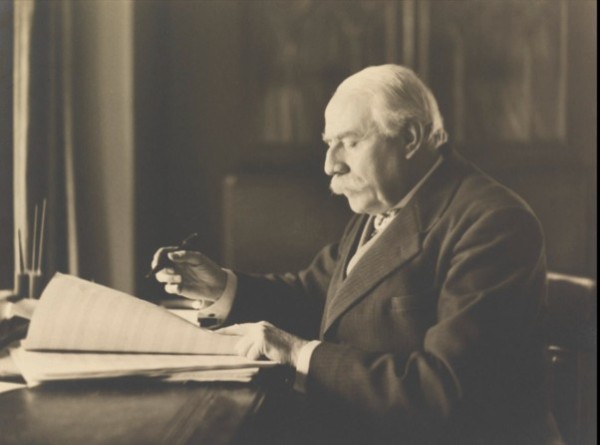
Herbert Lambert: Sir Edward Elgar, Bt, 1933
By the time the cadenza begins, we’re already forty minutes in. A successful performance requires a player who can pace themselves to do this unusual concerto justice. James Ehnes (the soloist in the performance above) is one of those players.
Emile Sauret
Paganini Violin Concerto No. 1
Niccolo Paganini (1782-1840) didn’t write out a cadenza for this concerto; he preferred to improvise.
Writing a cadenza for a piece by Paganini – the man who defined modern virtuoso violin playing – is an intriguing challenge. When the concerto itself is almost impossibly difficult, how is a performer supposed to make the cadenza even harder?
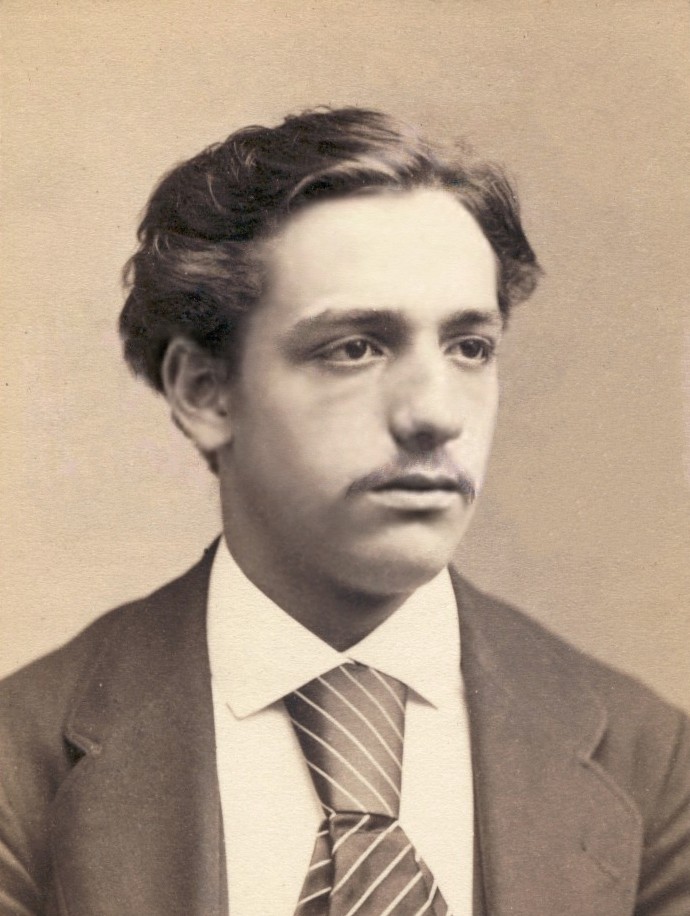
Emile Sauret
Many violinists have taken up the challenge, but French violinist Emile Sauret (1852-1920) wrote the work’s most famous cadenza. He wrote over 100 violin pieces. He is remembered today almost entirely for this one.
This performance comes from the 1967 Queen Elisabeth Competition final in Brussels, where the 20-year-old phenom Philippe Hirschhorn played it before winning first prize.
Joseph Joachim
Brahms Violin Concerto
Johannes Brahms (1833-1897) was not a violinist; he was a pianist – and it shows in his unidiomatic, often awkward string writing.
When composing his violin concerto, he turned to one of his oldest, closest friends, Joseph Joachim (1831-1907), who was arguably the most influential violinist of his generation.
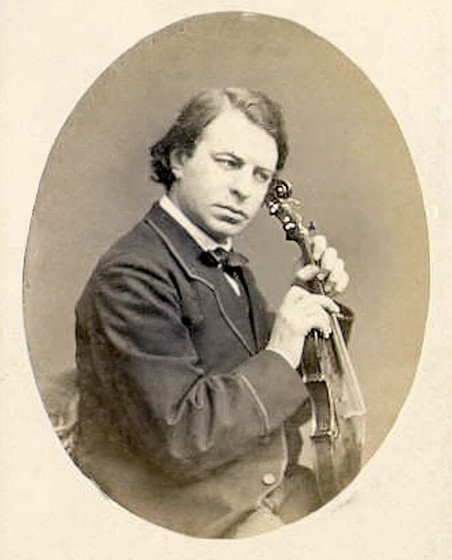
Joseph Joachim
Joachim collaborated with Brahms to make the concerto more suitable for the violin. In fact, in places, the final manuscript bears Joachim’s handwriting.
Joachim’s knowledge of the concerto and its composer made him the perfect person to write a cadenza for the work. Brahms reported to a friend that during an early performance, Joachim’s cadenza was such a hit that the audience broke out into applause before the movement was over.
Others have written cadenzas for the Brahms concerto. None feel as natural or as fully integrated into the whole as Joachim’s.
Fritz Kreisler
Beethoven Violin Concerto
Like Brahms, Beethoven was much more of a pianist than a violinist. He chose to leave the cadenzas to performers to figure out.
Fritz Kreisler’s set of three cadenzas for the first, second, and third movements was met with immediate acclaim. He used them in his 1926 recording and then published the sheet music in 1928.
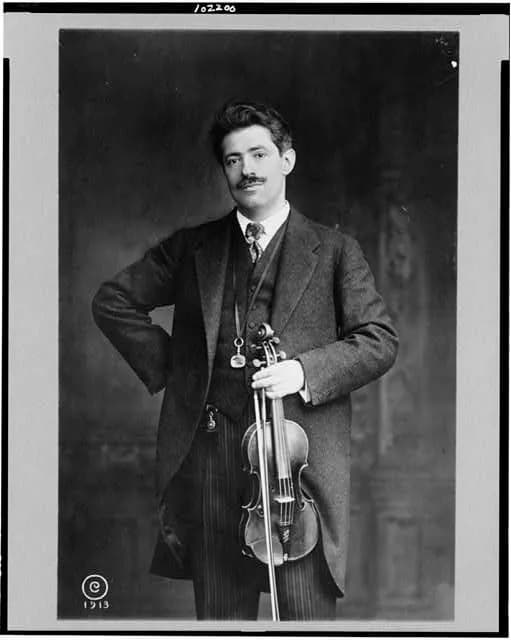
Fritz Kreisler
Kreisler had Jewish ancestry and eventually fled Europe to escape the Nazis. Yet the regime continued to permit performances of his cadenzas – even as it banned music by other Jewish composers.
Its most arresting moment is the double-stop counterpoint (at 2:00 in the performance above by Augustin Hadelich).
Conclusion
The cadenza has always been where performers can leave their fingerprints.
Whether it’s Kreisler making his mark on two of the greatest violin works ever written, Joachim collaborating so closely with Brahms that they verge on being co-composers, or Gilles Apap throwing out the rulebook entirely, the best violin cadenzas capture an artist’s individuality in a way no other classical music convention can.
If you’re looking for more great violin content, check out our guide to ten of the best violin concertos ever written.
For more of the best in classical music, sign up for our E-Newsletter