Winter has inspired classical composers for centuries, and women composers are no exception. From the 19th century to the present, many have written music explicitly about winter: falling snow, ice skating, winter evenings, and the season’s hushed mood.
These pieces centre around themes of reflection, memory, and nostalgia. They span genres from solo piano and art song to orchestral and choral music, reflecting both changing musical styles and the evolving conditions under which women could compose and publish.
Today we’re looking at a selection of classical works about winter by women composers, placing each piece in its historical and biographical context.
Fanny Mendelssohn Hensel – “December” from Das Jahr (1841)
Fanny Mendelssohn Hensel, the equally talented sister of composer Felix Mendelssohn, composed Das Jahr (The Year) in 1841 during an extended stay in Rome.
Structured as a thirteen-movement piano cycle depicting the twelve months of the year plus a postlude, she wrote the work for herself, her family, and the star musicians who attended her salons.
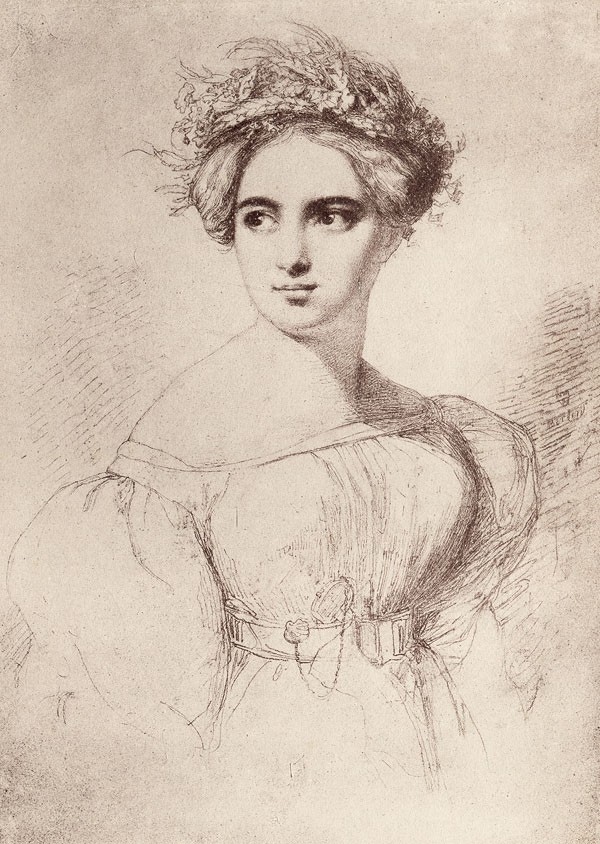
Fanny Mendelssohn-Hensel
She did not seek to publish Das Jahr during her lifetime. (She would only begin to publish at the very end of her life, after much inner conflict; to do so was considered unseemly for a woman of her social station, and it took her many years to feel confident enough to do so.)
However, just because this work wasn’t published right away doesn’t mean it isn’t a masterpiece. On the contrary, it’s one of the most striking season-themed cycles of the nineteenth century.
The “December” movement begins by evoking a snowstorm, but eventually shifts to something warmer and slower, as shown in her use of the Lutheran Christmas chorale “Vom Himmel hoch” (“From Heaven Above”).
One gets the distinct impression of a composer who has been out in a winter storm but ultimately finds her way into the cosy warmth at home.
Cécile Chaminade – Chanson de neige (1906)
By the turn of the 20th century, Cécile Chaminade was one of the most commercially successful women composers of her time. Her music was widely published, frequently performed, and embraced by professional musicians and amateur audiences worldwide.
Yet as tastes changed mid-century, much of her output – especially her songs – has since been unfairly dismissed as “salon music.”
“Chanson de neige” (“Song of Snow”) belongs to her mature period, when Chaminade was balancing public popularity with an increasingly refined musical language.
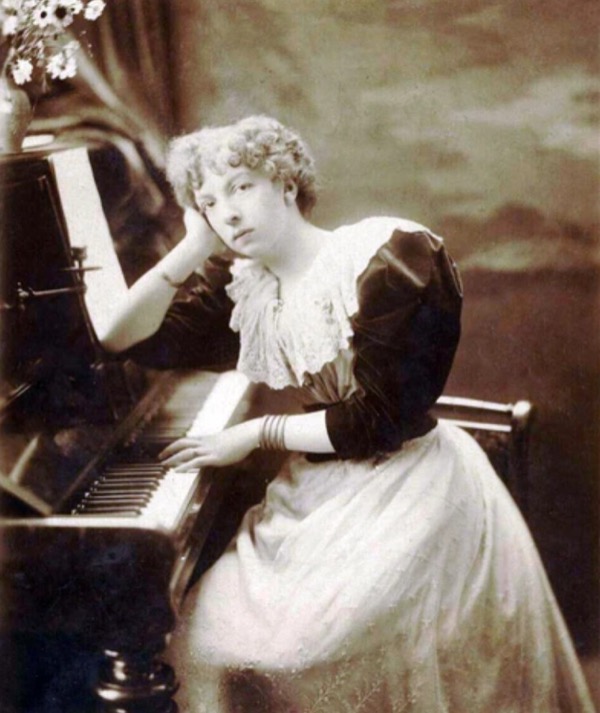
Cécile Chaminade
Set in the French tradition of mélodie, the song explores the melancholy that can arise while watching a snowfall.
In his poem, lyricist Louis-Alexandre Fortoul anthropomorphises the snowflakes, viewing them with a sad cynicism:
They dance like fools,
At the least touch of wind,
But they fall, sad and soft,
To melt, to melt lamentably…
Chaminade captures this attitude beautifully in her song.
At the time, mélodie offered women composers a genre well-suited to the subtlety and nuance of Chaminade’s musical voice.
It’s important to remember that just because many of her works were written on a smaller scale, that doesn’t make them any less affecting or important.
Nadia Boulanger – Soir d’hiver (1915)
Nadia Boulanger is best remembered today as one of the most influential composition teachers of the 20th century.
But before 1918, she composed a great deal herself. (She drifted away from composition following the 1918 death of her prodigiously talented little sister Lili, the first woman composer to win the prestigious Prix de Rome.)
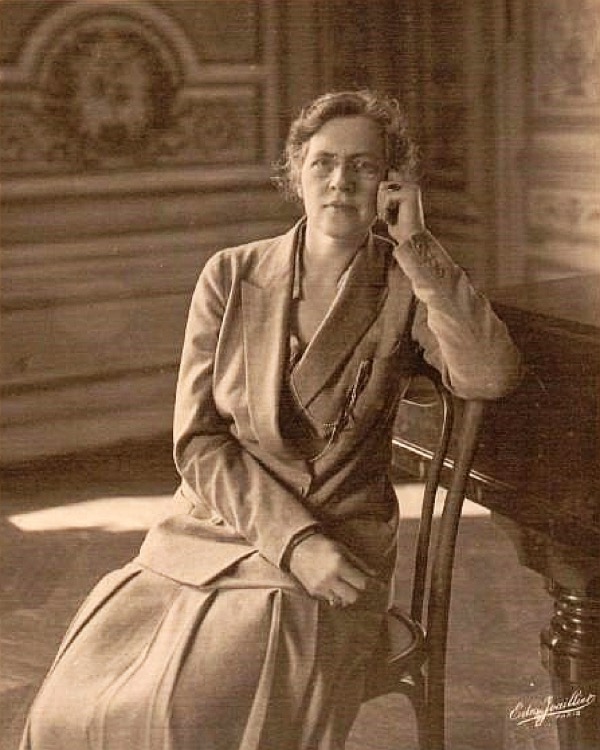
Nadia Boulanger, 1925
Nadia’s “Soir d’hiver” dates from 1915, during the First World War, when Boulanger was still contemplating her creative future after failing to win the Prix de Rome herself.
The lyrics tell the story of an abandoned mother rocking her son to sleep at Christmas, placing all her hopes in him. The story comes across as a dark twist on the famous nativity story.
The piece reflects both wartime austerity and Boulanger’s increasingly restrained aesthetic. It captures perfectly a raw, unresolved mix of emotions ranging from grief to loneliness to fear to hope to peace – all often felt during the holidays and wintertime.
Amy Beach – “Sliding on the Ice” from From Six to Twelve: A Piano Suite (1927)
Amy Beach was born in New Hampshire in 1867, and her career bridged the late Romantic and early modern eras in American music.
After her husband died in 1910, she entered a period of independence and productivity.
From Six to Twelve, a piano suite composed in the 1920s, reflects her growing interest in pedagogical repertoire that also provided artistic interest for young players.
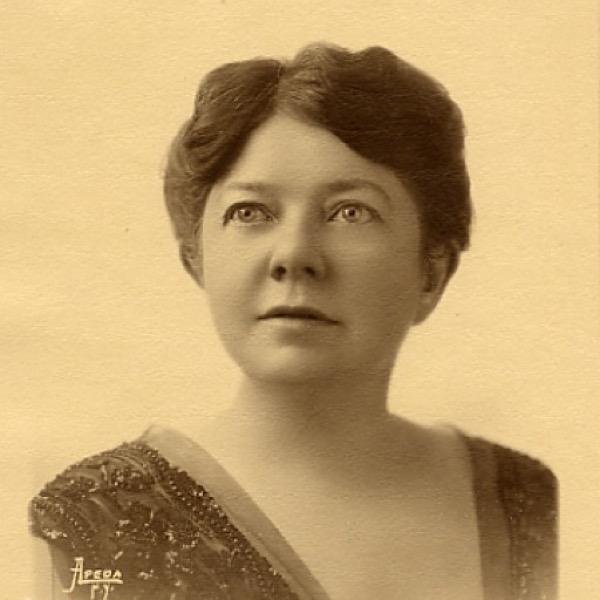
Amy Beach
“Sliding on the Ice” depicts winter from a child’s perspective. The piece also playfully interpolates Debussy’s ‘Golliwog’s Cakewalk,’ another famous piano work for children.
Here, winter becomes the setting for the pianist to recount a joyful memory with great energy and pizzazz.
Elizabeth Maconchy – “Winter” from The Land: Suite for Orchestra (1939)
Elizabeth Maconchy emerged in interwar Britain as a composer with a distinctly modernist voice. That voice often clashed with the style of popular pastoral composers like Gustav Holst, Ralph Vaughan Williams, and Gerald Finzi.
However, in 1939, Maconchy was inspired to write on a pastoral subject. She fell in love with poet Vita Sackville-West’s long 1926 narrative poem The Land, which inspired Maconchy to create a portrait of the English countryside in her own musical style.
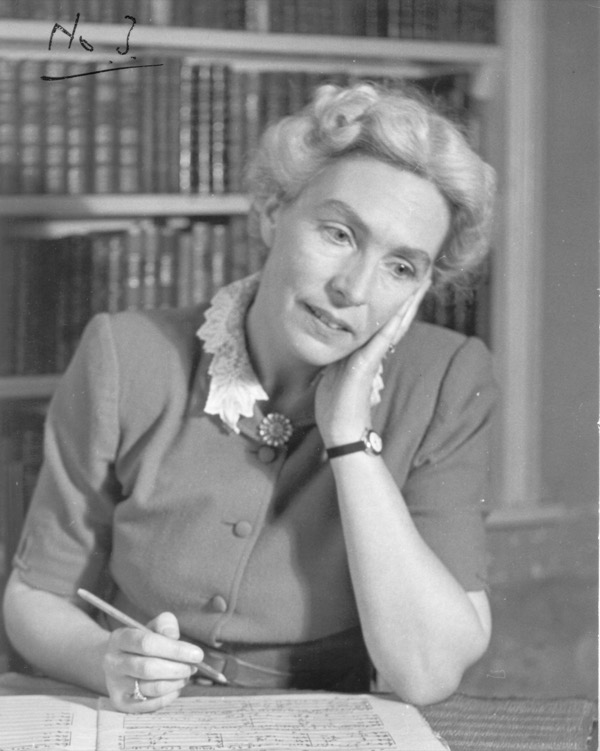
Elizabeth Maconchy
Sackville-West’s poem opens describing winter:
I sing the cycle of my country’s year,
I sing the tillage, and the reaping sing,
Classic monotony, that modes and wars
Leave undisturbed, unbettered, for their best
Was born immediate, of expediency.
Maconchy’s opening movement “Winter” is tense and austere. It eschews all cosiness, using ominously repeating phrases in the strings, as well as strident wind and brass solos, to create a mood that feels raw, emotionally harsh – and incredibly honest.
Florence Price – Song for Snow (published 1957)
An instrumental arrangement of “Song for Snow”
Composer Florence Price’s career unfolded under the compounded pressures of racial and gender discrimination in mid-20th-century America.
Because of her race and gender, much of her music remained unpublished or underperformed during her lifetime.
Florence Price: Song for Snow (Jan Karlsson Korp, piano; Malmö Opera Chorus; John Jeter, cond.)
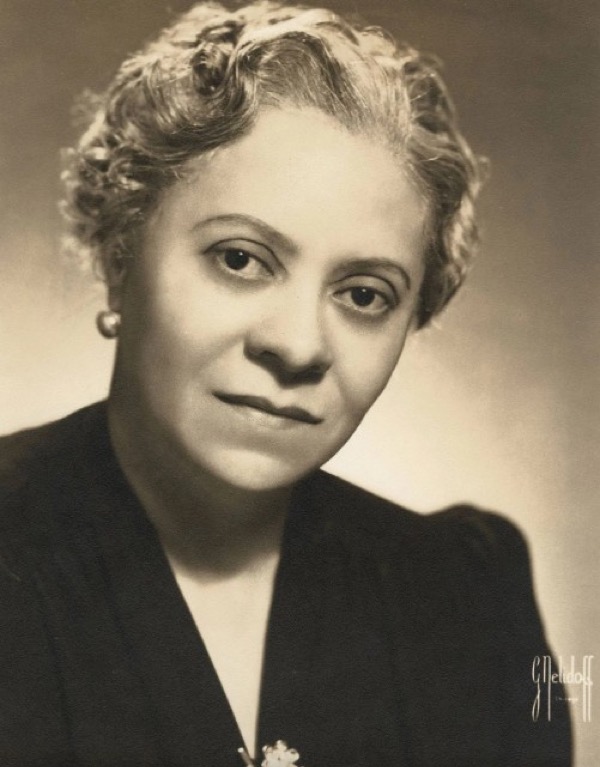
Florence Price
We don’t know exactly when she wrote her “Song for Snow”, but it was published in 1957, after her death.
Rather than emphasising the cold or desolation of winter, Price treats snow as an opportunity for contemplation.
The lyrics come from a poem by Elizabeth Coatsworth, who was inspired by the wintry landscape. “The earth is lighter than the sky,” the narrator repeats.
Along white roads the sleighs go by;
Along the roads the sleighs go by.
Icily sweet, the sleigh bells ring.
The approach aligns well with her natural compositional voice, which is usually warm and welcoming.
Joan Tower – Snow Dreams (1983)
By the late 20th century, women composers like Joan Tower were gaining more reliable access to orchestras, commissions, and performances of large-scale music.
In 1983, a grant from the Schubert Club – located in snowy St. Paul, Minnesota – made possible the composition of Snow Dreams, a work for guitarist Sharon Isbin and flautist Carol Wincenc.
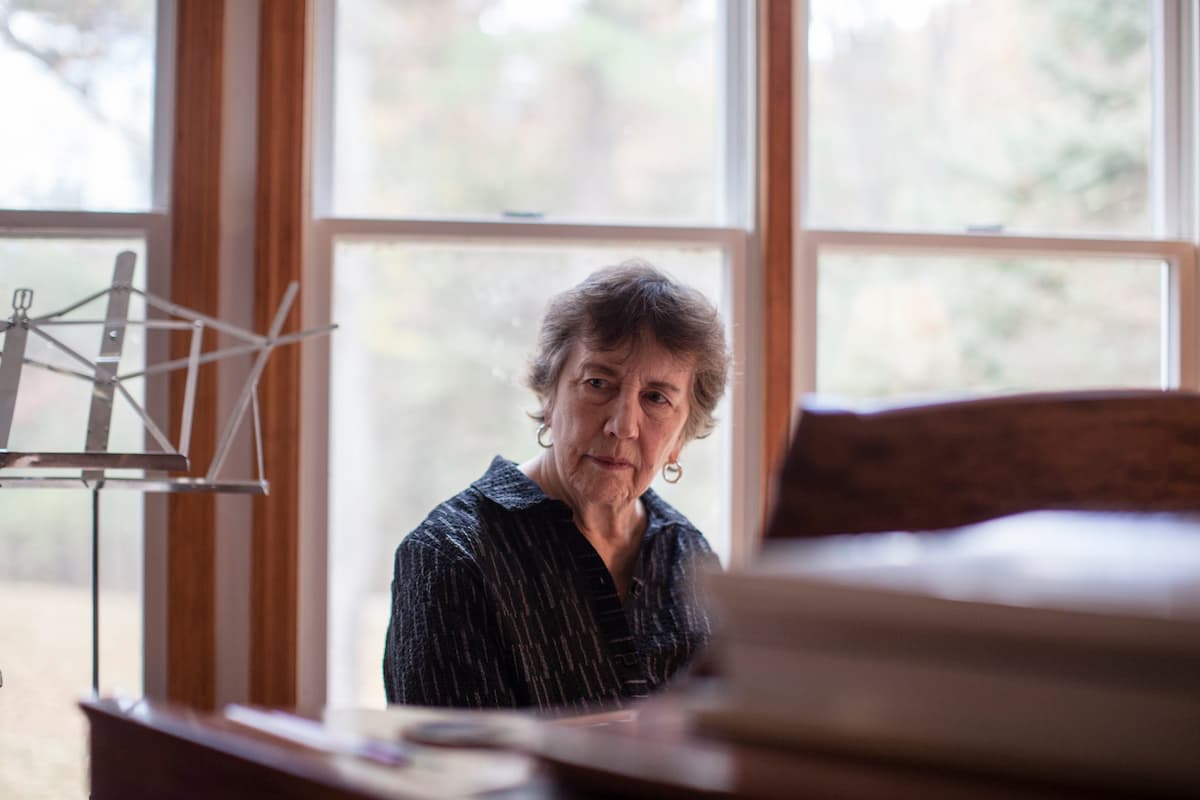
Joan Tower
Tower wrote enigmatically of the work and its portrayal of winter:
“There are many different images of snow, its forms and its movements: light snow flakes, pockets of swirls of snow, rounded drifts, long white plains of blankets of snow, light and heavy snowfalls, etc. Many of these images can be found in the piece, if in fact, they need to be found at all. The listener will determine that choice.”
Caroline Shaw – Winter Carol (c. 2013)
Composer Caroline Shaw was born in 1982 and comes from a generation of composers for whom historical boundaries between genres are increasingly fluid.
Her mesmerising “Winter Carol” draws on early choral traditions while simultaneously embracing a contemporary harmonic language. The result is a work that sounds modern, but also, somehow, like it has always been in the repertoire.

Caroline Shaw © Kyle Dorosz
Conclusion
From Fanny Mendelssohn Hensel’s privately distributed Romantic piano cycle to Caroline Shaw’s contemporary choral writing, these women have portrayed winter in many striking lights.
Taken together, these works offer a compelling overview of how women composers have engaged with winter across nearly two centuries of classical music history, writing works for public, private, and pedagogical spaces.
Listening to classical music about winter by women composers reveals a rich and varied tradition that deserves far more attention than it has received.
The next time you assemble a winter classical playlist, make sure to include your favourite work by a woman composer.
For more of the best in classical music, sign up for our E-Newsletter