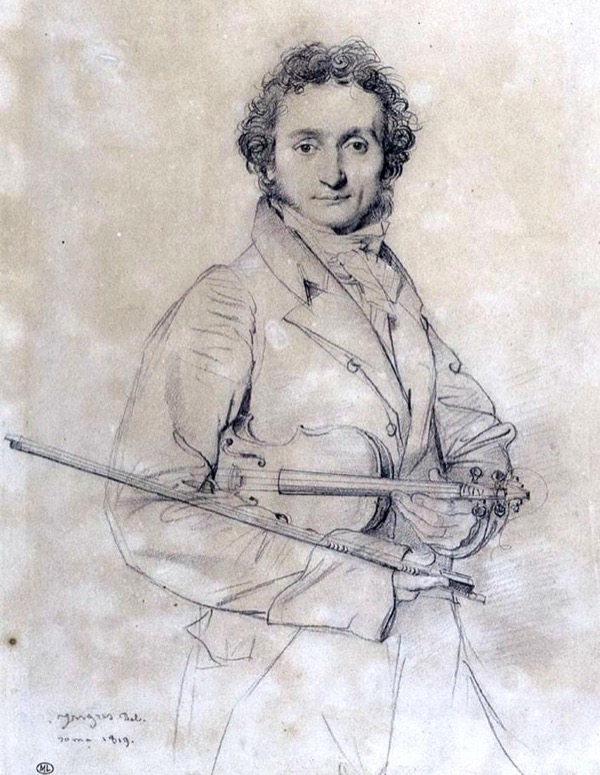
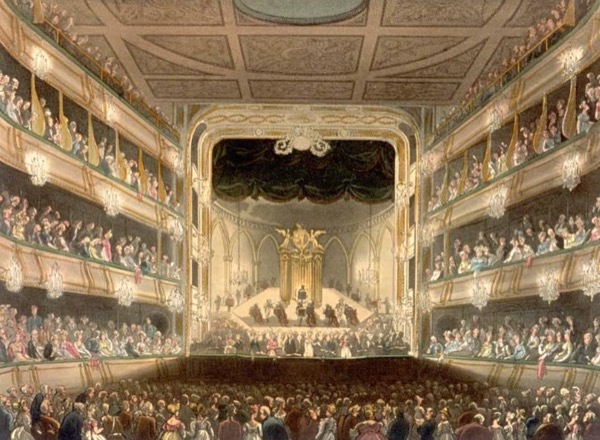
Nikolaus Simrock was one of the most important figures in classical music history, lending his name to a storied company that published some of the century’s most important music.
One of Simrock’s early clients was Ludwig van Beethoven himself. Decades later, his grandson went on to sign Brahms and Dvořák.
Today we’re looking at the history of three generations of the Simrock family business and the great classical music they published.
Nikolaus Simrock
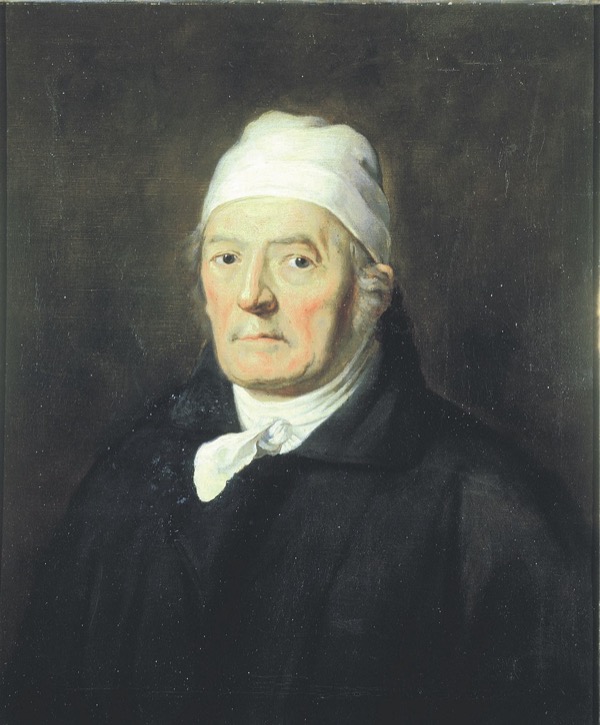
Nikolaus Simrock
Nikolaus Simrock was born in 1751 in Mainz, Germany. As a teenager, he worked as a bugler and horn player.
In 1774, when he was 23, he took a position in the court orchestra in Bonn, Germany, about 170 kilometres away from his hometown.
One of his coworkers in the orchestra was Johann van Beethoven, Ludwig’s father.
After Johann’s alcoholism grew so bad that he had trouble working, Ludwig took his place, and Nikolaus became Ludwig’s colleague.
In addition to playing in the court orchestra, Nikolaus had a side hustle of selling pianos, music paper, and sheet music.
In October 1794, Napoleon‘s forces invaded Bonn. Most of the court fled, and its orchestra disbanded. But Nikolaus chose to stay in Bonn to build up his business. His willingness to work with the French helped to raise his professional profile.
The Promising Early Days of N. Simrock
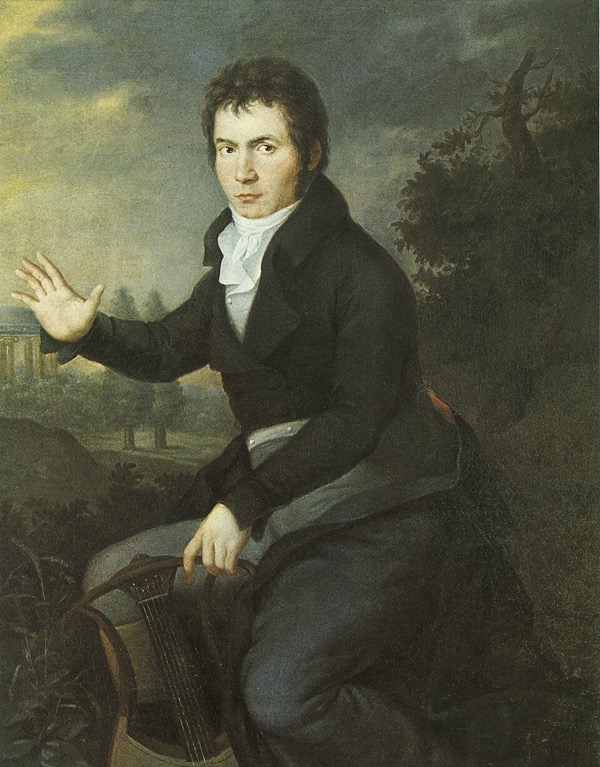
Ludwig van Beethoven, 1804 (Joseph Willibrord Mähler)
In 1793, Simrock founded a music publishing house, dubbing it N. Simrock, and the first major composer he signed was none other than his old colleague, Ludwig van Beethoven.
The first pieces he published included Beethoven’s variations on “Das rote Käppchen” (WoO 66) and variations on a theme by Waldstein (WoO 67).
Many of Beethoven’s works, including his Kreutzer Sonata (1805), his sextet (1810), and his cello sonatas (1817), would be added to the Simrock catalogue.
Beethoven’s Violin Sonata No. 9 (“Kreutzer”)
However, Beethoven was far from his only client. Nikolaus also published works by other major composers, including Carl Maria von Weber, Joseph Haydn, and Beethoven’s pupil Carl Czerny.
When Haydn returned from a tour to London in the 1790s, he travelled through Bonn. Nikolaus published several symphonies (including No. 97 and No. 99) that Haydn had written for the trip.
Haydn’s Symphony No. 99
Nikolaus also had a great interest in the works of Johann Sebastian Bach – which at the time was noteworthy. Bach had died in 1750, and he remained largely out of fashion until 1829, thanks to Mendelssohn‘s performance of the St. Matthew Passion that year. Though Bach was out of fashion, Nikolaus came out with editions of Bach’s Well-Tempered Clavier in 1800 and the solo violin works in 1802.
Peter Joseph Simrock
Nikolaus and his wife had thirteen children. Their son Peter Joseph Simrock was born in the summer of 1792 in Bonn.
After Nikolaus died in 1832, Peter Joseph Simrock took over the family business. Nowadays, his tenure isn’t remembered as often as his father’s or his son’s, but the firm continued to publish important works.
In 1833, inspired by the Bach revival Mendelssohn’s 1829 St. Matthew Passion had set in motion, Peter Joseph published Bach’s Mass in B minor.
Peter Joseph also published Mendelssohn’s Songs Without Words, op. 53, as well as Robert Schumann‘s third symphony.
Schumann’s Symphony No. 3
Fritz Simrock
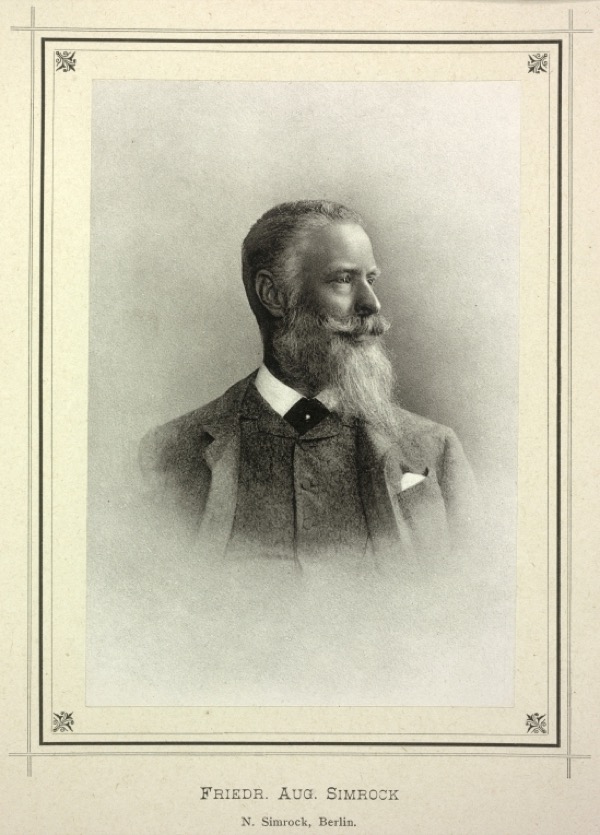
Fritz Simrock
Peter Joseph Simrock married, and in January 1837, the couple had a baby named Friedrich August, who came to be known as Fritz.
Fritz would cement Simrock’s reputation as one of the most important publishers of music of the century.
Fritz Simrock Signs Brahms
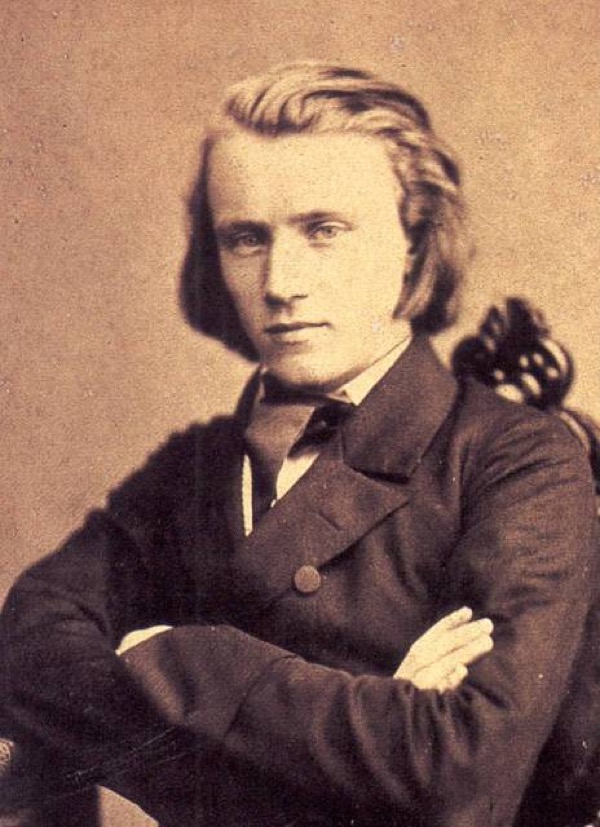
Johannes Brahms, 1853
In 1860, when Fritz was 23, he met the 27-year-old Johannes Brahms at a particularly fortuitous time.
Brahms’s publisher to date, Breitkopf & Härtel, had recently turned down his Piano Concerto No. 1, so Brahms was open to working with a new publisher.
Meanwhile, Fritz was “canny and jovial”, according to Brahms biographer Jan Swafford, and looking for promising composers to join his father’s firm. The two young men hit it off.
In 1860, Fritz and Brahms partnered to publish Brahms’s opus 16, the Serenade No. 2 in A major. From that point forward, Brahms sent much of his work to Simrock.
Brahms’s Serenade in A major
Simrock was rewarded with four volumes of commercially successful Hungarian Dances, two in 1869 and two in 1880.
Brahms received a one-time payment for these works and then allowed Simrock to, in Swafford’s words, “grow fat” off them.
In turn, Simrock was more likely than other publishers to support Brahms and publish works that were less commercial and more challenging.
Brahms’s Hungarian Dance No. 1
The Amalie Joachim Affair
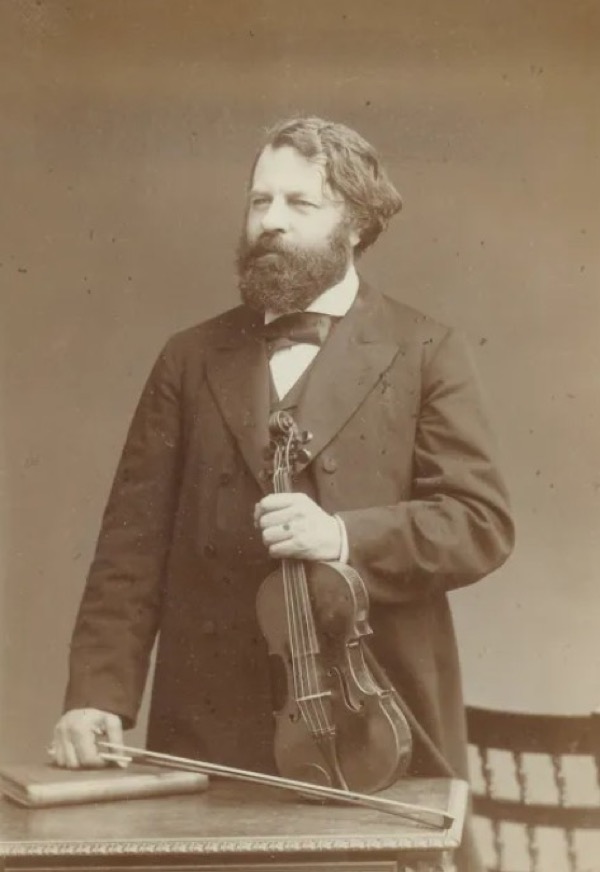
Joseph Joachim
Trouble struck in 1874 when their mutual friend, violinist Joseph Joachim, accused his wife Amalie of having an affair with Fritz.
No concrete evidence ever emerged to support Joseph’s accusation, and Brahms never believed it happened. (However, Clara Schumann did note in an 1874 letter to Brahms that she’d once seen the two cosy at a party.)
Over time, Joseph became so convinced that his wife had cheated on him with Fritz that he filed for divorce – but in court, Amalie produced a supportive letter Brahms had sent her, crushing Joseph’s case.
The matter eventually turned from a personal squabble into a fight with musical fallout because, in 1887, Brahms wrote his double concerto for violin and cello as an olive branch to Joachim.
Predictably but also somewhat ironically, it was published by Simrock. It was Brahms’s last work for orchestra.
Brahms’s Concerto for Violin and Cello
Fritz Simrock Signs Dvořák
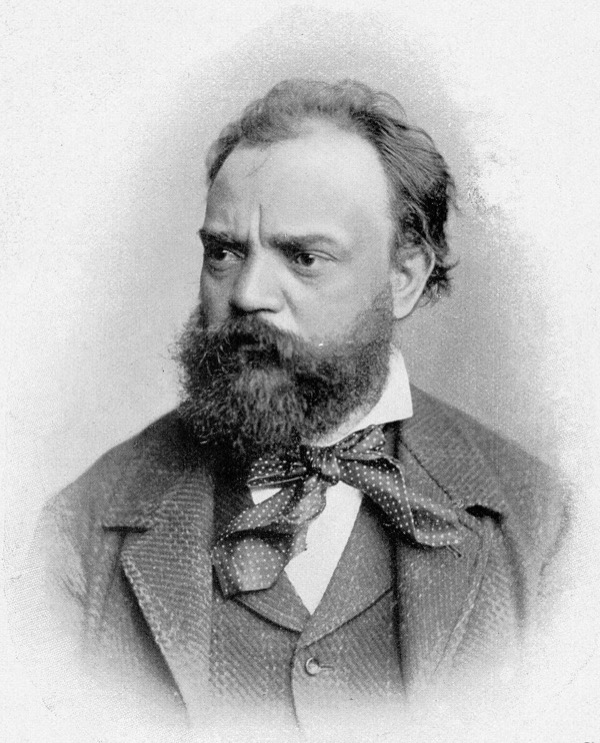
Antonín Dvořák, 1882
In 1877, Brahms met Antonín Dvořák. The two men hit it off, and Brahms recommended Dvořák’s work to Fritz.
Simrock commissioned a series of Slavonic Dances from Dvořák, hoping they would be as successful as Brahms’s Hungarian Dances had been.
Happily, they caused a sensation: so much so that they were difficult to keep in stock at German music shops.
Dvořák’s international reputation was made, and he began working with Fritz more and more.
Dvořák’s Slavonic Dances
Fritz Simrock and Dvořák’s Seventh Symphony
Unfortunately, the two men ran into personal trouble in 1885, when Simrock issued a succession of demands regarding his seventh symphony that greatly irritated Dvořák.
First, Fritz didn’t want to publish the full score until Dvořák could also produce a two-piano version. (This would sell better in the domestic sheet music market than just an orchestral score.) But Dvořák didn’t have an arrangement ready.
Then, for political reasons, Fritz forbade him to use the Czech version of his first name, Antonín, on the work’s cover, instead insisting on Germanizing it to Anton.
Fritz also wanted to remove the dedication to London’s Royal Philharmonic Society, the organisation that had invited Dvořák to write it in the first place.
And as if all that weren’t enough, Fritz only wanted to pay Dvořák 3000 marks, even after Dvořák claimed he could get 6000 marks from another publisher. (This lowball offer occurred around the same time that Fritz, who Brahms had put in charge of his savings, had lost 20,000 marks while managing Brahms’s money.) In the end, Fritz paid the higher price asked of him – but reluctantly.
Today, the seventh symphony is regarded as the finest of Dvořák’s seven symphonies.
Fritz died in 1901 in Lausanne, Switzerland.
Dvořák’s Symphony No. 7
The Simrock Legacy
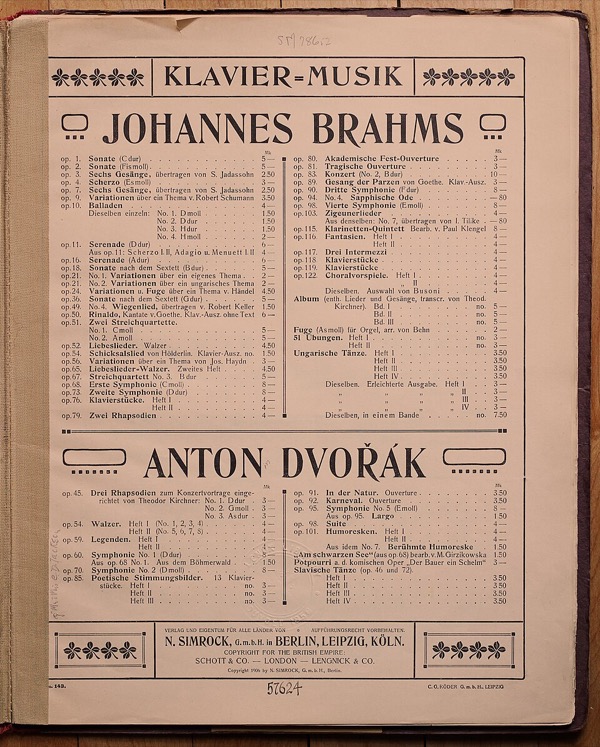
Simrock title page, 1906
The Simrock publishing house would live on, but the business never enjoyed a relationship comparable to those it had with Beethoven, Brahms, and Dvořák.
However, the legacy left behind is too rich to defy description. From the 1790s until the 1890s, Simrock was at the forefront of European art music – and even today, musicians and listeners continue to reap the benefit.
For more of the best in classical music, sign up for our E-Newsletter