The Taiwanese-American violinist Paul Huang, born on 6 September 1990 in Tainan, Taiwan, began as a young prodigy and rapidly rose to global prominence. Known for his captivating artistry and effortless virtuosity, Huang first gained international recognition by stepping in at short notice for major violinists.
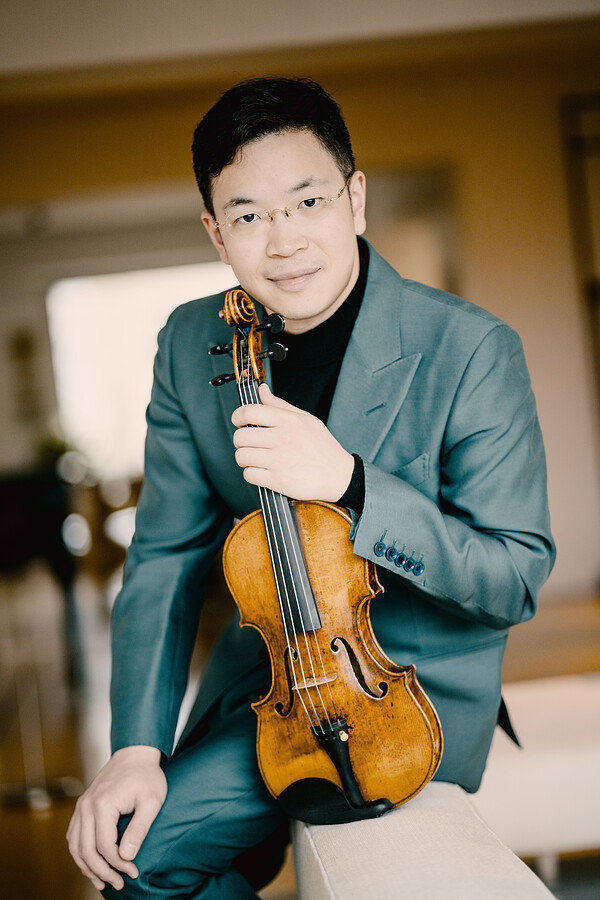
Paul Huang
While last-minute substitutions basically save a concert, Huang’s own high-profile replacements have been described as turning points in his career.
To celebrate Huang’s birthday, here are two pivotal substitutions that greatly helped advance his career.
Paul Huang performs Ysaÿe: Sonata No. 3 in D minor, “Ballade”
Replacing Midori
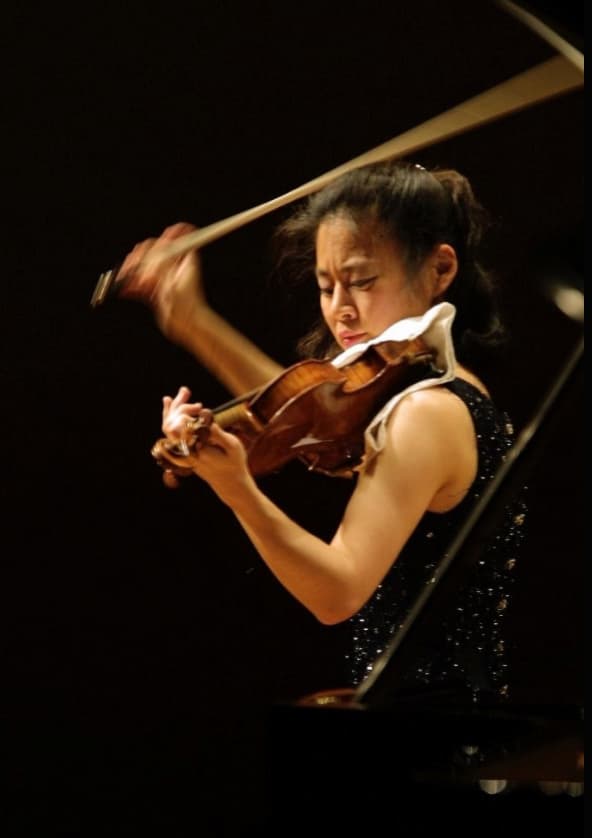
Midori © K. Miura
In May 2015, Midori (Goto) was scheduled to perform the Violin Concerto by William Walton with the Detroit Symphony Orchestra under the baton of Music Director Leonard Slatkin. Midori withdrew for medical reasons, primarily linked to her pregnancy and related travel restrictions.
Leonard Slatkin changed the programme to the Sibelius Violin Concerto, because the Walton concerto is not readily in the repertoire of most violinists. According to Huang, in a later interview, he received only about 24 hours’ notice. He described it as a whirlwind, and since he had never done anything like it before, he found it exhilarating.
Huang was already recognised as a rising talent, having won the Young Concert Artists International Auditions in 2011 and received the Avery Fisher Career Grant in 2015. Performing on the 1742 “ex-Wieniawski” Guarneri del Gesù on loan through the Stradivari Society of Chicago, Huang was off to a flying start.
Seizing the Moment
Colin Anderson, in his review for The Classical Source, wrote: “From the off, Paul Huang was intensely expressive, his tone in all registers captivating, and he enjoyed a faithful accompaniment, Slatkin keeping an eagle-eye on him. A few slippery moments of intonation aside, Huang (new to me) played with poise and power, bringing the solo part alive.”
“The first-movement cadenza was commanding and communicative, the slow movement (introduced by beguiling woodwind-playing) a little too heart-on-sleeve if eloquent, and the finale wasn’t rushed and proceeded with stealth and trenchantly to a fine blaze of culmination.” (Anderson, Classical Source, 2015)
Critics and audiences alike described a “step-in-and-shine” moment, and the concert helped to establish his name more widely in the classical music community. For Huang personally, it was a memorable milestone in his career.
Paul Huang plays Sibelius: Violin Concerto (DSO 2015)
Mozart on Short Notice
Four years later, Paul Huang’s phone rang again. In June 2019, Bravo! Vail’s 32nd season was scheduled to open with Anne-Sophie Mutter performing the complete Mozart violin concertos over two nights with the Chamber Orchestra Vienna-Berlin. According to the festival, unfortunate and unavoidable circumstances forced Mutter to delay her appearance.
Since the festival has a policy of never cancelling performances, substitutions were quickly arranged. Festival artistic director Anne-Marie McDermott took care of opening night, and Paul Huang was called on to play on the second night, performing Mozart’s Violin Concerto No. 4.
Charlotte Smith wrote in The Strad: “It was Huang in Mozart’s Fourth Violin Concerto who provided the standout performance of the evening… Huang drew an unfailingly attractive, golden and resonant tone from his 1742 ‘Wieniawski’ Guarneri ‘del Gesù’.”
Opportunity Knocks Twice
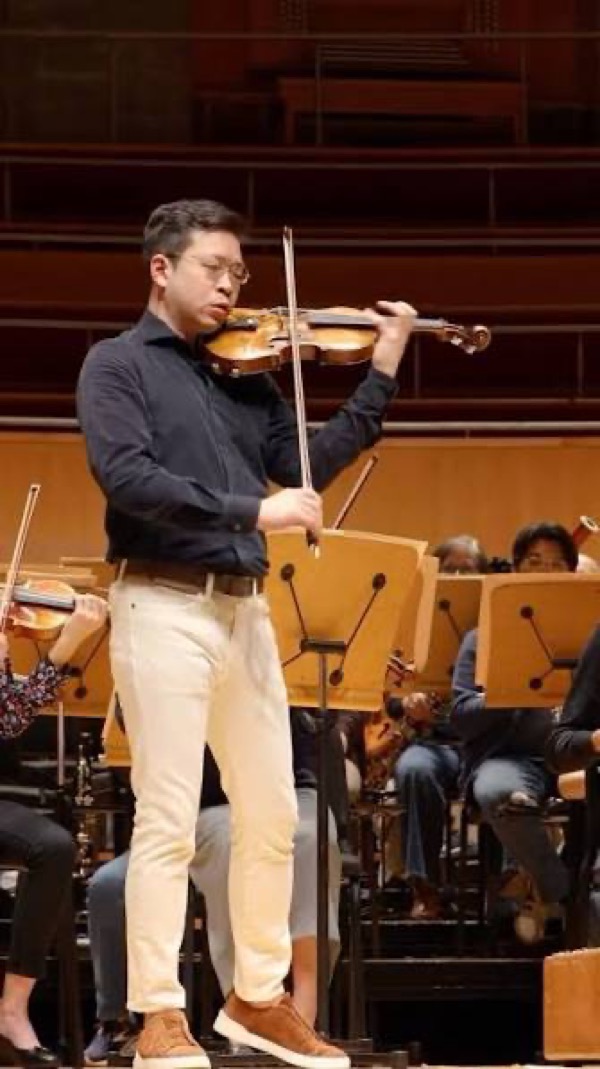
Paul Huang
“His more expansive bowing and romantic vibrato, in contrast to the sparseness and delicacy preferred by his orchestral collaborators, served as an effective distinction between solo and chamber palettes, particularly on his lower strings. If the first movement was confident and secure, the second and third transcended technical concerns to produce phrases of uninterrupted lyricism and effortlessly bubbling spiccato.” (Smith, “Silver Linings-Postcard from Vail,” The Strad, 2019)
Although Paul Huang was already an established prize winner, this substitution for Midori greatly accelerated his career. He managed to win over the audience and the orchestra, who had reasonable concerns about replacing a star with a young violinist. Rather than waiting years, stepping in for Midori gave Huang the chance to appear before a major audience.
These substitution appearances did not make or break Paul Huang’s career, yet they undoubtedly helped to accelerate it.
For more of the best in classical music, sign up for our E-Newsletter