Samuil Feinberg was born in the Ukrainian city of Odesa on 26 May 1890. With its unique blend of Russian, Yiddish, and Ukrainian cultures, the city gave birth to a substantial number of exceptional pianists ranging from Benno Moiseiwitsch to Shura Cherkassky, and from Emil Gilels to Yakov Zak.
Samuil Feinberg plays Johann Sebastian Bach: WTC 2, Prelude & Fugue in B Major, BWV 892
The Devil Pianist
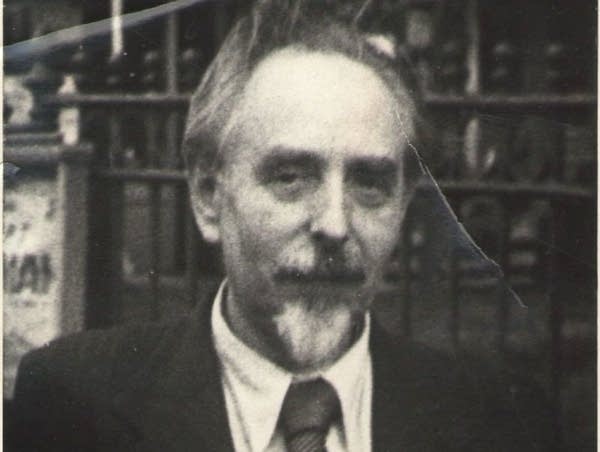
Samuil Evgenievich Feinberg
The two main pillars of piano tradition at the Moscow Conservatory during Feinberg’s time were Goldenweiser and Neuhaus. Feinberg quickly acquired a reputation as a pianist of unmatched stamina, and the pianist Alexander Brosovich wrote in 1926, “The phenomenal gift of Feinberg never ceases to amaze me… He plays like a devil.”
Feinberg held a lifelong admiration for the music of Johann Sebastian Bach, performing and recording the Well-Tempered Clavier, and he fashioned several Bach transcriptions. To celebrate his birthday, let us highlight a number of piano transcriptions of Bach’s organ music.
Johann Sebastian Bach: Nun komm, der Heiden Heiland, BWV 659 (arr. S. Feinberg for piano) (Martin Roscoe, piano)
Expressive Bach

J.S. Bach: The Well-Tempered Clavier — Samuil Feinberg, piano (Pristine XR, studio recordings 1958–61)
At an early age, Feinberg had the entire Well-Tempered Clavier in his repertoire, and he had performed all 48 in public before he left the Moscow Conservatory. Finally, he recorded them around 1960.
Feinberg preferred a heavily romantic approach to Bach. He generates great washes of sound by using plenty of pedal, and he adds generous rubato into the mix.
He felt a great connection to Bach’s music, especially the preludes and fugues that allowed him to showcase both his expressive virtuosic side and strict rhythmic precision. Connecting to Bach’s music through the improvisational character of these works, Feinberg creates effects similar to an organ.
Johann Sebastian Bach: 6 Schübler Chorales, BWV 645-650: Ach bleib’ bei uns, Herr Jesu Christ, BWV 649 (arr. S. Feinberg for piano) (Martin Roscoe, piano)
Feinberg’s Mission
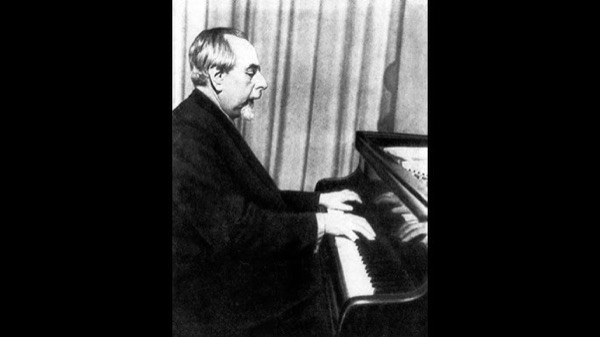
Samuil Feinberg at the piano
Feinberg regretted not having had the opportunity to study and play the organ. He even travelled to Germany to attend organ concerts given on the historic instruments at various churches.
Feinberg fashioned a large number of transcriptions that resulted in published works based on Beethoven and old Italian composers, as well as Tchaikovsky, Mussorgsky, and Borodin. He also knew a substantial number of transcriptions of Bach’s organ works before he decided to make his own contribution.
Christophe Sirodeau writes that Bach transcriptions from the organ to the piano occupied a special position in Russia. Since Russian Orthodox churches were not equipped with organs, it was virtually necessary for the repertoire to pass from the organ to the piano if it was to be heard. Transcriptions served to disseminate music. (Sirodeau, Bach Piano Transcriptions, 2004)
Johann Sebastian Bach: Prelude and Fugue in E Minor, BWV 548, “Wedge” (arr. S. Feinberg for piano) (Martin Roscoe, piano)
Pianism as Art
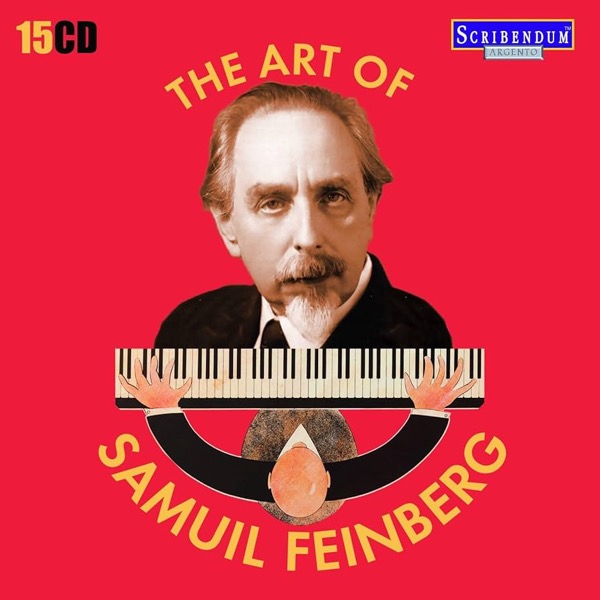
The Art of Samuil Feinberg (Scribendum Argento, 15 CD)
Samuil Feinberg’s book Pianism as an Art probes the relationship between interpreter and composer. And while he pledges complete fidelity to the original score, he does believe that transcriptions form an exception.
As he explains, “transcriptions are the composer’s desire to participate in the realisation of the original intentions… A noteworthy performer who has devoted his life to working on perfect realisations of the ideas of various composers, has spent many hours on practice and technique, and has penetrated special mysteries that have been opened only to him.”
“Thus, the only area where a pianist has the right to introduce creative corrections to the author’s style is that of transcriptions and arrangements. However, even in this domain, one should avoid unnecessary deviations, extraneous rhetoric, and invented passages and ornaments that violate the composer’s style.”
Johann Sebastian Bach: 18 Chorales, BWV 651-668, “Leipziger Chorale”: Allein Gott in der Hoh’, BWV 662 (arr. S. Feinberg for piano) (Martin Roscoe, piano)
Preserve or Transform?
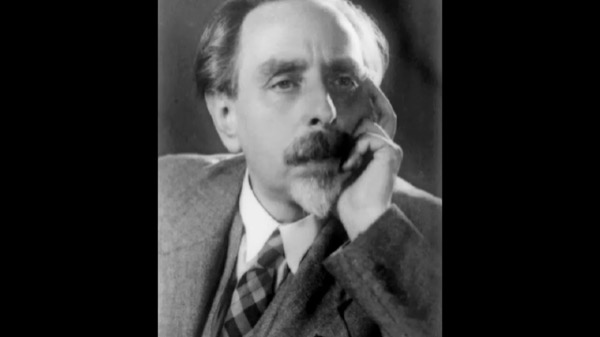
Samuil Feinberg
With special reference to Bach transcriptions, Feinberg writes, “What is fairest in a transcription? To force oneself to preserve the original text as precisely as possible, with the prior knowledge that, on the piano, an organ work’s expression will be significantly reduced?
Or to try to find a maximum of light and shade, to create a sort of pianistic equivalent of the organ’s power, even if that implies an inevitable dose of enrichment and addition to what had originally been written?”
“One might preserve the original text of a work almost completely, and, at the same time, smother the charm of the original in such a half-transcription. Or one might rework the original, creating a pianistic equivalent of it, and, despite everything, in so doing reveal the greatness of Bach’s music all the more strongly.”
Johann Sebastian Bach: Ein feste Burg ist unser Gott, BWV 720 (arr. S. Feinberg for piano) (Martin Roscoe, piano)
Elegant Rival
When we think of transcriptions of Bach’s organ music, Busoni and Liszt immediately come to mind. In comparison with Liszt, Feinberg created elegant and sleek keyboard transcriptions that forgo Lisztian extremes of texture and doubling to achieve a more intimate chamber style.
Feinberg’s transcriptions are generally spacious, and he favours the simultaneous use of distant registers with constant contrasts. Feinberg, like Busoni, is fully aware of the underlying musical programme of each piece, and this affects the musical spacing that he envisaged in each case.
The “Largo” from Bach’s Trio Sonata No. 5 leans heavily towards Busoni. Whereas all the other transcriptions show a reduction in proportion and musical scale compared to the original, this transcription is much more festive.
Johann Sebastian Bach: Trio Sonata No. 5 in C Major, BWV 529: II. Largo (arr. S. Feinberg for piano) (Martin Roscoe, piano)
Making Every Voice Sing
As Christophe Sirodeau points out, this piece resembles Busoni’s transcription of the Chaconne for solo violin, not only in its harmonic and textural inventiveness but also in the great disparity and change of scope between the original and the adaptation. (Sirodeau, Bach Piano Transcriptions, 2004)
Feinberg once said about playing Bach on the piano, “We cannot fully imitate harpsichord colours. However, the contemporary piano enables us to make every phrase, every voice expressive by strengthening or weakening the sound.”
Feinberg was an intellectual, sophisticated and highly educated man whose interests and knowledge went far beyond music and piano playing. In his Bach transcriptions, he expressed himself in the most lucid and perceptive way.
For more of the best in classical music, sign up for our E-Newsletter
Johann Sebastian Bach: Organ Concerto in A Minor, BWV 593 (arr. of Vivaldi’s Violin Concerto in A Minor, RV 522) (arr. S. Feinberg for piano) (Martin Roscoe, piano)