In the afternoon of 27 May 1840, the greatest violinist the world had ever known died at the age of 57. Niccolò Paganini had revolutionised violin technique and essentially invented the concept of the virtuoso performer.
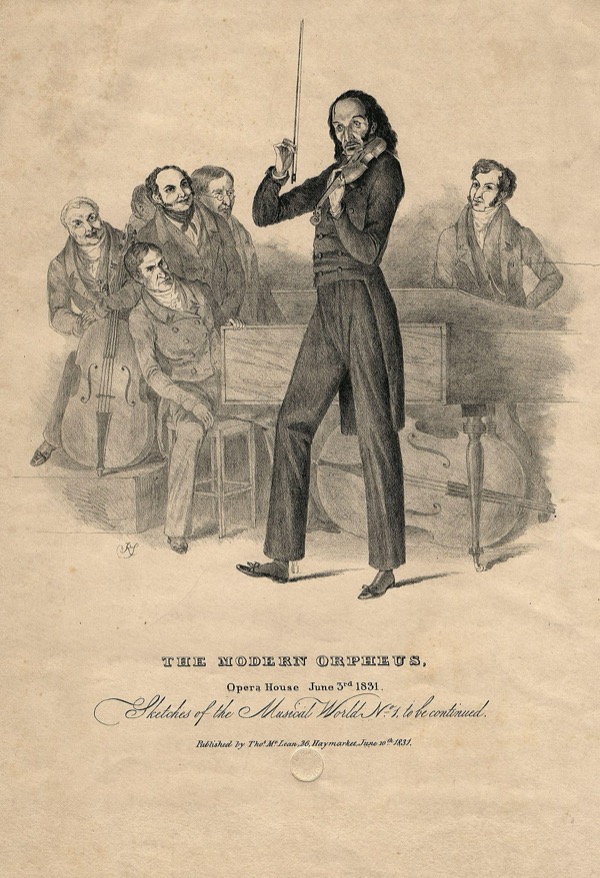
Niccolò Paganini by Richard James Lane
His legendary 24 Caprices, Op. 1, those showstoppers that have haunted violinists for two centuries, have been immortalised in transcriptions by Brahms, Rachmaninoff, and countless others.
His six violin concertos push the instrument to its physical limits with rapid double-stops, left-hand pizzicato, and ricochet bowing. Paganini was no ordinary fiddler; he was the violinist of myth and legend.
Yet, did you know that he composed well over 100 works for the guitar? Often attributed to Paganini is the saying, “the violin is my mistress, but the guitar is my master.” As we commemorate Paganini’s passing on 27 May, let us highlight his fifteen quartets for guitar and strings, mostly composed between 1813 and 1820.
Niccolò Paganini: Quartet for Guitar & Strings No.6 in D minor, Op. 5/3 “Allegro” (Zanon, Kashimoto, Abrahamyan, Park)
Paganini’s Secret Instrument
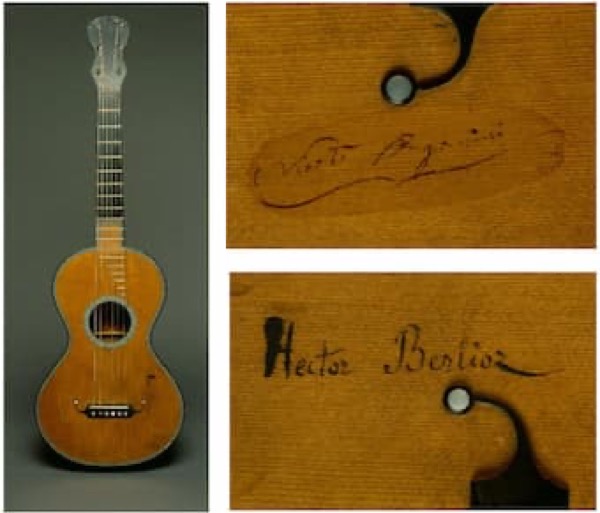
Guitar that belonged to Paganini and then to Berlioz © Strings by Mail
Around the turn of the 19th century, the modern six-string guitar had become increasingly common. It was frequently used in domestic music-making as the instrument’s sound had become more powerful and expressive.
The instrument was highly prized in aristocratic circles, and it gradually became a solo instrument. Hector Berlioz, a competent guitarist himself, mentions the instrument in his Treatise on Orchestration, and suggests that “it is almost impossible to write well for the guitar without being a player on the instrument.”
We have no conclusive evidence that Paganini took guitar lessons, but he certainly possessed the physical and intellectual skills to master the instrument. As he later told his biographer Julius Schottky, he very much enjoyed playing the guitar.
Niccolò Paganini: Guitar Quartet No. 7 in E Major, MS 34 (Paganini Ensemble Vienna)
Bohemian Adventures
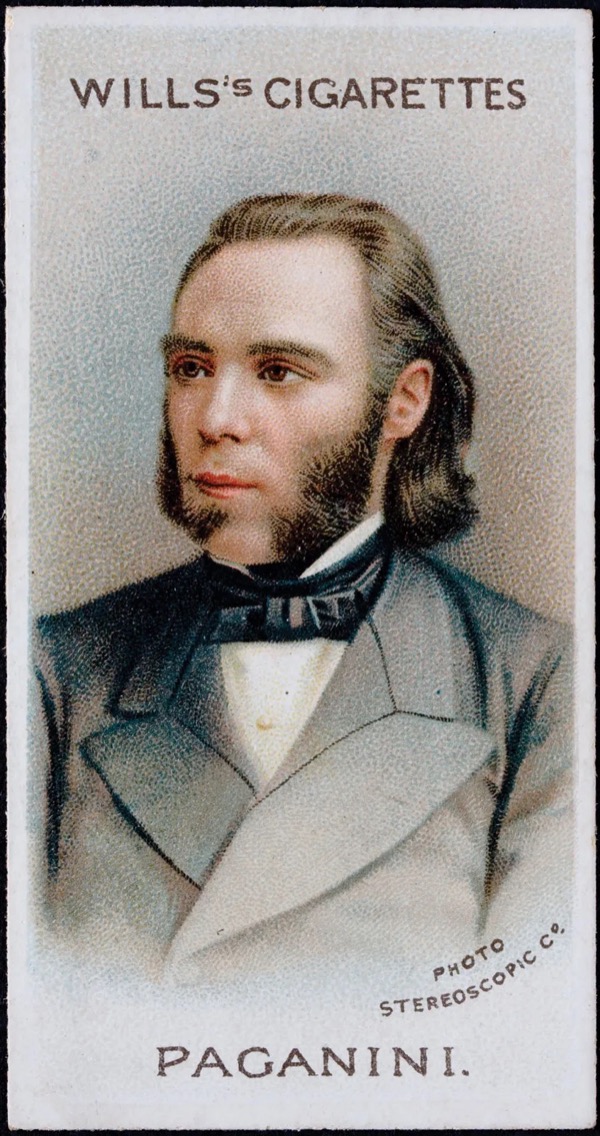
Niccolò Paganini cigarette trading card
Paganini wrote, “I love the guitar for its harmony; it is my constant companion on all my travels.” Seemingly, he would play the guitar alongside the violin, often as a soloist or in a duet. We also learn of Paganini’s guitar adventures from a surprising source: Charles Baudelaire‘s Les Paradis Artificiels of 1860.
“There was a Spaniard, a guitarist, who travelled for many years with Paganini. This was before the epoch of Paganini’s great rise to official glory.
The two of them led the vagabond life of bohemians, of wandering musicians, of people without ties to family or homeland. Together, guitar and violin, they gave concerts in every town and village through which they passed. And thus they wandered from country to country.”
Niccolò Paganini: Guitar Quartet No. 12 in A Minor, MS 39 (Paganini Ensemble Vienna)
Baudelaire’s Portrait
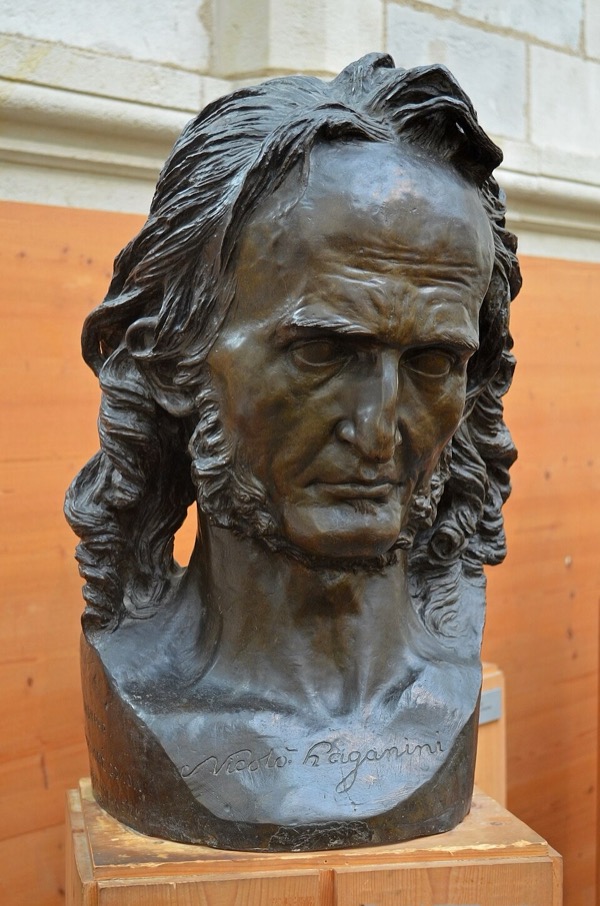
Niccolò Paganini by David d’Angers
Baudelaire continues, “Everywhere he went, strumming his strings, making them sing harmoniously beneath his thumb, a crowd always followed. With such a secret, one never goes hungry.
They followed him as Jesus Christ was followed. Who could refuse dinner and hospitality to this man, a genius, a sorcerer who had touched the depths of your soul with his most beautiful, most secret, most mysterious songs!
This man, I am told, could easily obtain simultaneous sound from an instrument capable of yielding only a succession of notes. Paganini carried their money and managed their budget, which ought not to surprise anybody.”
Niccolò Paganini: Guitar Quartet No. 2 in C Major, Op. 4, No. 2, MS 29 (Paganini Ensemble Vienna)
Luigi Legnani
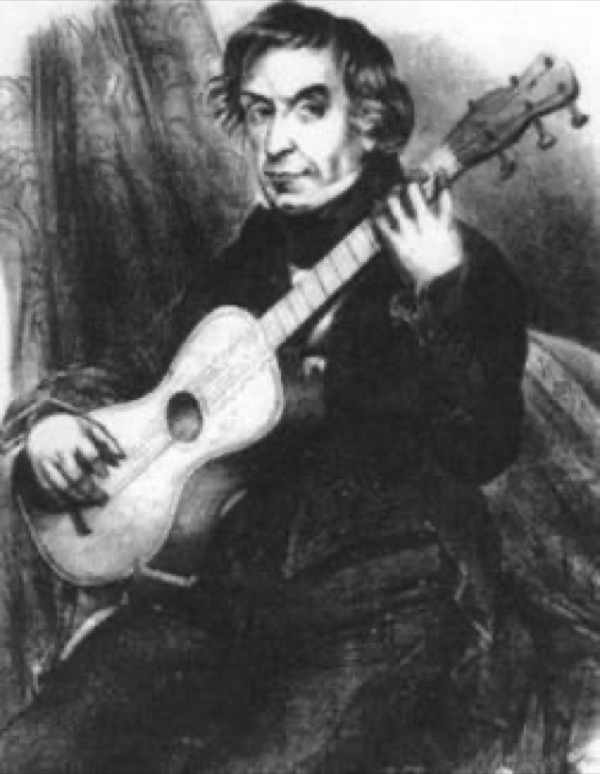
Luigi Legnani
Possibly, Baudelaire got the nationality of the Spanish guitarist wrong, because Paganini is known to have performed with the Italian guitarist Luigi Legnani. They met in Genoa in 1835 and performed in a number of concerts together.
In fact, Legnani was called the “Paganini of the guitar,” and Paganini composed a number of sonatas especially for him. As you might well imagine, these compositions had brilliant guitar parts discreetly accompanied by simple violin passages.
It has been suggested that this feature allowed Paganini and Legnani to swap their instruments in concert in order to perform these works: as a basic violinist, Legnani could easily accompany his friend playing the guitar.
Niccolò Paganini: Guitar Quartet No. 8 in A Major, MS 35 (Daniel Rowland, Vladimir Mendelssohn, Razvan Popovici, Joel Waterman, Claude Frochaux, Maja Bogdanović, Alberto Mesirca)
Crowning Chamber Music
In all, Niccolò Paganini wrote fifteen quartets featuring the violin, viola, guitar and cello. Scholars suggest that these quartets are among Paganini’s finest chamber compositions and represent the apex of his chamber music production.
Paganini probably began writing his quartets for guitar around 1813 and dedicated them to his Genoese friends and acquaintances. Only the first six would be published during his lifetime in 1820, and some apparently remain unpublished to this day.
These quartets feature attractive and singing melodies throughout, with Paganini occasionally adding a melancholic or operatic flavour. The majority follow standard classical structures, with occasional romantic touches.
Niccolò Paganini: Guitar Quartet No. 3 in A Major, Op. 4, No. 3, MS 30 (Sonja Prunnbauer, guitar; Rainer Kussmaul, violin; Ulrich Koch, viola; Marcel Cervera, cello)
Equal Partner
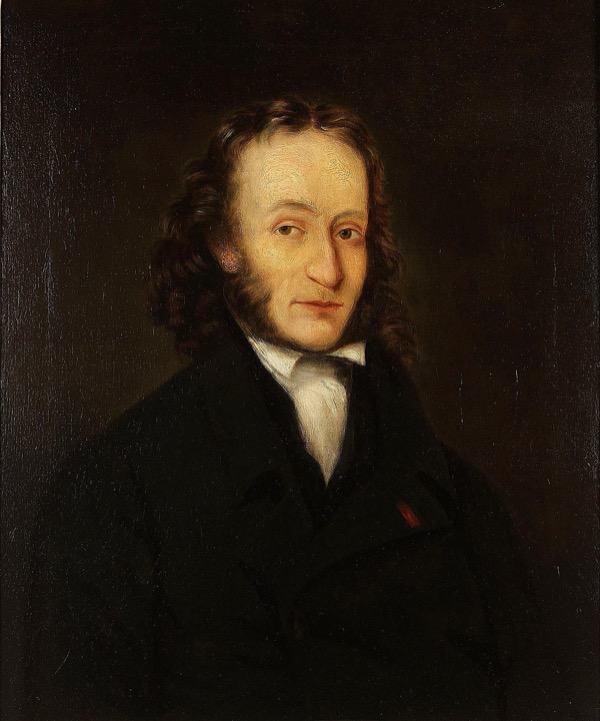
Niccolò Paganini
The guitar integrates as an equal voice, and it is certainly not a mere accompaniment. It adds strumming, plucking, and percussive textures that contrast with and complement the strings.
However, it is the violin that most often gets the most brilliant and virtuosic material.
On occasion, the viola, cello, and guitar also get prominent solos and thematic statements. And we certainly find plenty of intricate interplay between the guitar and the three-string instruments. These delightful and charming works, full of wit and melodious brilliance, are said to have helped establish the guitar as a legitimate concert instrument.
Nevertheless, the Paganini guitar quartets were forgotten for a long time, and only recently have scholars and performers started to explore this repertoire. We are now starting to understand that both the violin and guitar are integral parts of Paganini’s unique personality.
Clearly, his violin music was designed for public consumption, with all the superficial display that the public demanded, while the guitar was for music at home among friends. However, this delicious music was created by the same man.
For more of the best in classical music, sign up for our E-Newsletter