Bach’s Sonatas and Partitas for solo violin are six of the most unusual works ever written for the instrument.
They exemplify a number of contradictions. They are works of orchestral complexity – composed for completely unaccompanied violin. They are incredibly technically demanding – but they weren’t written as showpieces. They were neglected for many years after their composition – but now are foundations of every modern violinist’s repertoire and required at every major audition.
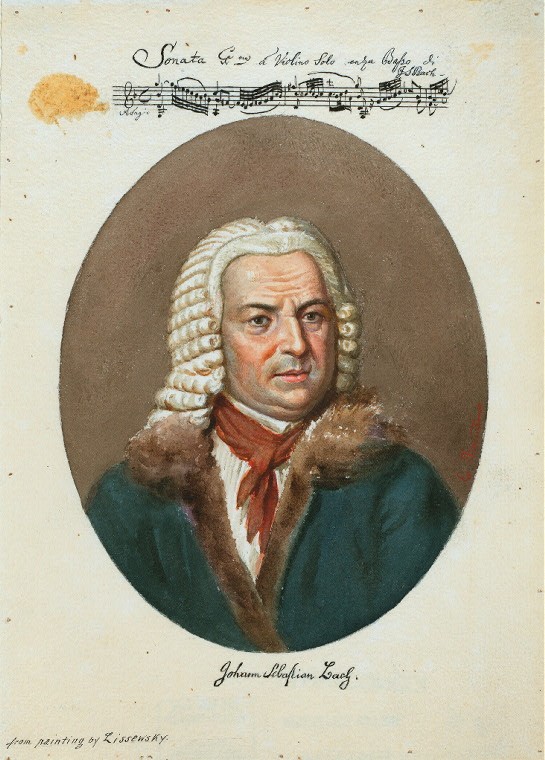
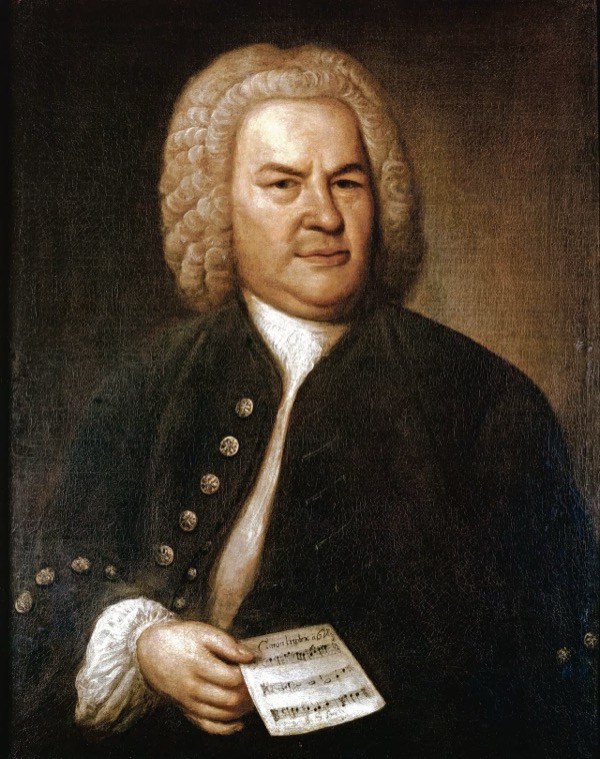
Portrait of J.S. Bach
They also don’t serve any commercial purpose; in fact, they may have been a cri de cœur after the death of Bach’s young wife.
Today, we’re looking at what the Sonatas and Partitas are, how they’re structured, the recordings worth your time – and where to begin.
What are the Bach Sonatas and Partitas?
Bach’s sonatas and partitas consist of three sonatas and three partitas, with the numbers BWV 1001–1006.
Scholars believe they were written in 1720, in the middle of Bach’s time as Kapellmeister for the court of Leopold, Prince of Anhalt-Köthen, a tenure that lasted between 1717 and 1723.
Prince Leopold preferred a simpler style of sacred music than Bach tended to write, so Bach focused on composing more secular music than during other times in his career.
Leopold also was a musician himself and enjoyed seeing what instrumental writing Bach could come up with.
Augustin Hadelich discusses his recording of the Sonatas and Partitas
The sonatas follow the sonata da chiesa – “church sonata” – structure: four movements, alternating slow and fast, anchored by a substantial fugue as the second movement. They are serious, architectural, and inward-looking.
Meanwhile, the partitas are dance suites. Each one is built from a sequence of stylized Baroque dances – allemandes, courantes, sarabandes, gigues – with each partita adding its own individual flourishes. They’re more varied in mood and more overtly physical in their rhythmic energy.
Despite the differences between the two, these works are conceived as a whole: in the manuscript, the end of the first sonata and beginning of the first partita are on the same page.
A Guide to All Six Sonatas and Partitas
Sonata No. 1 in G minor
James Ehnes plays the Sonata No. 1 in G minor
The first movement Adagio begins with an unforgettable, ringing G minor chord. It feels improvisatory, almost rhapsodic – but every ornament is precisely notated, and performing it convincingly requires a near-paradoxical combination of spontaneity and control.
The dramatic second movement Fugue is arresting. Listener and performer alike get a respite in the third movement Sicilienne (a type of languid dance). Still, the finale is a fast-moving finger-twisting Presto: Baroque music with a dash of Romantic era showmanship.
Partita No. 1 in B minor
Sayako Kusaka plays the Partita No. 1 in B minor
The first partita consists of four Baroque dance forms – an Allemande, Courante, Sarabande, and Bourrée.
After each dance movement comes a variation known as a Double, in his Doubles, Bach takes the same harmonic skeleton – the same chord progressions and shape – but recomposes the melody in faster, more virtuosic figuration.
Even in his dance movements, the cerebral Bach is figuring out ways to challenge himself intellectually.
Sonata No. 2 in A minor
Shunske Sato plays the Sonata No. 2 in A minor
The sonata in A minor begins with an ominous, improvisatory Grave movement – Italian for solemn, heavy, serious.
The minor-key Fugue is driving and relentless, while the Andante requires the violinist to simultaneously sustain a pulse of eighth notes beneath a breathtaking melody.
The finale, a darting Allegro, echoes its own phrases, evoking an organ performance. The entire effect is mesmerising.
Partita No. 2 in D minor
Veronika Eberle playing the Partita No. 2 in D minor
With the second Partita, Bach decides to combine the dance rhythms of the first partita with the sombre drama of the A minor sonata.
The Allemande sets the stage, while the Courante ducks, dives, and twirls. The slow-paced third movement Sarabande tugs at the heartstrings (you will often hear violinists pull this movement out in religious or funereal contexts).
The spirited perpetual motion Gigue would work well as a finale – but Bach doesn’t end the partita there.
Instead, as if it’s an afterthought, he tacks on the greatest movement ever written for solo violin: the monumental Chaconne, which is almost as long as the other four movements combined. The Chaconne is such an important piece that we dive into it separately below.
Sonata No. 3 in C major
Midori Seiler playing the Sonata No. 3 in C major
The D minor Partita has long been heard as a portrait of grief – and the C major Sonata that follows as its transcendent counterpart, a sonic portrait of heaven.
The sonata begins with a stunningly beautiful C major Adagio, which is followed by an exuberant Fugue whose subject is based on the Pentecost chorale “Komm, Heiliger Geist, Herre Gott” (“Come, Holy Ghost, Lord God”).
The sweet, lovely Largo has been interpreted as a depiction of paradise. It is followed by an Allegro Assai that, played perfectly, is just as thrilling as any showpiece.
Partita No. 3 in E major
Hilary Hahn playing the Partita No. 3 in E major
In this final partita, Bach continues exploring the C major sonata’s theme of joy. However, this time, he writes in E major, a key that sounds bright on the violin, given that the violin’s highest open string is an E.
That E-string creates a ringing effect in the famous and gutsy Preludio, consisting of dozens of daring string crossings taken at ferocious speed.
The following movements each embody different colours of optimism. The Loure calls to mind a simple, gentle shepherd’s dance. The Gavotte is both genteel and saucy. The two Minuets express the same emotion (and the second Minuet sounds very similar to a country fiddler with a drone).
The closing Bourrée and Gigue send listeners off with bright tidings. It is ironic – yet deeply satisfying – that this complicated, monumental collection of violin music ends with the sheer joy of simple, stripped-down dances.
The Chaconne: One of the Greatest Pieces of Music Ever Written
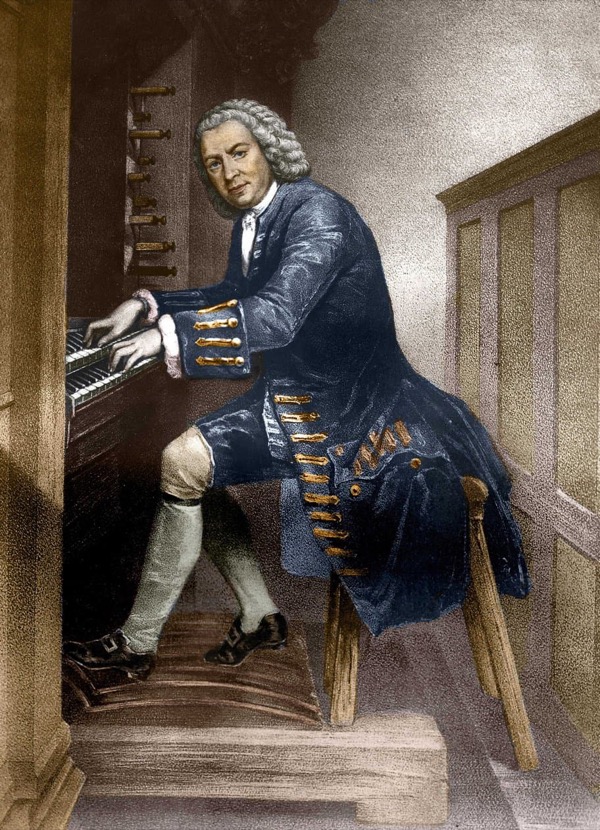
Johann Sebastian Bach playing the organ (c. 1881)
Nearly every classical violinist would agree that the Bach Sonatas and Partitas are the greatest works ever written for the instrument.
But we also agree about which individual movement is the greatest, and that’s the Chaconne from the D minor Partita.
A chaconne is a Baroque dance form in slow triple time with a short, obsessively repeating line in the bass.
Of course, it’s madness to write such a piece for solo violin: how can one instrument play both a melody and a repeating bass line?
Bach makes it work in several ways, including implying a bass line in the writing that our ears fill in automatically, requiring demanding string crossings, and even double, triple, and quadruple stops (that means playing two, three, and four strings at once).
Its range and ambition are unlike any other piece ever written.
Ray Chen playing the Chaconne
The technique of this work, and its kaleidoscope of emotions associated with grief – sadness, brokenness, fury, determination, and so many more – have led people to wonder why Bach wrote such an unusual work.
One theory is that it is his tribute to his late wife. Maria Barbara Bach died unexpectedly in July 1720, while Bach was on a work trip accompanying his employer, Prince Leopold, to a spa town. Bach wasn’t able to say goodbye or even attend her funeral, and her death left him a single father of several young children.
We will probably never know for sure, but the idea that the Chaconne is a tribute to her is an interpretation passed down among violinists for generations.
The piece has been an obsession of several great composers, including Brahms and Busoni, who each wrote transcriptions of the Chaconne in their own time, entering into dialogue with Bach across the centuries.
Where Should I Start?
Given all that, what should new listeners start with?
If you want to be devastated, start with the Chaconne from the D minor Partita.
If you want exuberant joy, start with the Allegro Assai from the C major Sonata.
If you want a majestic and mysterious movement that sounds like an improvisation, start with the Adagio from the G minor Sonata.
And if you want simple country dances, enjoy the E major Partita in its entirety. This is an entry point for many violinists and classical music lovers.
The best part? No matter where you start, you will never outgrow the Sonatas and Partitas or become bored with them. Even the world’s greatest violinists spend decades with them, finding new things to appreciate every day.
They will forever be the greatest works ever written for solo violin – and hopefully now you have a glimpse into why.
For more of the best in classical music, sign up for our E-Newsletter