Paavo Järvi’s musical roots spring from Estonia. His fruitful collaborations span across Nordic, Germanic, Russian, and transatlantic spheres. Ahead of his 2026 Asian tour, I asked him about the Estonian Festival Orchestra and its repertoire. Paavo spoke warmly about Estonian composers such as Erkki-Sven Tüür and Arvo Pärt, his long-standing connection with Sibelius, and his historically informed approach to Brahms. Now a seasoned teacher of younger conductors, he also described Leonard Bernstein, alongside his father, Neeme Järvi, as two truthful mentors whose curiosity and commitment continue to inspire.
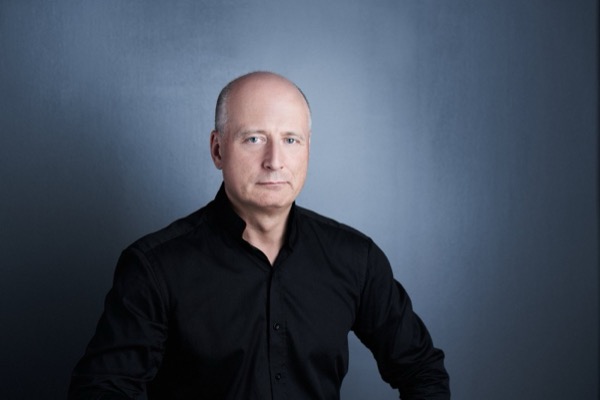
Paavo Järvi (Photo by Kaupo Kikkas)
Please tell us more about the Estonian Festival Orchestra that you founded.
We share a certain enthusiasm and openness—or, as I call it, a youth orchestra’s attitude. About half the musicians are exceptionally talented young Estonians, many of whom have graduated and now hold top orchestral positions. The other half come from Berlin, Munich, Paris, London, Frankfurt, and elsewhere. I place them alongside the Estonian players to create musical exchanges as well as professional and personal connections.
Iván Fischer’s Budapest Festival Orchestra was my biggest inspiration. Fischer wanted to create an orchestra that was deeply connected musically, rather than an institutionalised workplace. Every time the musicians come together, it should feel like a special occasion, not simply a workplace where people come in the morning and go home at night.
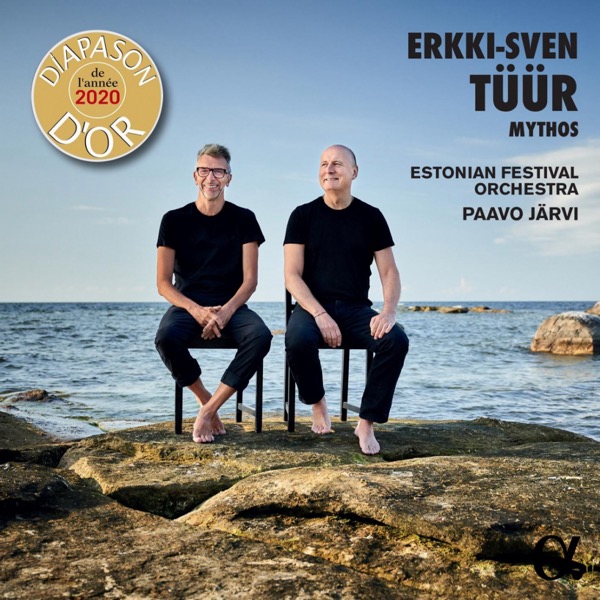
Can you introduce the Estonian composer Erkki-Sven Tüür, whose Action-Passion-Illusion you will perform this time?
We went to school together and played in the same rock band—I was the drummer. Tüür had a famous progressive rock band in Estonia, and that’s how he started composing. For more than 30 years now, I’ve happily performed his music and recorded albums with the Estonian Festival Orchestra.
Tüür’s compositional style has evolved in fascinating ways. Initially, his music was more rock-influenced, but over time it developed into a highly sophisticated, rhythmic language, full of colour and rich orchestral sound. By bringing Action-Passion-Illusion, I don’t underestimate the audience; they will get much more than we expect and find it refreshing.
Erkki-Sven Tüür: Incantation of Tempest (Estonian Festival Orchestra; Paavo Järvi, cond.)
Why did you decide to play Arvo Pärt’s Cantus in Memory of Benjamin Britten?
This is one of the pieces that made him famous, introducing his new Tintinnabuli style. It’s like pure water: undiluted, honest and free, not academic, busy, or overly clever. The layers of string sounds create a sense of purity and simplicity.
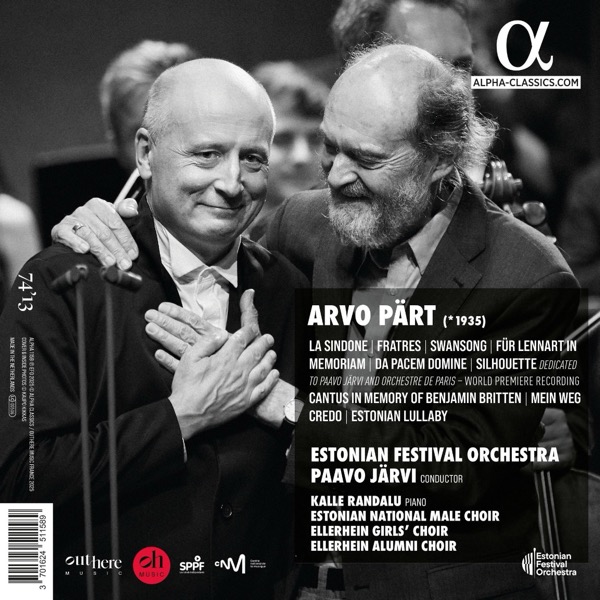
I’ve known Arvo Pärt since I was a child, as he has been a close friend of our musician family. Just a couple of days ago, Pärt turned 91. We recorded an album of his music for his 90th birthday, called Credo. He was also recently awarded the Goethe Medal in Germany, one of the highest honours for an artist.
Arvo Pärt: Cantus in memoriam Benjamin Britten (Estonian Festival Orchestra; Paavo Järvi, cond.)
What does religion mean in Pärt’s music?
Pärt is religious, but also very private about his faith. I think that’s how religion should be: a private, personal, and intimate matter, not something for public consumption. Many of his compositions are based on religious texts, but I don’t think his music is “religious music”; faith is more a source of inspiration.
Your recording of Sibelius’s Cantatas won you a Grammy. You were awarded the Sibelius Medal. Can you talk about this Estonian affinity to the Finnish composer?
If one cultural figure unites Finland, Estonia, Latvia, and Lithuania, it is Sibelius. Estonians and Finns are very close—not only geographically, but also culturally and linguistically. The Soviet Union unfortunately occupied Estonia, while Finland had more years of uninterrupted cultural development. Since regaining our freedom, we’ve been trying to make up for that lost time.
Personally, I feel very close to Sibelius’s music. His Fifth Symphony represents the culmination of his development—from the more traditional First, through the very popular Second, to the Fifth, where he truly finds his own voice. I consider it one of the great symphonies of the 20th century, alongside Prokofiev, Shostakovich, and Nielsen, and it moves beyond the direct influence of German Romanticism.
Paavo Järvi conducts Sibelius Symphony No. 5 with the Berliner Philharmoniker
Can you pinpoint your own style when conducting Sibelius?
I think “interpretation” (if one can even call it that) is never static. It’s not based only on intellectual convictions or score study. It also has a lot to do with the moment, the space, the performers, and the orchestra’s connection with the repertoire. What I value in performance is a sense of improvisation and inner freedom.
As I get older, I tend to be less sentimental in some repertoire and more sentimental in others. Although Sibelius’s modern, unconventional thinking and compositional style were alien to some people at the time, he was also strongly influenced by Bruckner, Tchaikovsky, and Brahms. So “interpreting” him is a mixture of everything that came before him.
Paavo Järvi conducts Sibelius Symphony No. 2 with the Estonian Festival Orchestra
How have historically informed performance and your experience with the Deutsche Kammerphilharmonie Bremen influenced your approach to Brahms?
It has influenced me a great deal. I grew up in a conductor’s family, and my father, Neeme Järvi, was—and still is—an avid record collector. In the Soviet Union, it was difficult to get records from the West, but my father occasionally travelled with Russian orchestras and would bring recordings back. We had a large collection of Western recordings, from Furtwängler, Klemperer, Karajan, George Szell, Fritz Reiner, and Toscanini to Bruno Walter. As children, my sister and I grew up hearing different interpretations of the same Brahms symphonies.
Most were romantic, old-world, post-Wagnerian interpretations, which I think work perfectly well. But after I began working with the Deutsche Kammerphilharmonie Bremen 25 years ago, historically informed performance revealed other layers of Brahms. We are used to large symphonic ensembles, but Brahms conducted his First Symphony with only about 40 musicians, which changes the piece’s transparency, agility, and overall character. Regardless of the size, different interpretations can work if they are convincing. Right now, my approach is an intuitive mix of these two worlds. The truth lies somewhere in between.
Paavo Järvi in The Brahms Code
The repertoire choice of your Asian tour—Tüür, Pärt, Sibelius, Rachmaninoff, Brahms—places the Estonian Nordic in between the Slavic East and the Germanic West. Has this in-betweenness fueled Estonia’s creativity?
Art comes from individuals and from an environment where original ideas can flourish. It’s not an industrial field where numbers measure success. If you look at Estonia, with only about 1.3 million people, we have composers such as Eduard Tubin, Veljo Tormis, Erkki-Sven Tüür, Lepo Sumera, Tõnu Kõrvits, and Arvo Pärt whose music is performed worldwide, with many more coming. Of course, a country with a billion people has a much larger pool of talent. But per capita, Estonia has been remarkably successful. There shouldn’t be a correlation between a country’s size or power and the importance of its art.
You regularly teach at the Järvi Academy at the Pärnu Music Festival and Conductors’ Academy at the Tonhalle-Orchester Zürich. How do you recognise talent?
Future talent is a balance between personality, natural talent, drive, knowledge, and professional preparation. It’s quite a big package. Some don’t have a natural predisposition for conducting, just as someone may not have the physical predisposition to play the violin. I don’t look for the most polished or ready conductor. I look for potential—something that can be developed across these areas.
Paavo Järvi teaches at Tonhalle Conductors’ Academy
How do conductors balance giving musicians the freedom to let things happen while still achieving the specific effects without micromanaging?
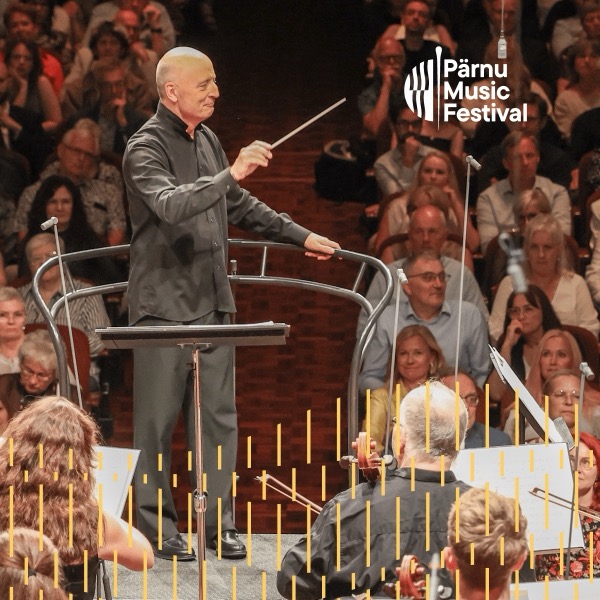
Micromanaging is a term often used without truly understanding the subtle workings of conducting. In some ways, conducting is micromanaging—but knowing when not to manage is part of the art. Showing every detail isn’t micromanaging; it’s simply inexperience or a lack of the tools needed for conducting.
Good conducting guides your ideas in a way that makes musicians feel they aren’t being guided. When people say, “he just lets the orchestra play,” that is partly an illusion. The conductor is still in control but knows when not to interfere and when to step in gently, especially at moments of change or transition, which won’t happen without a conductor.
Have you consciously cultivated a precise gesture?
When I was a young conductor, I over-conducted everything and did many things I wouldn’t do now. It’s something you gradually fine-tune—mastery of techniques, your gestures, how you rehearse, even how you learn a score. Everything becomes more concentrated. I would never blame a young conductor for overdoing things; that’s part of being young. What I’m always looking for is a musical, instinctive impulse—something that comes from deeper inside rather than just the surface. Everything else can be taught after that.
Can you talk about Leonard Bernstein, one of your most important mentors?
For me, Bernstein is a 20th-century giant, someone who truly had the capacity to galvanise the world. He was at the centre of American musical life—as a composer, teacher, conductor, political and human rights activist, and guru to many young conductors.
He went to Vienna and taught the Viennese to take Mahler seriously, and he did the same for Carl Nielsen in Denmark by conducting his Third Symphony. With his profound hunger for learning and knowledge, he connected popular culture with serious symphonic music, and I don’t think he did anything he didn’t do well.
I studied with him, and it was a life-changing experience. He wasn’t tall or a media-manufactured star, but a truly larger-than-life figure. He could walk into a room and light it up with his charisma. When he conducted, he always seemed to put everything on the line, as if it were his last performance. That’s a great inspiration to me. I have two idols in my life: Bernstein and my father, who is just as committed and obsessed with music.
Can you recommend a few recordings by your father, Neeme Järvi?
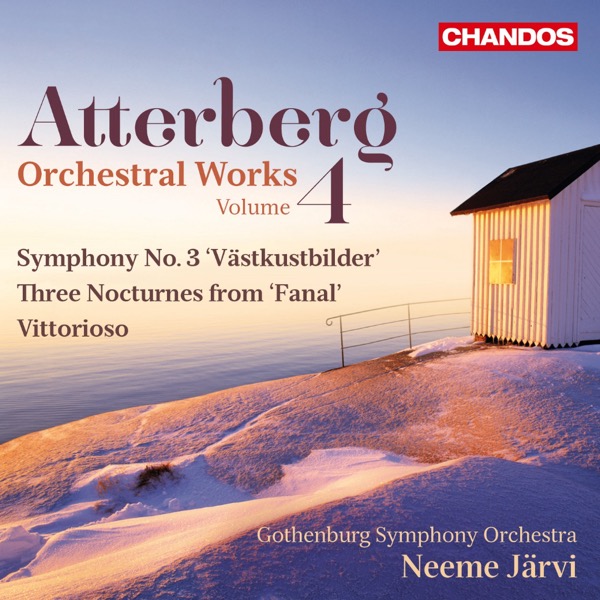
That’s hard, since he’s one of the most recorded conductors. I want to recommend a few composers that listeners might not know yet: Hugo Alfvén, Wilhelm Stenhammar, Kurt Atterberg, and Eduard Tubin. These are four Nordic composers worth discovering. I deliberately didn’t mention the standard repertoire, because I think listeners might be interested in exploring these lesser-known names from my father’s discography.
Do you have a recent fun or fulfilling moment you can share?
Humour and laughter are never a waste of time. Unfortunately, it’s not always easy to laugh when you look at the news, but you have to find humour even in difficult times. One of the things closest to my heart is the Pärnu Music Festival. Over 15 years, we’ve developed a strong cultural and musical program that reaches far beyond Estonia. We’ve built connections around the world, performed at Carnegie Hall and the BBC Proms with the Estonian Festival Orchestra, and many of my students have gone on to become successful musicians.
In terms of what gives me a sense of fulfilment, I also want to mention the Tonhalle-Orchester Zürich, where we’re currently in the middle of our Mahler cycle, which I’m very proud of, and my beloved Deutsche Kammerphilharmonie Bremen, with whom I’ve done a lot of Beethoven and am now in the middle of a Schubert cycle. So I have an interesting in-between life—Estonia, Zürich, and Bremen. I’m also looking forward to the next chapter in London, which begins in two years and will probably take us in an intriguing direction.
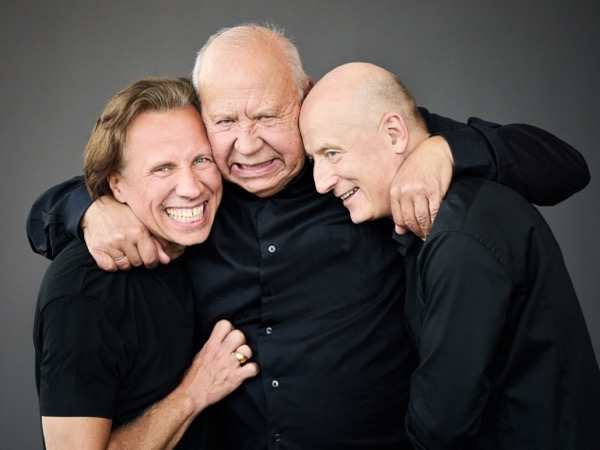
Kristjan, Neeme, and Paavo Järvi at the Pärnu Music Festival
When you think about finding hope in dreadful times, do you recall the Estonian Singing Revolution from 1987 to 1991?
Estonia has a very unique situation with the Singing Revolution. A huge majority of Estonians come together to sing Estonian folk songs. You couldn’t shoot into a singing crowd. That symbolism was incredibly powerful. Music, as clichéd as it may sound, is the highest way to bring people together. Nothing unites people more than music. All other ideologies pale next to its intimate power.
Now, with AI and new technologies, what will become more valuable than anything else is something intimate, human, private, and beyond words. Language has become a contaminated space with large language models. But real music—not manufactured music—is something people will keep trusting. When you listen to Bruckner, you know nothing about it is fake. Nothing in it is fake. It will always be honest and completely uncompromised.
For more of the best in classical music, sign up for our E-Newsletter