Do you know who Luciano Pavarotti once called “The Voice of the Century”? He wasn’t talking about himself, but about one of the most extraordinary operatic voices of the twentieth century. And that voice belonged to Joan Sutherland, born on 7 November 1926 in Sydney, Australia.
Sutherland helped to bring the music of Bellini, Donizetti, and Rossini back into the international operatic spotlight. Her radiant soprano effortlessly spanned more than three octaves, combining an extraordinary purity of tone with vocal agility that could make your heart melt.
Her recorded legacy is immense, as she released over 150 recordings, including complete operas, recital albums, and concert performances. In 2026, we celebrate the centenary of her birth, and we have taken the opportunity to compile a list of ten essential recordings that capture her artistry.
Joan Sutherland sings Donizetti: Lucia di Lammermoor, “Il dolce suono” (Mad Scene)
The Road to Lucia
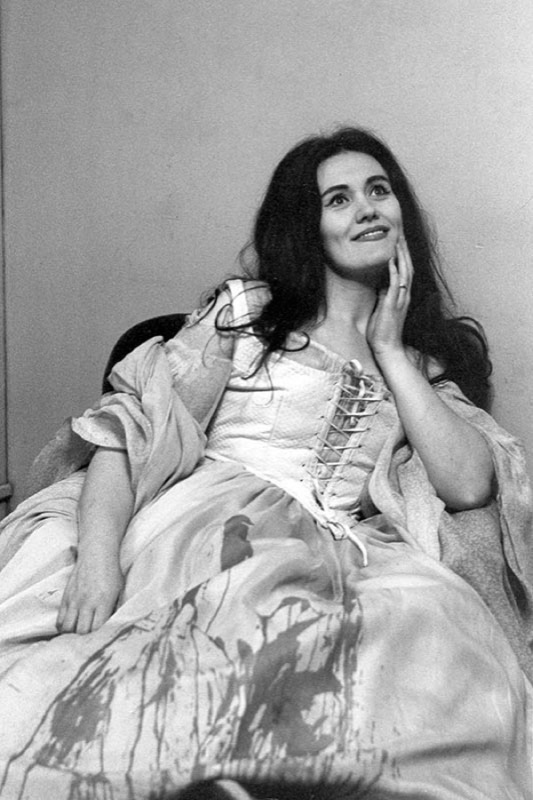
Joan Sutherland
Initially, Joan Sutherland was trained to sing in the lower register, with all the makings of a dramatic soprano. She initially protested, but eventually agreed and learned the dramatic arias of Verdi and Wagner.
She made her concert debut as Dido in Purcell’s Dido and Aeneas in 1947, followed by various recital performances. She met and later married pianist Richard Bonynge, who convinced her that her voice was not really suited to Wagner but was flexible enough to sing Donizetti and Bellini.
Sutherland took on the title role of Lucia in Donizetti’s Lucia di Lammermoor in a Covent Garden revival staged by Franco Zeffirelli in 1959. She became an international sensation, and the recording under John Pritchard captures her exceptional vocal assurance, helping make her the leading coloratura soprano of her generation.
Léo Delibes: Lakmé, Act III: Sous le ciel tout étoilé (Joan Sutherland, soprano; Monte-Carlo National Opera Orchestra; Richard Bonynge, cond.)
More Than Spectacular High Notes
If I could have only one solo album for my opera collection, it would have to be Joan Sutherland: The Art of the Prima Donna, released by Decca in 1960. The two-disc recital brings together fifteen arias, ranging from Handel to Rossini, and from Meyerbeer to Delibes.
Recorded early in her international career, Sutherland moves effortlessly between musical styles. Her command of coloratura and her ability to sustain lyrical lines are outstanding.
This album won the 1962 Grammy Award for Best Classical Solo Vocal Album, making Sutherland the first Australian to receive that honour. It’s one of my favourite albums because it shows how much more there is to her artistry than just spectacular high notes.
Joan Sutherland sings Handel: Alcina, “Tornami a vagheggiar”
A Sorceress and an Extraordinary Voice
In the mid-20th century, Handel’s operas had not yet caught the attention of modern opera audiences. The sorceress Alcina is a very powerful character, and everything on her magical island is either an illusion or a former lover transformed into a tree or a rock.
She shares the stage with Ruggiero, who has already discovered Alcina’s major weakness: she has fallen in love with him. Sutherland naturally adapts her voice to this earlier repertoire, bringing a wonderful sense of dramatic intensity to the story.
She effortlessly moves between the contrasting moments of enchantment, of passion, and despair. After all, she is a woman whose supernatural powers cannot protect her from the vulnerability of love.
Joan Sutherland sings Bellini: La Sonnambula, “Ah, non credea…Ah! Non giunge”
Endless Melody
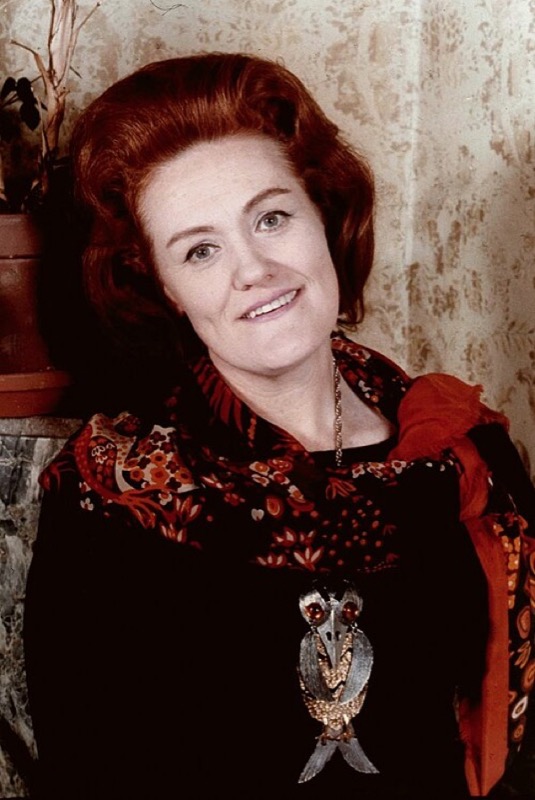
Dame Joan Sutherland © Allan Warren
The undisputed master of bel canto, Vincenzo Bellini, demanded an almost supernatural ability to sustain long melodic lines. And his 1831 La sonnambula is one of his supreme achievements.
Here, as elsewhere, Sutherland’s voice shows little effort or vocal strain. With a beautifully rounded tone, every phrase unfolds smoothly, allowing the melody to emerge naturally. She makes it sound as though she sings the entire musical thought in one continuous breath.
Let’s not forget her delicate control of volume, with softer notes remaining warm and full of body. Ornamentation always sounds as though it is part of the melodic line, and listen to those beautiful and effortlessly projected trills.
Joan Sutherland sings Bellini: Norma, “Casta Diva”
Grandeur and Grace
Let’s stay with Bellini for a moment, and there’s no doubt the soprano prayer “Casta Diva” from Act I has become one of the most beloved arias in all of opera. All the operatic greats have taken up this aria, and so has Joan Sutherland.
The French soprano Natalie Dessay writes about her performance here, “Sutherland had a huge, huge voice and she was able to lighten suddenly and to take this quick coloratura, and she had also the top high notes like a coloratura soprano but with a big, huge voice, which is very rare.”
In this role, Sutherland demonstrates her considerable power and dramatic authority. All the vocal agility and lyrical delicacy required in this aria come across with great confidence and musical understanding. Sutherland’s “Casta Diva” is certainly in my personal top three of all time.
Joan Sutherland sings Rossini: Semiramide, “Bel raggio lusinghier”
Virtuosity on an Almost Unbelievable Scale
Among the most impressive demonstrations of Sutherland’s technical resources is her performance in Rossini’s Semiramide. I’d call this virtuosity on an almost unbelievable scale.
The coloratura in Rossini unfolds at extraordinary speed, as passages feature rapid scales, turns, trills, and ornamental figures. And here comes Sutherland, allowing us to hear individual notes distinctly, even at very high speed.
The rapid ascending and descending scales, which strike fear into even the most seasoned singer, are remarkable even in Sutherland’s performance, with the tonal quality maintained throughout. It’s easy to become mechanical, but her delivery never feels like mere athleticism. Sutherland makes Rossini sound easy.
Joan Sutherland sings Donizetti: La Fille du Regiment, “Salut a la France!”
Vocal Fireworks and Comic Flair
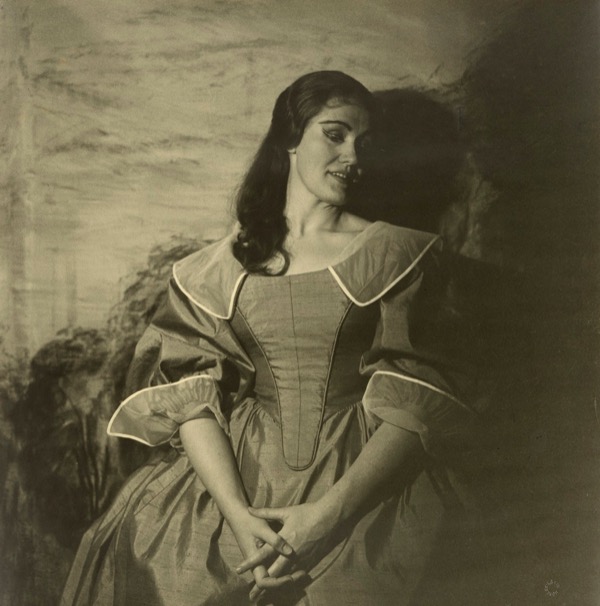
Joan Sutherland © National Portrait Gallery
I am already dizzy from Sutherland’s dramatic presentations and her incredibly technical achievements. Just in time, let’s find Sutherland in one of her most appealing comic portrayals in Donizetti’s La Fille du Régiment.
It’s difficult not to be completely impressed by Sutherland’s infectious sense of fun in a story of a young woman raised by a regiment of soldiers. But don’t let the funny story fool you, as Sutherland retains all the vocal sophistication expected of a supreme bel canto interpreter.
In her performances, I love the combination of spectacular vocal technique with a real sense of theatre. Everything is brilliantly sung, as expected, but she also convinces us of Marie’s character. Sutherland is not only a glorious singer, but she is also an exceptional storyteller.
Jules Massenet: Esclarmonde, Act II: Voici le divin moment (Joan Sutherland, soprano; National Philharmonic Orchestra; Richard Bonynge, cond.)
Most Ambitious Bel Canto Adventure
Let’s now turn to Massenet’s Esclarmonde, a largely forgotten French opera that became one of Sutherland’s most ambitious projects. The role of a Byzantine princess endowed with magical powers combines French lyricism with elaborate coloratura writing.
The opera is a fascinating mix of medieval fantasy with exotic orchestral colour, and spectacular vocal writing. It had largely disappeared from the repertoire, but was resurrected by Richard Bonynge. Sutherland first performed the title role in 1974, and the score is notorious for its stratospheric vocal writing.
In a 2002 interview with Martin Kettle, Sutherland was asked which of her recordings she would most like to be remembered for. And her answer was Esclarmonde. She actually singled out the love duet, calling it “the most erotic piece I ever sang.” Esclarmonde suited her voice exceptionally well, and it gave her a particularly rewarding dramatic experience.
Joan Sutherland sings Bellini’s I Puritani: “Qui la voce…”
Tenderness at the Edge of Madness
I Puritani was Bellini’s last opera, and many consider it one of his most ambitious and beautiful works. And here we find yet another “Mad Scene,” which creates a remarkable portrait of psychological turmoil.
This kind of dramatic setup suits Sutherland’s abilities, as her voice has the flexibility to navigate intricate passages and famous long melodic arches. In addition, her performance has a genuine dramatic dimension.
Elvira’s madness features plenty of vocal fireworks, but Sutherland finds a fragile, childlike quality in the character. Those wonderful changes of vocal colour portray a woman whose grip on reality is slipping away, and these moments of tenderness suddenly give way to bewilderment and agitation.
Giacomo Puccini: Turandot, Act II Scene 2: In questa reggia (Joan Sutherland, soprano; London Philharmonic Orchestra; Zubin Mehta, cond.)
Dramatic Majesty
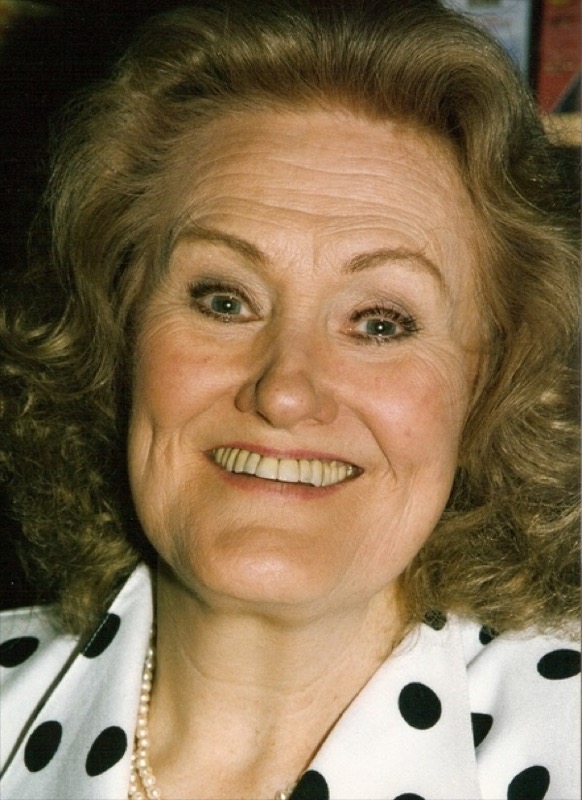
Joan Sutherland
Joan Sutherland’s artistry is almost overwhelming, and I had to think and listen for some time before I decided on the concluding selections for my list of the ten essential recordings. In the end, I decided on her interpretation of Puccini’s icy princess Turandot.
Unlike the demands of Bellini’s and Donizetti’s heroines, Turandot calls for a powerful voice to sustain declamatory passages over a large orchestra and a commanding upper register. Sutherland has it all, as her voice has plenty of weight and brilliance, and she never loses its characteristic warmth and rounded beauty.
Sutherland never sang Turandot on stage, so her recording with Luciano Pavarotti as Calaf, Montserrat Caballé as Liù, and Zubin Mehta conducting the London Philharmonic Orchestra makes for a wonderful historical document and a fitting tribute to her centenary.
For more of the best in classical music, sign up for our E-Newsletter