Hugh Cutting prepares for his role debut in Gluck’s Orfeo ed Euridice in FIGURE Ensemble’s new psychological drama at Stone Nest
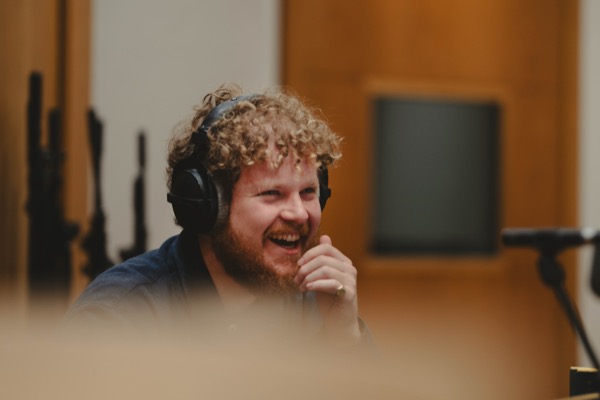
Frederick Waxman © Will Coates-Gibson, foxbrush films
In our new production of Gluck’s masterpiece with my ensemble FIGURE, founded in 2021, I wanted to do something that would collapse the distance between today’s audiences and the people who first heard Orfeo ed Euridice in Vienna in the eighteenth century to bring a sense of hearing the music afresh. The idea for it grew out of conversations with countertenor Hugh Cutting, who will be singing Orfeo (that iconic role made famous by a dying Kathleen Ferrier – Hugh became the first countertenor to win the competition in her memory), and director Laura Hounsell. Laura has been exploring new ways of doing opera through her company Bread and Bus Stop. She came up with a more contemporary psychological reading of the story after reading CS Lewis’s A Grief Observed.
It’s a book that looks at the nature of grief – he wrote it after his wife Joy Davidman died. It was so intimate and difficult for him to write that at first he published it under a pseudonym. One of the recurring themes was his reluctance to think about his wife, because he worried that every time he brought her to mind, it would dilute his memory of her. Laura’s idea was to confront this fear of loss. In her interpretation, the critical point at which Orfeo looks back is no longer a tragic moment, but a necessary stage in facing grief and accepting what’s happened. Rather than losing Euridice, he’s engaging properly with the fact that she’s dead.
Myths like Orfeo ed Euridice endure because they often deal with critical turning points in life – often more unflinchingly than modern stories do. All-consuming love, loss, jealousy, and violent revenge are all recurring themes, and the richly symbolic way in which this is expressed leaves them open to a wide range of contemporary interpretations.
Yet one of the problems we’re addressing is that while Gluck was a great reformer of opera, and Orfeo ed Euridice was revolutionary for its time, it’s difficult to convey that to modern audiences. Too often his music today can sound predictable, hackneyed and perhaps even formulaic. Gluck was rebelling against the conventions of Baroque opera, which he felt was too often little more than a vehicle for impressive singing. He wanted to dispense with the artificial plot devices and the long arias in which – say – a singer might repeat a single couplet for eight minutes. Instead he wanted a more straightforward narrative in which there was a genuine emotional connection between the music and the text.
When it was first performed in 1762, it was a huge success. Yet for twenty-first century audiences, this dynamism doesn’t come across. And if that sense of the modern is missing in an interpretation, the dramatic impact is unfulfilled.
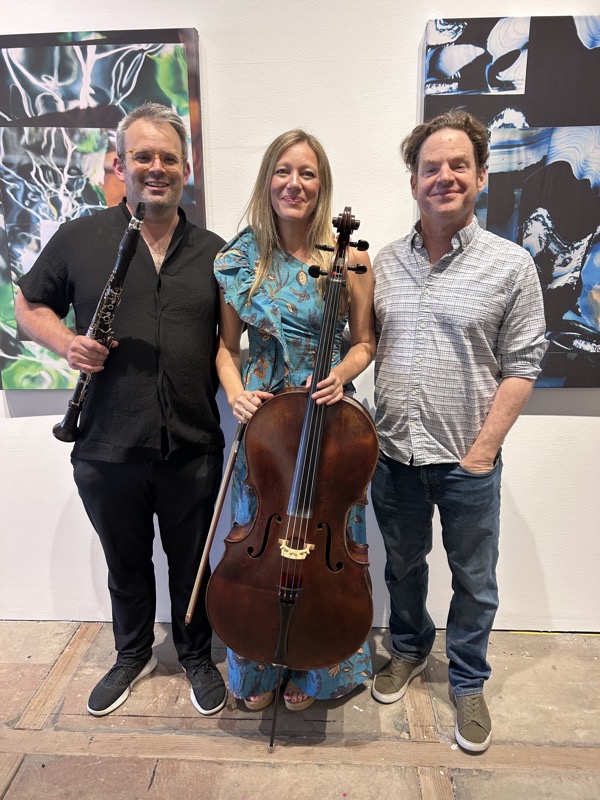
In our rearrangement of the music, we are exploring a new sound palette, blending our normal baroque period instruments with modern ones including harp, clarinet and percussion performed by James Larter, a former Young Musician of the Year finalist. (James and I have been recording The Rhythm of the Season an unlikely reinvention of Vivaldi’s Four Seasons for percussion soloist – out next spring!). Our aim is that new harmonies and contemporary music techniques will make the original score feel less dusty, even as we preserve Gluck’s original intention.
Rhythm of the Seasons – Vivaldi’s Four Seasons for Percussion and Strings: Spring 1 Teaser
Over the last few years Hugh has performed at venues like La Scala Milan, Deutsche Oper in Berlin and most recently at Santa Fe Opera so we are lucky to have him in the smaller intimate location of Stone Nest (the former church and infamous gay night club in the 80s). Like us, Hugh loves performing in smaller venues, where he can foster a real sense of connection. Our chamber version of Orfeo ed Euridice is a chamber version, will see the protagonists in modern dress as if Orfeo is Hugh himself, talking to parents and other family members as he negotiates his fear of loss.
I founded FIGURE to create just this kind of production after the COVID-19 pandemic. The idea was to put on intimate, historically-informed performances that would also challenge the way that people experienced the music they were hearing. As with everyone, lockdown gave me time away from the treadmill. I worked for a while as a gardener for Elizabeth Tyler, who’s a great lady and was a very good boss. But realistically, I’m no Monty Don.
Having studied Experimental Psychology at University College, Oxford, I have always toyed with various career options. I come from a medical family, and I enjoyed thinking about brains and neuroscience, but I didn’t want to be a shrink or an academic. Much of my university days was spent doing music, and it became clear that was how I wanted to spend my life.
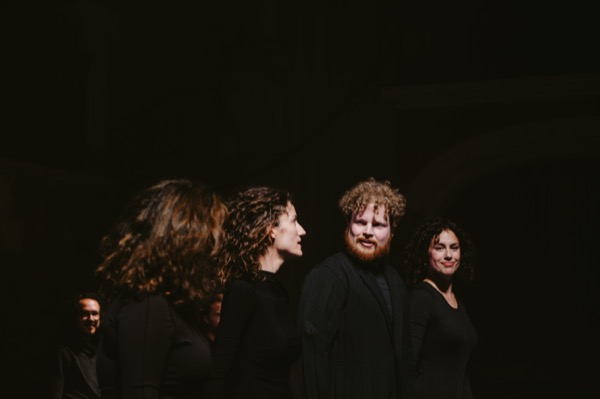
Mourn
Over the last few years at FIGURE we’ve reunited Felix Mendelssohn’s incidental music with A Midsummer Night’s Dream at Holland Park Opera, performed requiems by Charpentier and Fauré alongside writing by Dante, Alice Oswald and Philip Larkin, and created an immersive production of Pergolesi’s Stabat Mater. Later this year we’re doing Mourn: Laments from the Balkans and Renaissance Italy with the vocal trio Alkanna Graeca. It’s an exploration of grief in which we look both at ancient traditions from the Balkans and the music traditions of the Renaissance. We spent a lot of time workshopping with Alkanna Graeca on how to improvise in a Balkan style, which I found really inspiring.
MOURN Trailer – FIGURE and Alkanna Graeca
It’s been noted that quite a few of FIGURE’s projects confront the topic of death. It’s not a conscious choice to focus on mortality, but death was much more omnipresent in Bach’s day until the invention of vaccines and antibiotics. Now people are much more obsessed with fostering the illusion of immortality with bizarre exercise regimes or cosmetic procedures. Until the 21st century, life was brutally short and precarious, and art reflected this harsh reality. Death has almost become a taboo, hidden from sight.
Yet, by treating Orfeo’s journey as an attempt to come to terms with death, the myth becomes positively life-affirming. Learning to accept that Euridice has gone becomes, in a sense, a triumph of love. Perhaps growing up around doctors with their perspective on life and death has rubbed off on me after all. What would psychologist Philippa Perry say about that?
Frederick Waxman is a London-based conductor and keyboard player and Artistic Director of FIGURE, which reimagines work in the spirit of its historical context. During its residency at Stone Nest, Soho, FIGURE earned national acclaim, with The Guardian describing SIDE BY SIDE as “unequivocally impressive” and praising OUR MOTHER, starring Dame Emma Kirkby, for its “timeless directness and simplicity”. Alongside classical music, Frederick plays jazz and composes for film and theatre. He recently recomposed Monteverdi’s Possente Spirto for Iestyn Davies and the Berlin Soloists, with performances planned at Carnegie Hall and Wigmore Hall.
For more of the best in classical music, sign up for our E-Newsletter