When one looks back at the history of Western classical music, a number of forces emerge as central to its development: institutions, concert halls, conservatoires, courts, churches and patrons — some of which continue to shape music today. Yet one element is often overlooked: the friendships (and sometimes rivalries) between composers. From Bach and Telemann to Reich and Glass, personal relationships between musicians have repeatedly provided the conditions for innovation, influence and artistic progress. Some were built on admiration and support, others on competition and tension. Together, though, they form an essential and often underestimated thread in the history of Western classical music.
Bach and Telemann never lived in the same city, yet maintained a strong connection grounded in mutual admiration and respect. Telemann was, in fact, the godfather of Carl Philipp Emanuel Bach — a detail that reflects the closeness between the two families.
Haydn and Mozart shared one of the most celebrated friendships in music history. Although Haydn was considerably older, the two composers treated each other as equals, united by admiration for each other’s work. They regularly played chamber music together, and Mozart dedicated six of his string quartets to Haydn — works now regarded among the finest ever written in the genre. Haydn openly praised Mozart’s genius, while Mozart considered Haydn a mentor and artistic model.
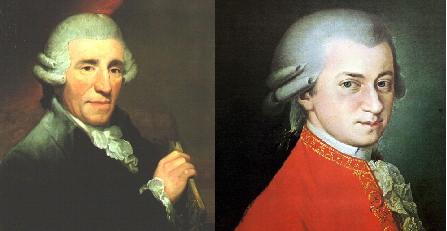
Joseph Haydn and Wolfgang Amadeus Mozart © Wikipedia
The relationship between the Schumanns and Brahms was equally significant, though marked by greater emotional complexity. Robert immediately recognised Brahms’s extraordinary talent upon meeting him, famously proclaiming him the future of German music. Brahms, in turn, developed a lifelong bond with both Robert and Clara. When Robert’s mental health deteriorated, Brahms became a source of practical and emotional support for the family, assisting Clara and remaining closely involved throughout the difficult final years of Robert’s life.
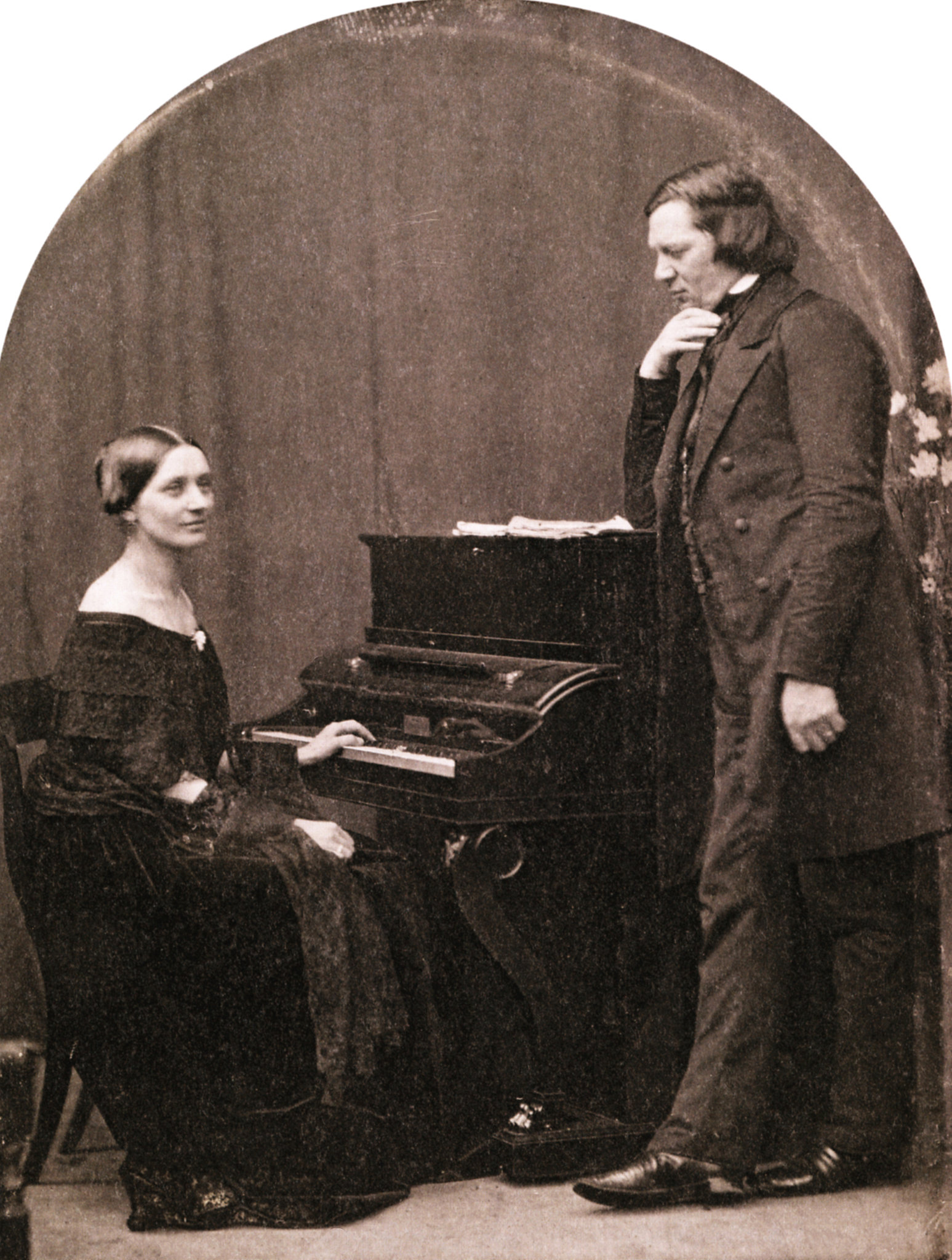
Robert and Clara Schumann © Wikipedia
Liszt and Wagner formed another partnership of enormous importance in the 19th century. Liszt became one of Wagner’s greatest advocates at a time when Wagner’s music remained controversial and financially difficult. During Wagner’s political exile, Liszt supported him both artistically and financially, conducting the premiere of Lohengrin and helping sustain Wagner’s career. Their relationship later became familial when Wagner married Liszt’s daughter, Cosima.
Brahms would later extend similar generosity to Dvořák; recognising the Czech composer’s talent early on, Brahms used his reputation and influence to introduce Dvořák to his publisher, Simrock, effectively launching his international career. Beyond professional support, Brahms is also known to have offered financial assistance to help Dvořák support his large family.
Ravel and Gershwin, despite coming from different countries and musical traditions, found common ground in their fascination with jazz. Gershwin admired Ravel deeply and even asked to study with him, a request Ravel famously declined. According to legend, Ravel responded by asking why Gershwin would want to become “a second-rate Ravel” instead of remaining “a first-rate Gershwin”.
Satie/Debussy – Gymnopédie I & III {Orchestrated 1897}
The relationship between Debussy and Satie was far more turbulent. Built on both camaraderie and rivalry, the two composers profoundly influenced one another during the formative years of French impressionism. Debussy would achieve international fame, while Satie remained on the margins for much of his life, often misunderstood by the musical establishment. Their friendship eventually collapsed, strained by personal and artistic differences, yet Satie continued to regard Debussy as a musical genius.
Among 20th-century American composers, the friendship between John Cage and Morton Feldman remains one of the most celebrated creative partnerships of modern music. Having met by chance after a concert in New York, the two composers developed a close intellectual and artistic relationship that lasted decades. Each influenced the other’s thinking on sound, silence, duration and musical space, while helping shape new approaches to indeterminacy and intuitive composition.
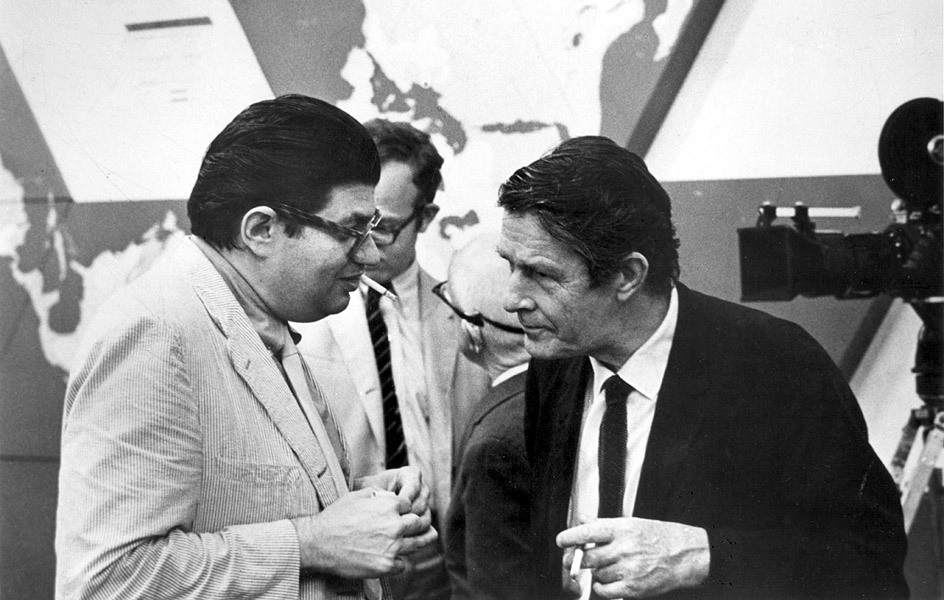
Morton Feldman with John Cage © digital.lib.buffalo.edu
Philip Glass – Two Pages (for Steve Reich), 1968
Finally, Steve Reich and Philip Glass — two titans and founders of American minimalism — began as close collaborators within the downtown New York art scene of the 1960s. They attended performances of each other’s early works, exchanged ideas and even operated a furniture removal business together to make ends meet. Yet, much like Debussy and Satie, their relationship gradually deteriorated. By the early 1970s, tensions had emerged, giving rise to a famously quiet and decades-long feud.
In today’s globalised and hyperconnected world, one might assume that relationships between composers and artists would be stronger than ever. Digital platforms, international festivals and online communities have made communication instantaneous and collaboration more accessible than at any other point in history. Yet, curiously, truly significant artistic bonds seem rare. While countless networks and circles exist, many contemporary composers appear more isolated than ever before. There are perhaps more composers now than at any previous moment in history, but sadly, fewer defining artistic friendships.
For more of the best in classical music, sign up for our E-Newsletter