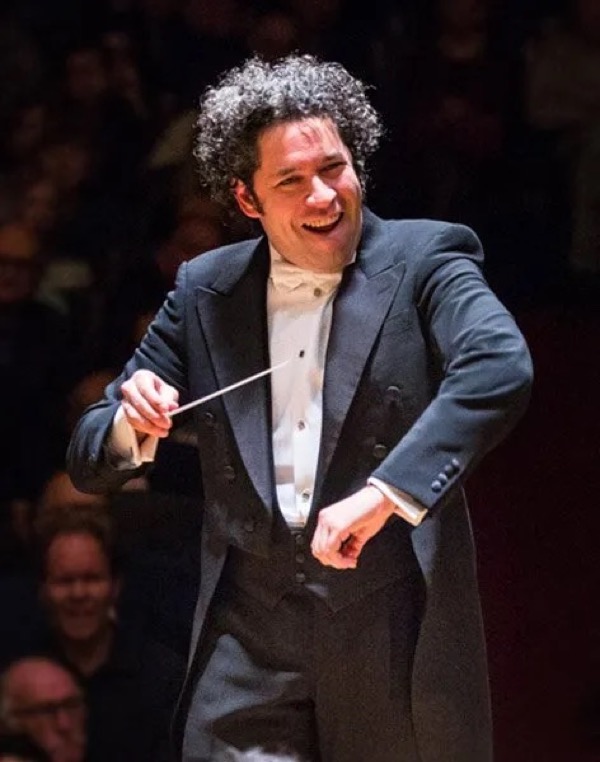
In 2027, we mark the bicentenary of Ludwig van Beethoven’s death, and among the celebrations will be a Platoon label recording of all six Beethoven piano concertos, featuring pianist Kirill Gerstein and the Chamber Orchestra of Europe.
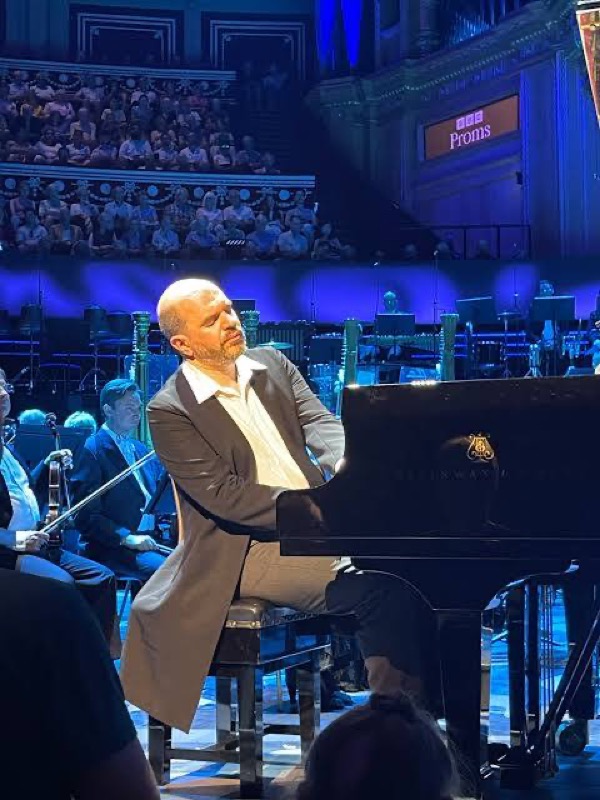
Kirill Gerstein
But wait! I can already hear AI-powered searches crying foul. Clearly, there is a typo in that introductory paragraph, since everybody knows Beethoven composed and published only five piano concertos.
Well, not quite. Beethoven published five concertos with opus numbers, but he had experimented with the piano concerto genre during his years in Bonn. That early and incomplete work is catalogued as WoO 4, and it is now being brought back into the spotlight as Beethoven’s Piano Concerto No. 0.
Ludwig van Beethoven: Piano Concerto in E-Flat Major, WoO 4 (original version for piano solo): I. Allegro moderato (Boris Giltburg, piano)
A Teenage Concerto
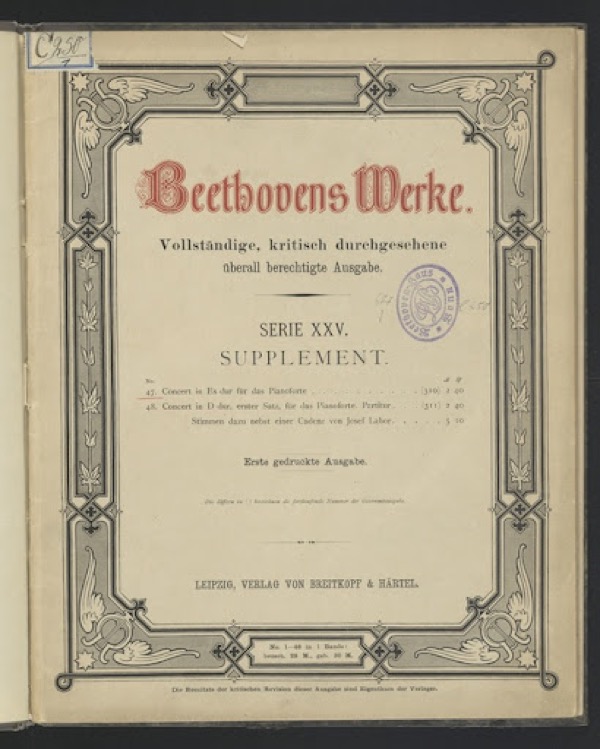
Beethoven WoO 4
The Beethoven Piano Concerto No. 1 in C major was actually his third attempt at the genre. It followed in the footsteps of the B-flat major Concerto known as his No. 2. The apparent confusion arises because both numbered works were released to the public in 1801, but the C-major work was published first as Op. 15.
Beethoven had already played both concertos in public on several occasions, with the C-major Concerto premiering on 18 December 1795 with Beethoven as soloist.
Always self-critical, he wrote, “One of my first concertos [in B-flat] and therefore not one of the best of my compositions is to be published by Hofmeister, and Mollo is to publish a concerto [in C major] which indeed was written later but which also does not rank among the best of my works in this form.” (Thayer, The Life of Ludwig van Beethoven, Vol. 1, 1921) At the time of publication, Beethoven was actually already working on his third numbered concerto in C minor.
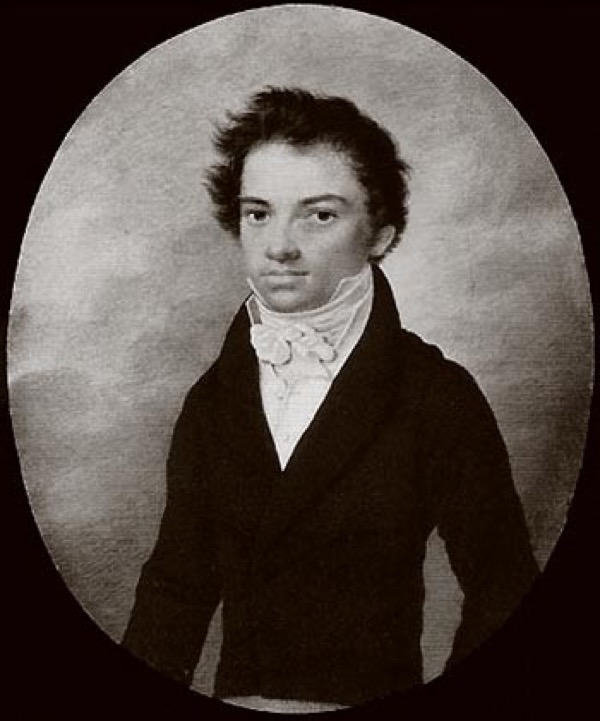
Beethoven (1788)
However, Beethoven’s earliest piano concerto dates from around 1784/85, when he was just 13 or 14 years old and still living in Bonn. It is scored in E-flat major and was initially assigned WoO 4. However, the surviving manuscript copy is actually incomplete, and a digitised version of the source is available through the Staatsbibliothek in Berlin. (Staatsbibliothek Berlin).
Ludwig van Beethoven: Piano Concerto in E-Flat Major, WoO 4 (original version for piano solo): II. Larghetto (Boris Giltburg, piano)
Piecing Beethoven Back Together
This source copy, written in an unknown hand, contains the complete solo part and a piano reduction of all orchestral passages played whenever the soloist is not playing. Beethoven also included some ideas on instrumentation, specifying strings, horns, and flutes.
Much of the musical material survives, and Beethoven scholar Willy Hess published his reconstruction of the concerto in 1943. Since then, pianists Howard Shelley, Ronald Brautigam, and Philippos Tsalachouris, as well as conductor Jon Ceander Mitchell, have completed several different reconstructions.
Kirill Gerstein and the Chamber Orchestra of Europe will use Ronald Brautigam’s reconstruction, a version deemed to adhere more closely to Beethoven’s surviving manuscript than the versions by Willy Hess and Jon Ceander Mitchell. (Kim, Beethoven WoO 4, Comparative Analysis, 2024)
Ludwig van Beethoven: Piano Concerto in E-Flat Major, WoO 4 (original version for piano solo): III. Rondo: Allegro, ma non troppo (Boris Giltburg, piano)
Filling in the Musical Gaps
As the solo piano part survives complete, Brautigam reconstructed the missing orchestral accompaniment. Brautigam retained Beethoven’s intended instrumentation and drew on Beethoven’s surviving thematic material and harmonic framework to finish the composition.
Of course, he had to make some stylistic decisions, like supplying missing melodic lines and adjusting details of articulation and dynamics. For the “Larghetto,” for example, he interpreted ambiguous flute notation as a continuation of the melodic lines, preserving the dialogue between the two flutes. As expected, Brautigam also supplied written cadenzas, but I am not sure whether Gerstein might surprise us with some of his own.
Although it is very early Beethoven, the music is full of originality and touching moments. Specifically, the “Larghetto” contains haunting passages in which the theme is taken to dark, unforeseen vistas. Some commentators even suggest that this slow movement is more original than those in the First and Second Piano Concertos. (Beethoven WoO 4)
Finding his Feet
The Chamber Orchestra of Europe writes that “the concerto reflects the style of early Viennese Classical writing, especially the piano concertos of Mozart. Elegant phrasing, clear structures, and decorative passagework dominate, rather than the muscular drama we associate with Beethoven’s mature style… It is a fascinating portrait of Beethoven in formation, a gifted prodigy absorbing Mozart and Haydn before reshaping the concerto genre entirely in his later works.”
Chamber Orchestra of Europe logo
Kirill Gerstein and the Chamber Orchestra of Europe have already performed Concerto No. 0 for audiences in Athens and Kronberg as part of a cycle featuring all six concertos, and live performances are scheduled in several cities in 2027. Now we look forward to a release that will showcase Gerstein’s alchemy in exploring Beethoven’s piano laboratory, and possibly even reveal a sense of humour.
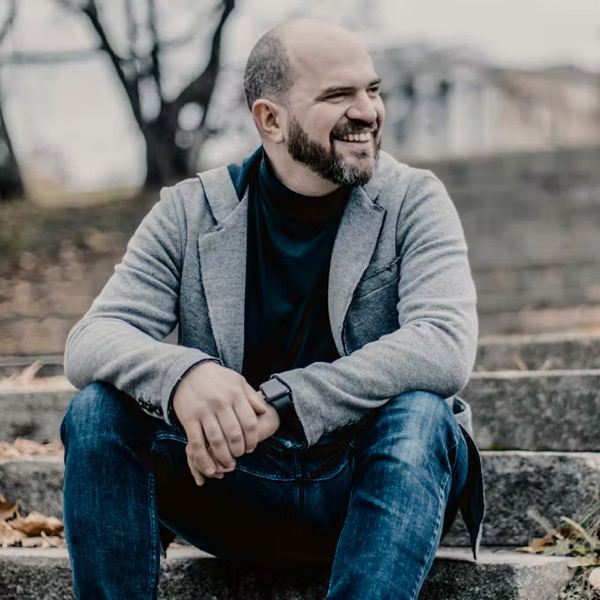
Kirill Gerstein
Kirill Gerstein’s schedule: https://kirillgerstein.com/calendar/
For more of the best in classical music, sign up for our E-Newsletter