The violin has a reputation as one of the most difficult instruments in the world to play.
But even so, certain works stand apart – pieces that have occupied the greatest players for entire careers; pieces that redefine what the instrument can do; and pieces that can go catastrophically wrong in front of a full concert hall.
Image created by ChatGPT
Today, we’re looking at which ones are the hardest violin pieces ever written. The criteria go beyond raw technical fireworks: we’re also considering their interpretive demands, the sheer physical stamina required to pull them off, and the particular challenge of making fiendishly difficult music sound inevitable.
Such a list will always be subjective. But here, in reverse order, are our picks for the hardest violin pieces ever written.
Schubert – Fantasy
Schubert is not a composer typically associated with virtuoso violin playing, but his Fantasy for violin and piano is notoriously demanding.
It was written in December 1827, eleven months before the composer’s death, around the time he was writing his final masterpieces back-to-back: works like Winterreise and the Impromptus, and the final three piano sonatas.
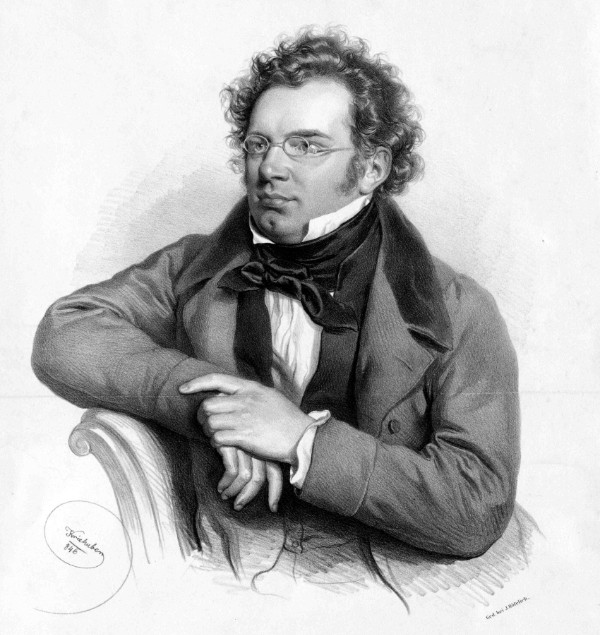
Franz Schubert
Pianist Nikolai Lugansky has claimed that this is the most difficult music ever written for piano – and the violin part is fiendishly difficult, too. The biggest challenge comes from melding two difficult parts together in a satisfying way.
Notice in the entrance how much bow control the violinist needs to create the bittersweet opening line. It’s the kind of virtuosity that can easily go unnoticed by a casual audience – but which violin players are astonished by.
Ysaÿe – Ballade, Sonata No. 3
In July 1923, in his mid-sixties, Belgian violinist Eugène Ysaÿe – one of the most influential musicians of his generation – wrote six sonatas for solo violin.
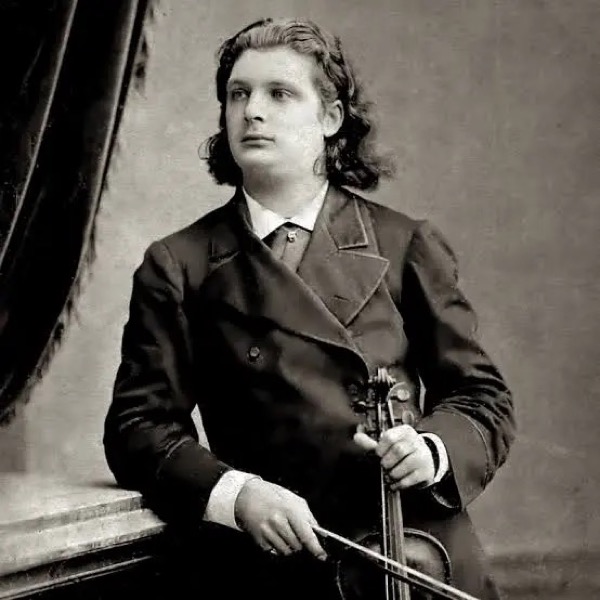
Eugène Ysaÿe
Although the works were written in an extraordinarily condensed period, each has its own personality. Each one was dedicated to and inspired by a different violin soloist colleague.
The third, a single-movement work titled Ballade, was written in honour of the exceptionally brilliant polymath George Enescu, renowned as a composer, conductor, pianist, teacher, and violin soloist.
The final half contains some of the most staggering violin writing ever put to paper, with its manic scrubbing sure to break a few bow hairs.
Elgar – Violin Concerto
The Elgar violin concerto isn’t on this list solely due to its sheer technical difficulty – although rest assured, there’s plenty of that.
Rather, it claims a spot for its emotional intensity and sheer length. (It is the longest violin concerto in the standard repertoire, with performances usually clocking in at around fifty minutes.)
It was written in 1909–1910, and is thoroughly Edwardian: grand, expansive, refined, and nostalgic for an era it feels is already slipping away. You can imagine the characters from Downton Abbey relating to its atmosphere and emotional tenor.
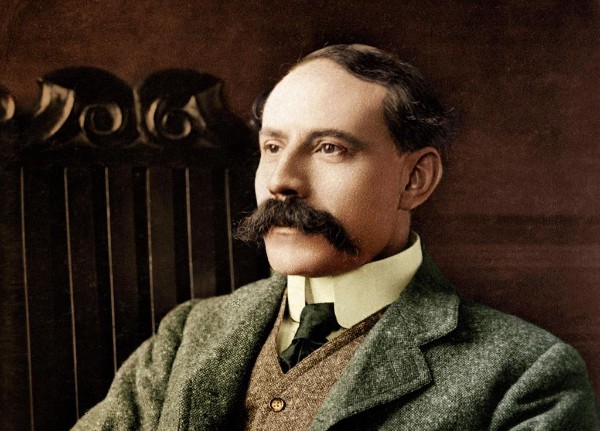
Edward Elgar
One of this work’s most notable features is its accompanying cadenza in the final movement, which begins around 41:00 in the video above, and features transformed themes from earlier in the work. It sums everything that has come before it in magical and haunting fashion. A violinist must not falter here, or the entire work fails. But it’s tough for violinists to be at their best this far into the performance.
Bartók – Sonata for Solo Violin
In 1943, Hungarian composer Béla Bartók had fled the Nazis and settled in New York. He was discouraged, impoverished, and battling a leukemia diagnosis that would prove to be fatal.
That year, violinist Yehudi Menuhin – in his late twenties at the time – came to the great composer to commission a solo work.
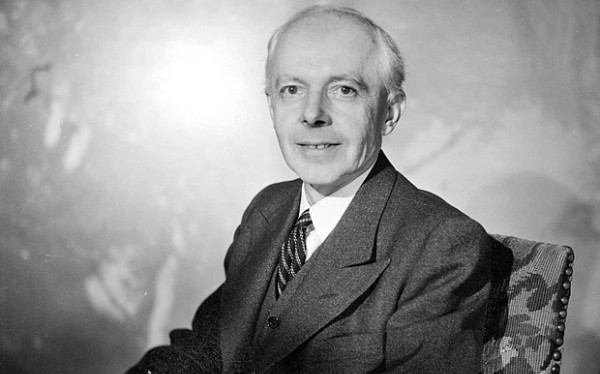
Béla Bartók
The result was this 25-minute-long solo sonata. It is loosely inspired by the structure of a Bach work, but with pungent Hungarian folk harmonies and a 20th-century world-weariness.
The technical challenges here include double stops across a variety of intervals, finger velocity, pizzicato, and quarter tones (notes that are a quarter step flat or sharp).
Throughout, it is absolutely unrelenting. It’s the work of a composer facing the end of his life, summing up all he knew about violin technique, and unconcerned about the interpretive difficulties he was leaving for future violinists to tackle.
Paganini – God Save the King Variations
No list of the hardest violin pieces ever written would be complete without at least one work by Italian violinist Niccolò Paganini (1782–1840), the man who reimagined what violin technique could look like.
He wrote a number of showpieces on famous opera tunes or anthems, and this is his unhinged take on “God Save the King.”
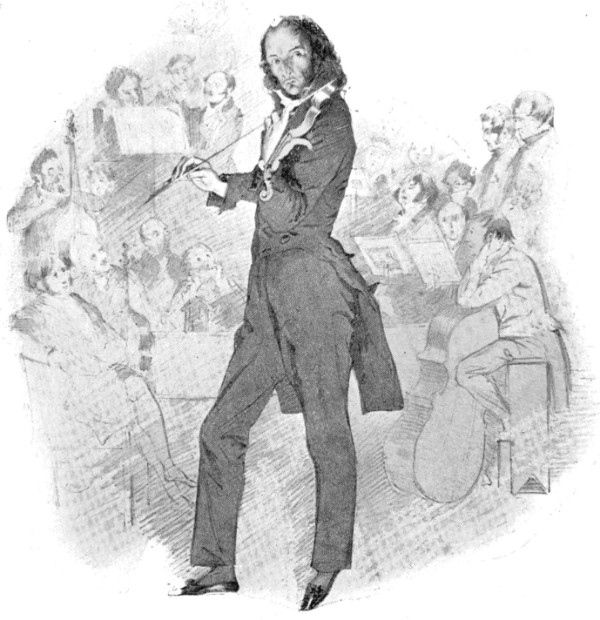
Niccolò Paganini
It includes massive stretches in the left hand, trills, spiccato bow bouncing, left-hand pizzicato, and so much more.
The variations are so extreme and extroverted, they sound more like a rock guitar solo than a violin work from the early nineteenth century.
Ginastera – Violin Concerto
Hilary Hahn talking about the Ginastera Violin Concerto
Alberto Ginastera: Violin Concerto, Op. 30 (Hilary Hahn, violin; Frankfurt Radio Symphony Orchestra; Andrés Orozco-Estrada, cond.)
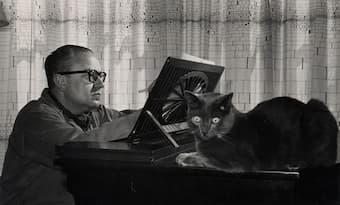
Alberto Ginastera
Alberto Ginastera was an Argentinian composer who lived between 1916 and 1983.
In 1963, during a time in his career when he was experimenting with the latest modernist techniques, he was commissioned by Leonard Bernstein and the New York Philharmonic to write this violin concerto for their first season at Lincoln Center. The work was so difficult that at its premiere, the orchestra musicians gave the solo violinist, Ruggiero Ricci, an ovation.
The concerto begins with a striking – and terrifying – five-minute opening cadenza, played solo. Next come six brief technical “studies,” each exploring different aspects of violin technique (chords, thirds, arpeggios, harmonics, and more).
In the second movement (“Adagio for 22 Soloists”), Ginastera creates an eerie atmosphere that demands intense attention and precision to execute well.
The work ends with a quiet scherzo that quotes fragments of Paganini’s 24th Caprice (a nod to one of the other milestone virtuosic works in the repertoire), followed by a thrilling perpetual motion.
No other work in the repertoire boasts its particular type of demanding modernism – for soloist and orchestra alike.
Schoenberg – Violin Concerto
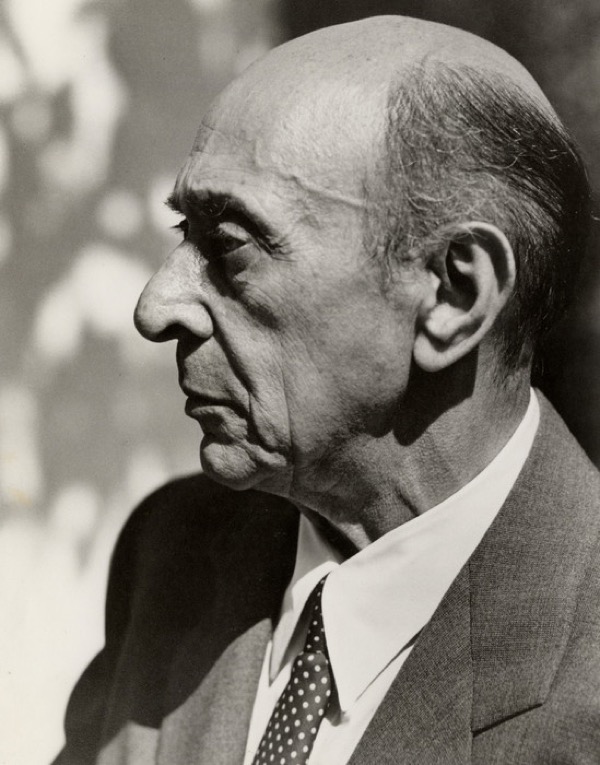
Arnold Schoenberg, Los Angeles, 1948
Arnold Schoenberg: Violin Concerto, Op. 36 (Hilary Hahn, violin; Swedish Radio Symphony Orchestra; Esa-Pekka Salonen, cond.)
Arnold Schoenberg wrote his violin concerto in 1936 in Los Angeles, where he had taken a teaching position at UCLA.
Schoenberg is most famous for espousing the twelve-tone method, in which a composer constructs a fixed row of all twelve pitches in the scale and derives the piece’s material from that row and its transformations (inversion, retrograde, etc.). It can be a major challenge for a violinist to make something musical out of a fixed row, especially when it comes to calculating intonation.
However, by 1936, Schoenberg had expanded his ideas of what twelve-tone music could be, so in this concerto, he also couples it with a neoclassical aesthetic and a brutally demanding virtuosity. The interpreter, therefore, has to straddle both languages and pull off the virtuoso fireworks Schoenberg included, to boot.
This concerto is so unique, and so challenging for both violinists and audiences, that few soloists have taken it into their repertoire, and it is rarely heard live today.
But for his part, Schoenberg relished its difficulty, writing, “I am delighted to add another ‘unplayable’ work to the repertoire. I want the concerto to be difficult, and I want the little finger to become longer. I can wait.”
Ernst – Last Rose of Summer Variations
Heinrich Wilhelm Ernst was born in 1812 in Moravia and began studying at the Vienna Conservatory at thirteen.
Even though we don’t hear much of his music today, he was one of the great virtuoso players of the nineteenth century, mentioned in the same breath as Paganini (who became both his idol – and rival).
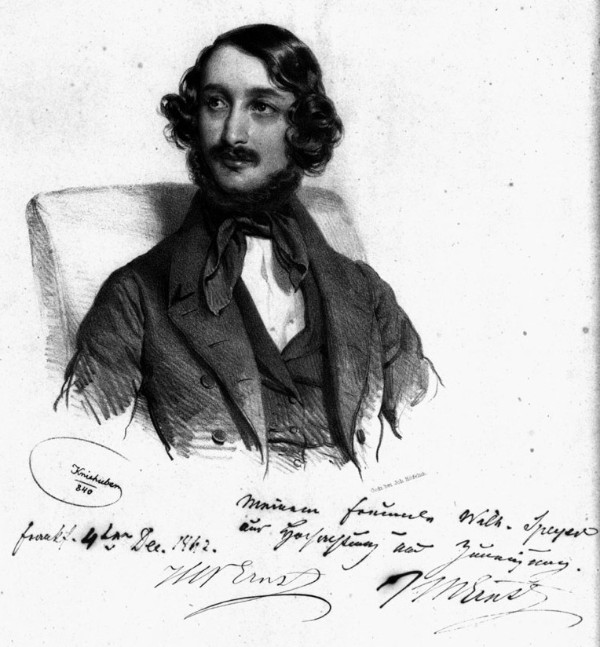
Heinrich Wilhelm Ernst
This is the last work from the last set of studies he published, the 6 Polyphonic Études. In it, he uses the melody of the Irish folksong “The Last Rose of Summer” as the basis for some jaw-dropping virtuosity, including a filigreed version of the melody accompanied by simultaneous left-handed pizzicato.
These studies are “polyphonic” – meaning “multiple voices” – so listen to hear how Ernst makes the violin sound as if it is playing a duet – and sometimes a quartet! – with itself.
Beethoven – Violin Concerto
To non-violinists, this concerto might seem out of place on this list. There are no Paganini-influenced virtuoso lines here, or twelve-tone rows, or accompanied cadenzas.
Instead, there is a huge amount of dangerously exposed solo playing – and all violinists know that is often the most difficult kind of playing to pull off.
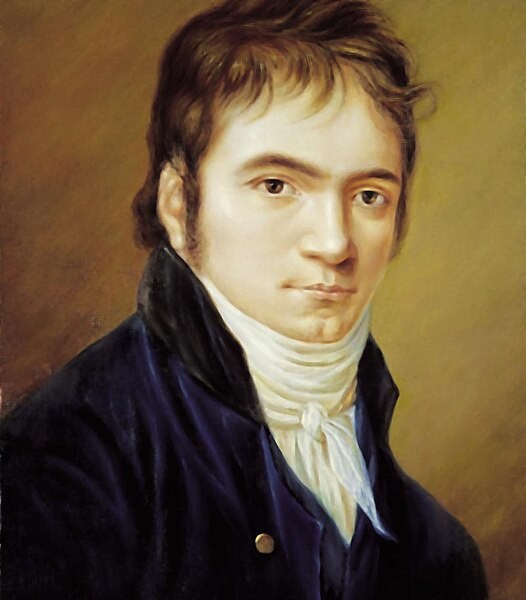
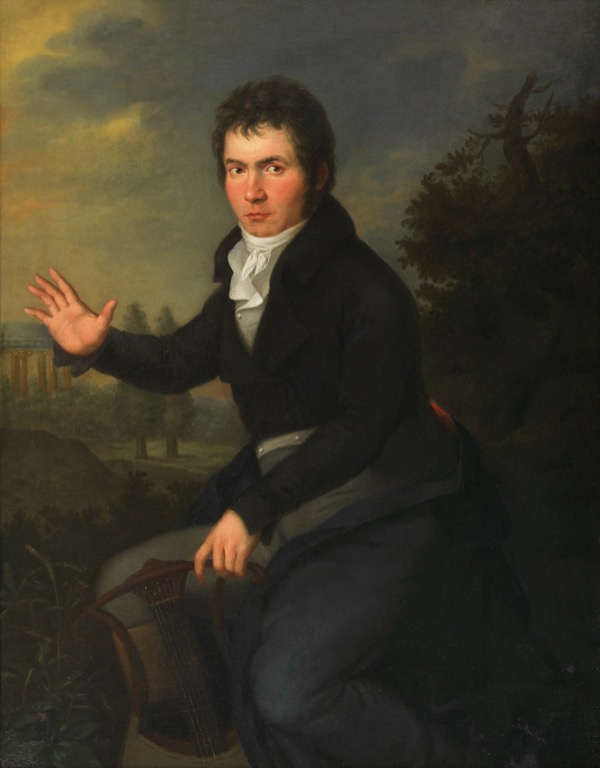
Christian Honeman: Ludwig van Beethoven, 1803 (Beethovenhaus Bonn)
Beethoven doesn’t ease the soloist into the job, either. After the imposing three-minute orchestral introduction, there is nowhere for the soloist to hide when they come in with their opening octaves, with no warm-up. Come in out-of-tune, and a violinist has crashed and burned before they’ve even really begun.
Throughout the entire 40-minute work, the soloist’s tone has to be interesting, beautiful, and purposeful, and their intonation perfect.
They also have to understand the piece’s architecture and structure so that the rising and falling lines don’t sound like empty scale exercises. Their concentration cannot flag.
A violinist truly sets themselves apart from their peers by excelling in this repertoire. It is one of the ultimate tests of violinistic technique and musicianship – even if non-players can’t necessarily hear why.
Bach – Sonatas and Partitas
The hardest work for violin in the repertoire? The Bach sonatas and partitas for solo violin.
Their myriad technical challenges are only outnumbered by their intellectual and emotional ones – and importantly, those challenges are inextricably bound up with one another. When a violinist is working on the 15-minute-long Chaconne, they’re both addressing how to tell the piece’s emotional story and how to do things like making chords ring, keep arpeggios in tune, and avoid exhaustion during such an exposed stretch of solo playing.
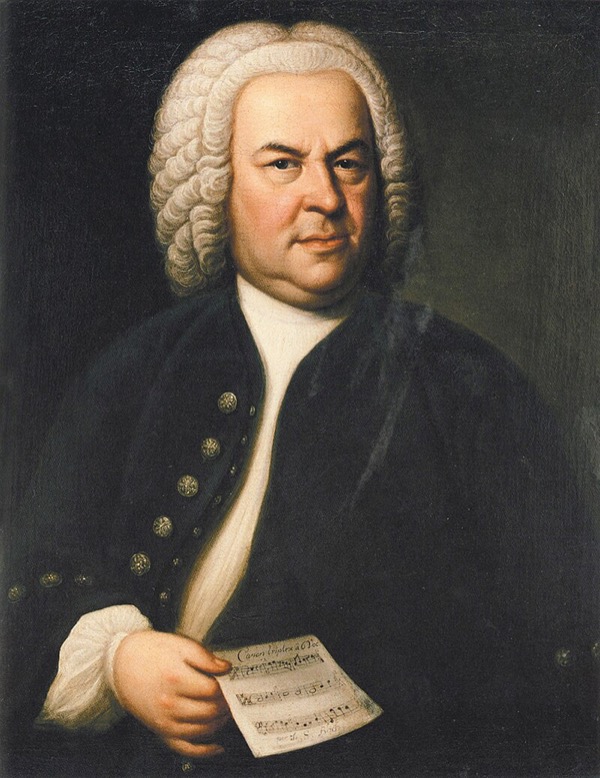
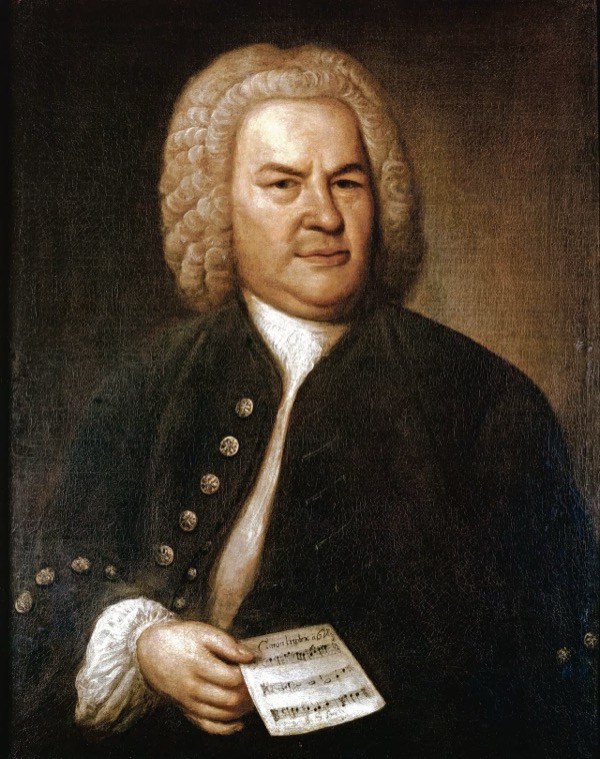
Elias Gottlob Haussmann: Johann Sebastian Bach, 1748 (Leipzig: Bach-Archiv)
To perform one, let alone all six, in a condensed period is one of the most gruelling assignments a violinist can undertake. Each movement has its own tricky violinistic challenges that take a lifetime to master. There’s the bow control required in the opening G minor Adagio, the string crossings in the Preludio, the balancing of voices in the three fugues, the echoey effect in the A minor Allegro, and countless other challenges.
These works have been called the Himalayas of the repertoire, and for good reason.
Conclusion
What every work on this list has in common is that technical mastery is only the beginning. Accurate fingers and bow arms are table stakes.
What separates a great performance from a merely accurate one is everything harder to name. A player has to excel at interpretation, control their nerves, be cognizant of a work’s architecture, and enjoy making the most demanding music in the repertoire sound like it couldn’t have been written any other way.
That’s why, played well, every work on this list is electric.
For more of the best in classical music, sign up for our E-Newsletter