Between 1710 and 1740, Handel composed over thirty Italian operas specifically for the competitive London stage. Among these monumental achievements, Ariodante stands as a crowning masterpiece from the late period of his operatic career.
The origins of Ariodante trace back to a distinguished literary and dramatic genealogy. Antonio Salvi crafted the opera’s libretto, adapting its core narrative from the fifth canto of Lodovico Ariosto’s Orlando furioso. Giacomo Perti had previously set Salvi’s text to music, and it premiered in Florence in 1708. Handel likely encountered Perti’s setting during his youthful travels through Italy. Decades later, Handel returned to Salvi’s libretto, reimagining it for his new theatrical home at the newly constructed Covent Garden Theatre in London, where Ariodante premiered on January 8, 1735.
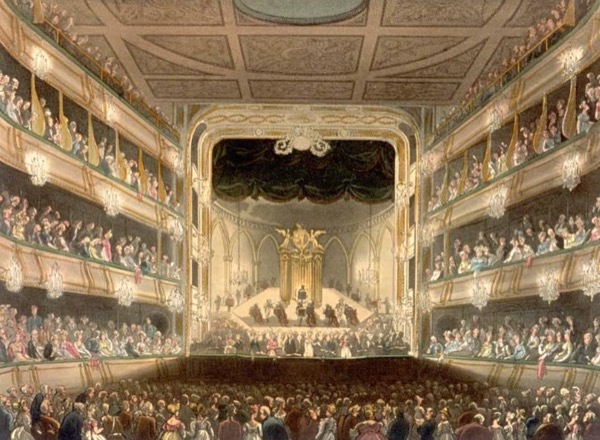
The interior of the first Covent Garden theatre, before the fire of 1808
The narrative outline of Ariodante presents a classic chivalric tale of devotion, deception, and salvation. Ginevra, daughter of the King of Scotland, is engaged to Ariodante, the noble heir. However, Polinesso, the villainous Duke of Albany, orchestrates a dark scheme, leading observers to believe Ginevra was unfaithful. Devastated by this apparent betrayal, Ariodante plunges into despair and disappears, leaving the court to believe he drowned. Accused of a crime she never committed, Ginevra faces execution under Scottish law. Ultimately, Polinesso’s treachery is unmasked, and Ariodante returns safely to restore Ginevra’s honour. With the lovers happily reunited, their wedding proceeds as planned, and Scotland is secured from disaster.
The relative simplicity of the underlying storyline gave Handel an ideal canvas on which to delineate an extraordinarily vast range of human psychological and emotional states. Within the score, Handel explores the profound depths of human experience, ranging from ecstatic, uninhibited joy to the most devastating despair, alongside vivid portrayals of jealousy, rage, and betrayal.
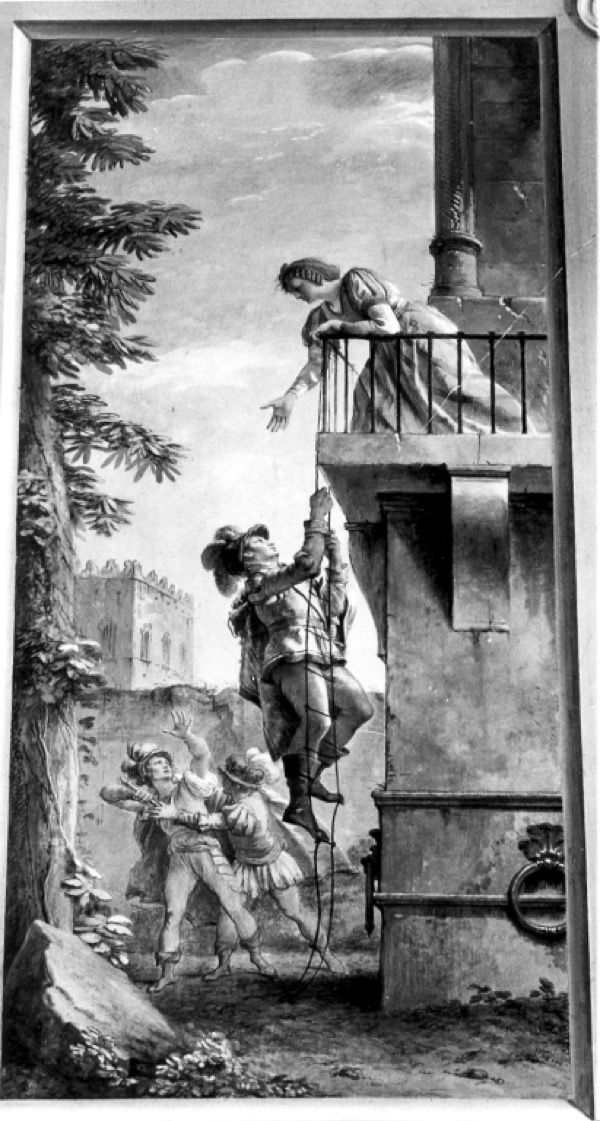
Polinesso climbs towards Dalinda disguised as Ginevra, 1787/1790
The psychological realism of Ariodante relied on eighteenth-century opera seria conventions, which streamlined situations into archetypal scenes to present human emotions in their purest, most concentrated forms. Architecturally, opera seria alternated between recitatives and arias. Plot progression moved through secco recitatives, accompanied only by harpsichord and cello. During dramatic crises, Handel deployed recitativo accompagnato, bringing in the full orchestra to heighten tension. Following recitatives, arias served as psychological snapshots of a character’s internal state. Most followed the tripartite da capo structure: a main section (A) establishing the primary affect, a contrasting middle section (B), and a repeated A section. Upon returning to A, singers improvised unwritten virtuosic ornamentation, showcasing both technical mastery and emotional depth.
This architectural framework anchored some of Handel’s most celebrated individual numbers. The score contains legendary showpieces, nowhere more evident than in Ariodante’s tragic Act II lament “Scherza infida”, where muted strings and a haunting bassoon obligato capture the painful sting of perceived betrayal. This devastating sorrow contrasts sharply with his exuberant Act III coloratura aria “Dopo notte”, a virtuosic explosion of relief as light banishes the night of grief. Meanwhile, Polinesso’s villainy shines through the sharp, cynical aria “Se l’inganno sortisce felice”, and Ginevra’s profound despair reaches its emotional zenith in the heartbreaking “Volate, amori”, as well as her harrowing Act II nightmare scene. Together, these famed musical moments transform abstract dramatic concepts into deeply human emotional snapshots.
Handel : “Scherza infida”, Ariodante (Lea Desandre/ William Christie)
Handel – “Se l’inganno sortisce felice”, Act II (Christophe Dumaux)
Critics and musicologists often note that Ariodante diverges significantly from many of Handel’s other London operas in several structural and stylistic respects. Most notably, the chorus and ballet play an extraordinarily prominent role throughout the work. The production of Ariodante marked Handel’s inaugural operatic venture at the newly built Covent Garden Theatre. The sophisticated stage capabilities of this new facility allowed Handel to forge a monumental artistic collaboration with the famous French dancer and choreographer Marie Sallé, recognised as the first preeminent female choreographer in dance history, who spent much of the 1730s working in London.
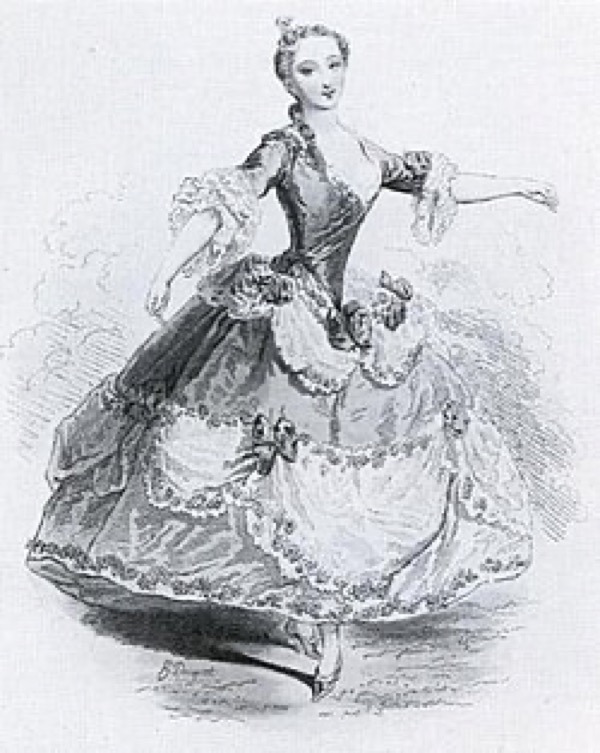
Marie Sallé, who danced in the original production of Ariodante
To capitalise on Sallé’s exceptional talents, Handel integrated a substantial amount of French dance music directly into the score of Ariodante. This French influence is most strikingly displayed in the elaborate dream sequence at the conclusion of Act II, where the staging contrasts “pleasant dreams” (songes agréables) with “frightening dreams” (songes effrayés)—a theatrical concept directly inspired by Jean-Baptiste Lully’s landmark French opera Atys from 1676. Building on Lully’s foundation, Handel expanded the sequence by adding a section depicting “pleasant dreams terrified” (songes agréables effrayés), annotating the movement directly in French. Although this intricate ballet sequence was originally conceived and composed for Ariodante, it was withdrawn before the 1735 premiere and later moved to Handel’s next opera, Alcina. Nevertheless, modern performances and revivals of Ariodante frequently restore this breathtaking ballet sequence to its original structural home in Act II.
Handel Ariodante – Andrea Marcon (Ballets start from 5:58 & 12:41)
Furthermore, the original performance ensemble assembled for the 1735 premiere reflected a fascinating blend of international stars and indigenous talent. The title role of Ariodante was crafted for the world-renowned Italian alto castrato Giovanni Carestini. The tragic heroine Ginevra was portrayed by the distinguished Italian soprano Anna Maria Strada, an exceptional singer whom Handel had personally discovered during his talent-scouting trips in Italy and subsequently brought to England to mentor and champion.
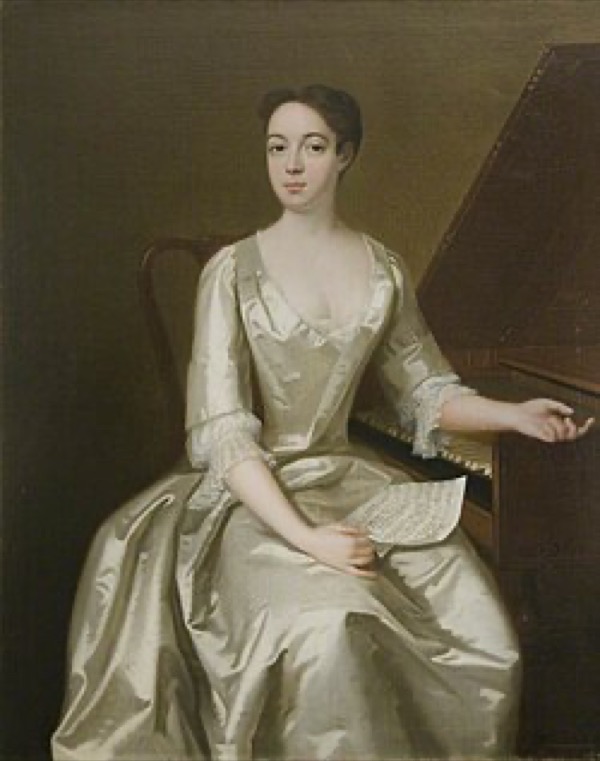
In a novel departure from his usual casting practices, the remainder of the premiere cast consisted entirely of English singers. Among them was the celebrated virtuoso bass Gustavus Waltz, who delivered a commanding performance as the King of Scotland. Waltz’s remarkable vocal agility and expansive range deeply inspired Handel, prompting the composer to write a bass role of formidable technical difficulty—an extraordinary rarity in early eighteenth-century opera, where bass voices were seldom granted such demanding virtuosic display. Through its synthesis of Italian vocal brilliance, French dance traditions, and profound emotional depth, Ariodante remains an enduring monument to Handel’s theatrical genius.
For more of the best in classical music, sign up for our E-Newsletter