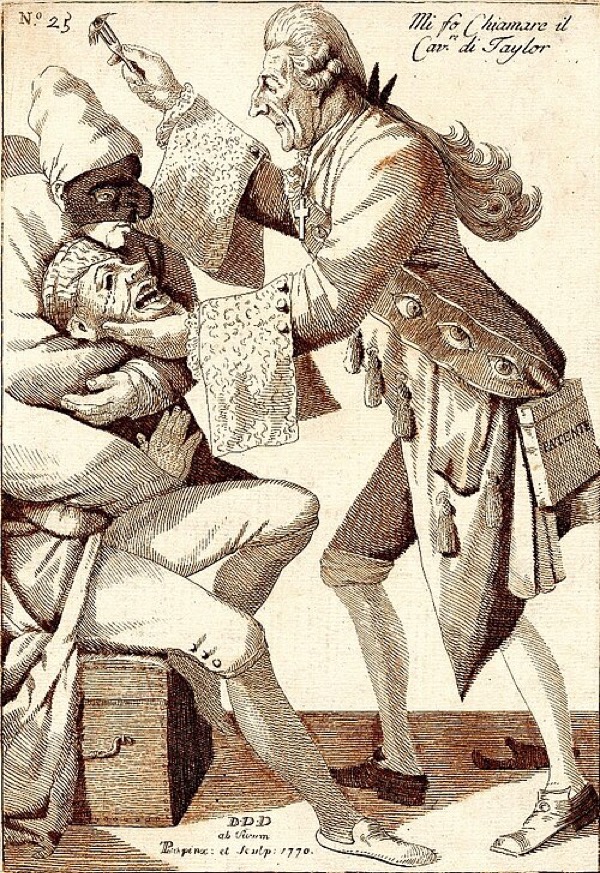
A major turning point in Niccolò Paganini’s life came in the summer of 1825, when his illegitimate son, Achilles Paganini, was born. His relationship with Achilles’s mother was, for all intents and purposes, over by the time the baby arrived, and the couple had a nasty breakup.
Once the dust settled, Paganini had sole custody of his young son – and, for a playboy virtuoso, he ended up taking the responsibility surprisingly seriously.
Over time, he came to rely on Achilles, even when Achilles was still a boy.
Today we’re looking at how Paganini navigated single fatherhood, how his and Achilles’s intense bond developed, and how the teenage Achilles had to take on the authorities to have the chance to bury his father.
Paganini as Single Father
Paganini’s La Tempesta (1828)
Paganini wasn’t well suited for parenthood, especially single parenthood.
His health was a major issue. During this time, he suffered from horrific dental pain and infection that kept him from the concert platform, on top of all his other chronic maladies. His condition didn’t improve until after an excruciating medical procedure with a dentist that helped reduce infection in the bone.
Still, Paganini refused to outsource Achilles’s care to a governess, as many men of the era would have done.
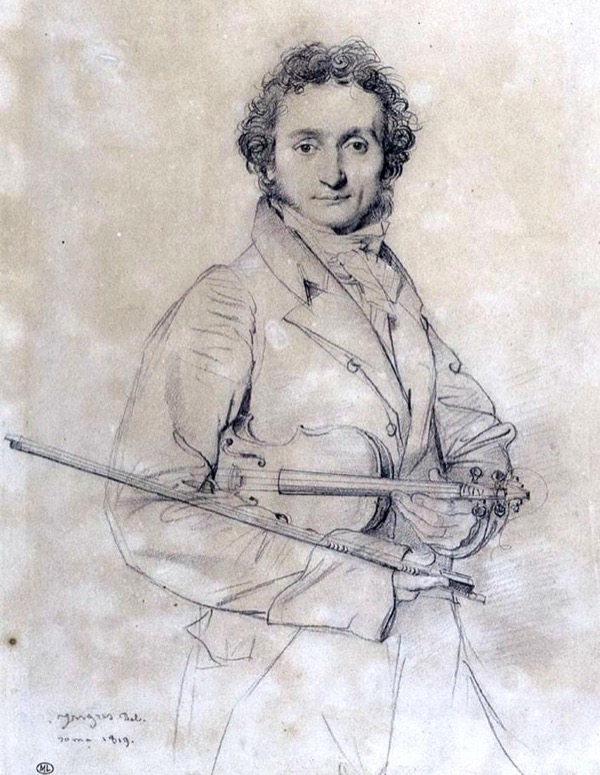
Niccolò Paganini
In a sharp switch from how he’d treated Achilles immediately after his birth, he now refused to let the child out of his sight. He even tucked him inside his fur coat when he went out in the cold. An old friend visited and reported seeing Paganini help Achilles put on his shoes.
“The poor child is bored! I don’t know what to do with him,” he wrote in one letter after describing how he’d fenced with Achilles earlier that morning and made him chocolate.
Paganini and Achilles Hit the Road
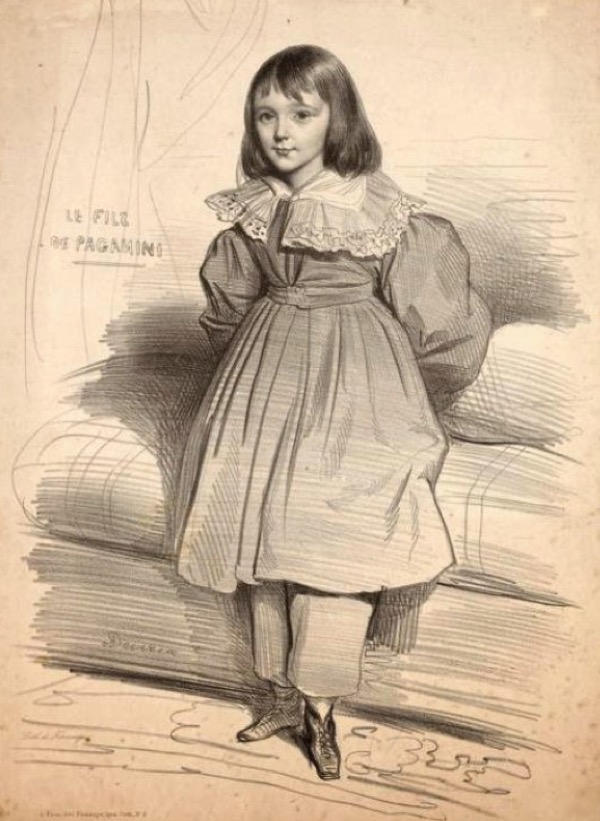
Achilles Paganini
Achilles experienced an unusual childhood growing up on the road with his famous father.
He began picking up German as they travelled through cities like Dresden, Leipzig, and Berlin. He continued picking up new languages during their travels and, in time, served as his father’s chief translator.
Paganini even brought Achilles to meet the greatest master of the German language, Goethe, in September 1829, when Achilles was four. The boy carried a little toy violin along with him on the visit. (Perhaps to make up for the lack of motherly attention, Paganini bought an endless stream of toys for the boy.)
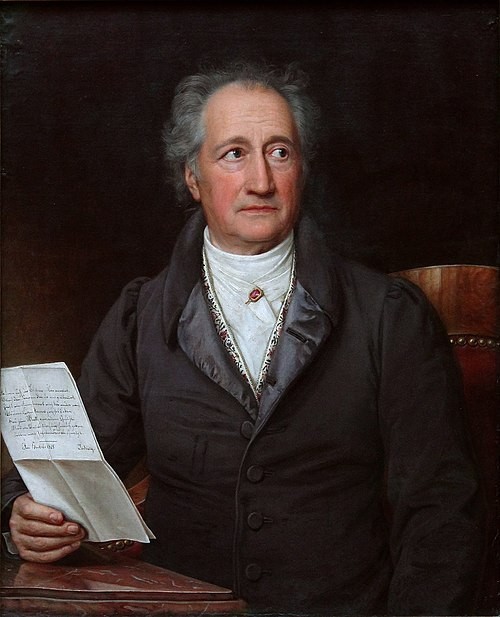
Joseph Karl Stieler: Johann Wolfgang von Goethe at age 79, 1828 (Neue Pinakothek)
The shape of their touring changed in 1830, after Achilles came down with a severe cold – an ailment that, in those days, could easily progress to something more serious like pneumonia, or even reveal itself to be tuberculosis.
In response, Paganini began structuring his tours so that he could return to a home base occasionally. This allowed Achilles to stay under a housekeeper’s supervision in one place for periods of time, instead of enduring the strains of travel. The arrangement didn’t last, but while it did, it provided some measure of stability.
Paganini’s Carnival of Venice (1829)
Considerations about Achilles even began influencing Paganini’s love life. In 1830, Paganini entered a relationship with a young, brilliant, unhappily married baroness named Helene, who fell deeply in love with him after seeing him in concert. She told him she’d get a divorce to be with him – and indeed followed through with the divorce in November 1830.
Paganini was impressed by her devotion and seriously considered marrying her, partly because he wanted Achilles to have a mother figure.
However, in the end, he turned her down, and we don’t know why. Paganini and Achilles would continue to make up a two-person family.
How Paganini Relied on Achilles
In 1831, the father-son duo arrived in Paris. From there, Paganini left Achilles in France and embarked on a tour of Britain. Still, according to surviving correspondence, he missed Achilles terribly, aching to hug and play with him again. (He had continued the habit of playing with his son so often that visitors and friends remarked on it.)
The affection ran both ways. Paganini wrote in an 1832 letter about how whenever he had a terrible coughing spell, the seven-year-old Achilles would come over and comfort him until it passed.
Paganini became increasingly reliant on him, especially throughout the 1830s, as illness began impacting the volume of his voice. Achilles would translate not only languages for his father, but his vocalisations – a practice that composer Hector Berlioz wrote about in his famous autobiography.
In December 1838, when he was thirteen, Achilles delivered one of the most important letters in classical music history to Berlioz, with unusual sensitivity and tact for a boy his age.
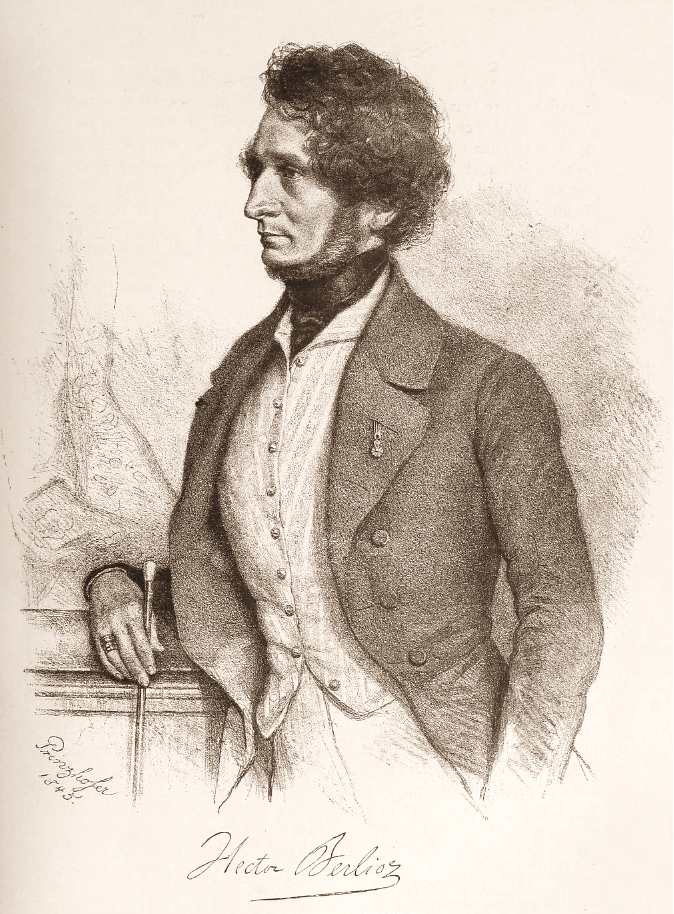
August Prinzhofer: Hector Berlioz, 1845
In Berlioz’s words:
“Next day I was alone in my room when little Achilles entered and said: ‘My father will be very sorry to hear that you are still ill; and if he were not so unwell himself, he would have come to see you. Here’s a letter he asked me to give you.’ I was about to break the seal when the child stopped me, and saying, ‘There’s no answer. Father said you’d read it when you were alone,’ and he hastily left the room.”
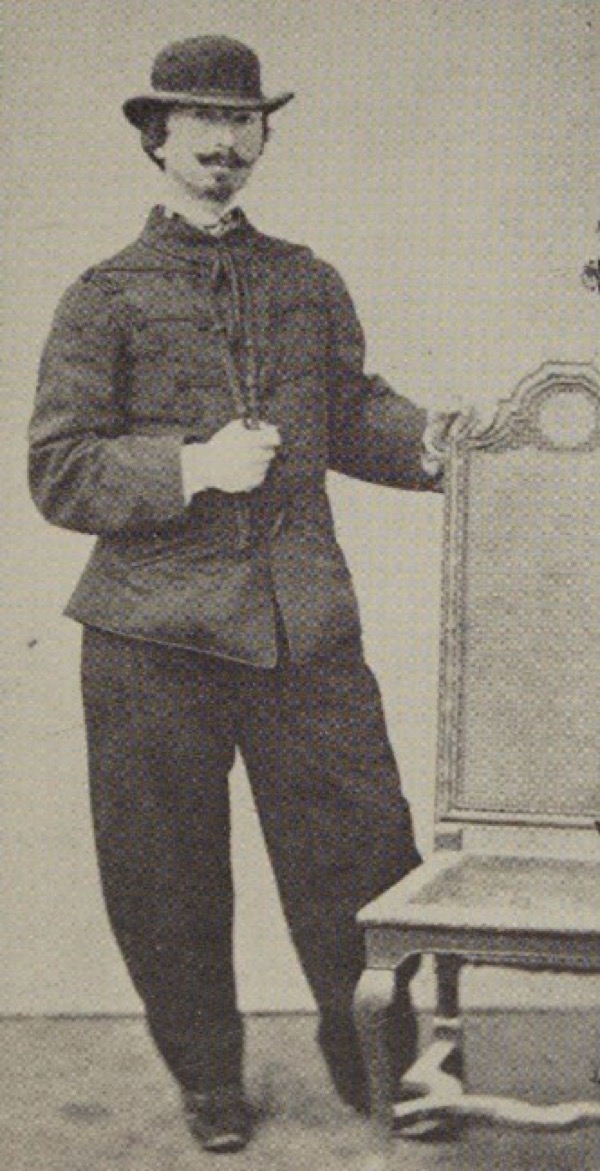
Achilles Paganini
Inside was a note informing Berlioz that Paganini intended to give him 20,000 francs: a life-changing amount of money that would ease his path as a composer.
Paganini’s Death
Paganini’s I Palpiti (1819)
In time, the accumulation of Paganini’s chronic illnesses grew too heavy to carry, and he died of internal haemorrhaging on 27 May 1840.
It is unknown if Achilles, less than two months away from his fifteenth birthday at the time, was at his bedside in the final moments. In any case, a Paganini friend named Count de Cessole took Achilles in.
Paganini, not believing he was close to death, had turned down last rites, which led a bishop to bar his body from burial in consecrated ground.
This wasn’t just a humiliating inconvenience; it was a health risk, necessitating his being embalmed (a new technology at the time) while details and legal challenges were hammered out. For a time, Paganini’s body was kept in the Count’s cellar, with nowhere else to go.
Over the following years, both the Count and Achilles would fight to ensure Paganini could finally be buried in a cemetery in Genoa. After years of battle, they succeeded.
The Fate of Achilles Paganini
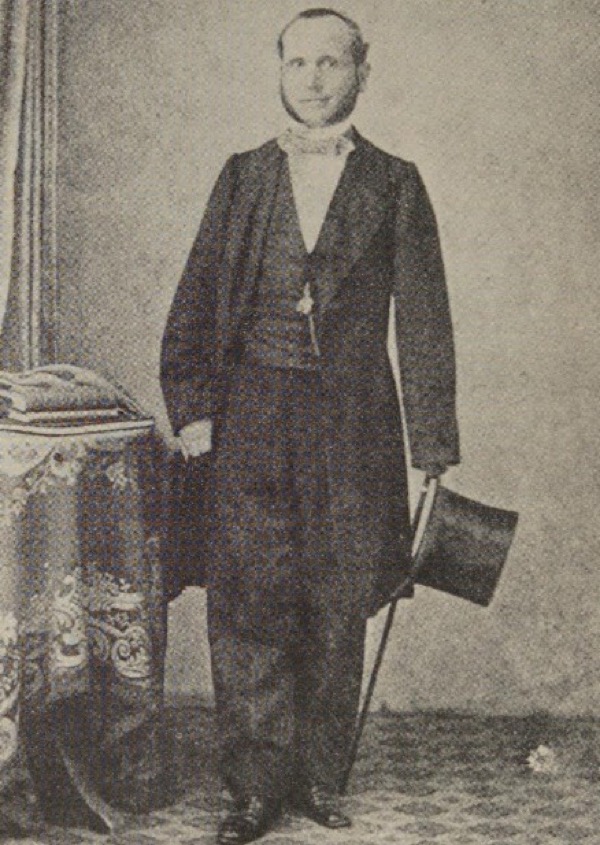
Achilles Paganini
Relatively little is known of Achilles’s life after his extraordinary childhood.
The historical record suggests that he had his first child in 1842, the year he turned seventeen. The following year, he married the young girl who appears to have been the mother, and they went on to have ten or twelve children in total (sources differ as to the exact number) – around half died in infancy, leaving only four who survived him.
In adulthood, he was wealthy, inheriting a fortune that included a number of priceless violins, and he often fielded correspondence about his famous father.
Achille died in 1895 and was buried in Parma. He was seventy years old and one of the last remaining links to Paganini.
For more of the best in classical music, sign up for our E-Newsletter