Bach’s Six Sonatas and Partitas for Solo Violin are the Himalayas of the violin repertoire – the phrase is George Enescu’s, and virtually every violinist who has ever attempted them would agree. Written around 1720, they remain the most demanding, most profound, and most obsessively revisited works ever composed for the instrument.
For three centuries, great violinists have brought their full selves to these six works. The result is a discography unlike any other in classical music: not a series of interchangeable versions, but a living document of how the violin, and our understanding of Bach, has changed across a hundred years of recording history.
This guide covers ten essential recordings, from Yehudi Menuhin‘s landmark 1930s traversal to Augustin Hadelich‘s 2021 pandemic-era release. Along the way, we’ll encounter violinists shaped by Romantic tradition and violinists shaped by historical research; violinists who recorded as teenagers and violinists who waited until their forties; violinists who found Bach in wartime and violinists who found him in lockdown. Each recording is a world unto itself.
Whether you’re new to this repertoire or building a deeper collection, this is where to start.
Yehudi Menuhin (1934–1936 on HMV; 1956–1957 on EMI; 1976 on Angel Records)
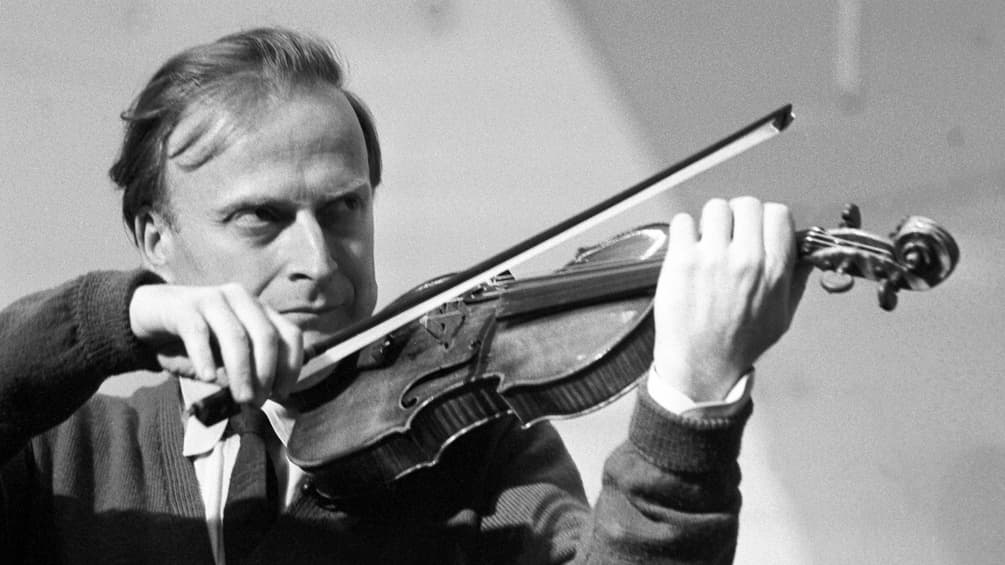
Yehudi Menuhin
Johann Sebastian Bach: Violin Sonata No. 1 in G Minor, BWV 1001 (Yehudi Menuhin, violin)
Yehudi Menuhin was the first violinist to record the entire set of Sonatas and Partitas, which he recorded over two years, between the ages of 18 and 20.
Menuhin studied with George Enescu (born in 1881) and Adolph Busch (born in 1891), so his ideas were shaped by late-Romantic ideas of Bach interpretation.
There’s something youthfully pure and earnest about these interpretations. Although not always technically flawless by today’s standards, they still have their own magnetism, especially given their remarkable origin story.
Menuhin does not emphasise the swinging Baroque rhythms that are often present in modern historically informed performances. Instead, you will notice the clarity, evenness, and songfulness of the musical lines.
He returned to the repertoire twice more – in the mid-1950s and again in the mid-1970s – and together, the three recordings trace the arc of a lifetime’s obsessive reckoning with the same six works.
Henryk Szeryng (1954 on Sony; 1967 on DG)
Szeryng plays the Fugue from the Sonata No. 1 in G minor
Polish violinist Henryk Szeryng was a child prodigy, but his career was interrupted at 20 with the outbreak of World War II. Because he spoke seven languages, he was hired as a liaison officer and interpreter for the premier of the Polish government in exile.
He gave more than 300 benefit concerts for Allied soldiers, but at the war’s end, he stepped back from his performing career and moved to teach music in Mexico.
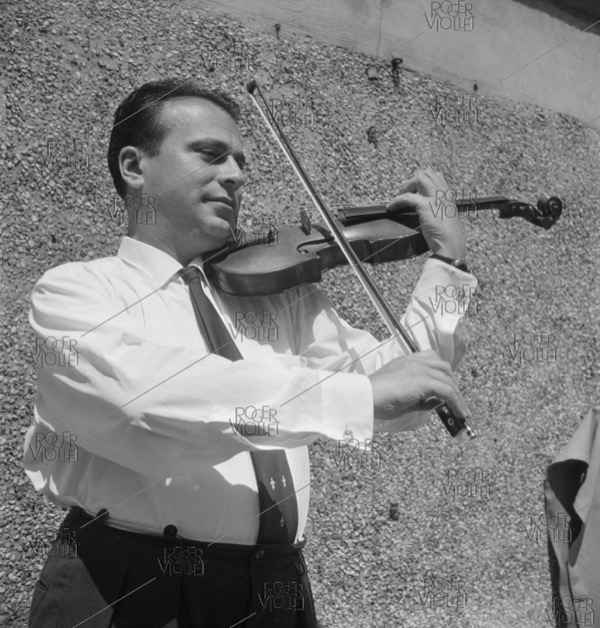
Henryk Szeryng
In 1954, when his fellow Pole Arthur Rubinstein gave a concert in Mexico City, the two men got together, with Szeryng playing him some solo Bach. Rubinstein was moved to tears, gave him his agent’s name, and persuaded Szeryng to start an international career in his late thirties.
The epitaph on his headstone is the final measures of Bach’s Chaconne from the D minor partita.
Arthur Grumiaux (1960–1961 on Philips)
Grumiaux plays the Sarabande from the Partita No. 2 in D minor
Belgian violinist Arthur Grumiaux was born in 1921. His career came to a halt when the Nazis invaded Belgium; he was nineteen at the time. For five years, he refused to play in public because he didn’t wish to appear before Nazis or Nazi collaborators.
Like Menuhin, Grumiaux studied with George Enescu. Enescu was famous for his love of Bach, and Grumiaux inherited that respect and awe for the works.
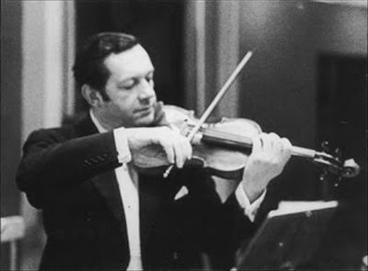
Arthur Grumiaux
Grumiaux’s approach to Bach was refined and aristocratic, emphasising the broader architecture of each movement rather than individual notes or phrases.
His recording of the Gavotte en Rondeau from the partita in E major was included on the Voyager Golden Record. It may be among the first performances that intelligent extraterrestrial life gets to enjoy from Earth.
Nathan Milstein (1954–1956 on Capitol Records; 1973 on DG)
Milstein plays the Preludio from the Partita No. 3 in E major
Nathan Milstein was born in 1903 in Odesa in present-day Ukraine. He had an unusually long career, playing at a high level into his eighties.
His set from the 1950s was recorded in mono, while his later-life set from the 1970s was recorded in stereo. The latter set actually won a Grammy in 1975.
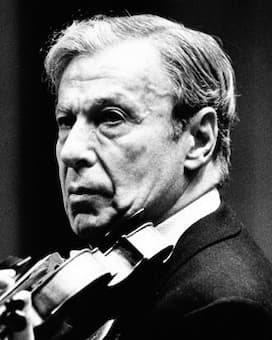
Nathan Milstein
Milstein’s performances blend intellectualism, great humanity, and a lack of fussiness. You get the sense that he is focused obsessively on letting the music speak for itself.
Once, violinist Pinchas Zukerman asked Milstein what he thought about when playing Bach. Milstein’s answer was, “I just try not to spoil it.”
Itzhak Perlman (1986–1987 on EMI)
Itzhak Perlman plays the Partita No. 2 in D minor
Itzhak Perlman was born in Tel Aviv in 1945. He had polio as a child and learned to play sitting instead of standing, which helped shape how he makes sound.
He tried recording the Bach Sonatas and Partitas multiple times, but was perpetually dissatisfied with the results. Instead of releasing any, he continued touring them around the world, honing his interpretations. He finally released the attempt in the mid-1980s, after he’d entered his forties.
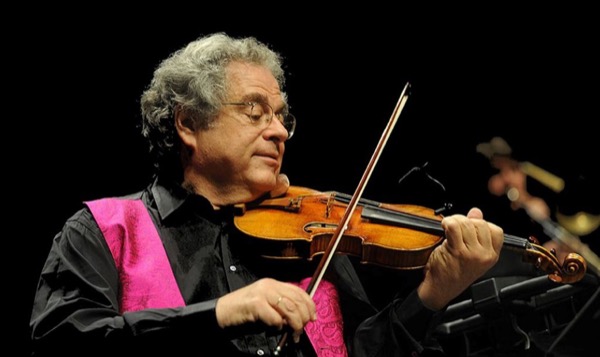
Itzhak Perlman
The first trait you notice in these recordings is Perlman’s huge, thick tone. This is not the silvery, refined Bach of Milstein or Grumiaux; it is grittier and earthier.
In his recording, Perlman rejected the interpretive ideas of historically informed performance practice, which were coming into vogue at the time. “Music is a language, and, performed responsively, with musical logic as guide, it will make sense,” he said.
The sound he makes may not be historically accurate, but it is deeply alluring.
Rachel Podger (1999–2000 on Channel Classics)
Rachel Podger plays the Sonata No. 1 in G minor and Partita No. 1 in B minor
Rachel Podger’s recording of the Bach Sonatas and Partitas is arguably the most famous version that came out of the historically informed practice (HIP) movement.
This movement, which gained steam in the second half of the twentieth century, involves musicians trying to recreate the sound world the composer knew. It involves using Baroque-styled instruments, bows, and gut strings, and playing in ways based on historical treatises and original manuscripts.
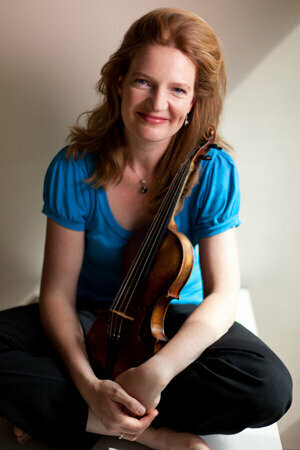
Rachel Podger
In Podger’s interpretation of Bach, this means an emphasis on a softer sound and dance rhythms. She has compared playing on Baroque-style gut strings versus modern steel strings as the difference between candlelight and electric light.
Some listeners enjoy this approach (for instance, on the BBC Radio 3 program Building a Library, this recording was a top recommendation), while others are more lukewarm. However, it remains the benchmark HIP-influenced performance on record.
Hilary Hahn (1997 on Sony; 2018 on Decca)
Hahn plays the Presto from the Sonata No. 1 in G minor
Hilary Hahn has a fascinating history with the Bach sonatas and partitas. She began learning them at nine. When she recorded her debut album at sixteen and seventeen, she chose to record the third sonata, the second partita, and the third partita.
These would be astonishing performances for anyone, but they’re especially so for a teenager. They are resonant, precise, and architectural; they are among the most technically accomplished versions ever recorded.
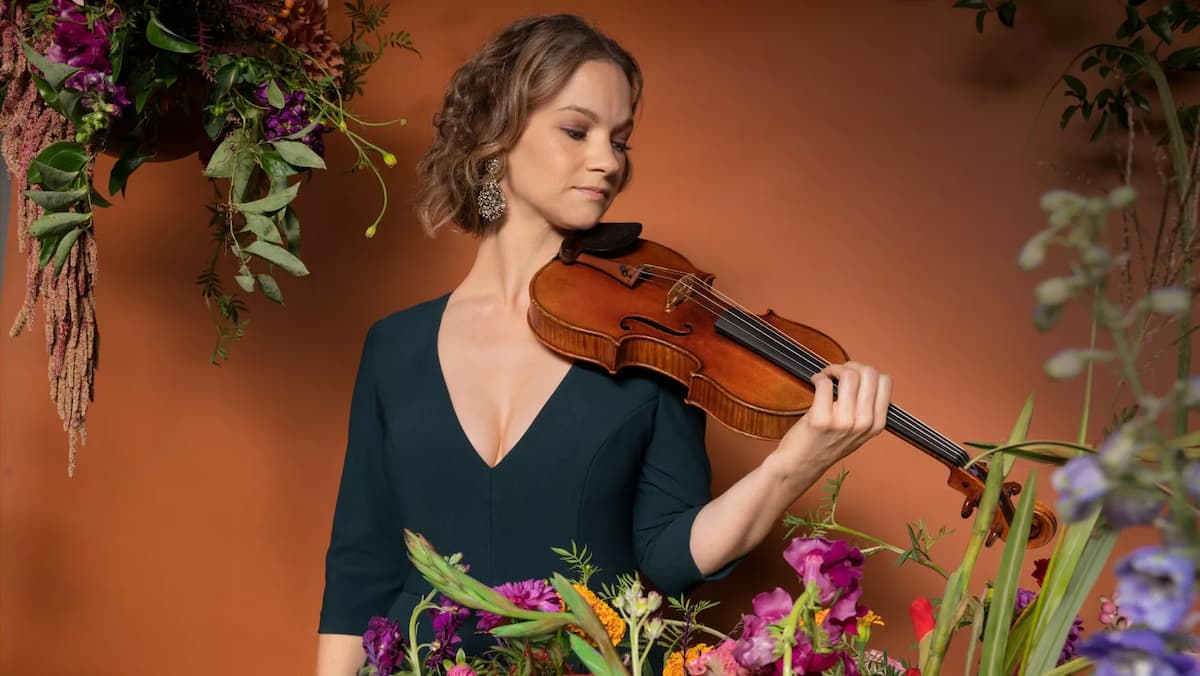
Hilary Hahn © classicalwcrb.org
For twenty years, as she rose to become one of the greatest violinists of her generation, a conspicuous hole remained in her discography: the first two sonatas and first partita. But in 2018, she returned to finish the cycle.
The sequel was just as satisfying – if not more so – than her outing as a teenager.
She said in one interview, “I always liked having the rest of the Bachs ahead of me. Once you’ve recorded it, all you can do in the future, as far as recording projects, is re-record it!”
James Ehnes (2000 on Analekta; 2021 on Onyx)
Ehnes plays the Sonata No. 1
Canadian violinist James Ehnes was born in the small city of Brandon, Manitoba. He first recorded the complete sonatas and partitas for the Canadian label Analekta at 23.
It’s a recording of staggering maturity: understated, unflashy, with an effortless technique and gorgeous tone. It earned him Young Artist of the Year at the Cannes Classical Awards.
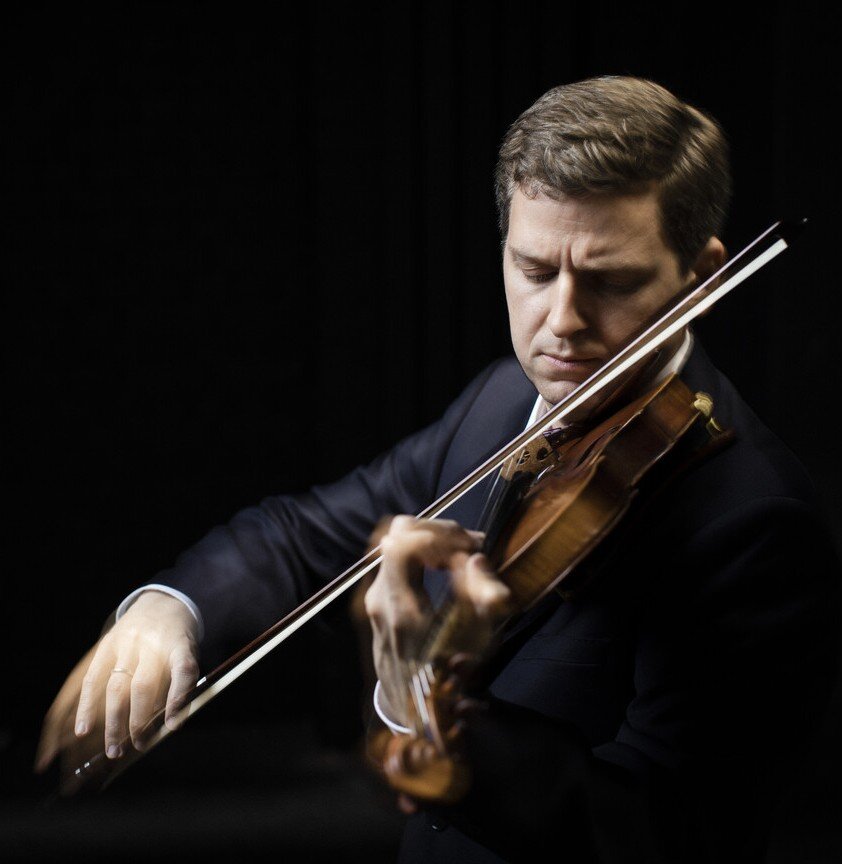
James Ehnes © Benjamin Ealovega
Temporarily barred from continuing his career as a globetrotting soloist, Ehnes embarked on a couple of solo recording projects during the pandemic, including a re-recording of the sonatas and partitas.
He recorded them at home and created an accompanying filmed version. He bought equipment and recorded the works overnight when ambient noise was at a minimum. The backstory and setting add an intriguing, personal layer to these deeply personal works.
Rachel Barton Pine (2015 on AVIE)
Barton Pine plays the Chaconne from the Partita No. 2
At the age of 17, Rachel Barton Pine won the gold medal at the J.S. Bach International Violin Competition. She is the only American ever to win the prize, and remains the youngest ever to do so.
She began performing Bach’s solo works as a child at the age of four at St. Paul’s United Church of Christ in Chicago – which, notably, has a stained-glass window portraying Bach.
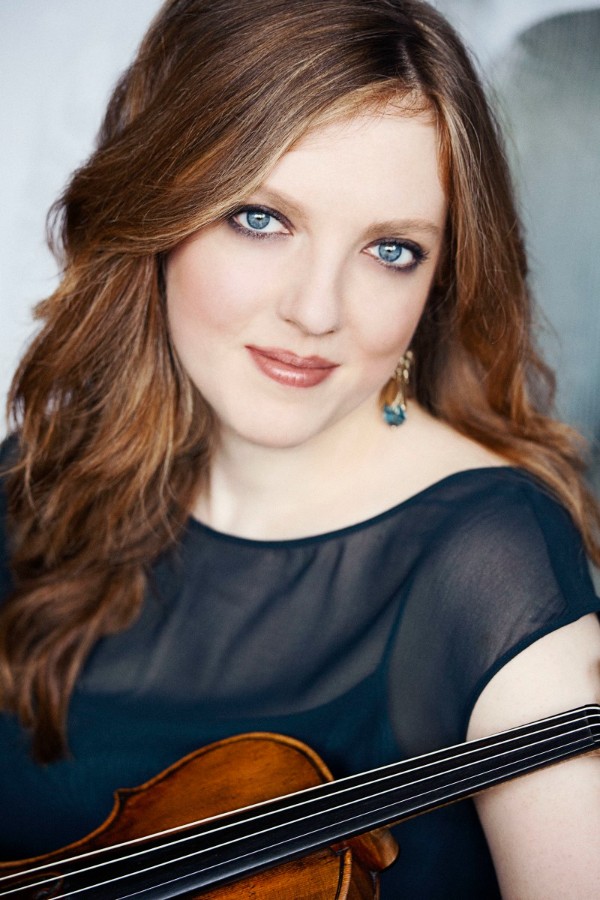
Rachel Barton Pine
In 2015, she returned to the church to record the complete sonatas and partitas there. She wrote, “The St. Paul’s sanctuary with its beautiful acoustics, reverberant yet clear, has continued to inform my interpretation of Bach’s music… and no matter where I play Bach, the acoustical qualities of the sanctuary are always in my ear.”
Along with her recording, she also edited a version of the sonatas and partitas, published by Carl Fischer, and created a 26-part video series analysing every movement. The result is the most thoroughly documented relationship any violinist has had with this repertoire.
Augustin Hadelich (2021 on Warner)
Hadelich plays the Andante from the Sonata No. 2
Augustin Hadelich was born in 1984 in Italy and came to prominence in 2006 when he won the International Violin Competition of Indianapolis.
He plays the 1744 “ex Szeryng LeDuc” Guarnerius – an instrument formerly played by Henryk Szeryng, the second violinist on this list.
For this recording, Hadelich, like Barton Pine, used a Baroque-style bow instead of a modern one. He bought it a few years earlier, but he didn’t get a chance to work with it until the pandemic lockdown.
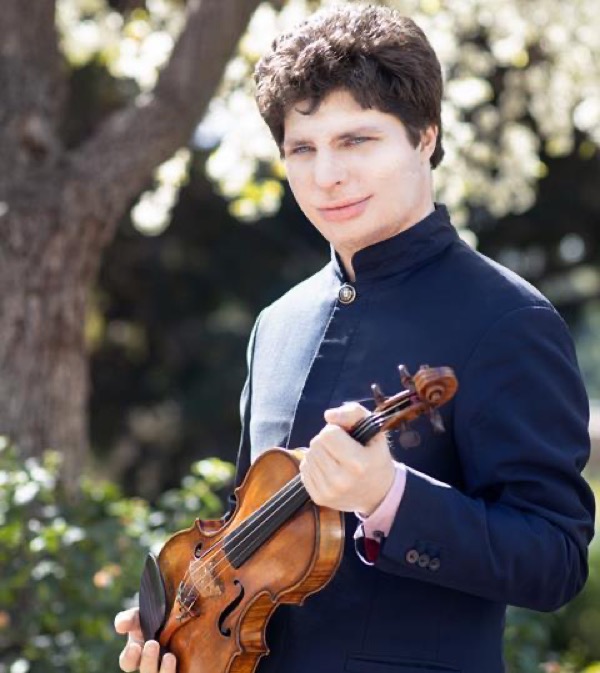
Augustin Hadelich
He described the bow as “a revelation,” and playing it felt “liberating.” He found that chordal passages could be played more fluidly, and buoyant Baroque dance rhythms became easier to achieve.
He told one interviewer in 2021, “The tradition of playing Bach, when I first heard it, was really severe. It had no joy in it. Even something like the Gavotte felt like it was supposed to ‘build character.’ A lot of these movements have a lot of joy in them, especially the third sonata and third partita.”
The result is a recording that mixes the best of modern and Baroque techniques – and one that insists, above all, on joy.
Conclusion
What’s striking, looking across these ten recordings, is how much biography shapes interpretation.
Szeryng’s wartime displacement, Grumiaux’s wartime silence, Perlman’s decades of live performance before a single note went to tape, Hahn’s deliberate twenty-year gap – in Bach’s Sonatas and Partitas, the violinist’s own story tends to find its way into the music.
That may be because these works demand everything. There is nowhere to hide in Bach’s writing for solo violin – no orchestra, no accompanist, no safety net. What you hear is always, in some sense, a portrait of the person playing.
Bach wrote these works over three hundred years ago, and violinists are still trying to get them right. That’s probably the highest compliment the repertoire could receive.
For more of the best in classical music, sign up for our E-Newsletter