
Trying to choose a single “best” violinist for each decade of the twentieth century is a fool’s errand – but an instructive one.
The process is less about choosing stars and more about understanding what greatness meant in different decades, and how each violinist – and each decade – pushed the art of violin-playing forward.
At the start of the century, the greats were famous for their tone and personal expressiveness. Mid-century, thanks to the diamond-hard virtuosity of Jascha Heifetz, priorities shifted toward technical greatness. Later, the pendulum swung back again: the greats began embodying warmth, humanity, and stylistic chameleonism alongside bulletproof technique.
The following list identifies one violinist per decade who best embodied the dominant values of their time.
1900–1909: Eugène Ysaÿe
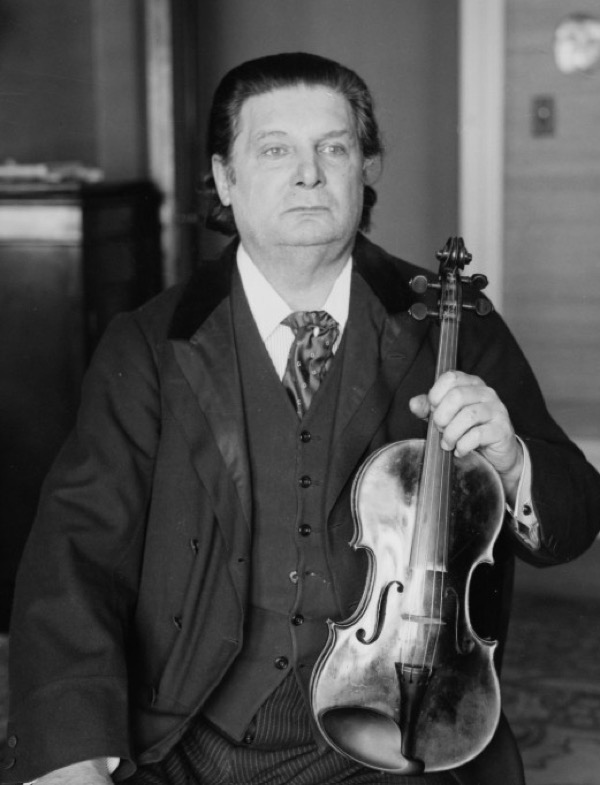
Eugène Ysaÿe
Eugène Ysaÿe playing the third movement of the Mendelssohn violin concerto
At the turn of the century, Eugène Ysaÿe stood at the centre of European musical life.
His playing fused technical command with unprecedented expressive freedom, laying the foundations of modern violinism and earning him the nickname the King of the Violin.
His approach to phrasing and tone permanently altered expectations of what the violin could express.
During his career, composers such as Franck, Chausson, and Debussy wrote with his sound in mind, resulting in a number of vital contributions to the violin repertoire.
He also wrote an important set of six solo sonatas, works that remain both technically and philosophically demanding for violinists today.
1910–1919: Fritz Kreisler
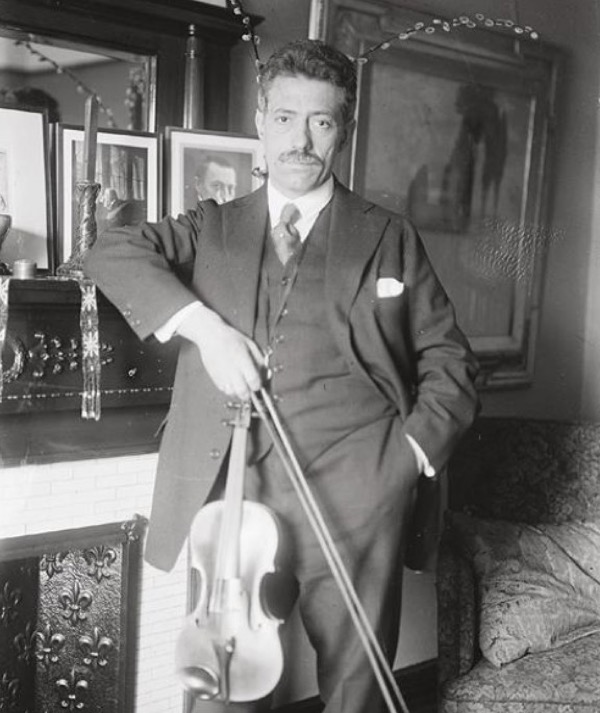
Fritz Kreisler
Fritz Kreisler playing Kreisler’s Caprice Viennois
Kreisler‘s supremacy in the 1910s was cultural as well as musical.
Many music lovers had their first introduction to violin music through his early recordings – especially the ones of his own beautiful and brief recital pieces like Liebesleid, Liebesfreud, and Caprice Viennois.
He was also famous for his Baroque-style miniatures like his Praeludium and Allegro, which he told audiences were rediscovered scores by obscure composers, but had actually been composed by Kreisler himself.
His famously golden tone, impeccable sense of rubato, and unapologetic Viennese charm shaped early twentieth-century musical taste.
1920–1929: Jascha Heifetz
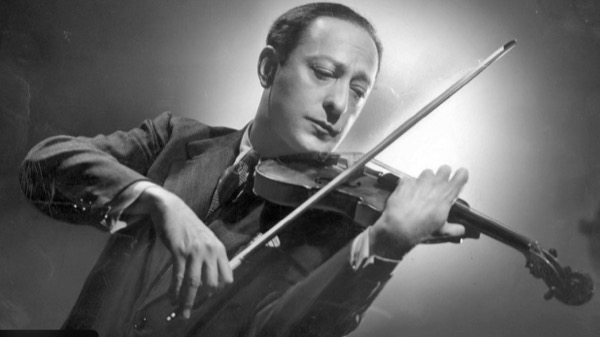
Jascha Heifetz
Heifetz playing 1st movement of the Tchaikovsky violin concerto
No arrival in violin history was more disruptive than Jascha Heifetz. When he first heard a young Heifetz play, Kreisler reportedly quipped that all other violinists might as well break their instruments across their knees.
In the 1920s, Heifetz redefined technical perfection, achieving clarity, speed, control, and precision previously thought unattainable.
From this decade onward, violinists were judged against a new and unforgiving technical standard: Jascha Heifetz’s.
1930–1939: Yehudi Menuhin
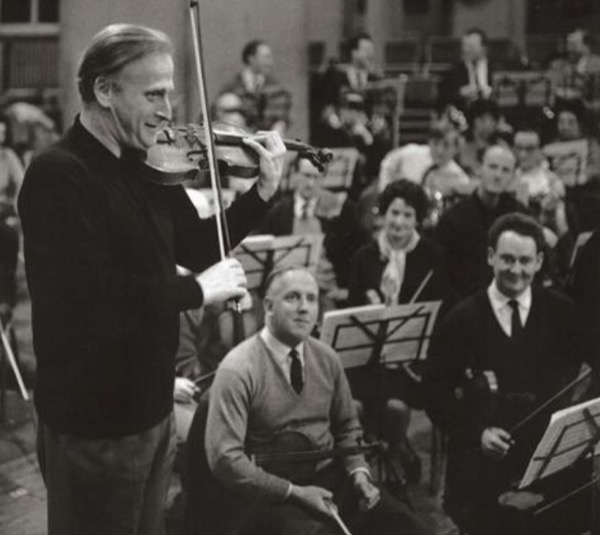
Yehudi Menuhin
Menuhin playing Mozart’s Violin Concerto No. 3
While Heifetz remained dominant through the 1930s (and there’s a good case to be made that he was also the most influential violinist for a couple more decades to come), Menuhin came to symbolise something different.
A prodigy of dizzying ability whose seriousness and introspection resonated during the Depression years, Menuhin demonstrated how a solo violinist could become known for his spiritual and even moral depth.
His seriousness and moral authority that emerged in the 1930s would later define his wartime performances, when he performed for Allied troops and concentration camp survivors.
Later in his career, he also became known for his cross-cultural exchanges (he was especially well known for his collaborations with Indian sitarist Ravi Shankar and French jazz violinist Stéphane Grappelli) and supporting young musicians’ careers.
1940–1949: David Oistrakh
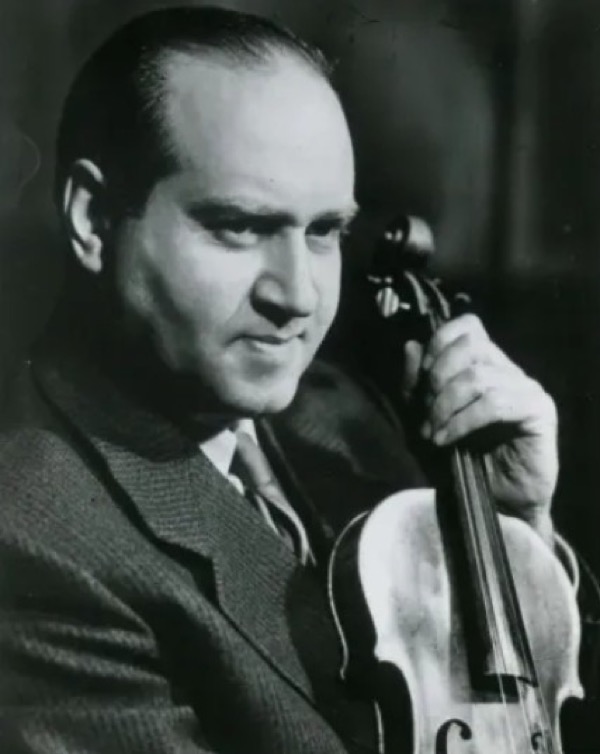
David Oistrakh
David Oistrakh playing Debussy’s Clair de lune
The wartime and postwar years demanded a kind of moral and musical gravity from its greatest classical musicians, and the playing of Oistrakh – with his deeply human tone and earnestness – fit the bill.
Oistrakh’s broad tone, architectural phrasing, and moral authority were hugely influential to both Soviet and Western violinists in a musical world fractured by war and politics at the dawn of the Cold War.
His collaborations with Shostakovich (the composer’s shattering first violin concerto, written between 1947-48, was dedicated to him), and his interpretations of Beethoven and Brahms established a model of postwar musical nobility that remains influential to this day.
1950–1959: Nathan Milstein
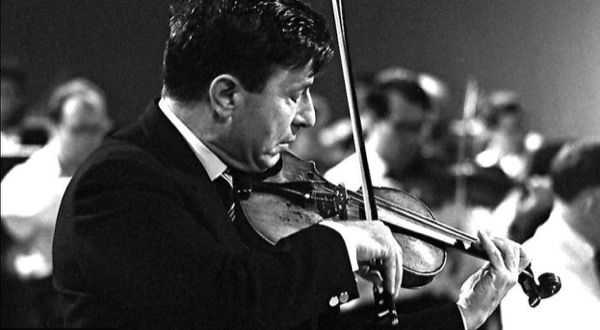
Nathan Milstein
Nathan Milstein playing his Paganiniana
The 1950s marked a turn toward refinement and stylishness.
Nathan Milstein’s elegance, restraint, and stylistic clarity made him a favourite of the era’s connoisseurs.
His Bach playing, in particular, exerted a particularly long-lasting influence. In those Bach performances and recordings, he favoured structure and line over Romantic excess, helping to usher in a stylish but unsentimental approach to the composer, which hinted at the upcoming historically informed performance practice movement.
1960–1969: Isaac Stern
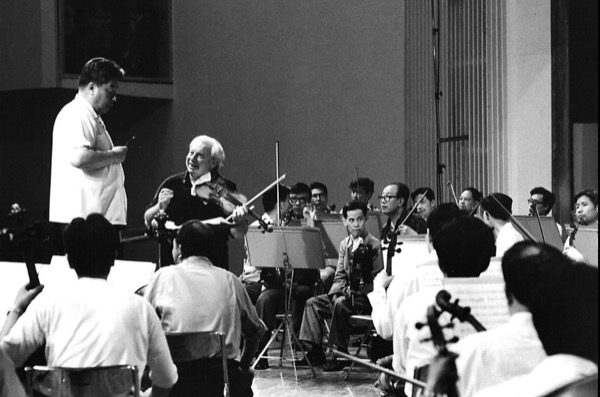
Isaac Stern
Isaac Stern playing Saint-Saëns’s Introduction and Rondo Capriccioso
By the 1960s, a violinist’s greatness was expected to extend beyond the concert platform. American violinist Isaac Stern followed in Menuhin’s footsteps, emerging not just as a concert violinist but as a cultural statesman.
He championed young artists, made benchmark recordings, and spearheaded the ultimately successful effort to save Carnegie Hall from demolition.
Later, in the 1970s, he even performed international diplomacy, touring China and giving concerts seven years after President Richard Nixon’s first official visit to the country. That tour underlined the country’s growing passion for Western classical music and served as the material for an Oscar-winning documentary, From Mao to Mozart: Isaac Stern in China.
1970–1979: Itzhak Perlman
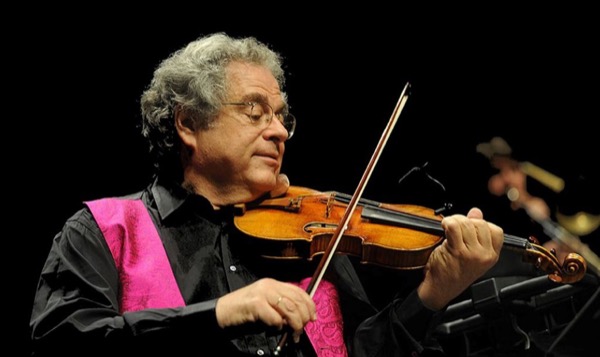
Itzhak Perlman
Itzhak Perlman playing Beethoven’s Violin Concerto
In the 1970s, Itzhak Perlman became one of the most recognisable violinists in the world.
From an early age, he made important appearances on mass media, showing up everywhere from television shows like The Ed Sullivan Show and Mr. Roger’s Neighborhood to soundtracks of major films like Schindler’s List.
His playing combined technical ease with warmth and generosity, contributing his unique charisma and emotional immediacy to concert platforms the world over.
At a time when virtuosity risked emotional coolness after the rise of Heifetz, Perlman helped to popularise a warmth of style and easy accessibility.
1980–1989: Anne-Sophie Mutter
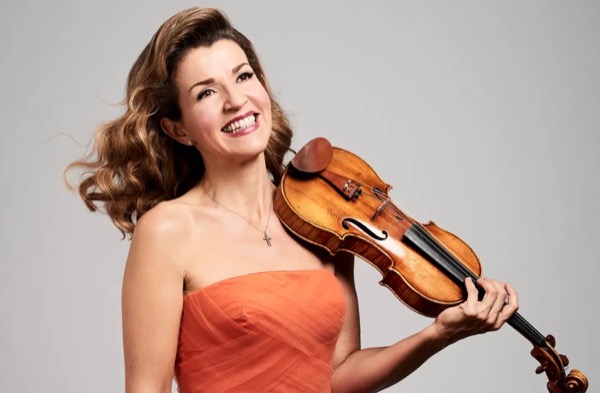
Anne-Sophie Mutter
Anne-Sophie Mutter playing Sarasate’s Zigeunerweisen
Anne-Sophie Mutter‘s frequent collaborations with Berlin Philharmonic conductor Herbert von Karajan (a major star in classical music in his own right), her technical authority, and her commitment to contemporary composers positioned her at the centre of late twentieth-century violin culture.
She also became famous for performing in shoulderless gowns, creating a modern idea of what a glamorous woman soloist could look like.
At a time when nearly all of the most famous violinists were men, Mutter demonstrated that virtuosity, authority, and visible femininity were not mutually exclusive.
She bridged virtuosity and modernism with rare confidence and individuality.
1990–1999: Gil Shaham
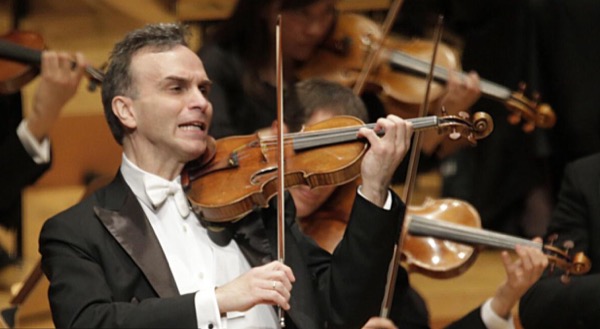
Gil Shaham
Gil Shaham playing Sarasate’s Carmen Fantasy
By the 1990s, no single ideal of violin-playing dominated in the popular consciousness. Recordings, television channels, and the number of influences on young violin soloists had multiplied.
In this pluralistic landscape, Shaham’s joyful, accomplished, communicative artistry stood out.
His playing built on Stern and Perlman’s approach, rejecting the more austere, aristocratic approach of a Heifetz or Milstein in favour of warmth and accessibility, redefining excellence as something that was technically jaw-dropping but also breathtakingly generous and human.
In a decade whose media was becoming increasingly fragmented, that ethos proved quietly influential. You can see traces of it in the generous and golden-toned violin playing of 21st-century violin stars like James Ehnes, Julia Fischer, and Augustin Hadelich.
Conclusion
Taken together, these violinists trace the evolution of what listeners prioritised from decade to decade: from individual expressivity to technical achievement to cultural authority to emotional connection.
By the end of the century, the art had embraced a number of styles, with no single figure dominating a decade like had happened in past decades.
Still, all of today’s great players – whether consciously or not – stand on the shoulders of the violinists who shaped each decade before them.
For more of the best in classical music, sign up for our E-Newsletter





Eight out of ten Jewish. Quite remarkable.
You continue to educate and entertain me… I thank you… Education and awareness brings appreciation… Today’s listing of the great violinists is just another example… They were all familiar to me, but now I am more than just familiar with the artists and the music they played…. Tony
Not Gil Shaham, but Maxim Vengerov for the Nineties….! Maybe shared with Schlomo Mintz….! (and where is, pray, Georges Enescu in the earlier decades….?)
The two best nowadays fo me are Leonidas Kavakos and Isabelle Faust, especially Faust due to her baroque playing along great virtuosity in romantic and contemporary repertoire.
This ranking is thought-provoking and I would argue for including Ida Haendel in the 1950s decade.