
The twentieth century was the first century in which pianists’ careers intersected with mass media. Perhaps as a result, greatness and influence during this period are inseparable from pianists’ public images.
Therefore, this is not a ranking of pianists by absolute merit, but an exploration of which figures most clearly defined what pianistic greatness meant within the culture of each decade.
By that measure – public influence – the twentieth century was full of great pianists: the composer of the most popular concertos of the century, an eccentric who devoted entire stretches of his career to achievement in the recording studio and made bestselling recordings, even a pianist who went on to become the prime minister of Poland.
Today, we’re presenting a decade-by-decade argument for the greatest – and most influential – pianists of each decade of the twentieth century.
1900–1909: Josef Hofmann
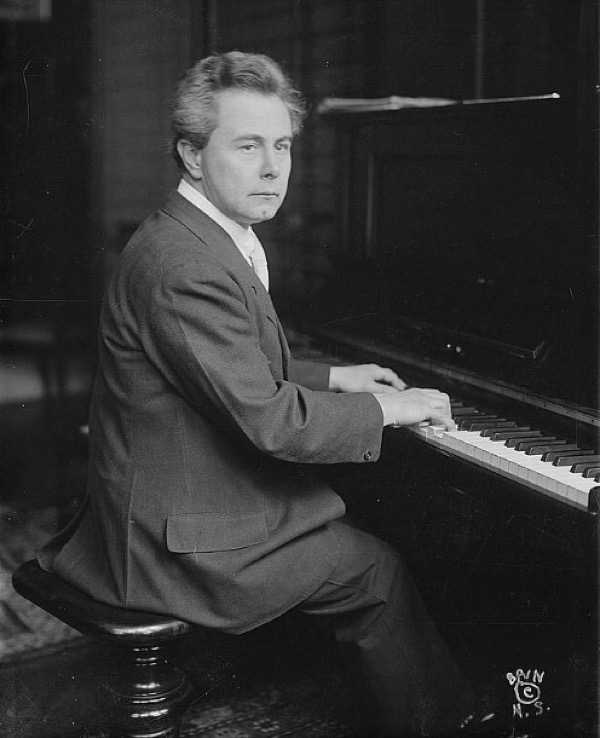
Josef Hofmann
Josef Hofmann playing the third movement of Beethoven’s Piano Concerto No. 5
Born in 1876, Josef Hofmann entered the twentieth century already a legend.
A child prodigy trained under Anton Rubinstein, he was widely regarded by fellow pianists as the most naturally gifted technician of his generation.
Hofmann combined phenomenal control with a famously economical physical approach, featuring smart use of his small hands, minimal motion, and astonishing precision.
By the early 1900s, he had settled in the United States, where he balanced a high-profile concert career with serious intellectual pursuits, later becoming director of the Curtis Institute of Music, which would go on to train countless of the world’s greatest musicians.
His relative avoidance of the recording studio and dislike of self-promotion later diminished his reputation, but in this decade, he represented the ideal pianist: effortless, elegant, and complete.
Among active performers, no one embodied pianistic perfection more fully.
1910–1919: Ignacy Jan Paderewski
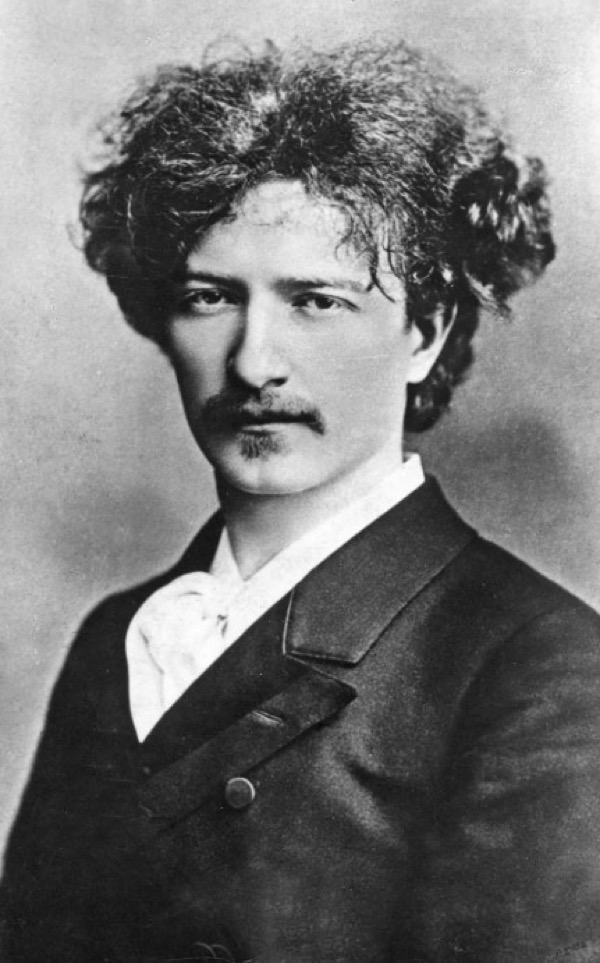
Ignacy Jan Paderewski
Paderewski plays his Menuet
By the 1910s, Paderewski was no longer merely a musician: he was a global figure.
His shock of red hair and impassioned style made him instantly recognisable, even to audiences who didn’t know much about classical music.
Trained in Vienna and Paris, he’d risen to international fame in the late nineteenth century, but his work during the 1910s cemented his authority.
World War I transformed Paderewski’s role entirely. He became an outspoken advocate for Polish independence, using his celebrity to influence political leaders and public opinion.
While younger pianists may have surpassed him technically, Paderewski’s stature as both artist and statesman made him the defining pianistic presence of the decade.
1920–1929: Sergei Rachmaninoff
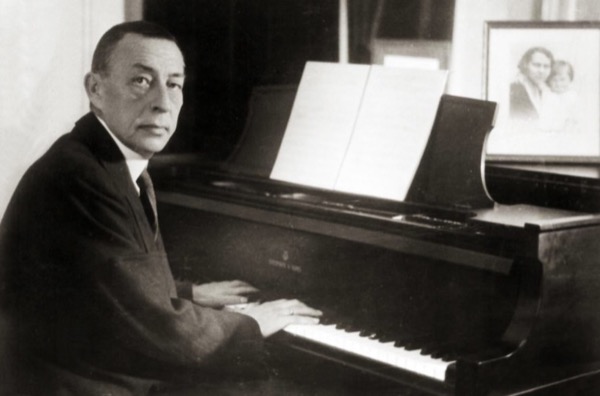
Sergei Rachmaninoff
Rachmaninoff plays his own Piano Concerto No. 2
Exiled from Russia after the Revolution, Rachmaninoff rebuilt his life in the 1920s as a touring pianist based in the United States.
This period coincided with the height of his technical powers and the bulk of his recording legacy.
His playing combined a massive sound with rhythmic exactitude and an understated but powerful passion beneath the surface of every performance.
Unlike many virtuosi, Rachmaninoff carried the authority of a major composer whose own works reshaped the piano repertoire. His large hands, reserved demeanour, and uncompromising standards projected an aura of seriousness that audiences of the era loved.
This was the decade that Rachmaninoff was widely regarded as the king of the keyboard.
1930–1939: Artur Schnabel
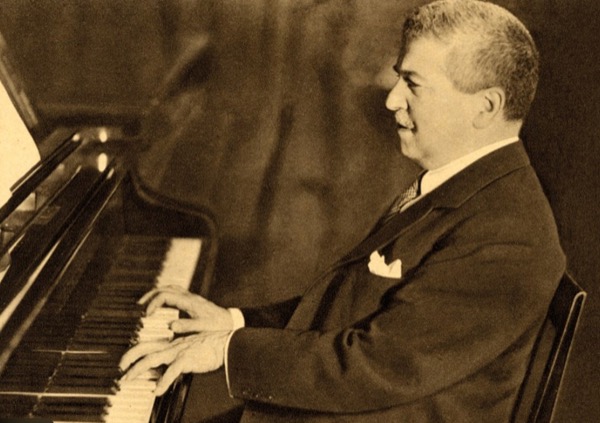
Artur Schnabel
Schnabel plays Beethoven’s Piano Sonata No. 31
Schnabel’s career represented a radical rejection of virtuosity as spectacle.
Born in 1882 in what is now Poland and trained in Vienna, he devoted himself to the three most beloved Viennese composers: Beethoven, Schubert, and Mozart.
His famous assertion that these composers’ best works were “better than they can ever be played” became a guiding philosophy for many pianists, and also contributed to the crystallisation of the modern piano repertoire.
In the 1930s, Schnabel recorded the first complete cycle of Beethoven’s piano sonatas, a project that redefined interpretive seriousness and thoroughness.
Forced into exile by the rise of Nazism, Schnabel nonetheless continued to shape modern pianism from afar, altering how generations approached the core repertoire.
1940–1949: Vladimir Horowitz
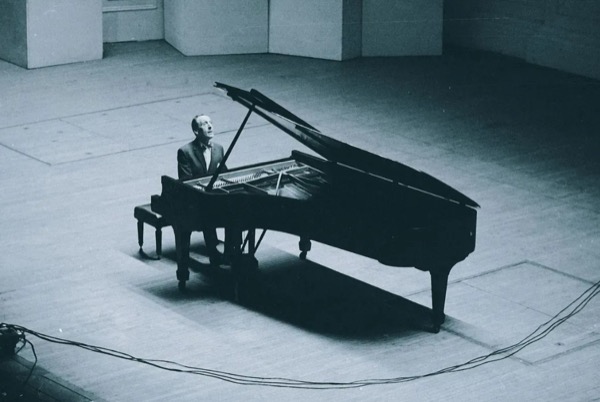
Vladimir Horowitz
Horowitz playing his Fantasy on Carmen
Horowitz’s career was marked by extremes: triumph and anxiety, confidence and fragility.
By the 1940s, he had already been famous for nearly two decades, renowned for his staggering technique and striking tonal palette. His wartime performances and recordings carried an almost unbearable intensity: brilliant, volatile, deeply personal.
Although he withdrew from public performance for several years mid-decade due to depression and performing anxiety, Horowitz’s aura only grew during his absences.
His return concerts were treated as front-page cultural events, and his sound – huge, biting, unmistakable – redefined pianistic individuality.
In a decade that was shaped by wartime trauma and recovery, Horowitz embodied both the fragility of the era and its ultimate resilience.
1950–1959: Artur Rubinstein
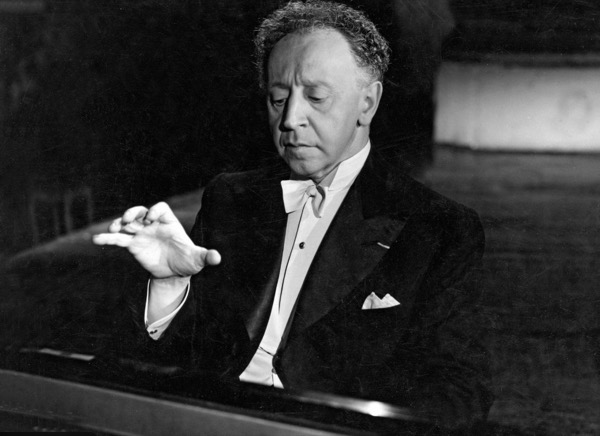
Artur Rubinstein
Rubinstein playing Chopin’s Polonaise in A-flat major
Rubinstein’s long career included early struggles, late blooming, and remarkable longevity.
By the 1950s, he had reached a period of serene authority. Having survived war, displacement, and personal doubt, his playing acquired a warmth and ease that audiences found deeply reassuring, especially in the postwar years.
A master of Chopin, Brahms, and Spanish repertoire, Rubinstein valued communicating emotion over technical perfection.
His cosmopolitan life – he was fluent in multiple languages, and equally at home in Paris salons and American concert halls – lent his performances an expansive glamour and humanity in an era when audiences craved it.
1960–1969: Glenn Gould
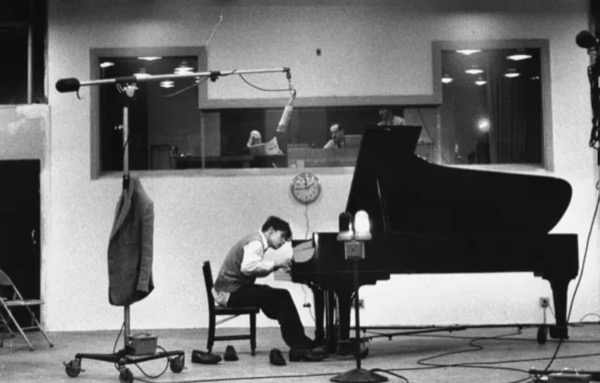
Glenn Gould
Gould playing excerpts from Bach’s Goldberg Variations
Glenn Gould’s career defied precedent. A Canadian prodigy with eccentric habits and uncompromising ideas, he stunned the musical world with his early Bach recordings before abandoning the concert stage entirely in 1964.
The remainder of the decade was devoted to studio experimentation, radio documentaries, and theoretical writing.
His insistence that recordings could surpass live performance reshaped the profession.
Gould’s Bach – fast, articulated, fiercely individual – challenged Romantic traditions and polarised listeners. Yet his influence was undeniable.
In many ways, he became the classical music world’s answer to the counterculture and social unrest of the 1960s.
1970–1979: Martha Argerich
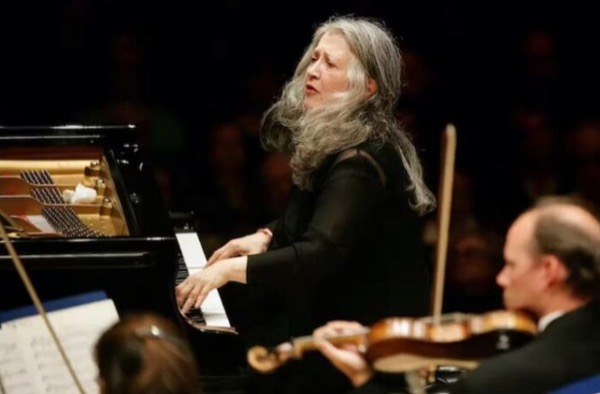
Martha Argerich
Argerich playing Chopin’s Piano Concerto No. 1
Argerich burst onto the international scene after winning the Chopin Competition in 1965 at the age of 24, but it was in the 1970s that her artistry – and her career – fully ignited.
Trained in Buenos Aires and Europe, she combined colossal technique with spontaneous, almost reckless musical instincts.
She wasn’t a traditional virtuoso pianist. Known for cancelling concerts, refusing to live by rigid schedules, and favouring collaboration over solo celebrity, Argerich nevertheless bewitched audiences whenever she appeared.
Her recordings from this decade – especially in repertoire by Chopin, Prokofiev, and Ravel – capture a sense of electricity and immediacy that few pianists have matched, before or since.
1980–1989: Maurizio Pollini
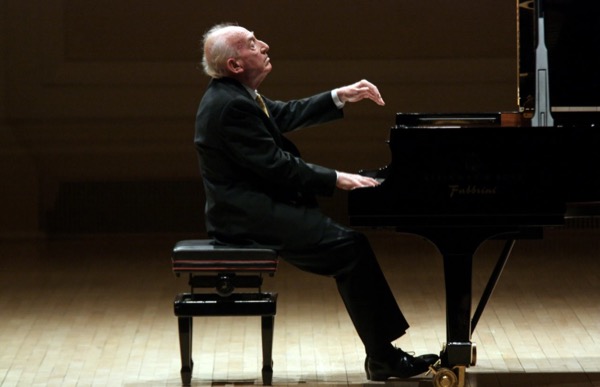
Maurizio Pollini
Pollini playing Mozart’s Piano Concerto No. 23
Pollini’s ascent followed a different path. After winning the Chopin Competition in 1960, he withdrew to study even further before returning to the concert stage as a rigorously disciplined artist.
By the 1980s, his playing was famous for its structural clarity and intellectual control. His performances reflected his belief that fidelity to the score was an ethical stance.
Closely associated with both Beethoven and twentieth-century modernism, Pollini rejected expressive excess in favour of coherence and proportion.
In a decade increasingly shaped by recording precision, Pollini defined what it meant to be a serious pianistic artist.
1990–1999: Evgeny Kissin
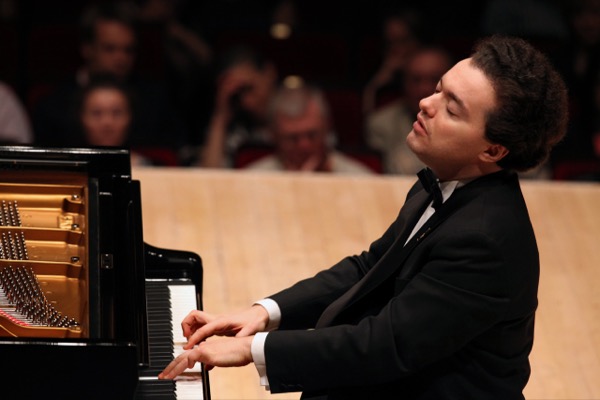
Evgeny Kissin
Kissin playing Tchaikovsky’s Piano Concerto No. 1
Kissin emerged from the Soviet system as a prodigy of extraordinary accomplishment. But unlike many child stars, he matured into an artist of rare authority.
By the 1990s, his performances were combining formidable technique with maturity and an almost old-fashioned air.
Audiences and critics alike treated Kissin as a custodian of tradition at a time when classical music faced increasing fragmentation. His Brahms, Chopin, and Russian repertoire projected command rather than personality.
In a pluralistic musical landscape, Kissin stood apart as one of the last great Soviet-trained pianists: a symbol of continuity at the century’s end.
Conclusion
Across the twentieth century, the piano absorbed – and reflected – enormous cultural change.
In an era shaped by recording, subsequent global reach, and rapidly changing preferences and ideals, these pianists defined what pianistic greatness meant to their respective generations.
From Hofmann’s physicality to Kissin’s late-century authority, each figure revealed a different answer to the same enduring question: what does it mean to be a pianist capable of defining a generation?
For more of the best in classical music, sign up for our E-Newsletter





(Edited) Glenn Gould was not a great pianist. He was a genius, yes, but his art was marred by huge aesthetic flaws and bad decisions that distorted music with eccentricity.