The Baroque era is one of the most transformative periods in the history of classical music. Beginning around 1600 and lasting until 1750, the Baroque era saw the invention and rise of opera, breathtaking sacred music, and innovative instrumental techniques.
Nowadays, musicians and organisations gravitate toward programming works from the late Baroque – i.e., those written in the first half of the 18th century.
However, there was a whole hundred years of the Baroque era that modern listeners don’t often listen to.
So today we’re looking at those first hundred years, stretching from 1600 to 1700, going decade by decade, choosing a highlight for each.
1600s: Claudio Monteverdi’s L’Orfeo (1607)
Italian composer Claudio Monteverdi was born in 1567.
While working at the court of Mantua in his thirties, a new art form combining music and storytelling began bubbling up in Florence. It was dubbed “opera.”
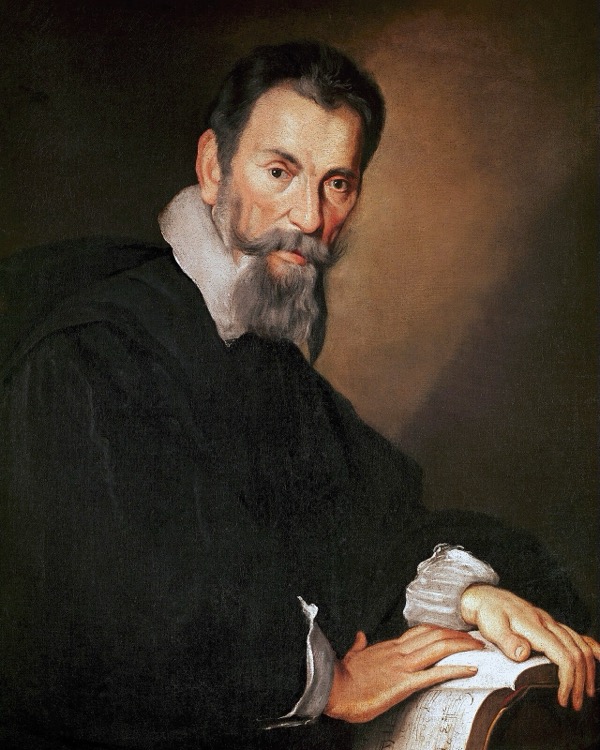
Claudio Monteverdi, oil painting by Bernardo Strozzi, c. 1630
Monteverdi was on the cutting edge of the genre. More than the composers who came before him, his operas unified their disparate ingredients. In the words of musicologist Robert Donington, the score of L’Orfeo “contains no element which was not based on precedent,” yet in toto is something entirely new – and the basis for centuries of operas to come.
1610s: Claudio Monteverdi’s Vespro della Beata Vergine (1610)
A few years after composing L’Orfeo, while still in the service of the dukes of Mantua, Monteverdi came out with another masterpiece, this time of sacred music: Vespro della Beata Vergine (Vespers for the Blessed Virgin).
It combines old musical traditions (known together as the prima practica, or “first practice”) and new ones (known as the seconda practica, or “second practice”).
Prima practica looked backwards to 16th-century music, prioritising a work’s harmonic rules over its text. In contrast, seconda practica loosened some of the old rules, allowing composers to write more expressively and to support the meaning of lyrics.
This gradual switch in focus, as exemplified by Monteverdi’s Vespro, influenced the vocal music of the rest of the Baroque era.
1620s: Claudio Monteverdi’s Il combattimento di Tancredi e Clorinda (1624)
Monteverdi remained a major figure well into the 1620s. In 1624, he wrote an operatic scene for three voices and an instrumental ensemble for that year’s Carnival of Venice.
Here, Monteverdi focused on innovating not the form or the vocal practice, but the instrumental parts. He created an approach that became known as the stile concitato, or “agitated style,” in which new instrumental techniques were employed for expressive effect.
For example, this is the first time a composer ever notated pizzicato (plucking the string in unison to create a kind of raindrop sound) or tremolo (quick repeated notes played at the tip of the bow that create an air of tension). Both new techniques served to tell the scene’s story.
These and other instrumental techniques colored the rest of Baroque-era instrumental writing.
1630s: Gregorio Allegri’s Miserere mei, Deus (c. 1630–1638)
Gregorio Allegri was born in 1582 in Rome, where he spent his entire life. He entered the priesthood as a young man and worked as a church musician.
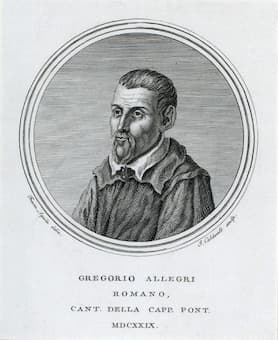
Caldwell: Gregorio Allegri (ca, 1740)
His Miserere mei, Deus, a setting of Psalm 51, was used by the choir in the Sistine Chapel. Later legend held that the work itself was never allowed to be heard outside the Chapel, but that’s incorrect; it was actually the throwback Renaissance Era ornamentation used during performances that was classified.
This work – and the mystique surrounding it – pumped the brakes on Monteverdi’s steady but relentless innovation, reminding listeners of the power and purpose of the old Renaissance Era musical traditions that Baroque composers had inherited.
1640s: Francesco Cavalli’s Giasone (1649)
Francesco Cavalli was born in 1602, making him the first composer on this list born in the 17th century.
As a student in Venice, he studied under Monteverdi, eventually rising to take Monteverdi’s one-time position as maestro di cappella at St. Mark’s Basilica.
Like his teacher, he wrote both sacred and secular music. He wrote more than 42 operas, but the most famous is Giasone, based on the myth of Jason and the Golden Fleece.
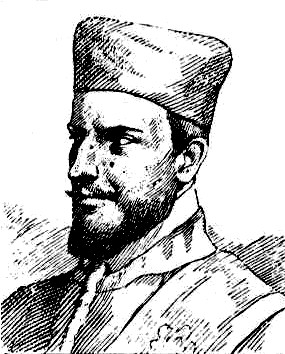
Francesco Cavalli
In Giasone, Cavalli made several innovations, including mixing genres (there are both comic and dramatic moments) and intermingling human and mythological characters. It also helped cement several operatic conventions, including love duets and laments. Its influence was immense; it became the most popular opera of the 17th century.
1650s: Heinrich Schütz’s Symphoniae sacrae, Book III (1650)
Heinrich Schütz was born in Köstritz in present-day Germany in 1585. As a young man, between 1609 and 1612, he traveled to Venice to study, soaking in the Italian tradition of Monteverdi.
After his return to Germany, he accepted a position as court composer in Dresden. His career overlapped with the disastrous Thirty Years’ War (1618–1648).
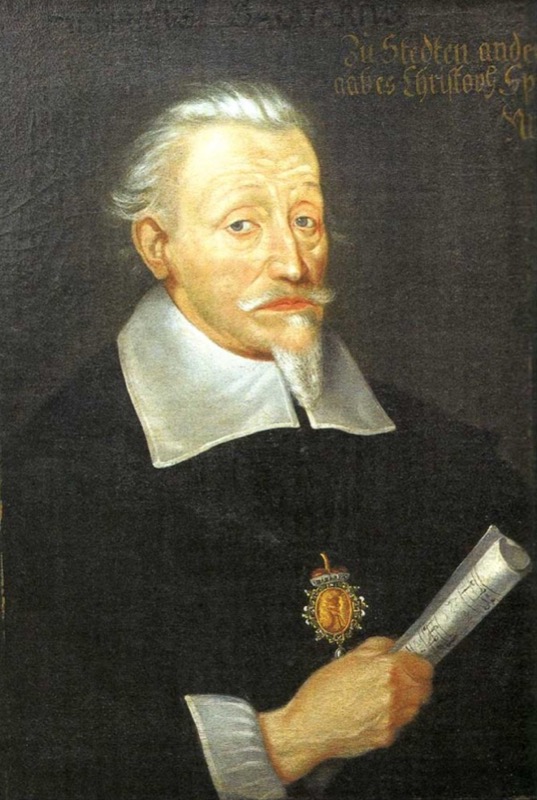
Heinrich Schütz
Due to the war, practicality dictated that his works be smaller and shorter. But after peace was declared, he was freer to write larger works that demanded more resources.
His later sacred music, published in the third book of his Symphoniae sacrae, blended German and Italian influences, and helped to establish the foundations of the German Baroque.
1660s: Johann Jakob Froberger’s Hexachord Fantasia (1660)
Johann Jakob Froberger, born in 1616 in Stuttgart, followed in Schütz’s footsteps. He was restless, travelling internationally, including to Italy, where he converted to Catholicism.
His most famous innovation was incorporating stylised dance music into his keyboard music and packaging it in the form of a suite, providing a template that composers would use for generations to come.
This idea of discrete sections or movements is on full display in his Hexachord Fantasia for keyboard, which is segmented into several parts.
1670s: Jean-Baptiste Lully’s Le Bourgeois Gentilhomme (1670)
Jean-Baptiste Lully was born in 1632 in Florence. As a 14-year-old, he took a job with a French duke who was passing through Italy, who wanted to hire a conversation partner for his daughter. He then rose in the ranks at the French royal court, working as both a dancer and a musician.
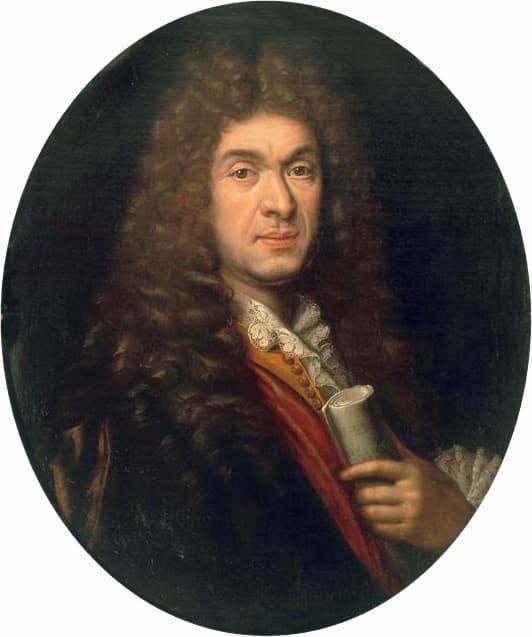
Portrait of Jean-Baptiste Lully by Paul Mignard
His 1670 comédie-ballet Le Bourgeois gentilhomme (The Bourgeois Gentleman) merges a variety of genres, including instrumental music, spoken word, and dance music, melding arts and creating a structure for later genres of theatrical music.
It also signals a new narrative sophistication, employing satire and comedy.
1680s: Henry Purcell’s Dido and Aeneas (c. 1688)
Henry Purcell was born in 1659 in London and became one of the greatest English composers not just of the Baroque era, but of all time.
His most famous work is his tragic opera, Dido and Aeneas. Its marquee aria is Dido’s Lament (“When I Am Laid in Earth”), which features a deeply affecting, repeating chromatic bass line reminiscent of tears trickling down a face.
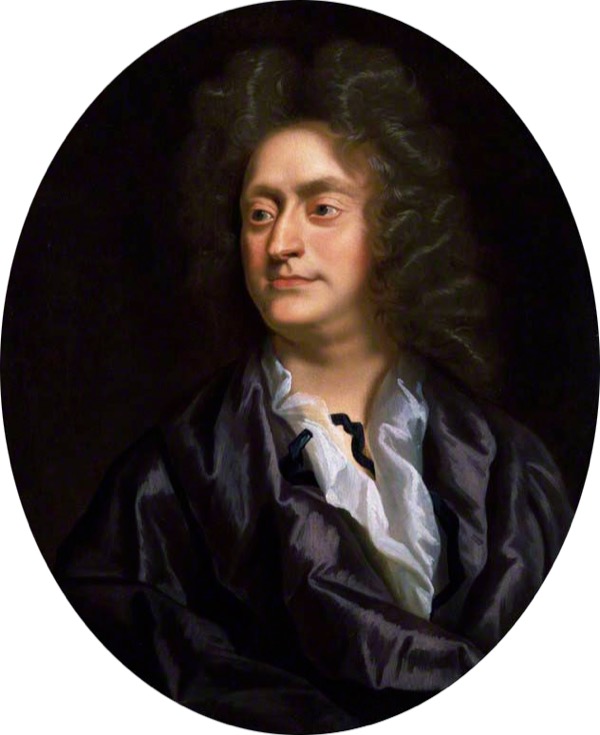
Henry Purcell by Closterman
With this opera, Purcell synthesised French-style overtures and dance styles, Italian vocal writing, and an English-language libretto into a single impressive chamber opera.
1690s: Dieterich Buxtehude’s Passacaglia in D minor (c. 1690s)
Dieterich Buxtehude was born around 1637 in the Danish-German borderlands, ultimately becoming the most celebrated organist in northern Germany.
His Passacaglia in D minor is arguably his most famous work, built around a repeating bass line. It’s the same gesture that animates Purcell’s “When I Am Laid in Earth,” just expanded upon, until it becomes the foundation of an entire organ showpiece.
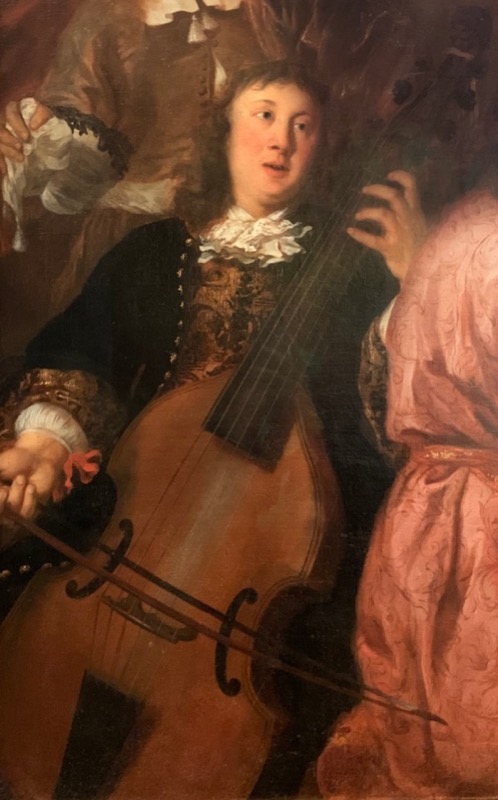
Dietrich Buxtehude
News of Buxtehude’s virtuosity travelled, and in 1705, at the age of twenty, Johann Sebastian Bach walked over 250 miles to Lübeck to hear him play. He stayed for nearly four months, soaking in his playing and the musical community Buxtehude had built.
Buxtehude’s penchant for a repeated bass line would prove inspiring to Bach, who would go on to write his own Passacaglia in C minor for organ after he returned home – kicking off the high Baroque era that would last until his death in 1750.
Conclusion
From Monteverdi’s first operatic experiments to Buxtehude’s towering passacaglia, the Baroque music of the 1600s was full of innovation and achievement, building the foundation for everything that came after.
And a lot happened after! These 17th-century works set the stage for the high Baroque era, when Johann Sebastian Bach, George Frideric Handel, and Antonio Vivaldi took up the baton and propelled the style into a new century.
For more of the best in classical music, sign up for our E-Newsletter