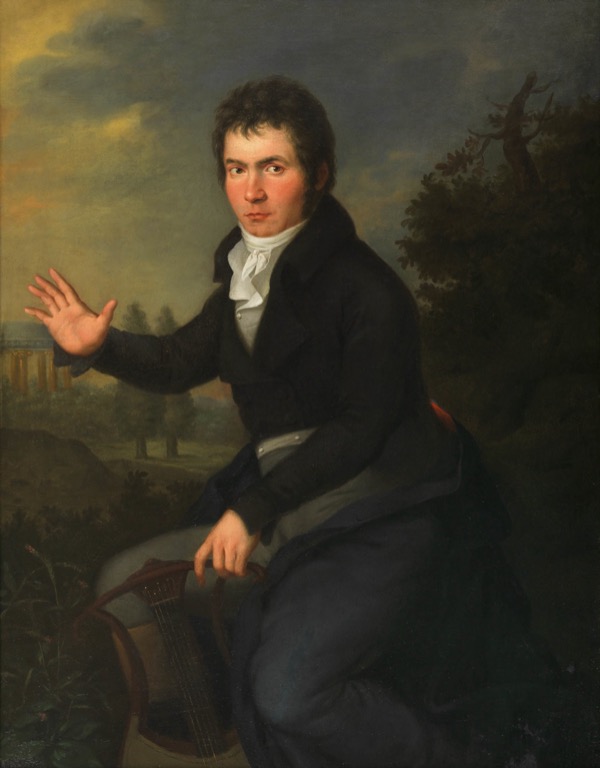
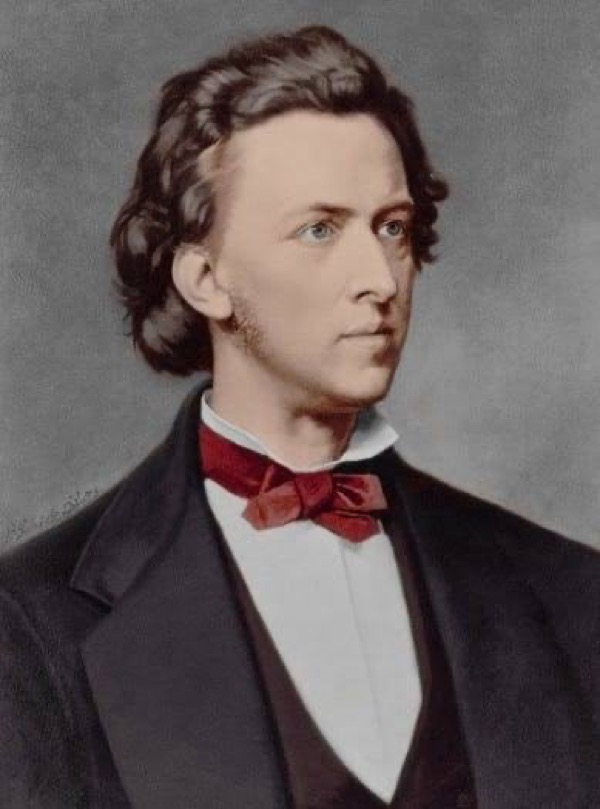
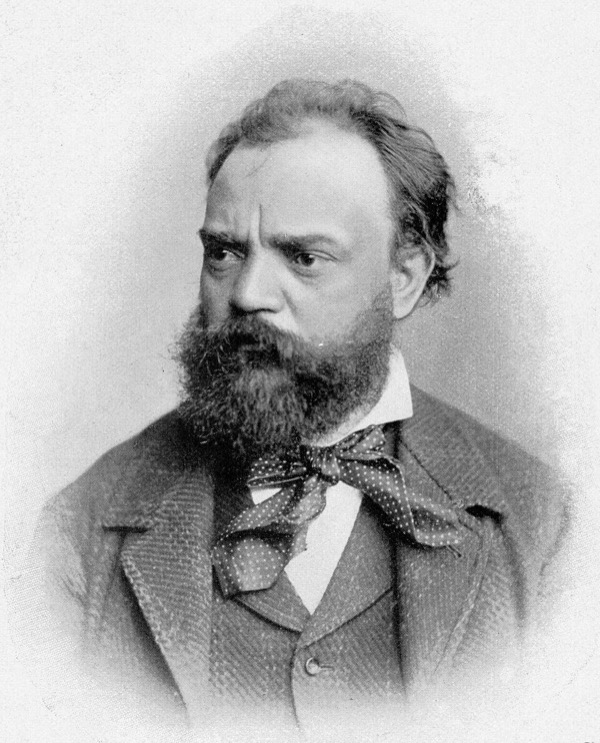
Beethoven’s late string quartets are some of the most famous and influential chamber music ever written – as well as some of the most intimidating.
Beethoven began writing his late quartets fourteen years after his earlier ones, meaning they came in the last years of his life.
By then, he was profoundly deaf and relied on his inner ear to compose. The resulting music earned a reputation for being advanced, challenging, and maybe even a bit crazy.
However, although the late quartets may be challenging, they also – paradoxically – include some of the lushest and most inviting music he ever wrote.
Today we’re looking at every late quartet, one by one, and noting what makes each one special: what to know, what to listen for, and where to start, one bullet point at a time.
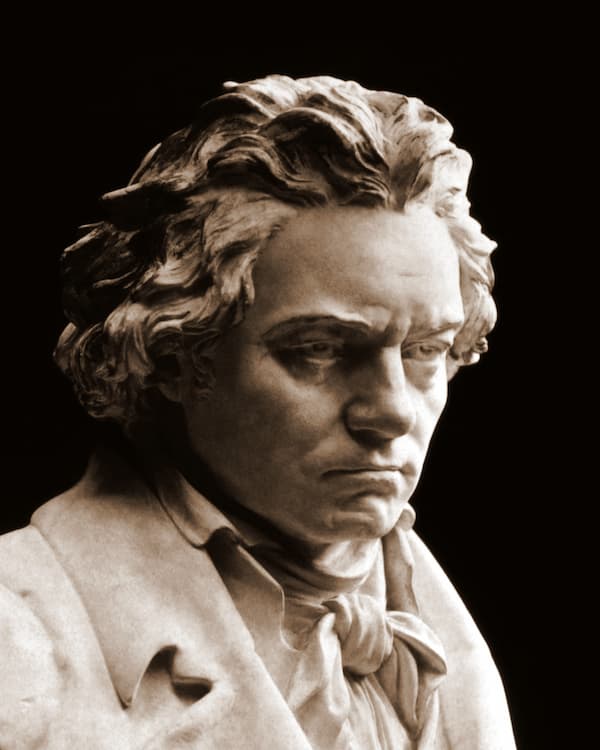
Photograph of bust statue of Ludwig van Beethoven by Hugo Hagen
String Quartet No. 12 in E-flat major, Op. 127
Year written: 1823–1824, when Beethoven was 52–53
Dedicated to: Nikolai Galitzin
- Fourteen years had passed since Beethoven’s last quartet: a staggering length of time given the speed of Beethoven’s creative evolution. During those fourteen years, he’d written his seventh, eighth, and ninth symphonies; his Missa Solemnis; and his Hammerklavier piano sonata.
- Prince Nikolai Galitzin, a Russian aristocrat and amateur musician, commissioned this quartet.
- Galitzin commissioned “one, two, or three new quartets” in November 1822. However, Beethoven was preoccupied with his ninth symphony and didn’t finish the quartets until 1824.
- Listen to the quartet’s opening, marked Maestoso (“majestic”), and its big dramatic chords. These chords recur throughout the movement.
- The heart of the quartet is its slow movement, which clocks in at around fourteen minutes. It consists of a theme and six variations.
- The finale is both sophisticated and pastoral.
- The quartet was incredibly challenging for the players. Beethoven didn’t help when he didn’t finish the quartet in time; in the end, the musicians had only two weeks to rehearse it.
- Not surprisingly, when it was played for the first time, the audience was mystified by it.
- Beethoven was completely deaf at this point and wasn’t at the premiere, but when he found out how it went, he criticised both the musicians and the listeners.
- Beethoven went to another quartet, led by violinist Joseph Michael Böhm, writing to him, “You must play my quartet.” Despite his deafness, Beethoven oversaw the rehearsals, and the second performance was more successful.
- We wrote about the initial disastrous premiere here: https://interlude.hk/beethoven-string-quartet-op-127-premiered-today-1825/.
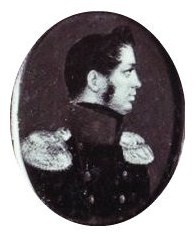
Nikolai Galitzin
String Quartet No. 13 in B-flat major, Op. 130
Year written: 1825, when Beethoven was 54
Dedicated to: Nikolai Galitzin
- This is the second quartet written for Prince Galitzin.
- It is also the fourteenth he wrote but later given the number thirteen when it was published.
- This quartet is very unusual, with six movements instead of the traditional four: an opening movement, a fast presto movement, a measured andante, a dance movement, a soulful cavatina, and a huge fugal finale.
- The fifth movement, the cavatina (“little song” in Italian), was one of Beethoven’s favourite things he ever composed. Beethoven later said it made him cry to compose, and that he’d even tear up just thinking about it.
- A recording of the Cavatina is on the Voyager Golden Record, the phonograph sent into deep space in 1977 in the hopes of intersecting with extraterrestrial life. If we ever meet the aliens, this quartet may be one of the first things they learn about us!
- The fugal finale became known as the “Große Fuge”, or Great Fugue. It was a hugely complicated, dissonant fugue that is challenging for audiences today, let alone those of 200 years ago. It was so challenging, in fact, that the publishers pushed Beethoven to write an alternative finale, which he did.
- Beethoven gave the manuscript to his secretary, and by the 20th century, it was owned by a Jewish Czech family, the Petscheks. When they fled the Nazis, the Gestapo asked a museum curator in Brno if it was authentically Beethoven. Fearing it would be looted, the curator said it was inauthentic, meaning it stayed safe in the Brno museum. In 2022, the manuscript was returned to the Petscheks.
String Quartet No. 14 in C-sharp minor, Op. 131
Year written: 1826, when Beethoven was 55
Dedicated to: Baron Joseph von Stutterheim
- Beethoven dedicated this quartet to Baron Joseph von Stutterheim, who ensured Beethoven’s nephew Karl secured a place in the army after Karl’s suicide attempt.
- This quartet, like the thirteenth, is unusual in its number of movements. It has seven movements, and each flows into the next, with no break in between. Despite this, only the first and last movements are in the same key (C-sharp minor).
- The order of the movements goes adagio – folk-like dance – transitional interlude – a slow movement set of variations – a quick presto – a sombre adagio – and an allegro.
- The heart of the work is the extended slow movement of variations. It alone lasts for over thirteen minutes.
- In the fifth movement, performers are instructed to play “sul ponticello” – i.e., to bow near the instrument’s bridge, which creates a glassy, spooky kind of sound. This is especially striking because of Beethoven’s deafness: he imagined this uncommon technique in his mind’s ear and was confident enough in that inner ear to write it down.
- Schubert famously asked for this quartet to be heard while he was on his deathbed. His musical friends acquiesced, forever linking this quartet to Schubert, too. He reportedly said of the quartet, “After this, what is left for us to write?”
- Given its unusual form, it was not premiered until after Beethoven’s death. The performance Schubert heard may have been one of the earliest, maybe even the earliest.
String Quartet No. 15 in A minor, Op. 132
Year written: 1823–1825, when Beethoven was 52–54
Dedicated to: Nikolai Galitzin
- This is actually the thirteenth quartet Beethoven wrote chronologically – which explains why its dedication was to Nikolai Galitzin, like the earlier works.
- That timing makes this Beethoven’s first quartet chronologically to experiment with adding movements to the standard string quartet outline.
- This quartet boasts five movements: two energetic movements at the beginning and two at the end, with the heart of the quartet being its slow, expansive middle movement.
- That slow movement is marked “Heiliger Dankgesang eines Genesenen an die Gottheit, in der Lydischen Tonart” (“Holy song of thanksgiving of a convalescent to the Deity, in the Lydian mode”). Beethoven wrote it because he’d been severely ill during the winter of 1824–1825 and was unsure if he’d survive. It is massive, clocking in at around seventeen minutes alone.
- His nephew Karl attended the premiere and wrote to his uncle that the quartet “received a lot of applause”: striking counterevidence to the idea that audiences uniformly rejected all of Beethoven’s later works for being too advanced.
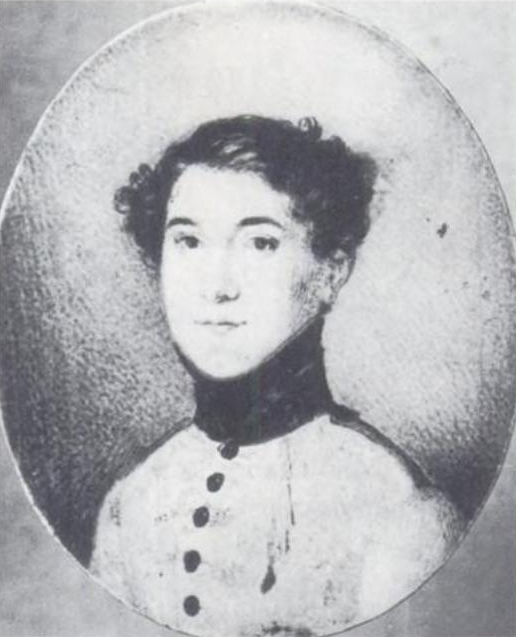
Karl van Beethoven, Beethoven’s nephew
String Quartet No. 16 in F major, Op. 135
Year written: 1826, when Beethoven was 55
Dedicated to: Johann Wolfmayer
- Beethoven’s sixteenth string quartet was the last major work that he completed, finishing it in October 1826. He died in March 1827.
- It is the shortest of the late quartets, clocking in at around 22 minutes, with only four movements. This connects it to Haydn’s tradition from a quarter century earlier.
- Once again, as it is in every one of these quartets, the stunning slow movement is a highlight: peaceful and pastoral.
- There is an intriguing inscription above the final movement’s opening chords: “Muß es sein?” (“Must it be?”) This is followed by another inscription above the movement’s main theme: “Es muß sein!” (“It must be!”) It is unclear if this is joking or a kind of existential questioning, and Beethoven never explained – so we listeners are free to interpret it as we wish.
- This was not only Beethoven’s last string quartet, but the last work that he ever completed. He finished it in October 1826 and died in March 1827. It premiered a few days before the first anniversary of his death.
Conclusion
Two hundred years after their composition, Beethoven’s late string quartets still sound like they were written yesterday. They are full of life, vibrancy, immediacy, and depth.
In the end, there’s no correct order to listen to Beethoven’s quartets. Dip in and out of them, depending on which ones catch your ear, or which historical tidbit you find most intriguing. No matter the order, each one is a new and deeply personal musical discovery.
For more of the best in classical music, sign up for our E-Newsletter