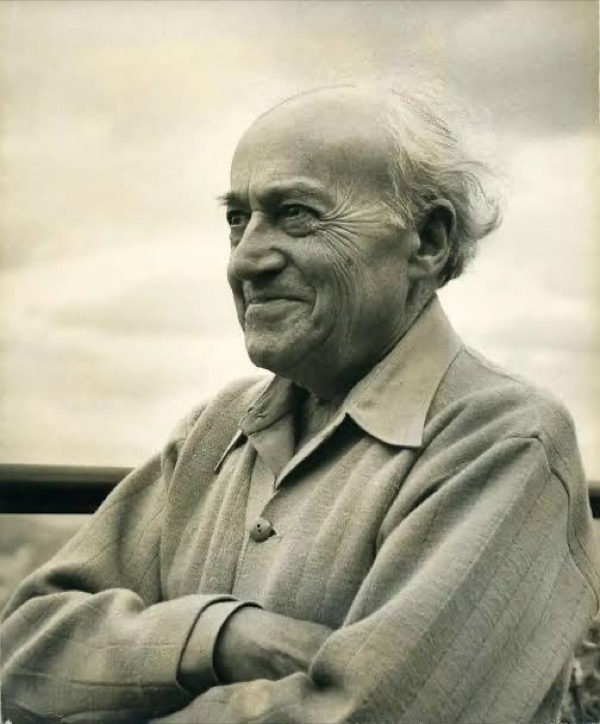
Ernest Bloch
Switzerland’s most prominent composer, Ernest Bloch, was born July 24, 1880, in Geneva. He emigrated to the United States and assumed the directorship of the Cleveland Institute of Music, later of the San Francisco Conservatory of Music, and of the University of California at Berkeley. We, cellists, revere this composer. He wrote masterfully for the instrument, featuring the cello prominently. The music focuses on depth of emotion, something a cello does so dramatically in Schelomo—Rhapsodie Hébraïque for cello and orchestra from 1916, his A Voice in the Wilderness, and his From Jewish Life (1924), a three-movement work for cello and piano.
But Bloch was prolific, so I should mention that he wrote an opera Macbeth: a Lyric Drama in Seven Scenes, Poems, Psalms, Concertantes, numerous orchestral works, and several works for smaller ensemble including pieces for violin, viola, or cello with piano, for flute, solo piano, two suites for solo violin, three suites for solo cello, five wonderful string quartets, and his masterful quintets for piano and strings.
Schelomo, arguably Bloch’s most popular work, has had many wonderful advocates, including Zara Nelsova with whom Bloch recorded the piece with the London Philharmonic in 1949, Emanuel Feuermann, Leonard Rose, Gregor Piatigorsky, André Navarra, Pierre Fournier, János Starker, Mstislav Rostropovich, Lynn Harrell, Steven Isserlis, Mischa Maisky, Yo Yo Ma, Truls Mørk and many others.
The title character, the Hebrew name for King Solomon, is represented by the cello. Solomon’s greatness and grandeur, as well as his brooding and powerful voice from the Book of Ecclesiastes laments, “I looked on all the works that my hand had wrought, and on the labour that I had laboured to do: and behold, vanity of vanities…all was vanity.” Written while Europe burned during the First World War, this phrase inspired a fervent response in the composer.
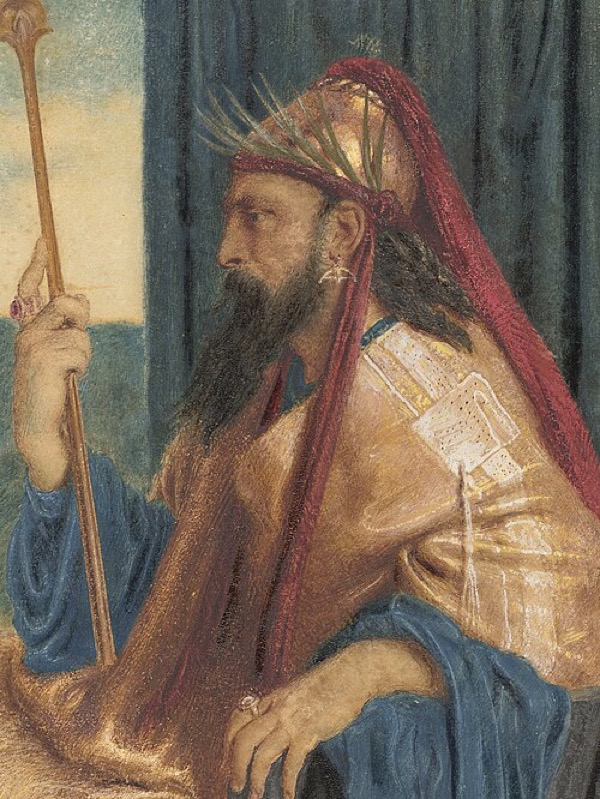
Simeon Solomon: King Solomon, 1872 (National Gallery of Art)
Premiered May 3, 1917, with the cellist Hans Kindler and first performed in 1928 in the US in Los Angeles by soloist Felix Salmond, it is much more, says Bloch, than the mere label “Jewish” which has been ascribed to this work.
In an article published in Musica Hebraica in 1938 and printed in a Los Angeles music program, notes by Nicolas Slonimsky, the composer himself says:
“…I have but listened to an inner voice, deep, secret, insistent, ardent, an instinct much more than cold and dry reason, a voice which seemed to come from afar beyond myself, far beyond my parents. This entire Jewish heritage moved me deeply; it was reborn in my music. To what extent it is Jewish, to what extent it is just Ernest Bloch, of that I know nothing. The future alone will decide.”
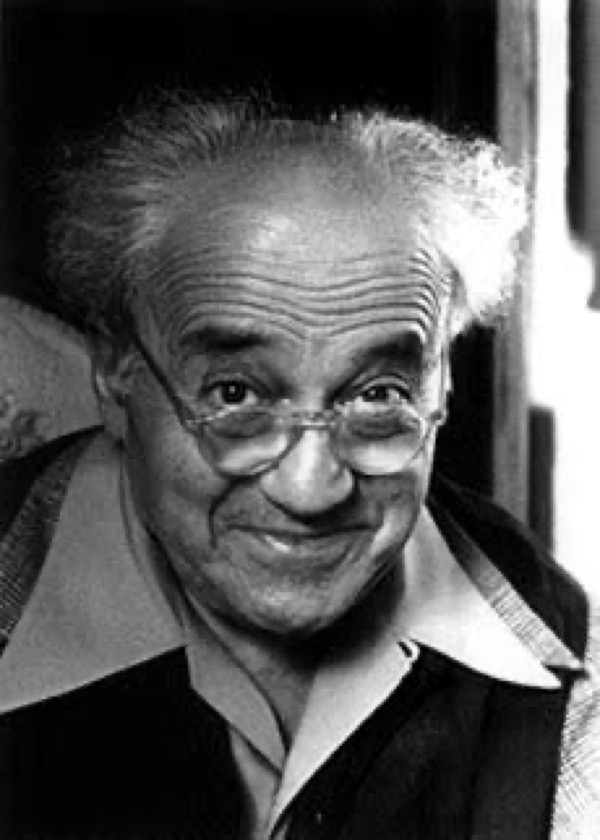
Ernest Bloch
Bloch continues, again from the LA notes, ‘In a letter to Philip Hale regarding Schelomo Bloch wrote with passion: “It is the Jewish soul that interests me, the complex, glowing, agitated soul, that I feel vibrating throughout the Bible; the freshness and naiveté of the Patriarchs; the violence that is evident in the prophetic books; the Jew’s savage love of justice; the despair of the preacher in Jerusalem; the sensuality of the Song of Songs. All this is in us; all this is in me, and it is the better part of me. It is all this that I endeavour to hear in myself and to transcribe in my music; the venerable emotion of the race that slumbers way down in our soul.”’
According to Bloch, the orchestra reflects “the world surrounding him and his experiences of life…” hence the orchestration is on equal footing with the solo, with its grand sweeps of tonal colours and alluring drama. It is dense with 3 flutes, 2 oboes, English horn, 2 clarinets, bass clarinet, 2 bassoons, contrabassoon, 4 horns, 3 trombones, 3 trumpets, tuba, timpani and several percussion instruments, 2 harps, celeste, and strings.
The approximately twenty-minute piece is in three continuous parts. The cello begins alone, on a lonely A, and soon states the proud and exotic theme. Bloch uses modal scales, ornamentation, embellishments, and rhythms that are rhapsodic and mimic the Hebrew language. The cadenza is used to interrupt the piece three times, perhaps representing Solomon’s reaction to the vanity in the world.
During the second part, he reveals a shofar-like theme, the celeste, and then an overpowering climax in the orchestra, illustrating the vanity and turmoil. The Final section andante moderato is full of superb lyricism. The piece ends with a remarkable depiction of Solomon’s resignation. Utterly spent, the cello plays long notes on the lowest string, and these lowest sonorities, combined with the contrabassoon, dissipate on the low D, punctuated gently by the timpani.
Listen to this breathless, inspired playing of Zara Nelsova so effortlessly depicting the paroxysms of emotion in the piece. I love how she clearly enunciates the chromaticisms. Utterly captivating.
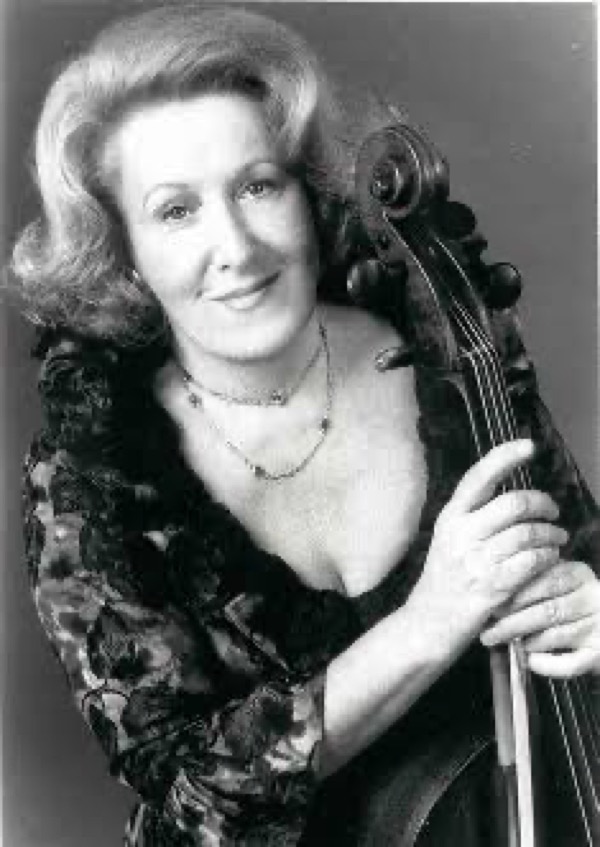
Zara Nelsova
Ernest Bloch: Schelomo (Zara Nelsova, cello; London Philharmonic Orchestra; Ernest Ansermet, cond.)
Interestingly, at 20 minutes, her rendition is a bit shorter than some of my other favourite performances. Some clock at 24 minutes! Here is another gorgeous interpretation of Norwegian cellist Truls Mørk.
Bloch – Schelomo: Rhapsodie Hébraïque (Truls Mørk)
One of my favourite works of Bloch, which I’ve played many times, is his Quintet for Piano and Strings No. 1. It begins with a restless and ferocious agitato. Listen for Bloch’s effective use of quarter tones. The slow movement gives us some moments of meditative suspension andante mistico, then it is followed by a wild and fierce Allegro energico, which certainly brings the audience to their feet.
Ernest Bloch: Piano Quintet No. 1 (Lilya Zilberstein, piano; Alissa Margulis, violin; Lucia Hall, violin; Nora Romanoff-Schwarzberg, viola; Mark Dobrinsky, cello)
It’s fantastic writing and orchestral in scope, much like the other great quintets of Brahms, Elgar, Dvořák, Bosmans, Schumann, and Schubert.
I’ll leave you with this hushed, atmospheric string quartet movement entitled Paysages movement I. North, which is so totally different from the other works I’ve featured here.
Ernest Bloch: Paysages: I. North (Saint John String Quartet)
I believe this composer’s music is of great spiritual and dramatic expression, and he deserves more attention. I hope you’ll consider delving into more of the music of Ernest Bloch.
For more of the best in classical music, sign up for our E-Newsletter