I imagine your mom, like mine, reminded you to sit up straight more times than you can count. Perhaps your music teacher said the same thing. They were right! A musician’s good posture is critically important. Good posture improves breath control and tone quality, helps you play with ease, reduces fatigue, and can protect you from injury.
How, you might ask?
The body likes to be in a position of least strain and effort. It works best in neutral or in natural positions despite the awkward postures sometimes required by our instruments. These awkward, fixed, or held postures, or stiff body positions, load and stress the joints.
What are risky postures?
For string players, risky postures strain the neck, torso, shoulders, and back. We have to balance all four in the least strenuous position.
How we look, feel, and sound is linked when it comes to playing an instrument. When your posture is upright and relaxed, your bones align, and your joints, muscles, ligaments, and tendons stay strain-free. This promotes movement efficiency and stamina.
Let’s start with your back.
Your spine should be in neutral. That means maintaining the lumbar curve in your lower back and the cervical curve behind your head. Avoid leaning forward or slumping. Also, if you lean to one side, your body has to work harder, which can lead to asymmetrical development and injury. When your torso collapses due to poor posture or fatigue, spinal discs are compressed, reducing blood flow to the muscles and tendons.
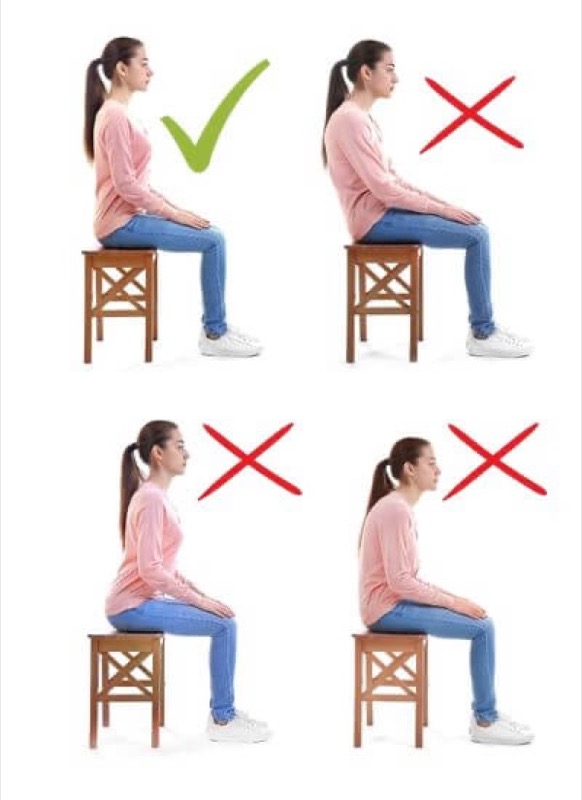
Correct (top left) and incorrect seated postures
Make sure you are not turning or twisting your torso. If you stand to play, keep your knees soft and don’t arch your back.
If you sit to play, sit forward with your knees descending from your hips and your weight forward and on your feet. Imagine a horse-riding position.
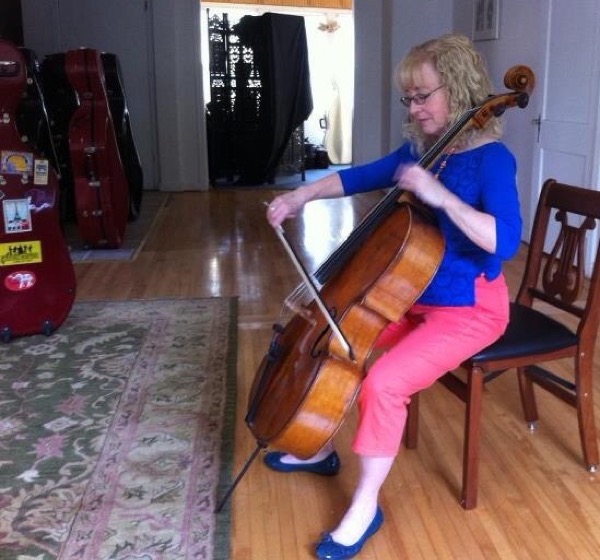
Janet Horvath practising, side view
I’m petite. If you’re tall, avoid a chair that’s too low, which brings your knees up above your pelvis and throws your back into a C curve. Aim for a chair that is knee-level or higher, or use wedge-shaped cushions or wooden boards under the chair legs. Here’s a sample.
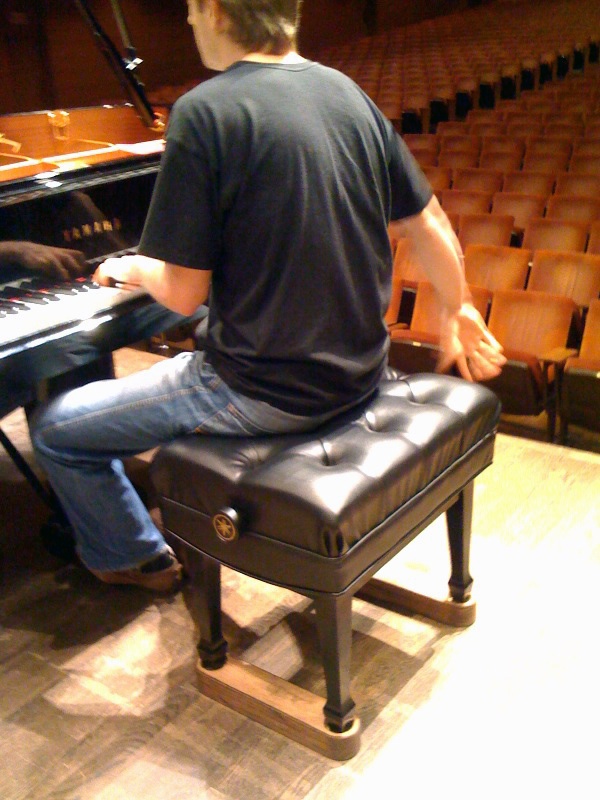
A piano bench raised on wooden blocks
It’s not always possible to avoid those hopeless backwards-sloping, moulded, or low folding chairs when you’re playing a gig. Consider purchasing and bringing a wedge-shaped, dense cushion.
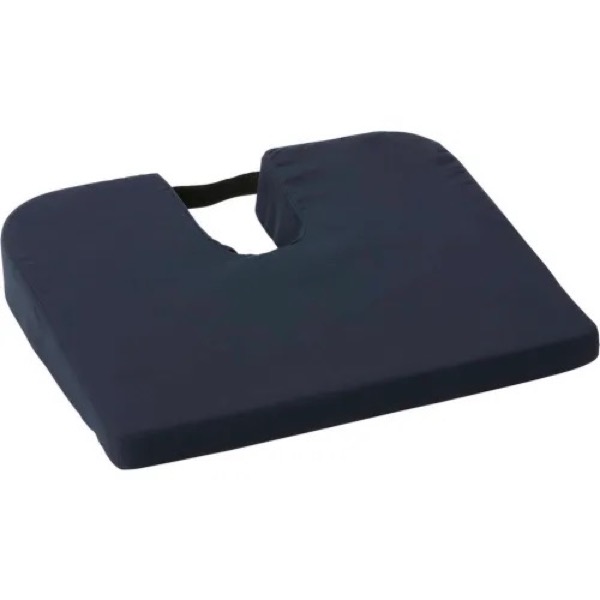
A wedge-shaped posture seat cushion
What about my head?
Keep your head upright and balanced directly over your shoulders with your chin tucked slightly in. When a musician tilts, rotates, or cocks their head forward or down, the body has to hold that weight, which adds stress to the cervical spine. It also adds tension and strain to the muscles and tendons in the neck and shoulder area and compresses nerves that originate in the neck and travel down the arm. Try to imagine yourself as a puppet on a string, your body upright with shoulders and arms gently draped over your rib cage. Maintaining this upright head position applies when you’re texting too!
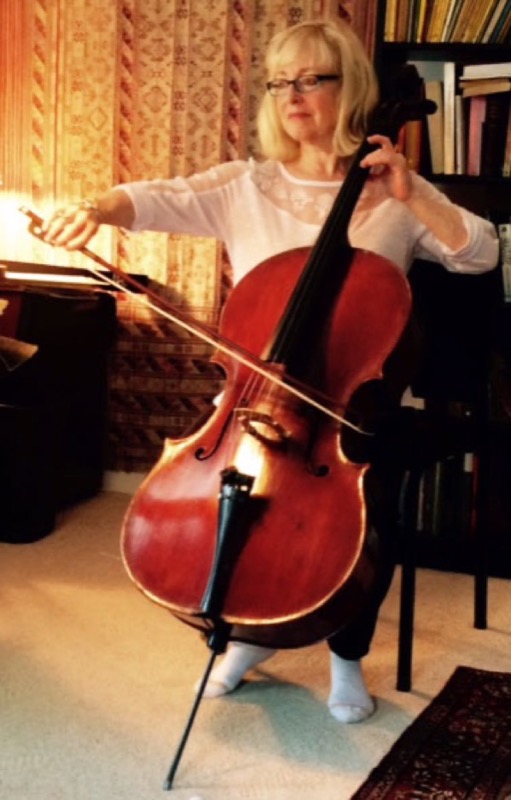
Janet Horvath playing the cello
Violinists and violists who use a chin rest and/or shoulder pad may tilt or rotate their heads, and over time this can cause muscle imbalance. The muscles on one side of the neck become shorter and stronger than on the other side, leading to joint dysfunction and nerve compression.
To avoid this type of injury, keep your head erect, chin in, and shoulders down with the violin more or less parallel to the ground.
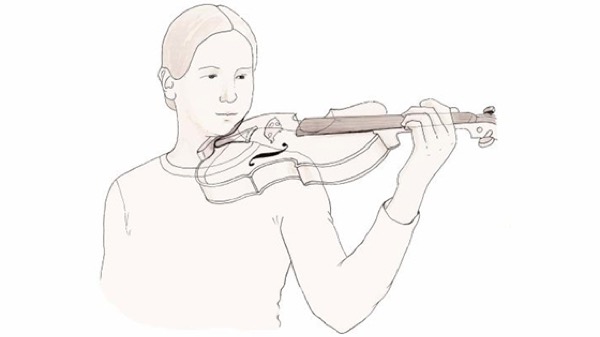
Holding the violin parallel to the ground
Illustration by Jessica Schallock
Violinists and violists should refit chin and shoulder rests to reduce “holding” tension. Many different shapes, sizes, and heights of shoulder pads and chin rests are available. Experiment and, if necessary, have one custom-fit to fill the space between your head and shoulder. Maintain as neutral a head and neck position as possible, one that minimises the need to tilt or turn your head. Here are more violin/viola holding hints.
Cellists avoid thrusting their head down and forward when getting into higher positions or during a long shift, or conversely, thrusting their chin out. Instead, keep the neck of your cello above your left shoulder, not on it, and away from your face. This allows your neck and left shoulder to feel freer. Avoiding tension in that area helps you keep your head more erect and promotes more efficient left-hand playing in the lower positions. Many cellists feel using a cello keypeg helps with this issue. Angle your cello slightly across your body so your head and neck feel free.
What if my shoulders are sore?
Keep your shoulders facing forward and lowered (but not drooping) with your chest free and open. Try imagining a helium balloon inflated in your chest.
Be sure you don’t reach for your instrument. Bring the instrument to you and adjust straps, stools, music stands, chairs, and iPads so that your gaze is level and you are looking straight ahead. Pianists bring the bench or chair close enough to the keyboard so you’re not reaching, and your wrists are level.
Holding your arms away from your body at or above shoulder height for long periods is tiring and straining. But we have to do that to hold most instruments! Good posture means keeping your shoulders relaxed, down, and facing forward. Lower your arms whenever you can during practice and performance.
Your posture is important. If you avoid twisting or turning your back, torso, and neck, and you’re vigilant about not raising your shoulders or thrusting your head and chin forward or down, you can protect your spine, reduce tension, and free up your arms to play with ease.
For more of the best in classical music, sign up for our E-Newsletter