In all, Francis Poulenc composed 15 Improvisations between 1932 and 1959. They emerged not as a continuous set but as four volumes. Musically, they balance music-hall charm with the composer’s delicate lyricism.
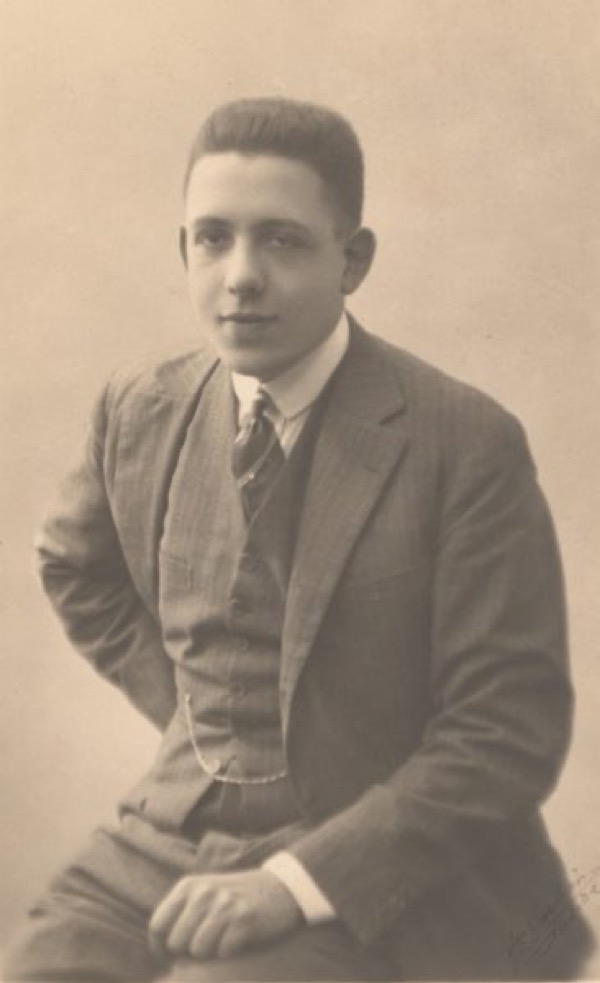
Francis Poulenc
Improvisation No. 15 in C minor, subtitled “L’hommage à Édith Piaf”, is among the most touching of the set. To Frances Wilson, “it has a passionate intensity and emotional resonance that mirrors Piaf’s performances, and the spirit of Paris in the mid-20th century.” (Wilson, Interlude, 2023)
However, the other Improvisations are equally worth discovering, as they reveal an astonishing range of moods and musical personalities in miniature form.
Francis Poulenc: Improvisation No. 15
A Collection in Four Instalments
The Improvisations were not planned as a set, and were issued in basically four groups. Dix Improvisations date from between 1932 and 1934, and a further Deux Improvisations appeared in 1941. A second group of Deux Improvisations dates from March 1958, and the final Quinzième Improvisation was written in 1959.
The complete Improvisations were never intended to be heard as a continuous group, although they do form a remarkably satisfying grouping. This is partially explained by the consistently high standard of the material and by an extraordinary range of expression.
The Improvisations did not emerge from a sudden artistic impulse but from a lack of commissions. Trying to keep his publishers satisfied, he writes, “I understand that one must create for the love of art, yet there are times when one must think as much about coal as about a pork chop.” (Dix improvisations, Wikipedia)
Francis Poulenc: Improvisation No. 1 in B Minor (Pascal Rogé, piano)
Francis Poulenc: Improvisation No. 2 in A-Flat Major (Pascal Rogé, piano)
Francis Poulenc: Improvisation No. 3 in B Minor (Pascal Rogé, piano)
Poulenc at the Piano
Francis Poulenc was an exceptional pianist, who started lessons as a small boy. Going initially through the usual paces, he discovered a taste for the music of Debussy and Schoenberg by the age of eleven.
However, it was his three years of lessons with Ricardo Viñes that prompted his emergence as a composer for the piano and as a pianist, although it was clear that Poulenc would never engage in a career as a touring soloist.
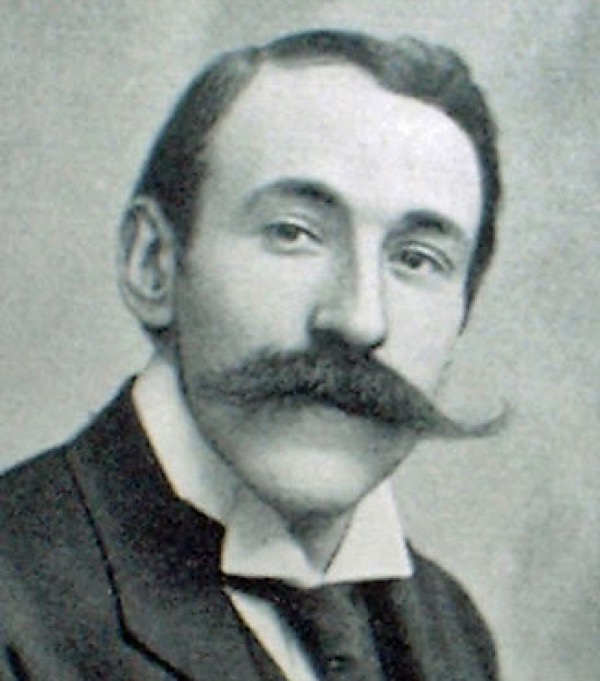
Ricardo Viñes
Poulenc himself tells us that “he preferred a full, vibrant sound, a strict observance of tempo and dynamic markings, a liberal deployment of pedal, and above all, a lively, boisterous approach to the keyboard.” (Daniel, Poulenc, 1982)
Francis Poulenc: Improvisation No. 4 in A-Flat Major (Olivier Cazal, piano)
Francis Poulenc: Improvisation No. 5 in A Minor (Olivier Cazal, piano)
Francis Poulenc: Improvisation No. 6 in B-Flat Major (Olivier Cazal, piano)
How to Play Poulenc
To be sure, Poulenc had very specific advice for how his piano music should be performed. “The great technical errors which deface my piano music, to the point of rendering it unrecognisable, are: tempo rubato, stinginess in the use of pedal, and too much articulation in certain arpeggiated phrases.”
“Let me explain; I hate rubato… once a tempo is adopted, under no circumstances should it be altered until I so indicate. Never stretch or shorten a beat. That drives me crazy. As for the pedal, that is the great secret behind my piano music.”
“One can never use enough pedal, do you hear me! Never enough! I often rely on the pedal for the realisation of a harmonic passage that could not be rendered completely in writing. Finally, the arpeggios and accompanimental chords should be in the background most of the time so that the melody can be heard.” (Daniel, Poulenc, 1982)
Francis Poulenc: Improvisation No. 7 in C Major (Gen Tomuro, piano)
Francis Poulenc: Improvisation No. 8 in A Minor (Gen Tomuro, piano)
Francis Poulenc: Improvisation No. 9 in D Major (Gen Tomuro, piano)
Francis Poulenc: Improvisation No. 10 in F Major, “Éloge des gammes” (Gen Tomuro, piano)
Spontaneity and Craft
Poulenc greatly favoured the Improvisations above all other works in the solo piano genre. After all, they do possess the spontaneity associated with improvisation at the keyboard. They contain true flashes of pianistic colour, possibly influenced by the Études and Preludes of Chopin.
In terms of structure, Poulenc either presents one idea and repeats and alters it, or he combines two ideas in ternary form.
The textures are predominantly chordal, ranging from flowing arpeggiation to rapid flights of fancy and rather complex figuration.
Francis Poulenc: Improvisation No. 11 in G Minor, FP 113 (Michael Bell, piano)
Opening Portraits
The opening Improvisation in B minor hints at Debussy, as its harmonies resemble the Arabesques. It carries a dance-like spirit, and the musicologist Pierrette Mari hears a bouncing elf performing gleeful pirouettes.
Improvisation No. 2, dedicated to the composer Louis Durey, is tenderly lyrical and begins like a Schubert waltz. After a repetition of the dominant, the style shifts to characteristic Poulenc progressions, and we never return to the opening motive.
Dry and nervous, Improvisation No. 3 features a great deal of chromaticism and a lack of melodic direction. Only occasionally does it blossom into controlled lyricism. Improvisation No. 4 is probably the most pianistic, as it presents severe technical complexities. It has been suggested that the percussive rhythm and frantic dance-like mood are perhaps in homage to Prokofiev.
Francis Poulenc: Improvisation No. 12 in E-Flat Major, FP 113, “Hommage à Schubert” (Michael Bell, piano)
Contrasts in Miniature
A lyrical and delightful etude appears in Improvisation No. 5. It starts in the minor key and ends in the major, and despite a good deal of chromaticism, it stays tuneful throughout. The main theme is repeated three times with only slight modifications.
We find a mock-military atmosphere in Improvisations No. 6, as the entire piece rests on percussive and dissonant elements. Improvisation No. 7, one of the most beautiful in the set, features a faux Alberti bass and a lightly romantic arpeggiated style.
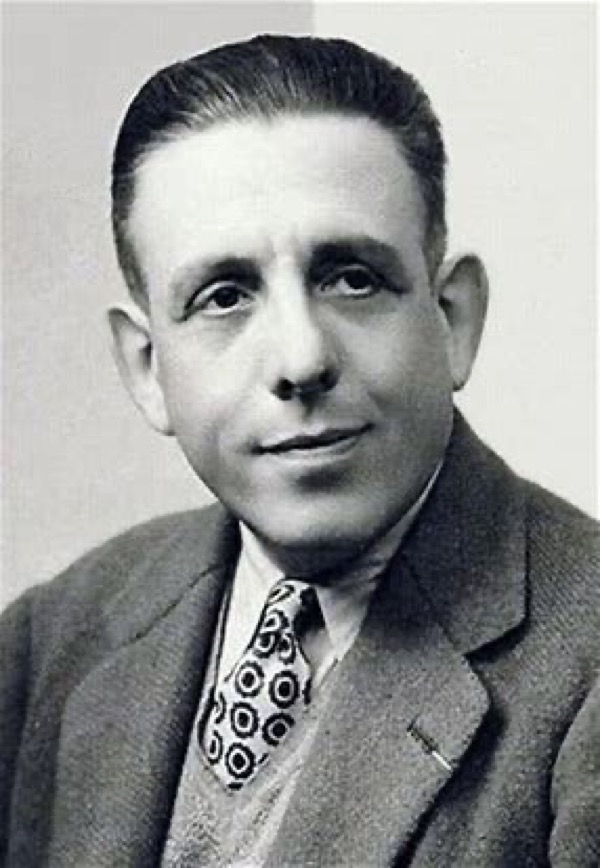
Francis Poulenc
Improvisation No. 8 blends a Prokofiev-like angularity with an astonishing range of mood and material offered up for our entertainment like a miniature ballet, all crammed into little more than a minute. Improvisation No. 9 features one of the characteristic Poulenc tunes, while No. 10 is subtitled “Éloge des gammes.”
Francis Poulenc: Improvisation No. 13 in A Minor (Haruna Hirao, piano)
Grace and Maturity
It is one of the best-known and most popular Improvisations as chromatic scales are accompanied by Alberti-like figures. It is all suggestive of some of the light-hearted tunes he would compose later.
The shortest of the Improvisations, No. 11, only spans twenty-one measures. One hears a bit of Schumann and certainly Mussorgsky, particularly in the harmonic progression. A brilliant waltz, as expected, emerges in the Improvisation No. 12, aptly subtitled “Hommage à Schubert.” The principal theme apparently influenced two other Poulenc works in the 1940s.
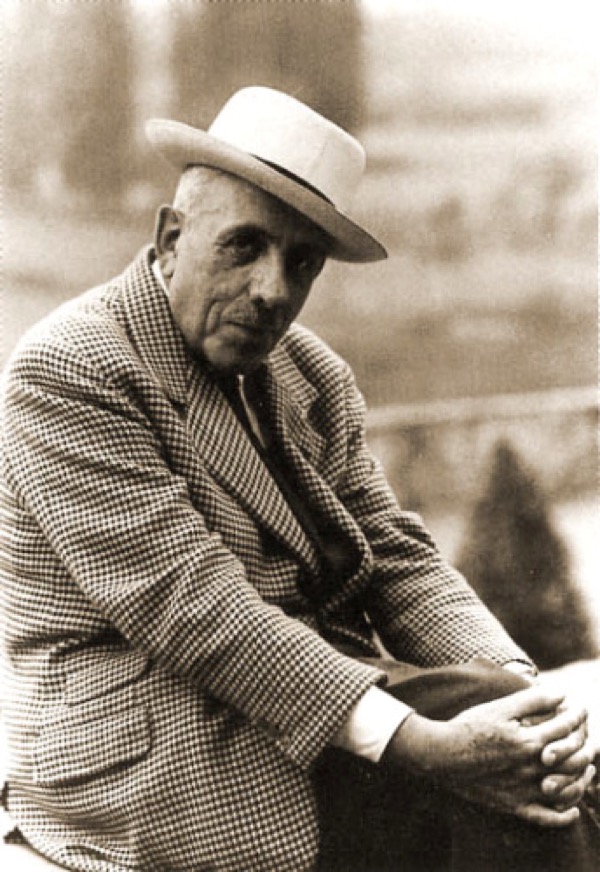
Francis Poulenc
“The last three Improvisations exhibit a graceful maturity, a gentle lyricism, and a predilection for arpeggios.” (Daniel, Poulenc, 1982) No. 13, in A minor, possesses the simplest of melodic contours and a rather bare chordal texture. Exquisite harmonies and accumulated pitches through the use of the sustain pedal trace an archetypal Poulenc work of full maturity.
Francis Poulenc: Improvisation No. 14 in D-Flat Major (Haruna Hirao, piano)
Charm Without Pretension
And in Improvisation No. 14, we find gentle lyricism supported by rich harmonies that also explore the upper and lower registers of the piano. As a whole, the Poulenc Improvisations are a rich collection of delightful piano pieces.
They are free from pretension, formulas, and overt virtuosity. They do, however, offer a wide range of techniques and moods. While pianists generally appreciate the set, critics, except for their appreciation of No. 15, have not been overly enthusiastic.
Poulenc himself had a possible answer to that contradiction as he explained, “Many of my pieces have failed because I know too well how to write for the piano. It is curious but true that as soon as I begin writing piano accompaniments for my songs, I begin to be innovative.
Similarly, my piano writing with orchestra or chamber ensemble is of a different order. It is the solo piano that somehow escapes me. With it, I am a victim of false pretences.” (Daniel, Poulenc, 1982)
For more of the best in classical music, sign up for our E-Newsletter