Franz Schubert’s final year began not with decline, but with a masterpiece.
In the autumn of 1827, he completed Winterreise – one of the most profound song cycles ever written – and presented it to his friends, who were baffled.
Over the next thirteen months, he composed the Impromptus, the Fantasia in F minor, the last three piano sonatas, the String Quintet, and Schwanengesang, among other works. He died on November 19, 1828, at the age of 31, after one of the most stunning explosions of creativity in the history of classical music.
This is a month-by-month guide to Schubert’s final year: what he wrote, what he heard, and what was happening in his world as he composed his masterpieces.
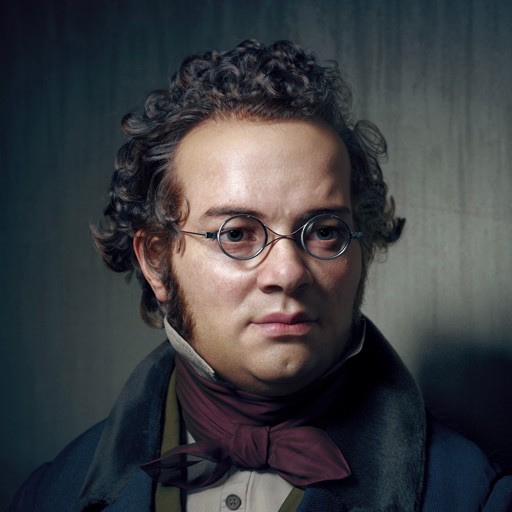
Franz Schubert © Hadi Karimi
November 1827: A Reserved Reaction to Winterreise
In November 1827, Schubert was thirty. He had one year left to live – but you’d never guess it, given the vitality of his music.
The month before, in October, Schubert had finished his monumental song cycle Winterreise. This set of 24 songs follows a man undone by heartbreak as he trudges alone through a frozen landscape.
That autumn – possibly in November – he invited friends to a private performance of the cycle. Before he played them, he called them “horrifying songs” and said, “I am anxious to know what you will say about them.”
After the performance, his friend Franz von Schober expressed his doubts. Schubert replied, “I like these songs more than all the rest, and you will come to like them as well.” He was right.
Schubert’s Winterreise
He spent the rest of the month composing his massive second piano trio, which took around 45 minutes to perform.
By then, Beethoven had been dead for only seven months, and composers were still grappling with his legacy.
This trio channelled Beethoven’s expansive, emotional spirit, and set Schubert up as the great composer’s creative heir.
The trio’s slow movement carries a melody Schubert had just heard sung at a Viennese salon: a Swedish folk song called “Se solen sjunker” – “The sun is setting.” In the shadow of Beethoven’s death, the folk song’s title resonates.
Schubert’s Piano Trio No. 2
December 1827: The Impromptus
This month, Schubert finished the finale of his second piano trio and prepared the first half of Winterreise for January publication.
But Schubert’s major accomplishment in December was composing his second set of four Impromptus for solo piano. This second set came on the heels of the first, which had been written in summer or fall.
The Impromptus are much more substantial than their titles suggest. Both clocked in at over half an hour apiece, and Robert Schumann remarked after Schubert’s death that, taken together, the Impromptus were like a piano sonata in disguise.
Two of the Impromptus from the earlier set were published this month. The rest wouldn’t be published until after Schubert’s death.
We wrote about the Impromptus and what makes them so special here: https://interlude.hk/schuberts-impromptus/.
Schubert’s Impromptus, Op. 90
January 1828: The Final Schubertiade
On 14 January, the first half of Schubert’s Winterreise was published. Just as Schubert had predicted, his circle was already starting to come around – especially after hearing professional baritone Johann Michael Vogl sing them. (The first time around, Schubert himself had sung them.)
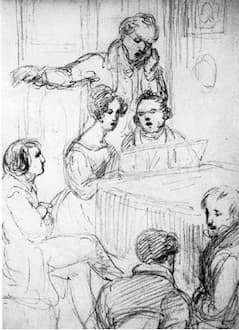
Soprano Josephine Fröhlich, baritone Johann Michael Vogl and Franz Schubert performing a three-part lied.
On 28 January, his friends gathered for a kind of musical party known as a Schubertiade. This time it was at the home of Schubert’s old friend, Joseph von Spaun, who hosted a lavish celebration in honour of his fiancée.
There they heard a performance of a Schubert piano trio (probably his second).
One attendee wrote in their journal, “Altogether 50 people attended. We nearly all got tipsy. We danced. Then we nearly all went to Bogner’s (cafe) where we sat on until 2:30.”
A few days later, Schubert turned 31. This would be the last major Schubertiade he’d ever attend.
February 1828: Schubert’s Fantasia
Schubert’s central project in February was his Fantasia in F minor, a dramatic, large-scale work for two pianists at a single instrument. He began it in January and finished it in March.
It was published with a dedication to Countess Caroline Esterházy, a former pupil his friends believed he loved.
She once asked him for a dedication, and he responded, “Why do that? Everything is dedicated to you anyway.”
Schubert offered the Fantasia to the publisher B. Schott’s Sons, describing it as “my strivings after the highest in art.”
However, the publisher passed it over in favour of other works, and it was not published until after Schubert’s death.
Schubert’s Fantasia in F minor
March 1828: The First All-Schubert Concert
On 26 March 1828, the only all-Schubert concert of Schubert’s lifetime took place. It fell on the first anniversary of Beethoven’s death; we don’t know whether this timing was a coincidence or simply fortuitous.
It took place at the Gesellschaft der Musikfreunde (Society of Friends of Music) and consisted of his second piano trio, the Schlachtgesang for double male choir, and several songs.
One song was composed especially for the occasion – “Auf dem Strom” (“On the River”), for the striking combination of tenor, horn, and piano.
It portrayed a singer leaving his lover on the shore before rowing down the river. The departing rower is understood to be Beethoven himself: an interpretation underscored by a direct quote from the Eroica Symphony’s funeral march.
Unfortunately for Schubert, three days later, the concert was eclipsed by the arrival of star violinist Niccolò Paganini in Vienna. Schubert’s concert was soon forgotten, but the profits from the event at least enabled him to buy his own piano.
In the end, Schubert’s event raised 800 florins, while Paganini left Vienna with 75,000.
Schubert’s “Auf dem Strom”
April 1828: Schubert’s New Piano
April is largely undocumented in the historical record. Schubert was likely enjoying his new piano – and possibly starting preliminary work on his final three piano sonatas.
May 1828: Schubert Sees Paganini
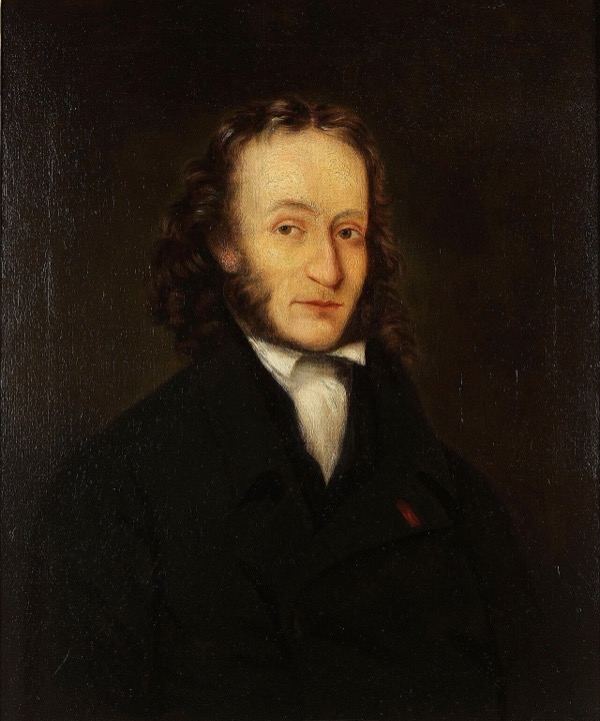
Niccolò Paganini
On 9 May, Schubert performed the Fantasia in F minor with his friend, composer, and conductor Franz Lachner.
Paganini was still in Vienna that spring, drawing enormous crowds. At some point during the season, possibly in May, Schubert and his friends scraped together the money to attend a performance. Afterwards, Schubert wrote, “I heard an angel sing.”
It’s striking how Schubert focused on Paganini’s singing tone versus his virtuosity. When classical music lovers think of Paganini, they don’t often think of him as a player famous for his singing tone.
June 1828: Paganini’s Vienna
June is a poorly documented month of Schubert’s life. However, Paganini was still in Vienna; restaurants offered menu items inspired by him, and his portrait appeared on household items and memorabilia.
It’s worth wondering what it meant for Schubert to be composing his final works with Paganini’s music and example so omnipresent.
July 1828: Schubert’s Mass in E-flat Major
In July, Schubert finished his Mass in E-flat major: a major work that lasts nearly an hour, scored for soloists, chorus, and orchestra. In it, Schubert referenced several composers who came before him – Bach, Haydn, Mozart, and Beethoven – casting himself as an heir to the Viennese lineage.
Schubert never heard it performed; its premiere was conducted by Schubert’s brother Ferdinand in 1829.
Schubert’s Mass No. 6 in E-flat major
Sometime in the summer of 1828, Schubert shifted his attention to another religious tradition. A couple of years before, he had struck up a friendship with a Jewish baritone named Salomon Sulzer. Sulzer was appointed cantor at a Viennese synagogue and commissioned composers to write liturgical music.
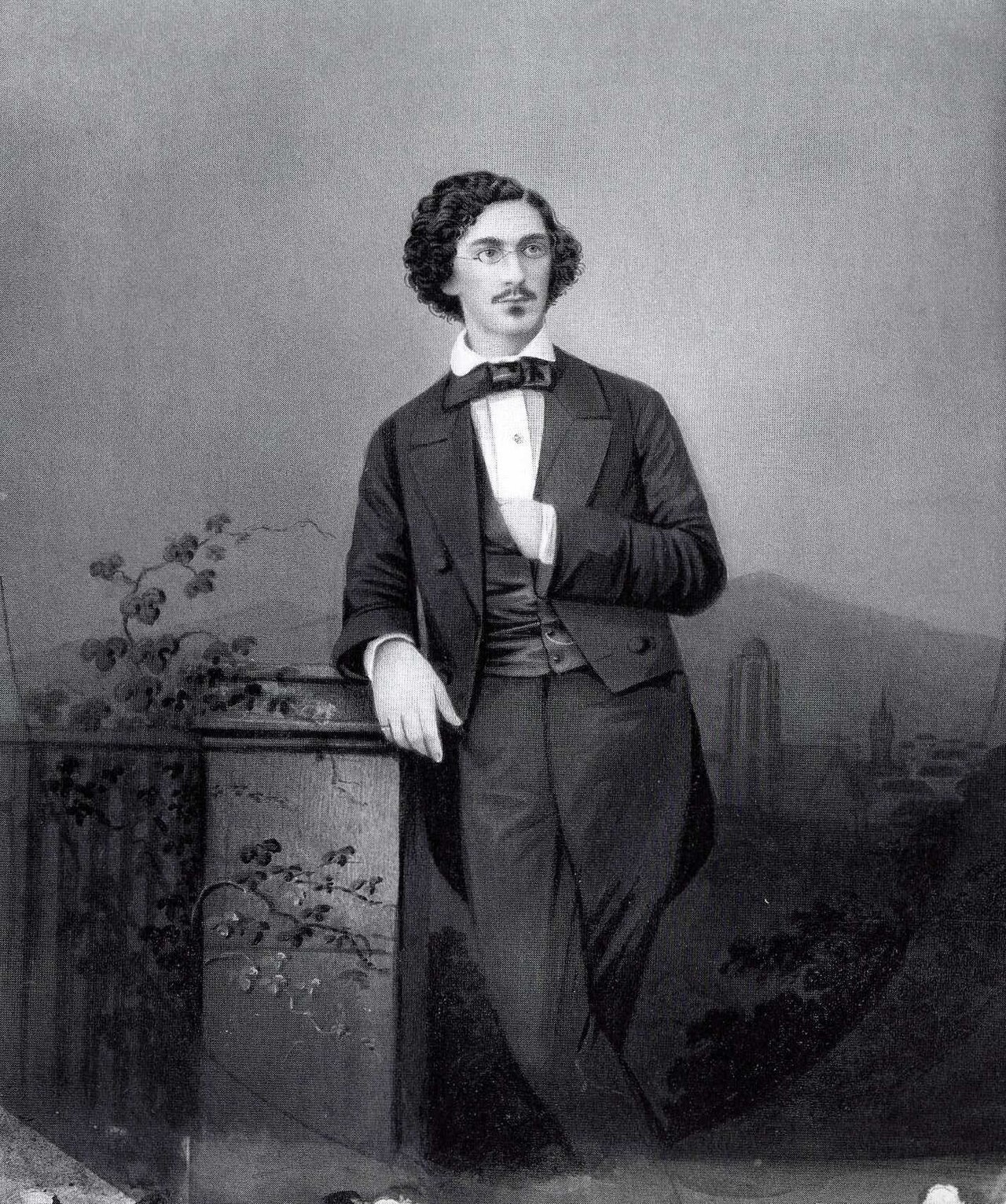
The young Salomon Sulzer
In Schubert’s case, the result was Psalm 92, the only work he wrote in Hebrew. Outside of the works played at the March Schubert concert, it was the only Schubert work to have a public premiere in 1828.
Schubert’s Psalm 92
August 1828: Schubert’s Schwanengesang
In August, he wrote the songs later published as Schwanengesang – Swan Song, a title chosen by the publisher, not Schubert.
They consist of texts by two separate poets – Ludwig Rellstab and Heinrich Heine – and Schubert intended to publish the two poets’ songs separately.
Rellstab sent some of his poems to Beethoven to set, but Beethoven died before he could. Beethoven’s former secretary Anton Schindler then passed the poems to Schubert – and these were the result, created in Schubert’s final weeks.
Meanwhile, the six Heine settings are different things entirely: darker, stranger, and pointing toward later music by composers like Schumann and Wolf.
At the very end of the month, Schubert, his health now visibly failing, moved in with his brother Ferdinand.
Schubert’s Schwanengesang
September 1828: Three Piano Sonatas and the String Quintet
In September, Schubert finished an astonishing three piano sonatas in C minor, A major, and B-flat major: three of the greatest piano works ever written. None were published during his lifetime; he didn’t have time.
Schubert’s Piano Sonata in B-flat major
If that wasn’t enough, he also wrote his glorious String Quintet in C major, scored for a string quartet with an extra cello. Today it is one of the most beloved chamber music works in the repertoire – but at the time, publishers rejected it, asking him for more marketable songs instead.
Schubert’s String Quintet
Even after the month’s accomplishments, Schubert still wasn’t satisfied, telling his friends, “Now for the first time I see what I lack.”
He arranged to study counterpoint with a specialist to learn more, but he could take only one lesson before he died.
October 1828: Final Weeks
In early October, he took a three-day walking tour with friends, covering 42 miles.
On 2 October, he wrote to his publisher inquiring about the release date of his E-flat piano trio, saying he awaited its “appearance with longing.” He wouldn’t live to see the published version.
A few weeks later, on 26 October, he signed the manuscripts of his last three piano sonatas, the final act of his professional life.
Around this time, he contracted typhoid fever. By 31 October, food no longer agreed with him.
November 1828: Hearing Beethoven for the Last Time
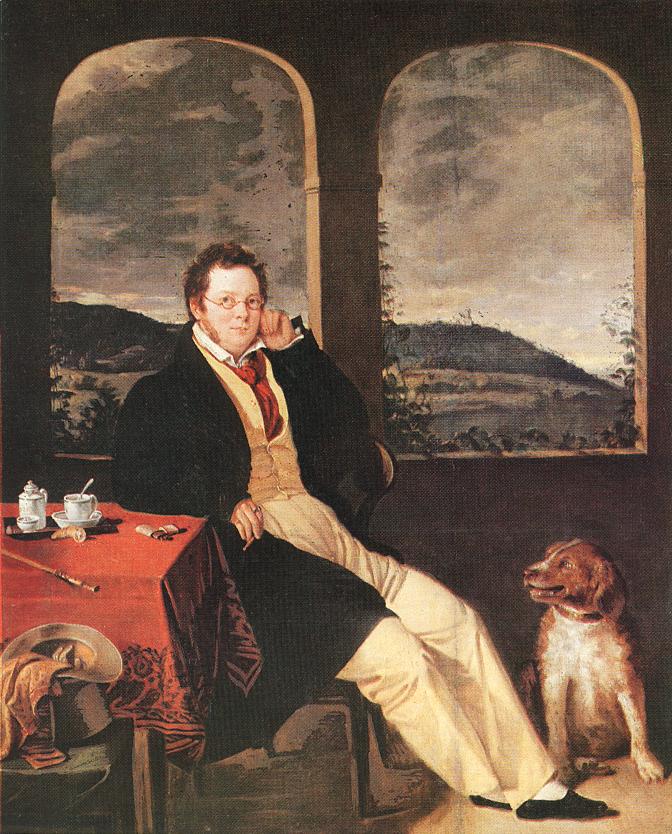
Gábor Melegh: Franz Schubert, 1827 (Budapest: Hungarian National Gallery)
Initially, Schubert appeared to rally. He went to a concert on the 3rd, then took his counterpoint lesson on the 4th. He attended dinner with a baron on the weekend of the 8th–9th, where he seemed normal and cheerful.
But on the 11th, he took to his bed due to extreme fatigue. Something was terribly wrong. He requested to hear Beethoven’s C sharp minor string quartet – one of Beethoven’s last works – on his deathbed. His friends granted him that wish on the 14th.
Five days later, he died.
Conclusion
In his final year, Schubert produced enough music to sustain another composer’s entire legacy – and just kept going.
The three piano sonatas alone would have secured his place in the repertoire. So would the String Quintet. So would Winterreise, completed just thirteen months before his death.
What makes Schubert’s final year remarkable isn’t just the volume of work, but the restlessness of its creativity. Even in September 1828, surrounded by masterpieces he’d just finished, he was already arranging counterpoint lessons. He never stopped trying to be better, even when time was clearly running short.
The last musical work he asked to hear was Beethoven’s C-sharp minor quartet – one of Beethoven’s own late-period masterpieces, written in the shadow of deafness and mortality. It’s hard not to read something into that choice.
Schubert had spent his final year composing in Beethoven’s wake. He died still thinking about him, perhaps wondering if he’d done enough to join the master’s musical lineage.
For more of the best in classical music, sign up for our E-Newsletter