Ten decades, ten symphonies, and one central question: what happened to the symphony over the 1800s?
The form entered the century as a genteel curtain-raiser: twenty minutes of Classical politeness, often featuring courtly, aristocratic minuets.
It left the century capable of embodying autobiography, nationalist argument, spiritual crisis, and philosophical statement – sometimes all at once, and sometimes for the better part of two hours.
This list traces that transformation decade by decade, picking the symphony that did the most to move the genre forward.
1800s – Beethoven, Symphony No. 3, “Eroica” (1803–1804)
Beethoven’s third symphony broke the rules the genre had followed for decades. Before 1804, symphonies were expected to last between twenty and thirty minutes. However, Beethoven’s Third lasts nearly fifty minutes. Its opening movement alone is longer than many of Haydn’s and Mozart’s symphonies.
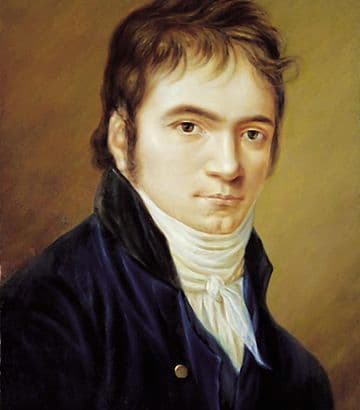
Christian Hornemann: Ludwig von Beethoven, 1803
That massive first movement isn’t the only stand-out moment in the work. The second movement is a dramatic funeral march; the third a beefy scherzo with three horns; and the finale is a massive set of variations on a theme.
That doesn’t even touch on the extramusical story of the work. It was originally meant to be a tribute to Napoleon. Still, after Napoleon declared himself emperor in 1804, Beethoven was furious and struck out the symphony’s nickname so violently that he tore a hole in the title page.
It was a fittingly dramatic coda to the creation of a work that went on to shape the rest of the 19th century.
1810s – Beethoven, Symphony No. 7 (1811–1812)
Beethoven’s Third permitted symphonists to dream bigger, but his Seventh let them find inspiration in one of music’s smallest, most basic elements: rhythm.
Each movement of Beethoven’s Seventh showcases a different, insistent pulse. The first movement uses swinging, dotted rhythms; the second, hushed funereal march rhythms; the third, bouncy presto rhythms; and the fourth, swirling sforzandos on dazzling fly-by sixteenth notes.
As different as each movement is, this focus on rhythm lends coherence to the entire work.
Richard Wagner called this symphony “the apotheosis of the dance.” It gave future composers a blueprint for building large-scale orchestral works around rhythmic drive rather than melody alone.
1820s – Beethoven, Symphony No. 9 (1822–1824)
You might be thinking, Beethoven again? But it’s undeniable: for three decades in a row, Beethoven composed what is unquestionably the most important symphony of the decade.
Beethoven’s ninth (and final) symphony is where he pushed himself furthest creatively. First, it outpaced even the Third Symphony in length, taking around 70 minutes to perform.
More consequentially, he created a final movement scored for orchestra and voices, setting a text from Schiller’s Ode to Joy in an ecstatic celebration of universal brotherhood.
Beethoven’s Ninth has reverberated ever since. Mahler answered Beethoven directly, writing choral symphonies of his own. Brahms avoided choral writing in his symphonies entirely, aiming to prove a purely orchestral symphony alone could pack the same punch. Meanwhile, Wagner found the Ninth so overwhelming he came to believe it marked the culmination – and the end – of purely instrumental music and turned to opera instead.
This symphony isn’t just influential for how it sounds; it’s influential for the ideas it unleashed.
1830s – Berlioz, Symphonie Fantastique (1830)
Berlioz heard Beethoven’s Ninth in 1828 and was deeply inspired. Two years later, he took the form a step further, giving his own symphony an overt narrative.
Inspired by his obsession with Shakespearean actress Harriet Smithson, the Fantastique tells the (suspiciously autobiographical) story of a drug-fueled artist obsessing over a woman. The story ends with the artist’s execution and a witches’ sabbath.
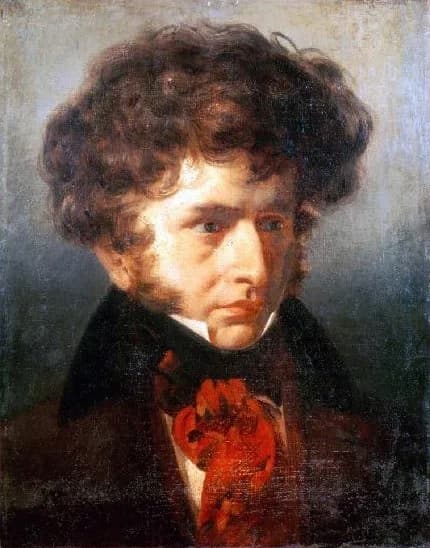
The young Hector Berlioz
In the symphony, Berlioz uses a device called an idée fixe, a single melody that recurs and mutates across all five movements. It grants the symphony a new kind of unity: narrative rather than purely structural or rhythmic.
The orchestration was also groundbreaking, calling for col legno bowing (string playing that uses the wooden part of the bow), offstage oboe, and church bells.
The flash and colour of Berlioz’s storytelling and orchestration inspired composers for the rest of the century, from Liszt’s symphonic poems to the psychological programs of Tchaikovsky’s later symphonies.
1840s – Mendelssohn, Symphony No. 3, “Scottish” (1829–1842)
After Berlioz’s fever dream of a symphony, Mendelssohn wrote one that also embraced the idea of thematic material transforming from movement to movement.
However, where Berlioz aimed for narrative, flash, and spectacle, Mendelssohn focused on atmosphere and control, proving the two impulses could coexist within Romanticism rather than compete. Even the symphony’s structural innovation – having each movement performed without any break in between – is inextricably linked to the fact that the work employs the traditional four-movement structure.
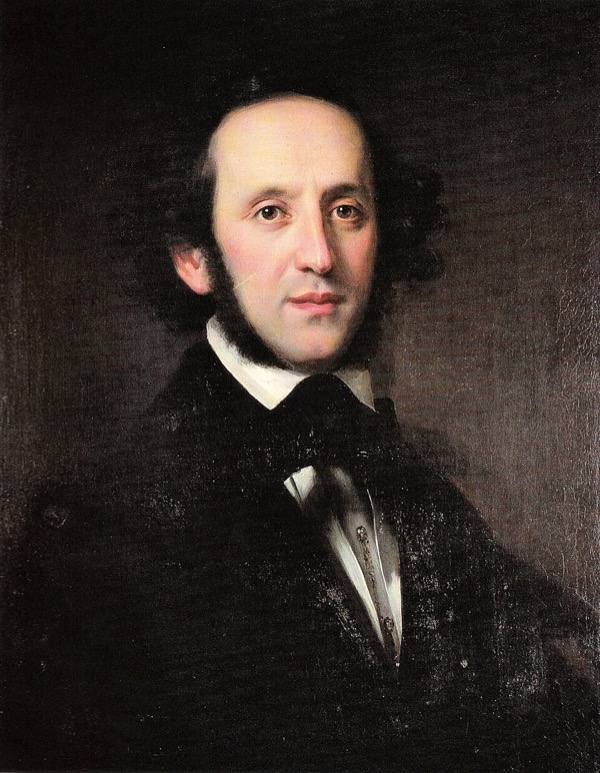
Eduard Magnus: Felix Mendelssohn, 1846 (Berlin State Library)
In the end, Mendelssohn’s third became a model for composers who wanted emotional impact without completely abandoning convention.
The “Scottish” took Mendelssohn thirteen years to finish. He began it after visiting a ruined chapel at Holyrood, Scotland, during his European Grand Tour in 1829.
“In the deep twilight we went today to the palace where Queen Mary lived and loved… The chapel below is now roofless… Everything is ruined, decayed, and the clear heavens pour in. I think I have found there the beginning of my ‘Scottish’ Symphony.”
Although he may have found the beginning there, he didn’t finish it until 1842.
1850s – Schumann, Symphony No. 3, “Rhenish” (1850)
Robert Schumann wrote this symphony in a five-week burst in the fall of 1850, between November 2 and December 9. Although it was the last symphony he completed, it’s numbered as his third.
Schumann gravitated naturally toward songwriting throughout his career, and that instinct shaped his symphonic writing too. He admired how Mendelssohn had folded songlike, lyrical melodies into orchestral form, and he used that device in his own symphonies.
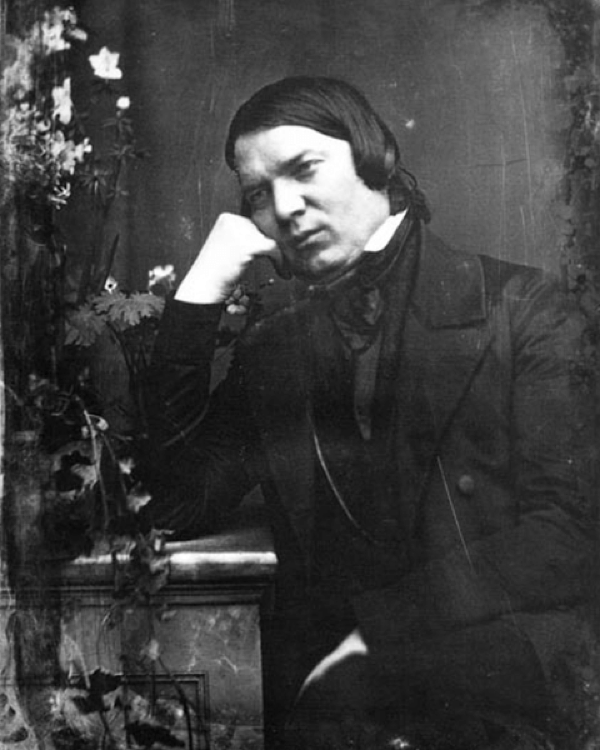
Robert Schumann
That same instinct extended to a taste for storytelling, though Schumann resisted attaching an explicit program the way Berlioz had. Instead, the “Rhenish” suggests its story rather than narrating it: the second movement evokes the Rhine River, and the fourth movement portrays a “solemn ceremony,” inspired by an archbishop’s elevation to cardinal at Cologne Cathedral, which Schumann had witnessed in person.
Where Beethoven had expanded the symphony in his third and ninth symphonies by making its four movements longer, Schumann expanded it by adding a fifth movement outright – treating movement count itself as a variable, rather than a fixed convention, to be adjusted to fit the material.
That precedent gave later composers room to do the same: Mahler, working within an even more flexible sense of symphonic structure, would take that same license further.
1860s – Tchaikovsky, Symphony No. 1, “Winter Dreams” (1866–1868)
The 1860s were a quiet stretch, symphonically speaking. Brahms was a decade into writing his first symphony but paralysed by Beethoven’s enormous shadow. Meanwhile, Bruckner, Borodin, and Dvořák were still young men finding their voices.
A 26-year-old Pyotr Ilyich Tchaikovsky stepped into that gap. Tchaikovsky, a recent graduate of the St. Petersburg Conservatory, wrote his first symphony while suffering something close to a breakdown from insomnia and overwork.
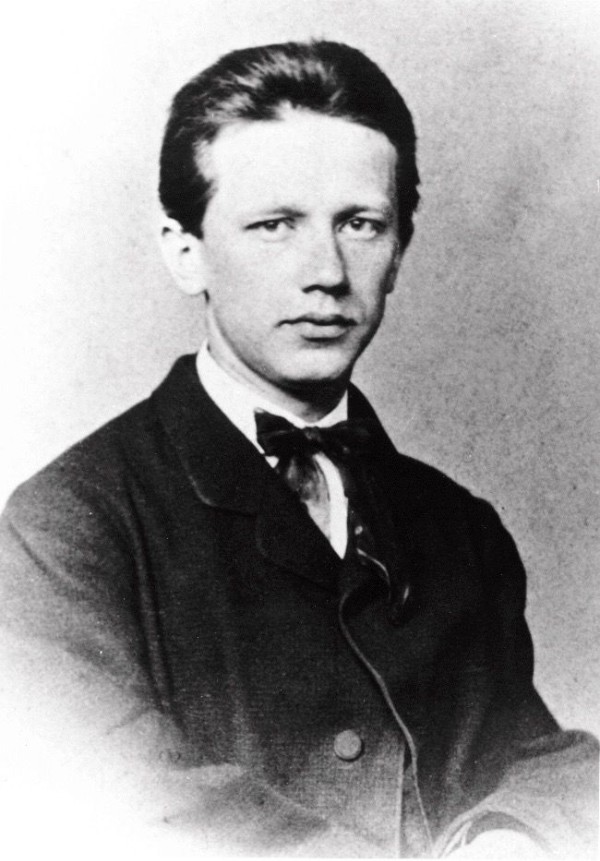
Pyotr Ilyich Tchaikovsky at 23
He revised it twice over the following years, never fully satisfied.
What survives is the first symphony by a Russian composer to enter the standard modern repertoire. Although Tchaikovsky’s later symphonies ultimately overshadowed it, this first one is important, proving that the German-Austrian tradition wasn’t the only path to symphonic legitimacy.
1870s – Brahms, Symphony No. 1 (1854–1876)
Brahms began sketching this symphony in the 1850s and didn’t finish it for over twenty years, paralysed by the idea that any symphony he wrote would be compared to Beethoven’s.
He was right to be nervous about the inevitable comparisons, because they came. In fact, when it finally did premiere, in 1876, a conductor dubbed it “Beethoven’s Tenth” – fortunately for Brahms, meant as a compliment.
The symphony’s Beethovenian C minor-to-C major trajectory, its finale’s echo of the “Ode to Joy” theme, and its sheer structural and technical rigour all read as a direct answer to Beethoven.
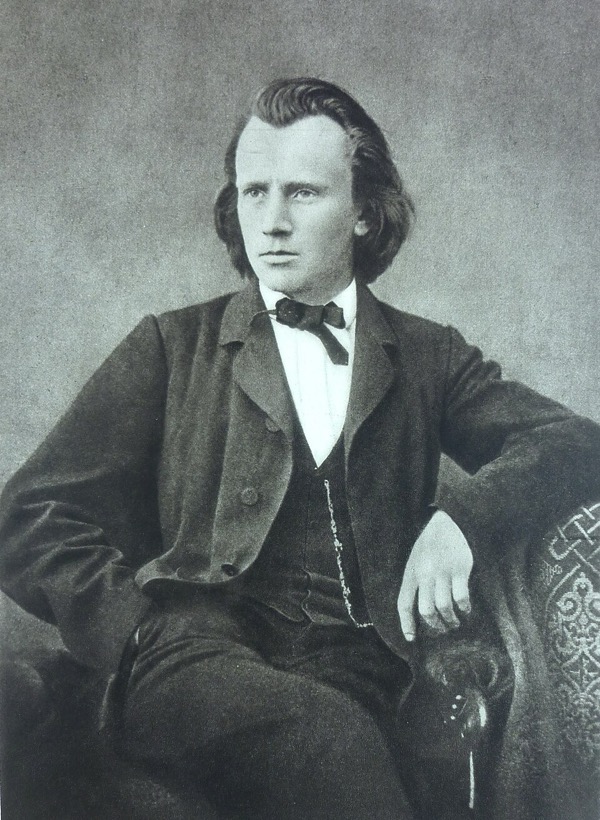
Johannes Brahms, 1866
Brahms was working against another headwind too: Liszt and Wagner’s flashy new symphonic poems and music dramas were making the case that the old purely instrumental forms Brahms treasured were becoming obsolete.
Brahms’s success with this work breathed new life into a form that Liszt and Wagner had all but declared obsolete.
1880s – Dvořák, Symphony No. 7 (1885)
Antonín Dvořák came up with the idea for the first movement of his Seventh Symphony after seeing a train of Czech men travelling to Prague to perform at the National Theatre.
Dvořák was inspired to write a serious intellectual work that would depict the drama of the national struggle for independence while being imbued with Czech character.
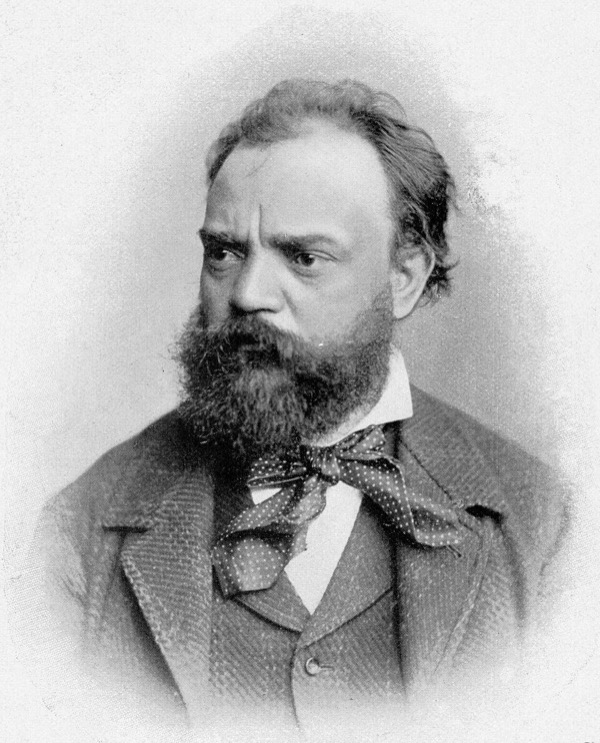
Antonín Dvořák, 1882
His most famous symphony is the Ninth Symphony, nicknamed the “New World.” But that popularity has eclipsed many of his other works, including the seventh. Musicologist Donald Tovey called his seventh “among the greatest and purest examples in this art-form since Beethoven.”
Dvořák’s seventh also contained an unspoken, extramusical argument: that Czech composers like him could use the symphony – widely seen as a primarily Austro-German art form – to express nationalist ideas and emotions.
Between the 1860s and 1880s, Tchaikovsky and Dvořák proved that nationalist identity wasn’t a limitation on the symphony. Still, a source of new vitality – a tradition Sibelius and Shostakovich would carry into the 20th century.
1890s – Mahler, Symphony No. 2 (1888–1894)
Mahler’s second symphony doesn’t close out the century so much as it kicks the door open to the next one.
Subtitled the “Resurrection”, it runs for nearly ninety minutes, demanding a massive orchestra, offstage brass, a soprano and alto soloist, and a full chorus that doesn’t enter until the final movement, where it sings a text written in part by Mahler himself.
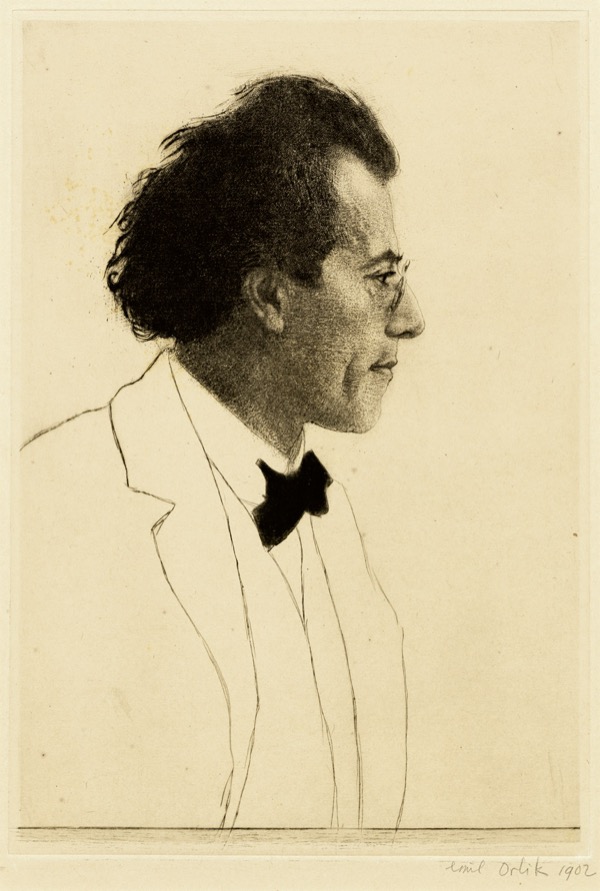
Emil Orlík: Gustav Mahler, 1902
The symphony’s use of the human voice, its willingness to confront death and resurrection head-on as explicit textual subject matter, and its refusal to resolve neatly within Classical proportions all point away from the 19th century and squarely toward the next one.
That expanded sense of what a symphony could be – part autobiography, part spectacle, part spiritual reckoning – became the inheritance every 20th-century symphonist had to reckon with.
Conclusion
Line up all ten choices and a pattern appears that no single entry reveals on its own: the story of the 19th-century symphony is the story of composers answering their predecessors, one symphony at a time.
Beethoven answered Haydn and Mozart by making the form bigger and stranger. Berlioz answered Beethoven by making it explicitly personal. Brahms answered Beethoven, but it took him twenty years of honing his creative powers. Mahler wrote such long, complicated works that he seemed to answer everyone at once.
Sibelius, Shostakovich, and the rest of the 20th century’s symphonists inherited a form so thoroughly reinvented that “symphony” stopped meaning any one thing – and started meaning everything.
For more of the best in classical music, sign up for our E-Newsletter