Ten decades, ten concertos – and one long argument about what a violin concerto should be.
Today we’re looking back at the musical history of the nineteenth century and deciding which Romantic-era violin concertos best represent their respective decades.
In the process, we’ll trace the long conversation composers have had over the decades about how a concerto should be structured, what techniques it should contain, and what it should make audiences feel.
Here’s how the story unfolds, one decade at a time.
1800s
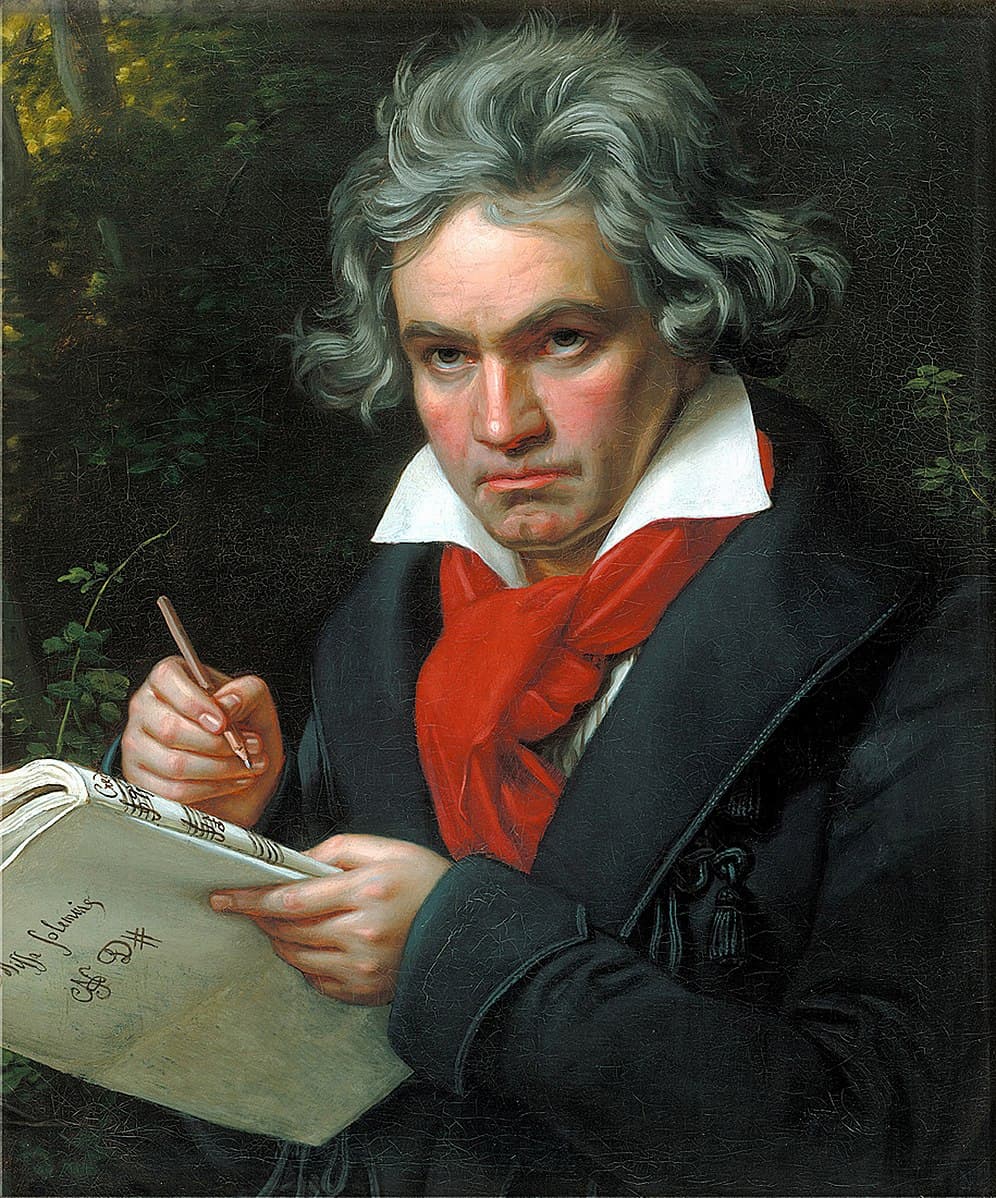
Ludwig van Beethoven: Violin Concerto (1806)
Only a handful of violin concertos from the 1700s have entered the standard repertoire, which is one reason why the Beethoven (written in 1806) hits like such a thunderbolt.
Beethoven re-envisioned the violin concerto as a symphonic work that integrates soloist and orchestra, featuring soaring, pastoral themes and clocking in at an unprecedented 45 minutes.
Contemporary audiences received it coolly. It wasn’t until 13-year-old violin prodigy Joseph Joachim, with conductor Felix Mendelssohn, began championing it in 1844 that it entered the repertoire for good.
If you ask a professional violinist which violin concerto is the greatest, many of them will say Beethoven’s.
1810s
Louis Spohr: Violin Concerto No. 8 (1816)
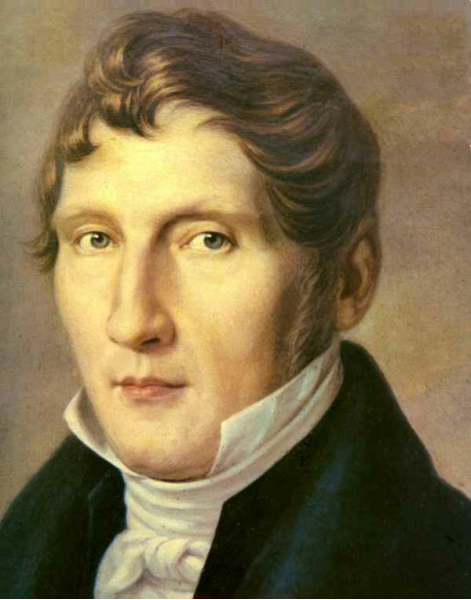
Louis Spohr
Louis Spohr: Violin Concerto No. 8 in A Minor, Op. 47, “in modo di scena cantante” (Hilary Hahn, violin; Swedish Radio Symphony Orchestra; Eiji Oue, cond.)
Louis Spohr was born in present-day Germany in 1784, and he grew up to become one of the most celebrated violin soloists of his generation. (In 1808, he rehearsed Beethoven’s “Ghost” Trio with the composer.)
His best-loved concerto is his eighth, which he wrote for an Italian tour. Instead of using Germanic, Beethovenian sonata form, he structured the piece like an extended bel canto aria. To a modern listener, it sounds much more like a transcription of an opera aria than a violin concerto.
It isn’t played often today, but it became one of the most performed violin works of the 19th century – and an important influence on how later composers like Mendelssohn thought about injecting vocal lyricism into their instrumental writing.
1820s
Niccolò Paganini: Violin Concerto No. 2 (1826)
Niccolò Paganini was born two years before Spohr, in 1782. He became a pillar of the Romantic era, famous for his macabre appearance and otherworldly violin technique.
His second violin concerto helped set the standard for Romantic-era violin playing.
Like Spohr, Paganini drew his primary inspiration from opera. Still, by 1826 he could combine vocal-inspired lyricism with technical fireworks that far outstripped Spohr’s: harmonics, chromatic scales, fingered octaves, left-hand pizzicatos, lightning-fast arpeggios, and much more.
The theme of its finale – known as “La Campanella” or “The Bell” – became a touchstone of the Romantic era, inspiring composers like Schumann and Liszt to write their own variations on the theme.
Paganini’s second violin concerto isn’t often heard today in its totality, but it helped to cement the archetype of the concert violinist as an attention-grabbing showman.
1830s
Henri Vieuxtemps: Violin Concerto No. 2 (1836)
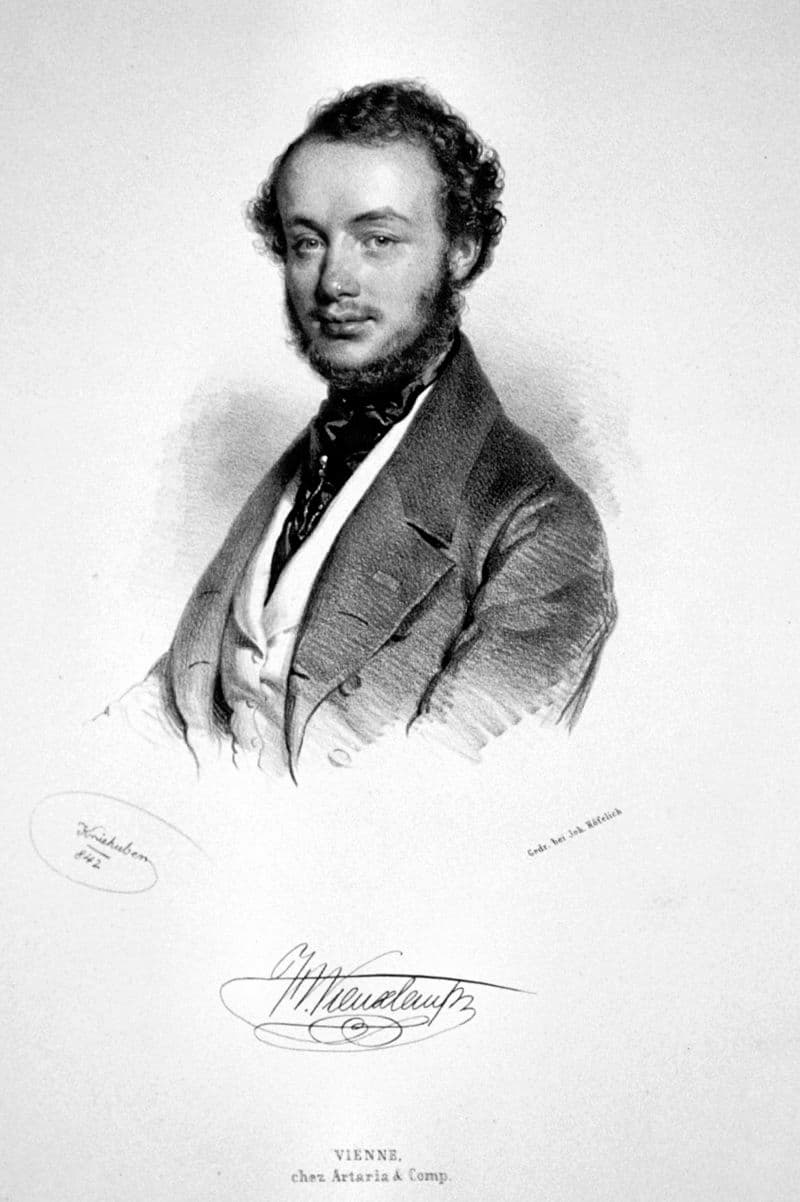
Josef Kriehuber: Henri Vieuxtemps, 1842
Henri Vieuxtemps: Violin Concerto No. 2 in F-Sharp Minor, Op. 19 (Misha Keylin, violin; Janáček Philharmonic Ostrava; Dennis Burkh, cond.)
After the explosion of Paganini’s career and celebrity, the violin concerto genre went through an identity crisis. Very few concertos from this transitional decade remain in the repertoire today.
One violinist who had to reckon with Paganini’s legacy was Belgian soloist Henri Vieuxtemps, born in 1820. He was a child prodigy and toured from an early age, meeting Louis Spohr at 13 and Paganini at 14. He drew inspiration from both.
In his teens, he studied composition with Berlioz’s Paris-based teacher Anton Reicha. His later music synthesised operatic style and instrumental virtuosity into a unique, refined personal voice.
Today, violinists are more familiar with Vieuxtemps’s work than general audiences, but he was a vital link in the chain of violin history.
1840s
Felix Mendelssohn: Violin Concerto (1844)
Mendelssohn’s concerto is possibly the most flawlessly constructed violin concerto in the entire genre – even though he breaks many of the genre’s rules.
The innovation begins at the start, when he dispenses with the traditional orchestral exposition and has the soloist enter alone with the searing main theme.
Next, Mendelssohn writes out the cadenza – up until that time, usually a moment when the violinist improvised solo – and incorporates it into the first movement development section.
All three movements flow into each other, featuring charming, opera-like connective tissue in between.
The result was an unprecedented marriage of flashy instrumental virtuosity and serious symphonic form. He broke so many rules and still produced something that feels inevitable, which is exactly why the Mendelssohn concerto endures.
1850s
Joseph Joachim: Violin Concerto No. 2 (1857)
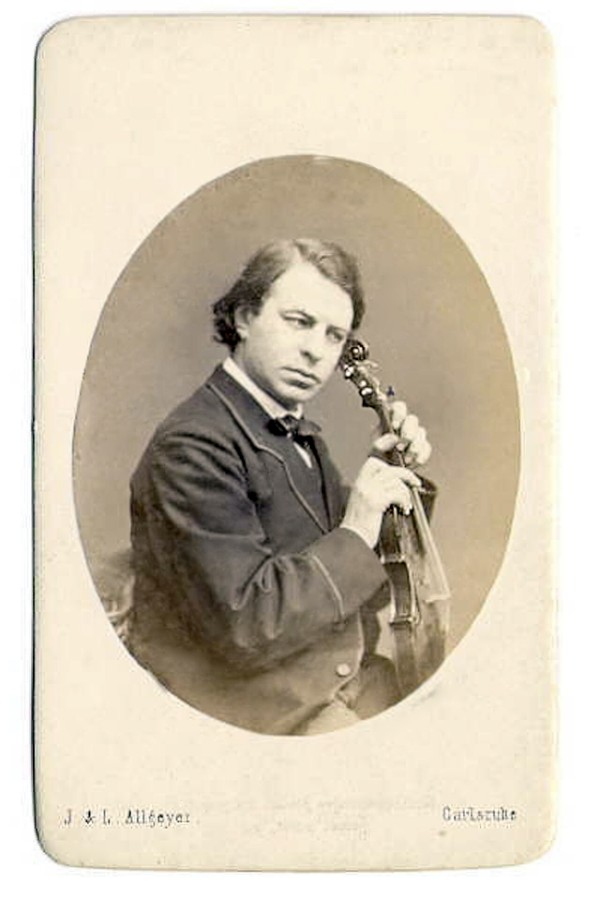
Joseph Joachim (Photo by Julius Allgeyer
Joseph Joachim: Violin Concerto No. 2 in D Minor, Op. 11, “In the Hungarian Style” (Rachel Barton Pine, violin; Chicago Symphony Orchestra; Carlos Kalmar, cond.)
Violinist Joseph Joachim – the same violinist who had helped to resurrect the Beethoven violin concerto in the 1840s – wrote his second violin concerto “in the Hungarian style” when he was 26.
Joachim’s playing would ultimately gain more fame than any of his compositions, but that doesn’t mean this concerto should be overlooked.
Its character is distinctly Hungarian, while still wholeheartedly embracing the German symphonic structure: important foreshadowing of the generation-defining Brahms concerto, which Joachim assisted in writing.
Joachim’s Hungarian concerto was an early example of nationalism and folk-music influences entering the repertoire. Composers like Brahms, Dvořák, Tchaikovsky, and others would build on the concept in their own violin concertos, to great effect.
1860s
Max Bruch: Violin Concerto No. 1 (1867)
Like Mendelssohn, composer Max Bruch tinkered with the standard structure of the violin concerto – and ended up with a masterpiece.
The first movement of his concerto is marked “Vorspiel”, German for “prelude.” It is passionate and improvisatory – and also, being a prelude, shorter than many opening movements of the Romantic era. (In fact, due to this unusual introduction, Bruch questioned whether this work was even a concerto at all. His collaborator Joseph Joachim assured him it was.)
That dramatic first movement preludes to the heart and soul of the work: its second movement, an adagio, one of the tenderest in the repertoire.
In contrast, its finale is a spirited, rebellious dance of an Allegro energico.
Bruch sold the concerto to a publisher outright and never saw much financial benefit from its explosive popularity. This explains the bitterness he expressed toward it in his later years, complaining that he didn’t know why this concerto overshadowed his other work.
1870s
Johannes Brahms: Violin Concerto (1878)
Johannes Brahms wrote his concerto in close collaboration with Joseph Joachim, who advised on the solo part and premiered the work.
In it, Brahms looked back to Beethoven’s idea of a muscular symphonic work with a big, vital solo violin part.
Some listeners and violinists were initially unconvinced by this approach. In fact, 19th-century virtuoso Pablo de Sarasate once incredulously asked, “Does anyone imagine that I am going to stand on the rostrum, violin in hand, and listen to the oboe play the only tune in the Adagio?”
But ensuing generations have fallen in love with the work and validated Brahms’s (and Beethoven’s) priorities. A century and a half later, it’s Sarasate’s complaint that sounds dated, not Brahms’s oboe melody.
1880s
Camille Saint-Saëns: Violin Concerto No. 3 (1880)
Camille Saint-Saëns wrote his third violin concerto for Pablo de Sarasate, and the piece reflects Sarasate’s aesthetic: elegant, transparent virtuosity that keeps the violin consistently at the forefront, unlike the dense symphonic argument Brahms wrote just two years earlier.
The famous slow movement, a barcarolle that drifts into a hushed chorale-like finish, reveals Saint-Saëns’ preference for melodic clarity over muddy textures.
The concerto hasn’t attained the same kind of ubiquity as the Brahms or Bruch concertos; its closest counterpart in spirit and popularity is probably the Vieuxtemps.
It reminds us that Saint-Saëns’s French tradition, not just Beethoven and Brahms’s German one, also shaped what the violin concerto sounded like.
1890s
Ernest Chausson: Poème (1896)
As the 1800s came to a close, composers began pushing the boundaries of symphonic works further and further. Harmonies grew ever more complicated; symphonies grew exponentially longer; orchestras grew larger; genres themselves began to splinter.
Sometimes the best violin and orchestra work of this decade weren’t even concertos – like Ernest Chausson’s 15-minute fantasy Poème.
It answers the century-long conversation about the Beethoven-to-Brahms Germanic tradition by abandoning traditional structure for improvisatory atmospherics.
Its influence came less from reshaping what a violin concerto was, and more from legitimising the idea of atmospheric solo-movement works for violin and orchestra. The Poème anticipated some of the early 20th century’s most famous pieces, like Vaughan Williams’s The Lark Ascending and Ravel’s Tzigane.
The violin concerto genre lived on well beyond the 1890s. But by the close of the century, it was just one of the many forms composers had at their disposal when writing for violin and orchestra. Chausson’s Poème exemplifies why.
For more of the best in classical music, sign up for our E-Newsletter