In the 2025–2026 season, Spanish early music master Jordi Savall and his longtime collaborator Luca Guglielmi completed a new performance version of Mozart’s famous unfinished masterpiece, the Mass in C minor (K. 427), and toured it across Europe. This article looks at the work itself, the logic behind the completion, and its cultural meaning.
Breaking the “Commission Model”: From Religious Ritual to Personal Expression
In 18th-century Europe, patrons usually commissioned sacred music. The church or nobility provided financial support, and composers wrote music to fit specific religious services. While this system gave composers financial security, it often limited their personal expression. However, Mozart’s Mass in C minor (K. 427) broke this pattern. Although it is a grand missa solemnis in form, Mozart did not write it for a church commission. Mozart originally planned to finish the work and take it to Salzburg to introduce his new bride, the singer Constanze, to his father and sister. This gave the Mass a deeply personal meaning, especially since his father had initially opposed the marriage.
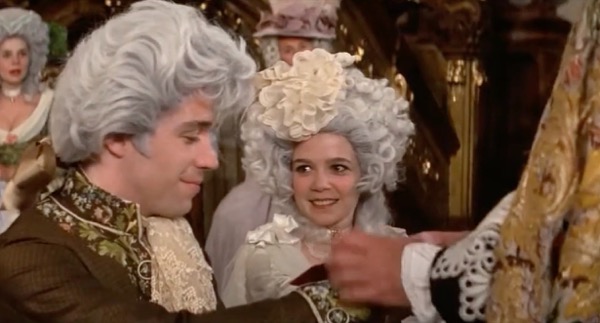
In the film Amadeus (1984), the wedding scene between Mozart and Constanze is set to the Kyrie from the Great Mass in C Minor.
Amadeus – wedding scene
In a letter to his father dated 4 January 1783, Mozart explained the meaning and progress of the work:
“I made the promise and hope to be able to keep it. When I made it, my wife was still single; yet as I was determined to marry her soon after her recovery it was easy for me to make it – but as you yourself are aware, time and other circumstances made our journey impossible. The score of half a Mass, which is still lying here waiting to be finished, is the best proof that I really made the promise …”
Mozart used a wide range of musical techniques in the Mass in C minor, showing how he reformed sacred music. At Baron van Swieten’s salon, Mozart studied Bach and Handel’s polyphonic works. These Baroque masters inspired him to use complex contrapuntal writing, moving beyond the simpler harmonic structures of traditional church music. At the same time, he expanded the orchestra to include pairs of trumpets, timpani, horns, trombones, flutes, oboes, bassoons, strings, and organ continuo. This large orchestration added grand solemnity and showed his drive for richer artistic expression. In this work, Mozart combined Baroque counterpoint, the lyrical style of Italian opera, and the formal beauty of the Viennese Classical style.
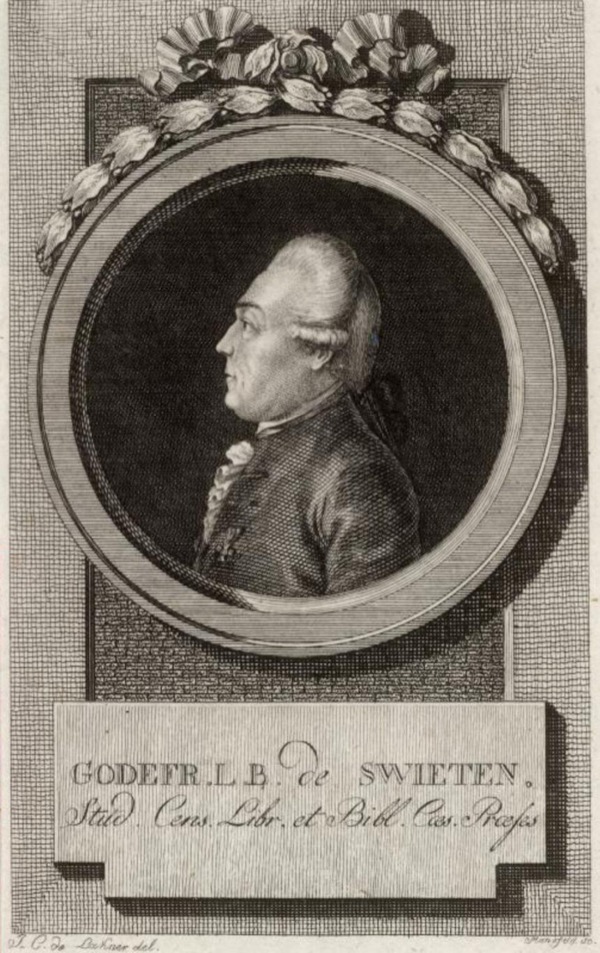
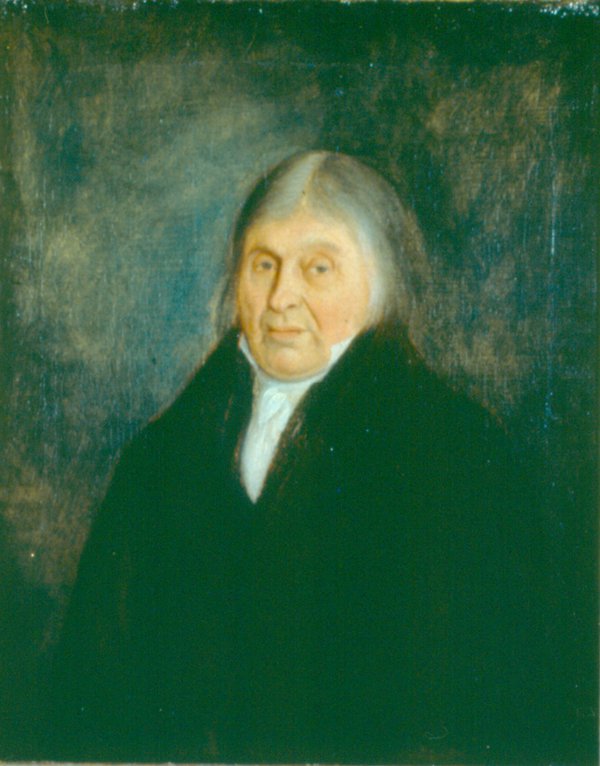
Gottfried Bernhard Baron van Swieten (1733-1803) – Photograph of an engraving thought to be by Johann Georg Mansfeld,
based on a drawing by Lakner.
Despite his hard work, Mozart left the Mass incomplete. He finished the Kyrie and Gloria, along with parts of the Credo. He may have had ideas for sections like the Sanctus, but he left no final manuscripts. In the summer of 1783, when Mozart and Constanze returned to Salzburg, they performed parts of the work at St. Peter’s Abbey. According to Mozart’s sister Nannerl, this performance took place on October 26 and featured the full court orchestra, with Constanze singing the soprano solos. Because the work was incomplete, they performed only the Kyrie and Gloria, which fit local church practices at the time.
The Completed Sections: Mixing Baroque Counterpoint and Opera
The Kyrie opens the work with strong Baroque emotion that is both tragic and dramatic. Stepping basslines, dense counterpoint, and rich chromatic lines set the tone. Then, the mood shifts into E-flat major for the “Christe eleison”. Here, the clear and noble soprano solo uses wide leaps and ornaments to create a vivid texture.
Wolfgang Amadeus Mozart: Mass No. 18 in C Minor, K. 427, “Great”: Kyrie (Giulia Bolcato, soprano; Elionor Martínez, soprano; La Capella Nacional de Catalunya; Le Concert des Nations; Jordi Savall, cond.)
Next, the Gloria opens with a powerful choral statement. The music moves from dark C minor into a triumphant C major. In the “in excelsis Deo” section, Mozart creates a grand effect much like the “Hallelujah” chorus from Handel’s Messiah. The “Laudamus te” is a lively soprano solo in a clear opera style with large vocal leaps. At the same time, the “Gratias agimus tibi” is a short, solid choral section that recalls Handel’s Baroque style. The two sopranos then join in a duet for “Domine Deus”, bringing in clear elements of Italian opera.
Wolfgang Amadeus Mozart: Mass No. 18 in C Minor, K. 427, “Great”: Gloria: Gloria (Giulia Bolcato, soprano; Elionor Martínez, soprano; La Capella Nacional de Catalunya; Le Concert des Nations; Jordi Savall, cond.)
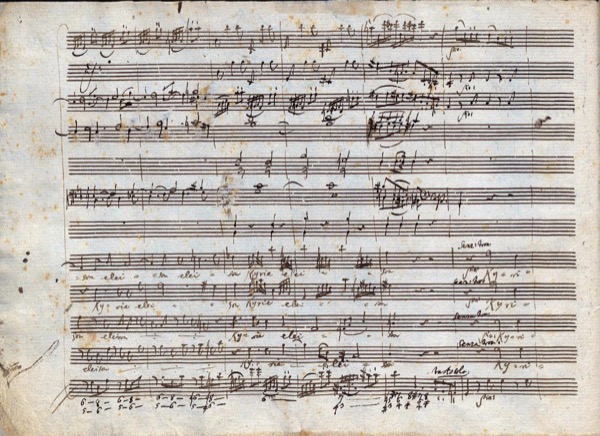
Mozart’s autograph of his Great Mass in C minor, K. 427
The “Qui tollis peccata mundi” is a key part of the Gloria. Mozart uses a double choir in eight parts, combining dotted rhythms with a passacaglia-style bassline to show the best of the Baroque style. The following “Quoniam tu solus Dominus” is a light trio for two sopranos and a tenor, showing the easy grace of Italian opera. After a brief “Jesu Christe”, the music builds to a peak with “Cum Sancto Spiritu”, a grand fugue.
Wolfgang Amadeus Mozart: Mass No. 18 in C Minor, K. 427, “Great”: Gloria: Qui tollis (Giulia Bolcato, soprano; Elionor Martínez, soprano; La Capella Nacional de Catalunya; Le Concert des Nations; Jordi Savall, cond.)
In the Credo, even though only two sections were completed, Mozart’s writing remains captivating. The “Et incarnatus est” features an ornate soprano solo backed by woodwinds, creating a warm and intimate mood. In the unfinished Sanctus, the “Cum Sancto Spiritu” section uses a double fugue to show complex counterpoint. Finally, the Benedictus unfolds as a quartet, using rich melodies and delicate harmony.
Wolfgang Amadeus Mozart: Mass No. 18 in C Minor, K. 427, “Great”: Credo: Et incarnatus est (Giulia Bolcato, soprano; Elionor Martínez, soprano; La Capella Nacional de Catalunya; Le Concert des Nations; Jordi Savall, cond.)
Luca Guglielmi’s Completion: Respecting History and Adding New Ideas
When completing Mozart’s Mass in C minor, Luca Guglielmi took a unique approach. Compared with earlier completions, Guglielmi’s work stands out in several key ways.
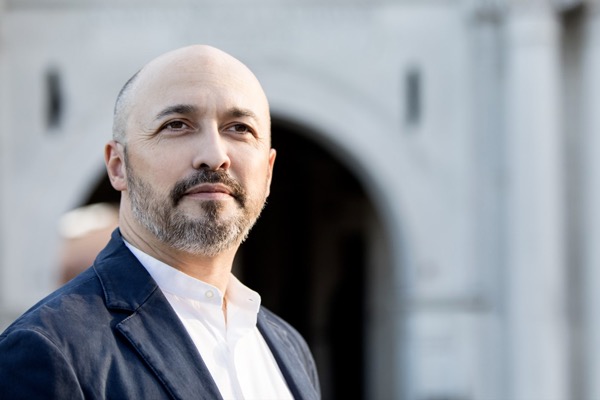
Luca Guglielmi (Credit: https://unionemusicale.it)
First, instead of writing large amounts of new music, Guglielmi focused on studying Mozart’s sketches, unfinished manuscripts, and related musical ideas from his other works. He aimed to preserve Mozart’s original style and structure. Careful analysis of Mozart’s surviving manuscripts was the core of his work. For example, in the cantata Davide penitente (K. 469)—written shortly after the Mass—Mozart reused almost all the music from the Mass except for two new arias, changing little more than the text. Building on this, Guglielmi used melodies from K. 469 to complete parts of the Credo, substituting the text. This was common practice at the time, allowing composers to set new words to existing tunes without writing new music from scratch.
For the “Et in Spiritum Sanctum” section, Guglielmi based his work on music Mozart had drafted for an earlier Mass in C major (K. 337). Although Mozart had set that music aside, Guglielmi’s analysis showed that its melody and structure fit the Mass in C minor, so he worked it into his completed version. For the Agnus Dei, Guglielmi drew on Mozart’s Solfeggio (K. 393, No. 2) and the opening Kyrie from the Mass itself. This kept the mood consistent with the rest of the work, following a long tradition dating back to the Renaissance, where a Mass uses shared musical material in its opening and closing movements.
Jordi Savall – Mozart: Great Mass in C Minor, K. 427: III. Credo: Et in Spiritum sanctum
Jordi Savall – Mozart: Great Mass in C Minor, K. 427: V. Agnus Dei: Agnus Dei
Earlier completions often relied on free adaptations or heavy invention. Guglielmi, by contrast, demonstrates an “archaeological creativity”—a deeply respectful, musicological approach. By building strictly on Mozart’s surviving sketches, unused ideas, and contemporary material, he reconstructs missing movements with rigorous historical accuracy. This technique aligns with the “raw material restoration” strategy used in architecture, prioritising technical precision and minimising the restorer’s personal style to stay true to the original work’s spirit. It reflects modern musicology’s shift toward an empathetic, evidence-based understanding of historic classics.
For more of the best in classical music, sign up for our E-Newsletter