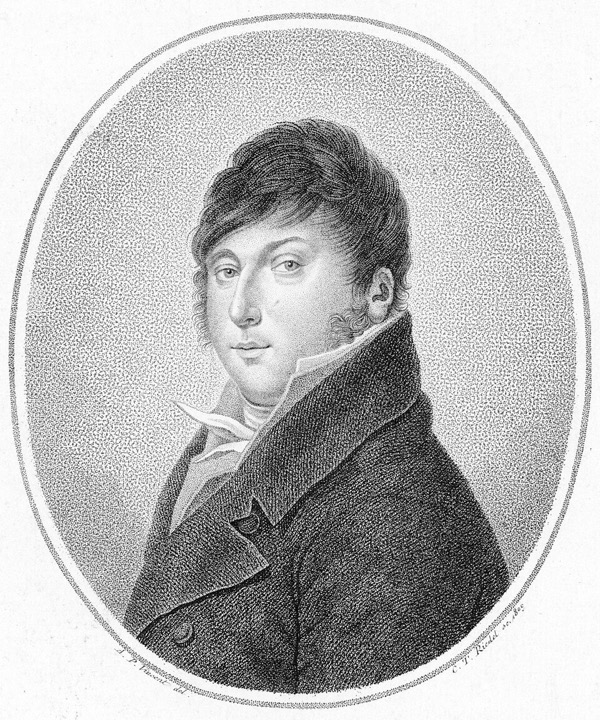
Not all of Beethoven’s piano sonatas had dedications, but those that did were deeply meaningful. Some recipients were teachers, like Joseph Haydn. Others were patrons whose stipends kept Beethoven fed and housed, or aristocratic students he grew close to over years of lessons. A handful were women he loved.
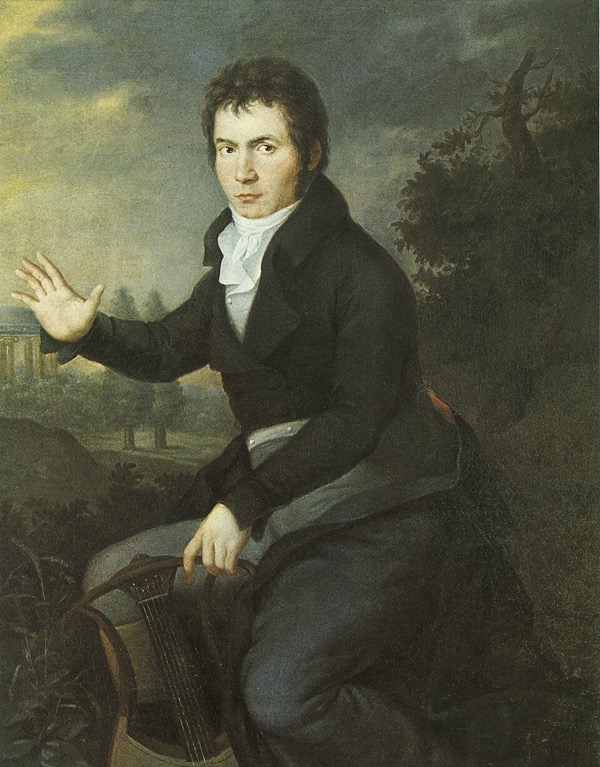
Ludwig van Beethoven, 1804 (Joseph Willibrord Mähler)
Together, these sixteen dedicatees trace Beethoven’s entire life. Here’s who they were, and why Beethoven chose them.
Joseph Haydn
Dedicatee of the Piano Sonata Nos. 1, 2, 3
Beethoven’s Piano Sonata No. 1
In 1792, at 21, Beethoven left his hometown of Bonn for Vienna, in part to study with Joseph Haydn. Unfortunately, they didn’t mesh well as teacher and pupil; Beethoven found Haydn inattentive, and Haydn found Beethoven headstrong.
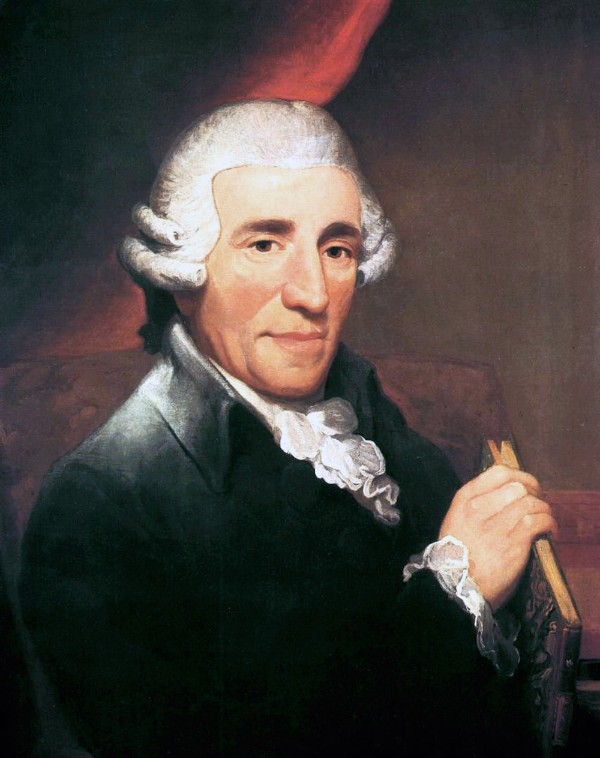
Joseph Haydn
Still, Beethoven respected Haydn, and a few years later, he dedicated his first three piano sonatas to him.
The dedication had practical ramifications. It publicly linked Beethoven and Haydn’s names and announced Beethoven’s intention to follow in Haydn’s hallowed footsteps.
Ana Luiza Barbara “Babette” Keglević
Dedicatee of the Piano Sonata No. 4
Beethoven’s Piano Sonata No. 4
As a young man, Beethoven took on several aristocratic students, including Ana Luiza Barbara Keglević, nicknamed Babette.
She began studying piano with him in her mid-teens. Beethoven taught her in her family’s palace in Bratislava, in present-day Slovakia. Legend has it he showed up to teach in his robe and slippers.
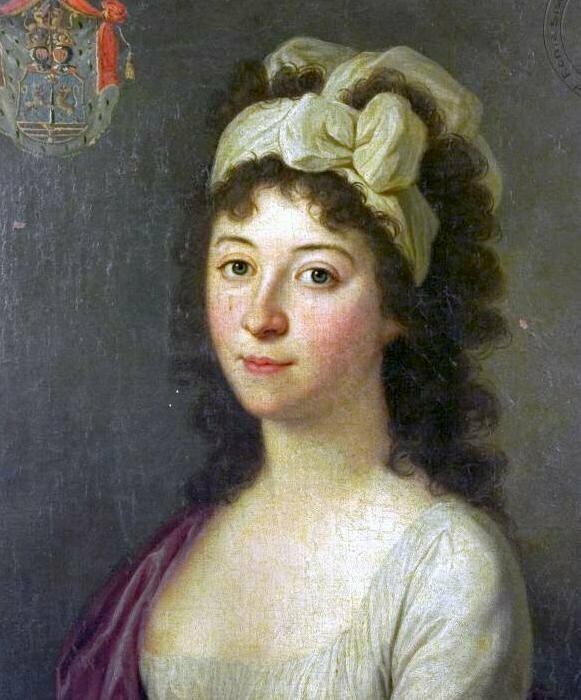
Ana Luiza Barbara “Babette” Keglević
He may have been romantically interested in her. He certainly respected her; he dedicated his fourth piano sonata and his first piano concerto to her.
She married Prince Innocenz Odescalchi in 1801 and died in 1813, having given birth to at least seven children.
We wrote about her here: https://interlude.hk/beethoven-maiden-love/.
Count Georg von Browne
Dedicatee of the Piano Sonata No. 11
Countess Anna Margarete von Browne
Dedicatee of the Piano Sonata Nos. 5, 6, 7
Beethoven’s Piano Sonata No. 11
The first couple that Beethoven dedicated piano sonatas to was Count Johann Georg von Browne and his wife, Countess Anna Margarete von Browne. His grandfather emigrated from Ireland after the Jacobite defeat and served in the Russian army.
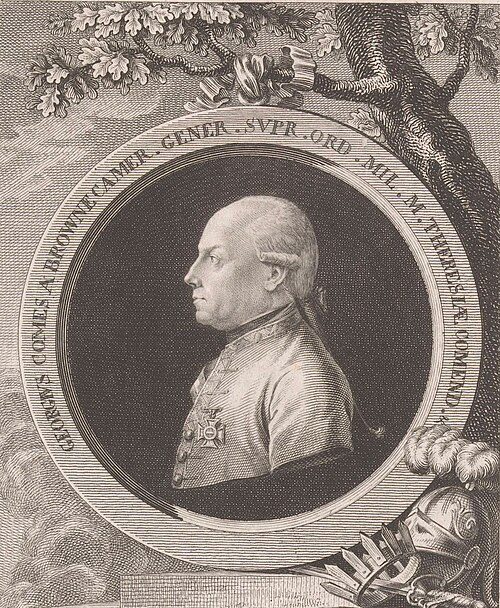
Count Johann Georg von Browne
Browne settled in Vienna in the mid-1790s and became one of Beethoven’s earliest patrons. They often performed his music at their home. In gratitude, Beethoven dedicated one sonata to the count and three to his wife. They in turn gifted Beethoven a horse – which he didn’t use, and forgot about until the huge feed bill arrived.
Karl Alois, Prince Lichnowsky
Dedicatee of the Piano Sonata Nos. 8, 12
Beethoven’s Piano Sonata No. 8
Karl Alois, Prince Lichnowsky, was born in Vienna in 1761, nearly a decade before Beethoven. He studied piano with Mozart as a young man and later became one of Beethoven’s early Viennese supporters.
Beethoven lived in the palace between 1793 and 1795; while there, he gave chamber music concerts. The prince also sent Beethoven a monthly stipend to help support his composing.
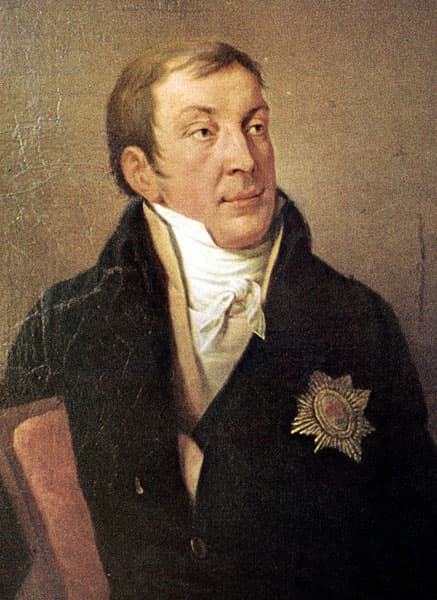
Prince Karl Lichnowsky, 1800
They had an explosive breakup in 1806 after the prince asked Beethoven to play piano for invading French troops during the Napoleonic Wars. Beethoven stormed out, walked home in the rain, and smashed the prince’s bust. That infamous break explains why Prince Karl had no late piano sonatas dedicated to him.
Baroness Josefa von Braun
Dedicatee of the Piano Sonata Nos. 9 and 10
Beethoven’s Piano Sonata No. 9
We know relatively little about Baroness Josefa von Braun, and much more about her husband, Baron Peter von Braun.
The Baron was an industrialist who managed Vienna’s imperial court theatres. Beethoven needed to stay on good terms with him if he wanted to book a venue for performances of his orchestral works – and it seems that Beethoven figured a dedication to his wife wouldn’t hurt.
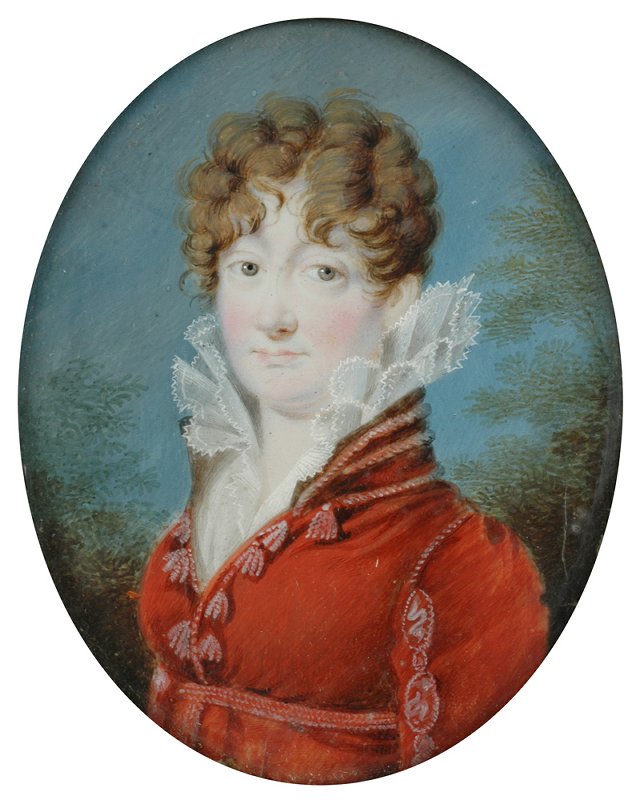
Baroness Josefa von Braun © johnpwalshblog.com
Princess Josephine Sophie von Liechtenstein
Dedicatee of the Piano Sonata No. 13
Beethoven’s Piano Sonata No. 13
In the spring of 1792, 15-year-old Josefa married the 31-year-old Prince Johann Joseph von Liechtenstein, a successful military man and art patron. They would go on to have fourteen children together.
The couple was one of Beethoven’s high-ranking Vienna-based patrons. In gratitude, he dedicated his thirteenth piano sonata to her in 1802.
Countess Julie “Giulietta” Guicciardi
Dedicatee of the Piano Sonata No. 14
Beethoven’s Piano Sonata No. 14
Julie “Giulietta” Guicciardi was born in 1782, making her twelve years younger than Beethoven. Initially, they met because she was a cousin of Beethoven’s other students, sisters Therese and Josephine von Brunsvik. Beethoven began teaching her piano around 1800 and promptly fell in love with her.
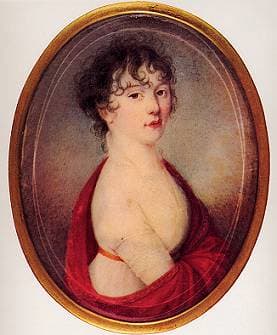
Julie “Giulietta” Guicciardi
We don’t know what she felt about him. In any case, class differences thwarted their potential marriage.
In 1802, Beethoven wanted to dedicate a work to her. He chose his already-completed fourteenth piano sonata, which earned the nickname “Moonlight” after his death.
As for the countess, she split the difference: in 1803, she married an aristocratic amateur composer named Count Wenzel Robert von Gallenberg.
We looked at the real story behind the Moonlight Sonata here: https://interlude.hk/beethovens-moonlight-sonata-the-true-story-behind-its-many-myths/.
Baron Joseph von Sonnenfels
Dedicatee of the Piano Sonata No. 15
Beethoven’s Piano Sonata No. 15
Austrian jurist Joseph Freiherr von Sonnenfels was born in 1732. He was a noted Enlightenment-era reformer who successfully advocated for the abolition of torture in Austria. He was also passionate about the arts and was a friend and patron of Mozart.
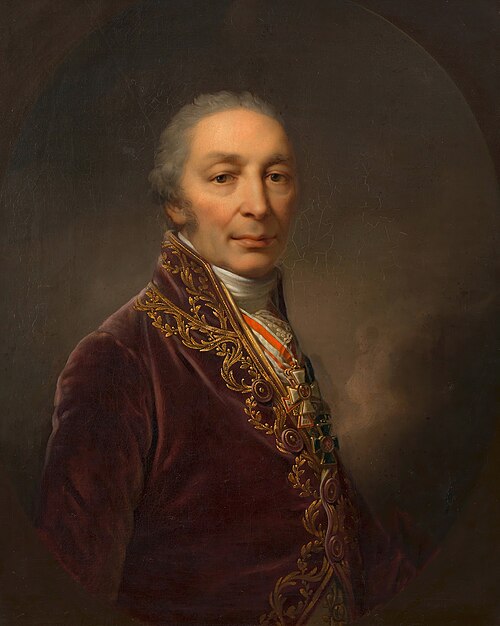
Baron Joseph von Sonnenfels
Unlike most of Beethoven’s dedicatees, Sonnenfels had no documented personal or musical relationship with the composer, who was nearly forty years his junior. The dedication of his fifteenth sonata, published in 1801, seems to honour his stature as a public figure rather than celebrate their close personal friendship. The choice may reflect Beethoven’s Enlightenment-influenced politics during this time.
Count Ferdinand Ernst Gabriel von Waldstein
Dedicatee of the Piano Sonata No. 21
Beethoven’s Piano Sonata No. 21
Count Waldstein was one of Beethoven’s very first patrons. He was eight years older than Beethoven and moved to Beethoven’s hometown in 1788, where he saw the teenage composer’s promise firsthand. He recommended that Beethoven study with Haydn.
The two never crossed paths again after Beethoven left for Vienna. But, fittingly, in 1805, the count became the dedicatee of Beethoven’s masterful 21st piano sonata, nicknamed “the Waldstein.”
Count Franz von Brunsvik
Dedicatee of the Piano Sonata No. 23
Beethoven’s Piano Sonata No. 23
Count Franz von Brunsvik was born in 1777, seven years after Beethoven, into an aristocratic Hungarian family. His sisters were Beethoven’s piano students Therese and Josephine Brunsvik, and his cousin was Julie Guicciardi, the dedicatee of the Moonlight Sonata.
Like his siblings, Franz loved music; he was a talented amateur cellist, and he and Beethoven corresponded for years. They even used the informal “du” with each other, signalling their close friendship. His sister Josephine may even have been the famous Immortal Beloved.
To commemorate their friendship, Beethoven dedicated his 23rd piano sonata – which later became known as the “Appassionata” – to Franz.
Countess Thérèse von Brunsvik
Dedicatee of the Piano Sonata No. 24
Beethoven’s Piano Sonata No. 24
Countess Thérèse von Brunswick (Brunsvik) was born in 1775, five years after Beethoven, and was the eldest of four siblings, including Franz and Josephine.
She was extremely musically gifted, and in 1799, at 24, she travelled to Vienna with her mother and Josephine. There, Beethoven – captivated by the sisters’ playing – started giving them free lessons.
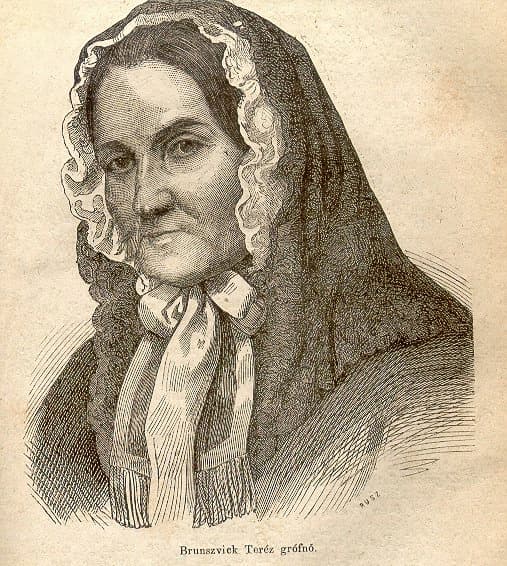
Thérèse von Brunsvik
She never married and, in her later years, became an education reformer, founding Hungary’s kindergarten movement.
Beethoven dedicated his 24th piano sonata to her in 1810, a few years after he’d dedicated the “Appassionata” to her brother.
We wrote about the tragic story of Josephine Brunsvik and her family here: https://interlude.hk/josephine-von-brunsvik-was-this-tragic-figure-beethovens-immortal-beloved/.
Archduke Rudolf
Dedicatee of the Piano Sonata Nos. 26, 29, 32
Beethoven’s Piano Sonata No. 32
Archduke Rudolf, born in 1788, was Emperor Leopold II’s youngest son. Poor health precluded a military career, so he made his life in the church instead. He was eventually consecrated Archbishop of Olomouc and made a cardinal in 1819.
He began piano lessons with Beethoven around 1804, and also became the composer’s only student in composition. Despite their vast difference in social status, the two men remained friends for two decades.
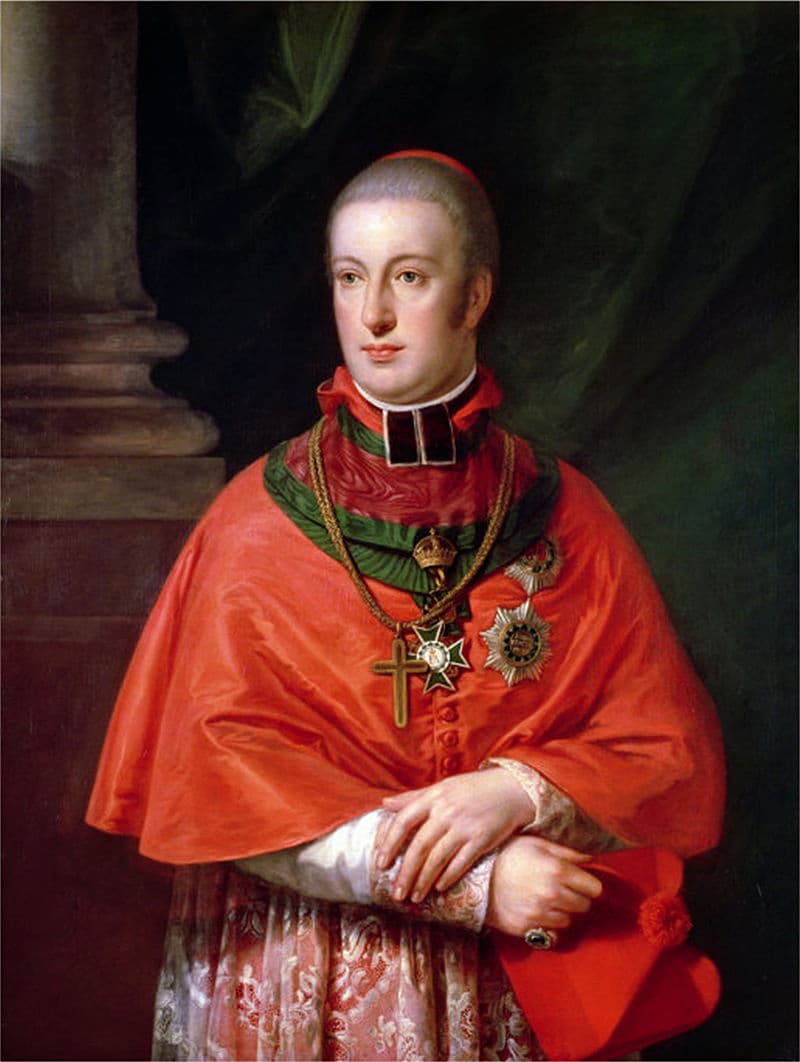
Archduke Rudolf
In 1808, fearing that Beethoven would accept a lucrative job offer in Kassel, Rudolf teamed up with other wealthy Viennese to keep him in town. That support was vital to creating so many works listeners love today.
The Archduke became Beethoven’s most dedicated patron – and consequently received more dedications than anyone else: fourteen in all, including three major piano sonatas.
We covered Archduke Rudolf and his friendship with Beethoven here: https://interlude.hk/archduke-rudolph-of-austria-the-sickly-muse/.
Prince Moritz von Lichnowsky
Dedicatee of the Piano Sonata No. 27
Beethoven’s Piano Sonata No. 27
Count Moritz von Lichnowsky was the younger brother of Beethoven’s patron Prince Karl (the one whose bust Beethoven smashed in 1806). Despite the estrangement from Karl, Beethoven continued his friendship with Moritz.
In fact, in September 1814, Beethoven dedicated his 27th piano sonata to Moritz. He wrote to him, “I must tell you that a sonata of mine is about to appear, dedicated to you,” adding that he’d wanted it to be a surprise.
Baroness Dorothea Ertmann
Dedicatee of the Piano Sonata No. 28
Beethoven’s Piano Sonata No. 28
Dorothea Graumann was born in May 1781 and married Austrian infantry officer Stephan von Ertmann in 1798, the year she turned 17.
The couple moved to Vienna, and she began taking piano lessons from him around 1803.
In 1804, her only child died. Beethoven extended his sympathies in the only way he knew how: by inviting her over to improvise for her for an hour, saying simply, “We will now talk to each other in tones.”
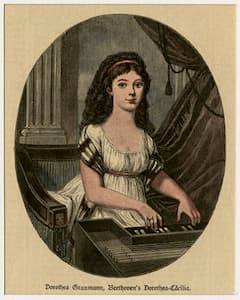
Dorothea Ertmann
She became renowned for her skill at interpreting Beethoven and even premiered his Third Cello Sonata in 1809.
In 1817, he dedicated his 28th piano sonata to her: an important work that signalled the beginning of his introspective late period.
We wrote about the baroness here: https://interlude.hk/beethovens-high-priestess-of-music-dorothea-ertmann/.
Maximiliane Brentano
Dedicatee of the Piano Sonata No. 30
Beethoven’s Piano Sonata No. 30
Maximiliane Brentano was born in 1802 in Frankfurt, the daughter of Beethoven’s close friends, Franz Brentano (a merchant) and his wife, Antonie Brentano (an art patron and collector).
Beethoven had known Maximiliane since childhood and wrote her a short piano trio, WoO 39, in 1812, when she was just ten.
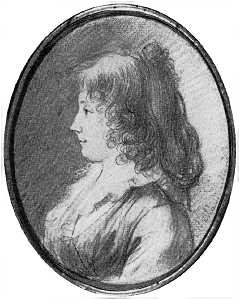
Maximiliane Brentano
Nearly a decade later, in 1821, he published the Piano Sonata No. 30 and dedicated it to her.
She married Baron Friedrich von Blittersdorff in 1824 and died in 1861.
Conclusion
Taken together, these dedications reveal something the independent-minded Beethoven could do best in his music, rather than express in effusive face-to-face conversations: gratitude.
These dedications also became incredibly long-lasting gestures of thanks. Some of these men and women, powerful in their own day, would be completely unknown to us today, except for their association with Beethoven.
In the end, the dedications to his piano sonatas – some of his most personal and intimate work – reveal who mattered to Beethoven, and when.
For more of the best in classical music, sign up for our E-Newsletter