The symphony began as a kind of warm-up act – a short instrumental piece played before a larger work, meant to settle a restless audience.
Over the next two centuries, composers turned that warm-up act into one of classical music’s most ambitious forms.
Today we’re tracing that transformation by looking at specific symphonies – and how each of the major composers inherited their predecessors’ rules, then threw them out.
Sammartini – Sinfonia No. 6 in F major (c. 1744)
The symphony originated in the sinfonia, a genre traditionally used as an orchestral introduction to a larger work, like an opera.
Italian composer Giovanni Battista Sammartini (c. 1700–1775) was one of the first composers to detach the sinfonia from the opera and perform it independently. This change laid the groundwork for the modern symphony.
Sinfonias were often in three parts: a bright, rhythmic fast section, followed by a lyrical, slower section, followed by a dance-like conclusion.
Haydn, Symphony No. 104, “London” (1795)
Austrian composer Joseph Haydn (1732–1809) inherited the form that Sammartini had pioneered.
Haydn’s first symphony dates from 1759. Its structure closely follows Sammartini’s, with three movements: a fast presto, a slower andante, and another presto.
In the 1760s, he began adding a third movement, a minuet. By the 1770s, the four-movement structure became standardised.
Another vital development that Haydn helped pioneer was writing first movements in sonata form: i.e., a form in which two themes are played, contrasted, and developed.
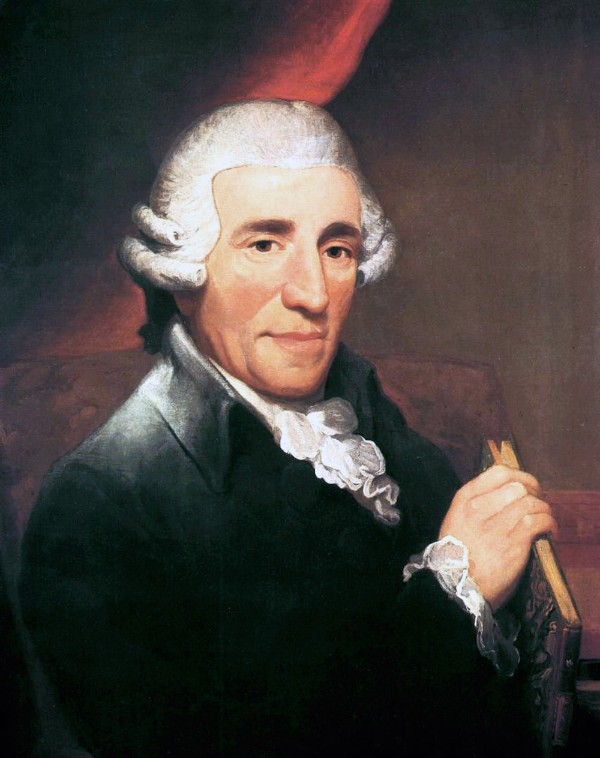
Joseph Haydn
By the time he completed his 104th symphony in 1795, Haydn had spent nearly forty years codifying the modest sinfonia into a genre that would dominate orchestral writing for over a century.
Beethoven – Symphony No. 3, “Eroica” (1802–1804)
Beethoven – Symphony No. 9 (1822–1824)
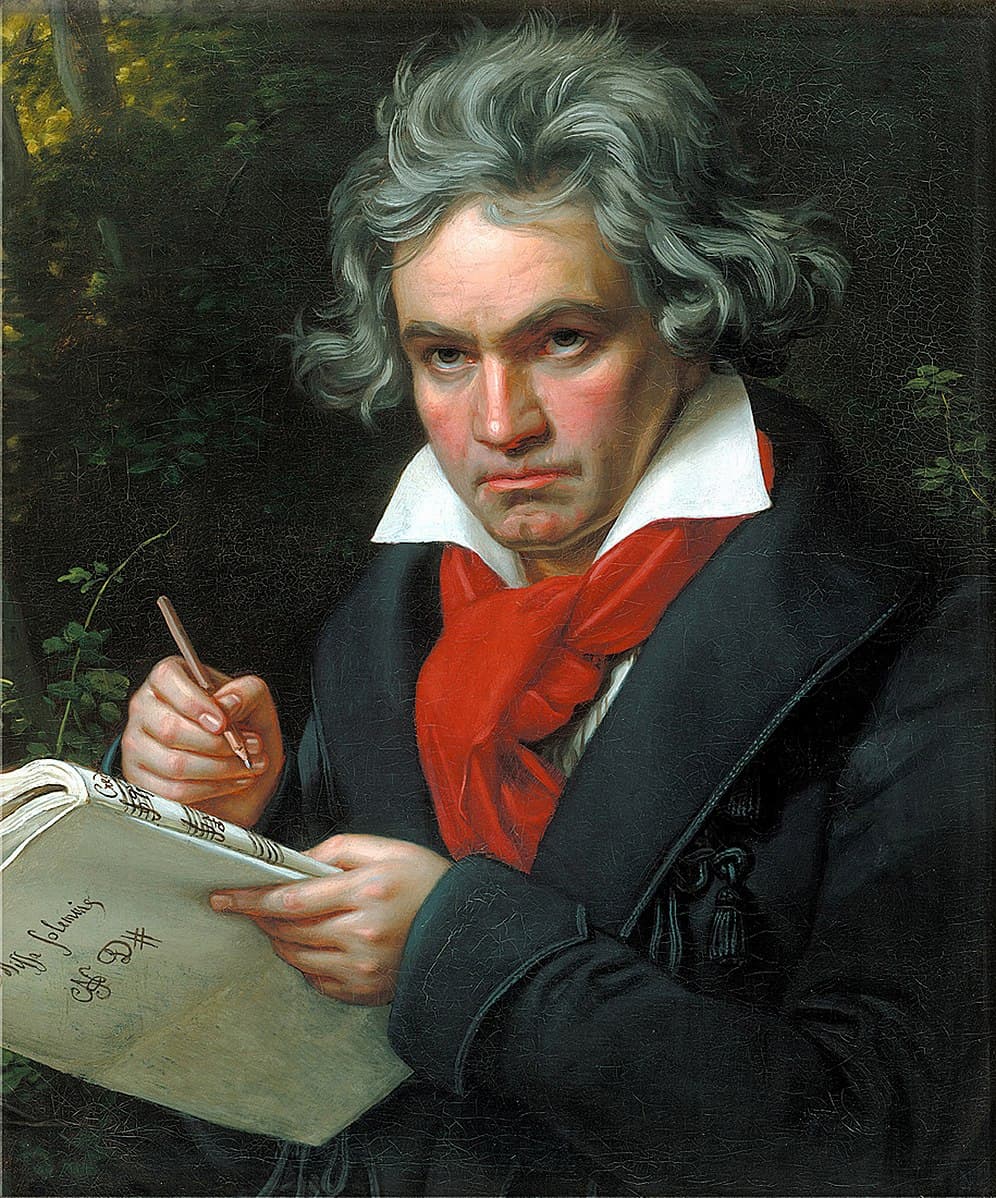
German composer Ludwig van Beethoven (1770–1827) inherited Haydn’s four-movement structure and broke it – twice.
His third symphony, nicknamed the Eroica, runs nearly twice as long as a typical Haydn symphony. The second movement is not just the customary slow movement; it is a theatrical funeral march, fit for a tragically fallen hero.
Beethoven originally dedicated it to Napoleon Bonaparte, seeing him as a champion of more egalitarian Enlightenment ideals – but when Napoleon crowned himself emperor in 1804, Beethoven reportedly scratched out the dedication in fury, tearing the title page.
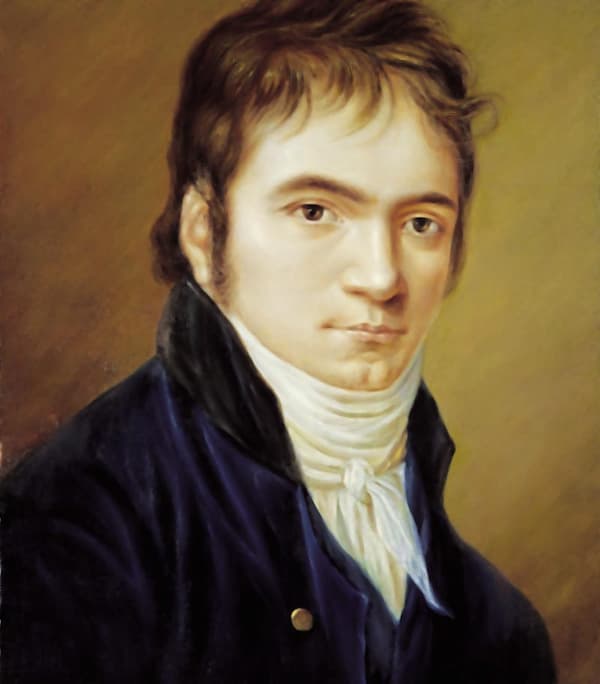
Christian Horneman: Beethoven, 1803 (Beethovenhaus Bonn)
Two decades later, Beethoven shattered the conventions again. His ninth symphony is scored for a full orchestra, four vocal soloists, and a chorus – the first time vocal soloists and a chorus had ever been used in a symphony.
He also pushed forward the idea that extramusical ideas can be expressed in the symphony; the text he set was Schiller’s “Ode to Joy,” an explicit call for universal brotherhood.
Between them, these two symphonies wrestle with the question: how far can the boundaries of a symphony be pushed before it stops being a symphony at all?
With these two works, Beethoven made that question the genre’s central preoccupation for the next century.
Berlioz – Symphonie fantastique (1830)
French composer Hector Berlioz (1803–1869) answered Beethoven’s innovations by going somewhere Beethoven never had: autobiography.
His Symphonie fantastique – subtitled “Episode in the Life of an Artist…in Five Sections” – consists of five movements tracing an artist’s opium-induced descent through obsession, heartbreak, and, finally, hallucinations of his own execution.
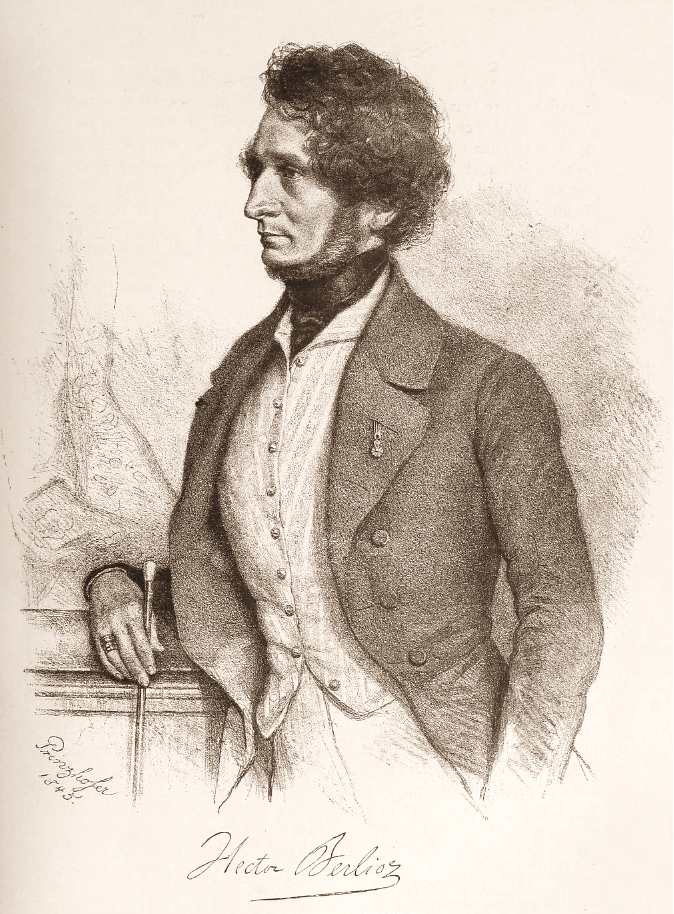
August Prinzhofer: Hector Berlioz, 1845
The unhealthy obsession Berlioz drew on here was very real. In 1827, he became infatuated with Irish actress Harriet Smithson after seeing her perform Shakespeare in Paris.
The symphony’s recurring melody, dubbed the idée fixe, represents her idolised image, returning in various guises across all five movements to show the artist’s fixation on her everywhere.
The idée fixe was a striking new way to create cohesion across a large orchestral work, and it became a tempting tool for composers who wanted to inject narrative into their symphonies.
Brahms – Symphony No. 1 (1855–1876)
Beethoven pushed the symphony into new territory of expression, and Berlioz followed him. By the mid-1800s, Berlioz, Liszt, and Wagner were going even further, pushing extramusical narratives and program music, the so-called “music of the future.”
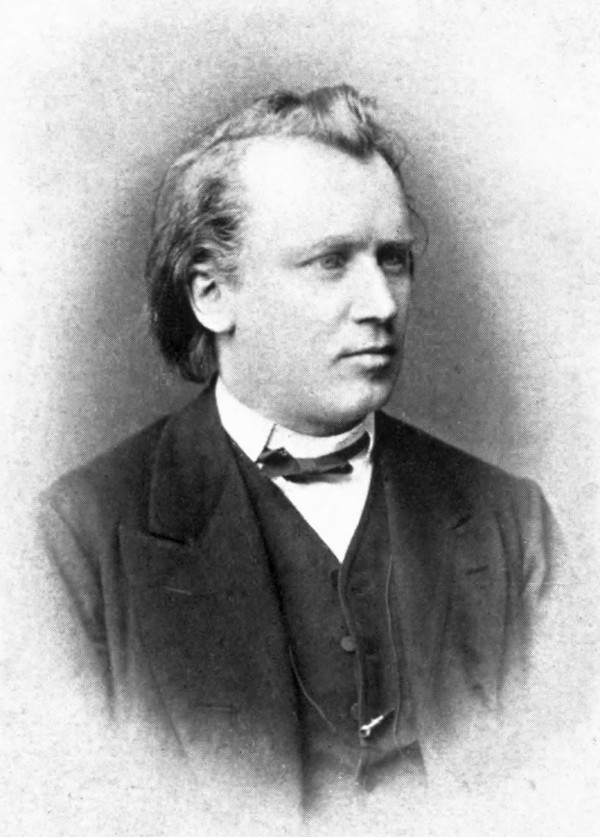
Johannes Brahms, c. 1872
Johannes Brahms (1833–1897), however, wanted to rewind the clock. He believed the symphony could still work in its older, “absolute” form, with no story attached.
Intimidated by Beethoven’s example (he compared his legacy to “the tramp of a giant”), he took his time making his case. He began composing his first symphony in the mid-1850s but didn’t finish it for two decades.
The result was worth the wait. Brahms’s majestic first symphony proved that absolute music could still make an emotional and intellectual impact, even with a traditional structure and without an extramusical narrative.
It also argued that composers don’t necessarily have to “break” what came before or forget it. Sometimes the music of the future could look back to the past.
Tchaikovsky – Symphony No. 6, “Pathétique” (1893)
In 1893, two of the most popular symphonies of all time premiered. Each one offered a potential path for future composers to pursue.
Symphonies almost always close with a fast, affirmative finale. But Tchaikovsky’s Pathétique breaks that unwritten rule: its final movement is slow and mournful, fading into silence.
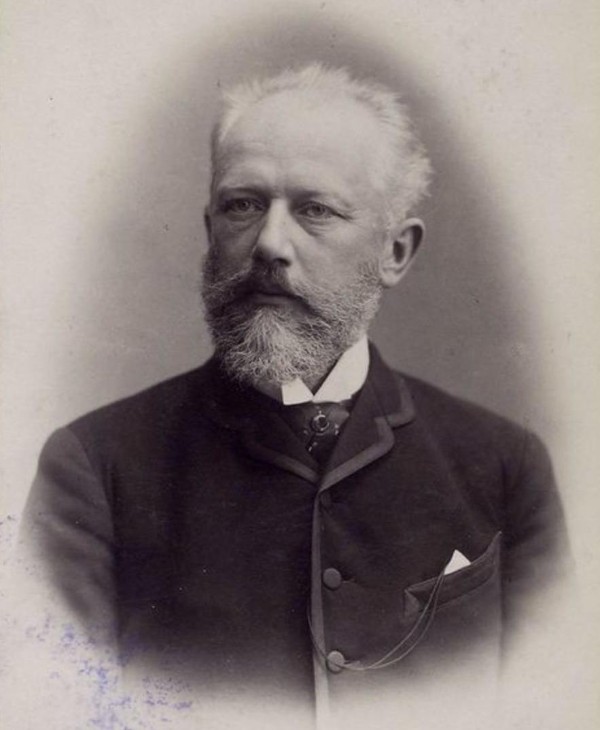
Pyotr Ilyich Tchaikovsky
In this symphony, Tchaikovsky split the difference in the ongoing 19th-century battle between program music and absolute music. He created a program, but kept it secret, and wanted audiences to come up with a story on their own.
(Intrigue about that program grew after Tchaikovsky died just nine days after conducting the symphony’s premiere, reportedly of cholera – a death that’s remained the subject of speculation and debate ever since.)
Whatever the symphony’s private meaning, its structural statement is clear: honest, emotional expression can dictate a symphony’s structure.
Dvořák – Symphony No. 9, “From the New World” (1893)
The Pathetique pointed one way a symphony could go: toward personal expression of private emotional extremes.
Another 1893 symphony that offered a path forward was Dvořák’s ninth: the communal experience of folk music.
Dvořák had spent his career inspired by the folk songs, dances, and rhythms of his native Bohemia. The Slavonic Dances and his Eighth Symphony both draw on melodic shapes and rhythmic patterns inspired by Czech folk music.
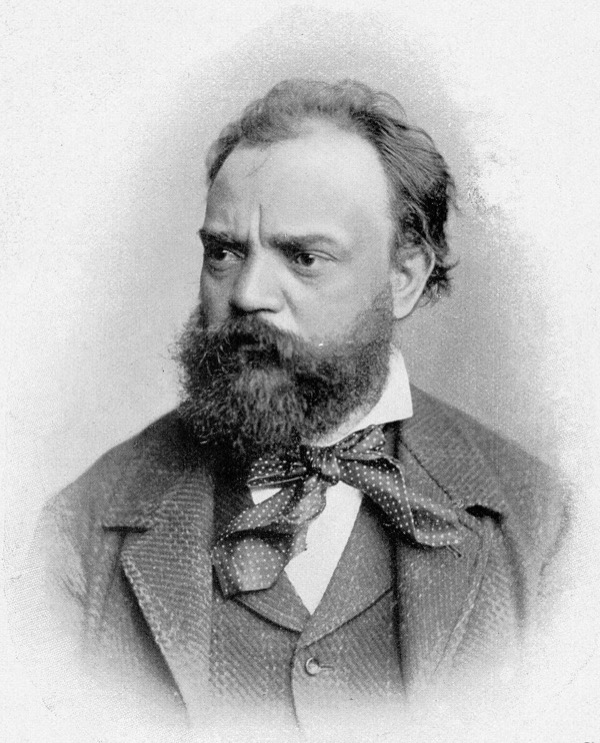
Antonín Dvořák, 1882
Between 1892 and 1895, Dvořák took a job teaching in America, and his influences expanded accordingly. The melodies of his ninth symphony evoke the pentatonic scales and rhythmic character of American spirituals and folk songs.
Tchaikovsky’s sixth looked inward for inspiration, while Dvořák’s ninth looked outward.
Mahler – Symphony No. 9 (1908–1909)
German-Austrian composer Gustav Mahler (1860–1911) stretched symphonic conventions to their breaking point.
Mahler’s ninth throws out multiple conventions. It runs roughly ninety minutes, longer than any other symphony on this list. It also opens with what would traditionally be a slow movement instead of a fast one, and its massive final movement is a slow adagio rather than a triumphant allegro.
Mahler was acutely aware of his own mortality while writing it. He’d recently been diagnosed with a fatal heart condition and had lost his young daughter the year before.
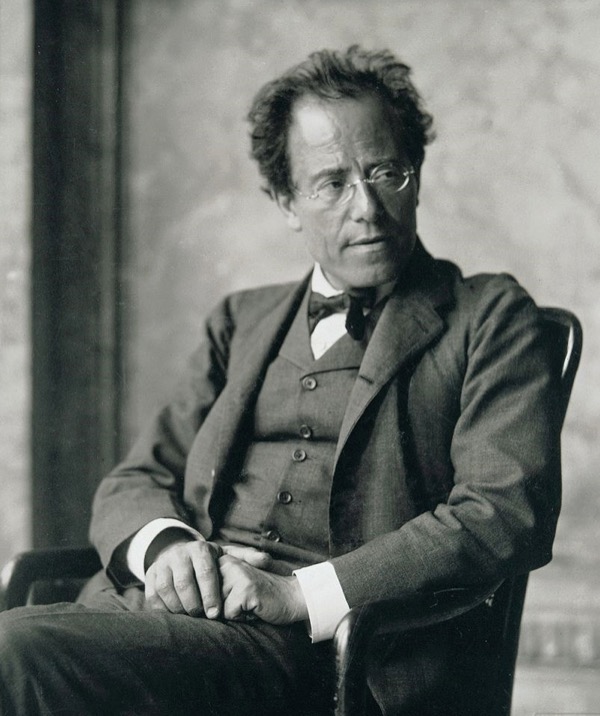
Moritz Nähr: Gustav Mahler, 1907
That biographical weight seems to show up in the music itself – quotes or gestures that mimic the beating of a heart; long passages that seem to dissolve rather than resolve; and a final page that fades to near-silence, marked in the score with an instruction usually translated as “dying away.”
Here, Mahler borrowed all kinds of innovations – including Beethoven’s scale, Berlioz’s embrace of autobiography, and Tchaikovsky’s emotional intensity – and blended them. The work would be his final completed symphony.
Sibelius – Symphony No. 7 (1914–1924)
In his seventh symphony, Jean Sibelius (1865–1957) condensed his ideas into one twenty-minute movement, dictating with precision how tempo and character should evolve gradually over time.
He originally envisioned a more conventional multi-movement work, but as he worked with his material, he came to believe it would be most effective in its ultimate condensed form.
Because of this, he even hesitated to call it a symphony, toying with the idea of designating it a “fantasia sinfonica” before giving in.
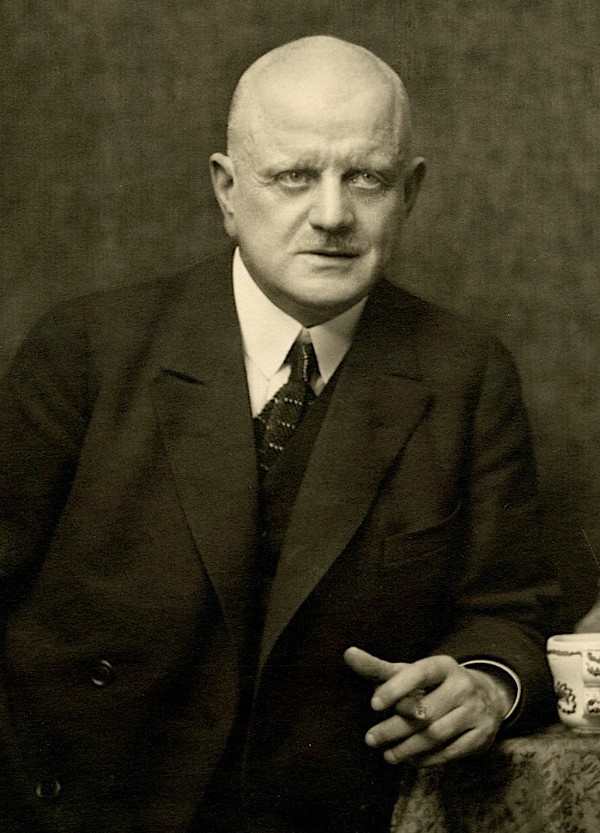
Jean Sibelius, 1923
Nearly every composer before him had contributed to the genre by adding something: length in Haydn and Beethoven’s cases, an extramusical story in Berlioz’s, intense and effusive emotional expression in Tchaikovsky’s. Sibelius did something radical by removing what made it a symphony in the first place: clearly delineated movements.
Schnittke – Symphony No. 1 (1969–1974)
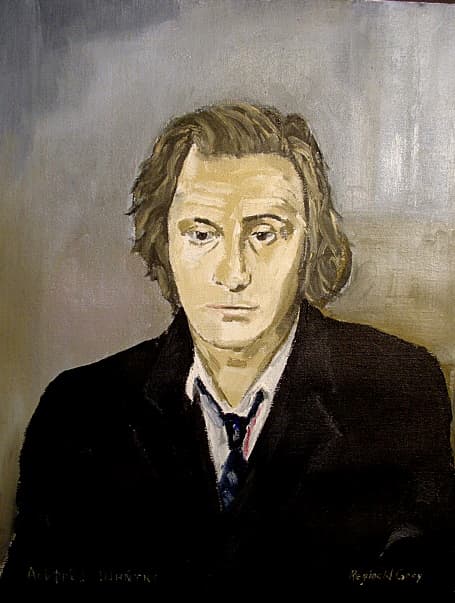
Portrait of Alfred Schnittke by Reginald Gray
Alfred Schnittke: Symphony No. 1 (Russian State Symphony Orchestra; Gennady Rozhdestvensky, cond.)
By the mid-1900s, so many symphonic innovations had already taken place, changing, stretching, and challenging the genre in multiple ways, that it was becoming increasingly difficult for composers to think of new ones while remaining faithful to the genre’s conventions.
But Soviet composer Alfred Schnittke (1934–1998) had one innovation up his sleeve. He developed a style he’d dubbed polystylism – the deliberate blending of different, dissimilar styles – and then wrote his first symphony employing it.
In this symphony, he quotes Haydn, Beethoven, and Strauss waltzes. Jazz improvisation occurs. At certain points in the score, musicians are instructed to walk on and offstage.
Any listener would be forgiven for wondering if this is still actually a symphony – if, perhaps, sometime between Haydn and Sibelius, the word had lost its meaning…or perhaps gained a new one.
Every symphony on this list up to this point defined itself by responding to what came before. Schnittke’s contribution was to enshrine that history rather than build on it.
Conclusion
By the time Schnittke walked musicians on and off the stage mid-performance, quoting Haydn and Strauss in the same breath, the question Beethoven had first posed with the Eroica – how far can a symphony be pushed before it stops being a symphony at all? – had effectively been answered. That answer was: as far as a composer’s willingness to break rules would take them.
Composers still write symphonies today. But whether the word still means what it meant to Haydn in 1795 is another debate entirely.
For more of the best in classical music, sign up for our E-Newsletter