When it comes to our musical lives, we violinists are social animals. Most of our repertoire requires collaborating with partners – whether pianists, orchestras, or quartet members.
So when a composer bucks tradition and writes for solo violin, that’s special. We’re not used to having nowhere to hide.
The works on this list represent the best of what composers have created in the genre: from Baroque counterpoint to Romantic fireworks to a modern work inspired by a cursed violin.
Bach – Sonatas & Partitas
We’re starting at the summit: Johann Sebastian Bach‘s three solo sonatas and three solo partitas, which date from around 1715.
These are the greatest works ever written for solo violin, period. Their impeccable intellectual craft and staggering technical challenges are only matched by the rawness of their emotion.
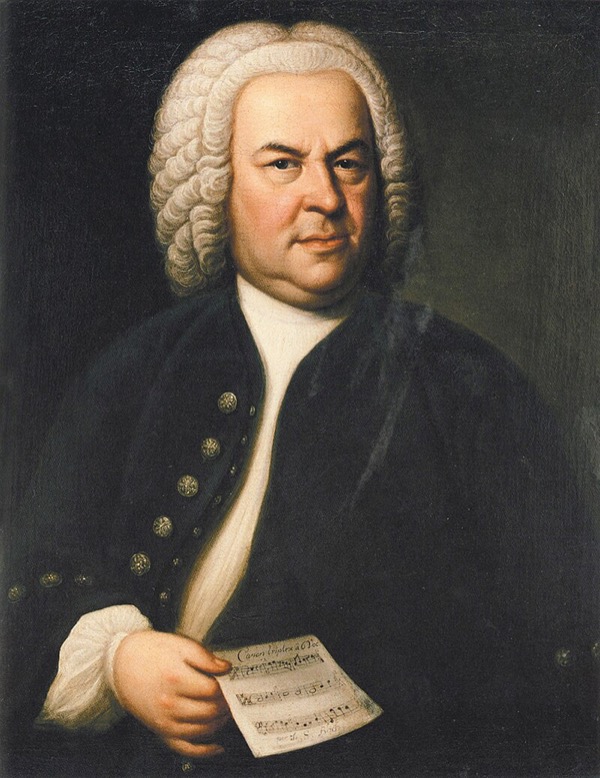
Elias Gottlob Haussmann: Johann Sebastian Bach, 1748 (Leipzig: Bach-Archiv)
Many listeners don’t understand the centrality of these works to the violin community. They are required at every major audition, and most of us play excerpts from them every day. We have grown up loving them. Now it’s your turn to fall in love!
Biber – Passacaglia
Many violinists never play repertoire written before Bach’s sonatas and partitas, which is a shame.
Czech-Austrian composer Heinrich Ignaz Franz Biber wrote this solo violin work about fifty years before Bach’s, around 1676, and you can hear the tradition from which Bach drew inspiration.
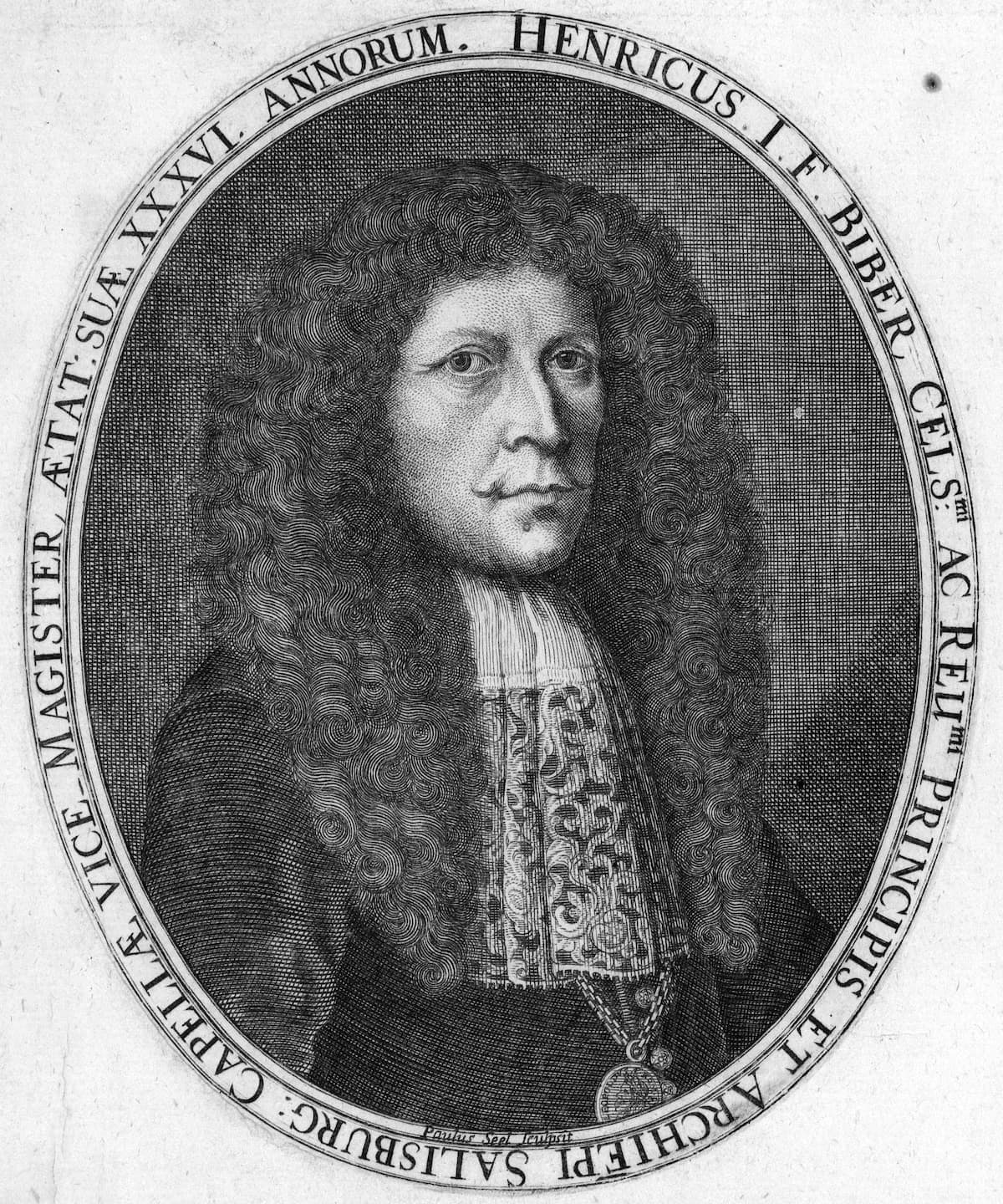
Heinrich Ignaz Franz Biber
The Passacaglia is the finale of Biber’s Rosary Sonatas, a collection of 15 sonatas for violin and continuo.
The manuscript to the Passacaglia is prefaced with an engraving of a guardian angel. That guardian angel feels apt: there’s something almost sacred and inevitable about how the work unfolds.
Locatelli – Harmonic Labyrinth
In the 1730s, Italian composer Pietro Locatelli wrote a set of twelve violin concertos called L’arte del violino.
Each concerto follows a fast-slow-fast structure, and in the fast movements, Locatelli notates what he calls a capriccio – an opportunity for the soloist to show off.
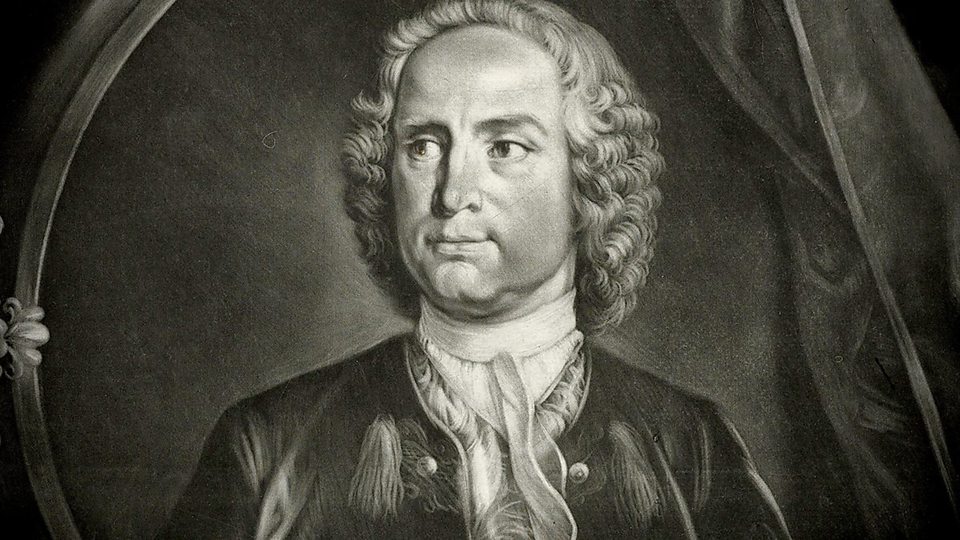
Pietro Antonio Locatelli
The final concerto of the set boasts the most virtuosic capriccio of all. It has become a showpiece in and of itself.
Locatelli inscribed beneath it: “Laberinto armonico: ‘Facilis aditus; difficilis exitus'” (“Harmonic Labyrinth: Easy to enter; difficult to escape!”).
Telemann – Fantasias
Georg Philipp Telemann was one of the most prolific composers in music history.
Around 1735, he wrote 12 fantasias for solo violin. Some are three movements; some are four.
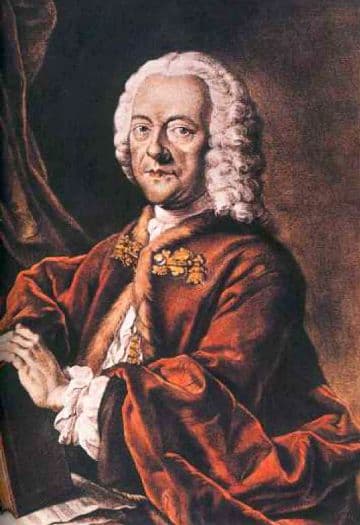
Georg Philipp Telemann
Many of these movements are vanishingly brief – less than a minute long – but somehow that adds to their charm and cheerful, improvisatory nature.
Put one on, and you’ll find yourself halfway through all twelve before you notice.
Paganini – 24 Caprices
Niccolò Paganini, an Italian violinist born in 1782, used his showmanship and seemingly supernatural virtuosity to redefine violin technique.
(He was also a major inspiration to Franz Liszt, who made analogous advances in piano technique a generation later.)
Although they were written to explore Paganini’s groundbreaking technique, they also have an operatic quality to them: a dichotomy that has drawn generations of composers to study them, making them the most famous works for solo violin ever written, alongside the Bach sonatas and partitas.
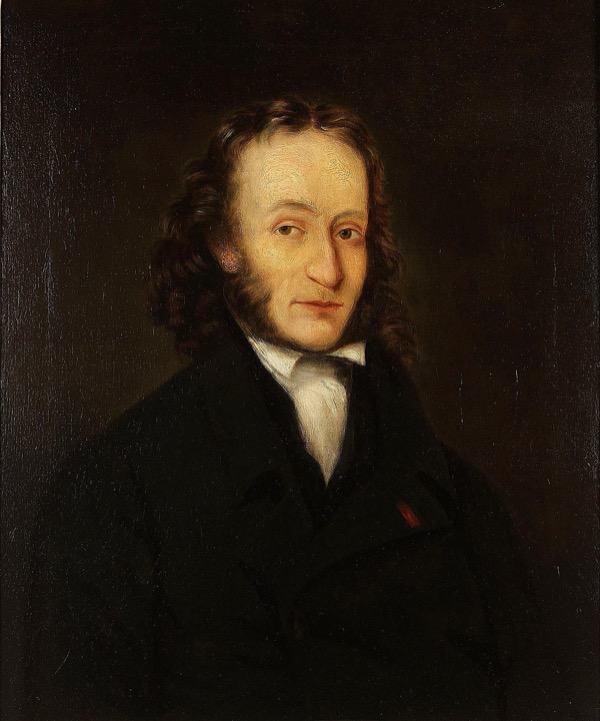
Niccolò Paganini
Due to their technical and lyrical challenges, violinists can spend their entire careers working on these pieces. None of us will feel as though we’ve ever truly mastered them.
Ernst – Der Erlkönig
When he was 18, Schubert wrote one of his most famous songs, “Der Erlkönig”, in which the singer plays four roles: a narrator, a worried father, his deathly ill son, and a sinister folkloric creature called the Erlking.
You would think it would be impossible to transcribe a song with four points of view for a solo string instrument that only has four strings, but 19th-century violinist Heinrich Wilhelm Ernst was just unhinged enough to try it.
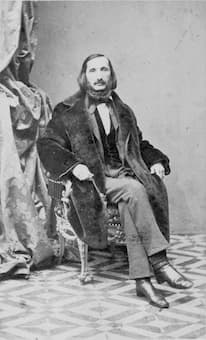
Heinrich Wilhelm Ernst
The result is among the most staggeringly difficult pieces in the violin repertoire. It will leave your jaw on the floor.
Kreisler – Recitative and Scherzo
Fritz Kreisler, born in 1875 in Vienna, was one of the most beloved violin virtuosos of his generation, renowned for the warmth and humanity of his playing and personality.
Although he spent most of his time concertizing, he also enjoyed composing. He became especially famous for his so-called Viennese “bon-bon” pieces: frothy, creamy confections that early gramophone listeners loved.
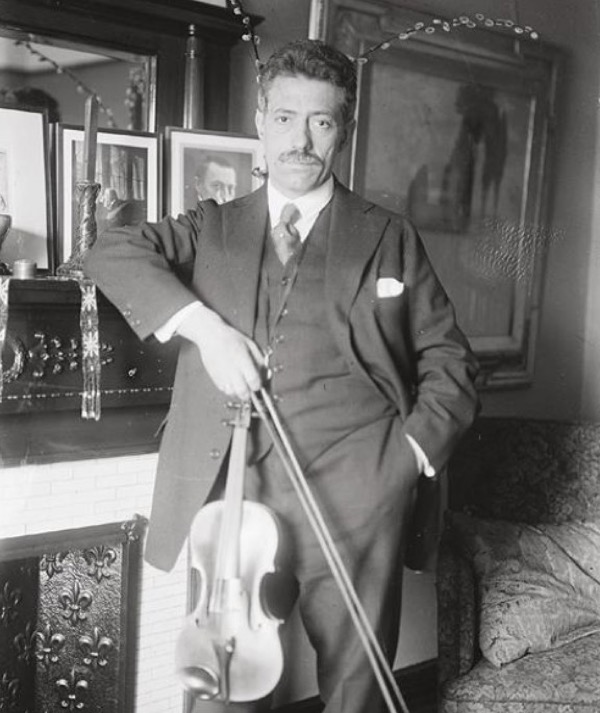
Fritz Kreisler
His 1911 Recitative and Scherzo was darker and more avant-garde than most of his works. You can hear the influence of the solo violin music of his colleague, Belgian virtuoso Eugène Ysaÿe, to whom he dedicated the piece.
It’s intriguing to imagine what Kreisler’s compositions would have turned into, had he continued down this harder-edged stylistic path.
Ysaÿe – Solo Sonatas
Ysaÿe was born in 1858 and went on to become one of the most influential musicians of his generation, with many great works dedicated to him, including the aforementioned Recitative and Scherzo, as well as works by Chausson and Franck.
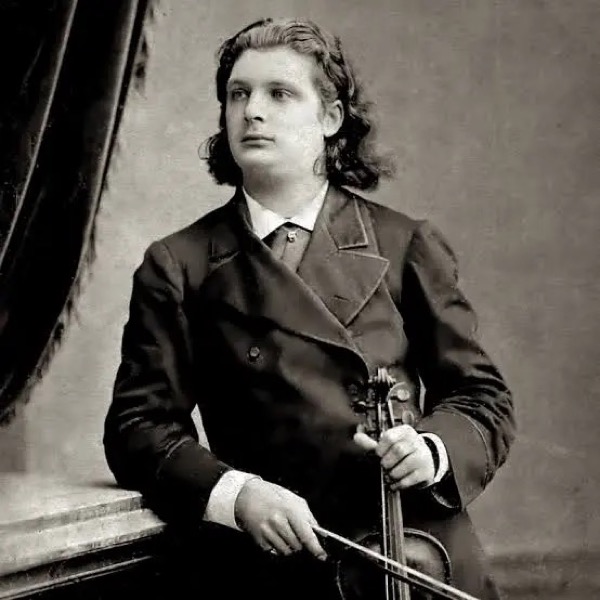
Eugène Ysaÿe
He also composed himself. After illness forced him off the concert stage, he turned to teaching and composing.
He wrote his six sonatas for solo violin in 1923. Each was dedicated to a different colleague – and the fourth to Fritz Kreisler.
Prokofiev – Sonata for Solo Violin
In 1947, after World War II, Prokofiev was commissioned by the Soviet government to write this work for pedagogical purposes.
Intriguingly, it was originally written to be played by students in unison: a practice that has been ignored, even as the sonata itself has remained in the repertoire.
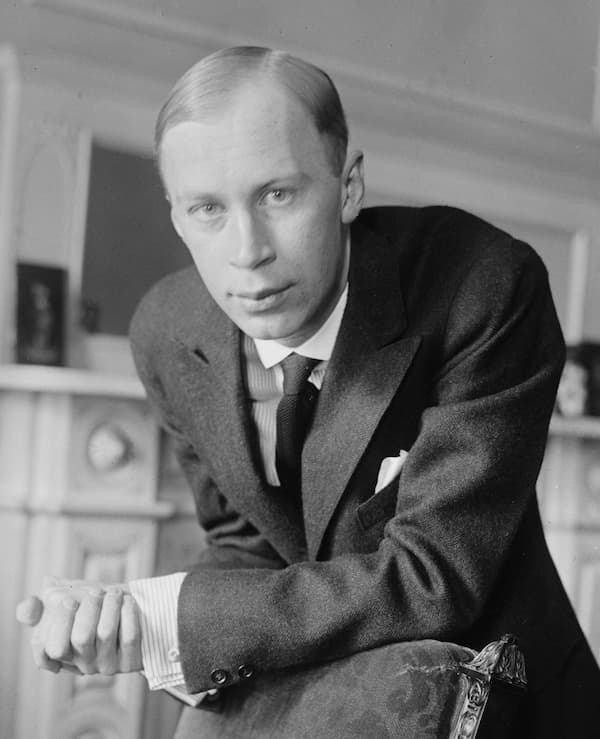
Sergei Prokofiev, ca 1918
In fact, it wasn’t performed in its solo form until 1959, years after Prokofiev’s death. For a work born of bureaucratic commission, it has a surprisingly bleak and searching quality.
Hindemith – Solo Sonata
Paul Hindemith was a violinist, violist, and hugely prolific (and fast) composer.
He was especially famous for his Gebrauchsmusik (utility music) – i.e., music written to fulfil particular occasions and instrumentations (no matter how unusual).
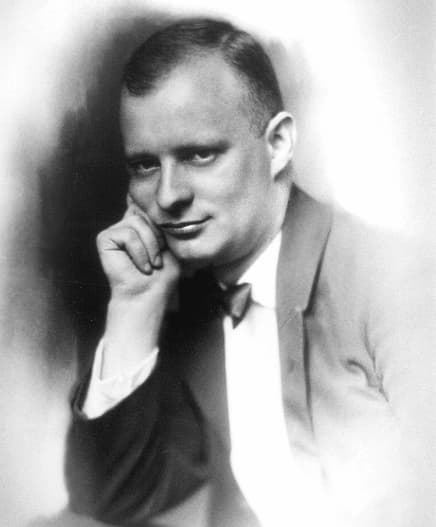
Paul Hindemith, 1923
Hindemith wrote this particular sonata in 1924 while on the train between Hannover and Frankfurt. He dedicated it to Walter Caspar, the second violinist of his influential string quartet, who loved playing works off the beaten path – especially when they were by Hindemith.
The sonata lasts for around twelve minutes and consists of four movements. Each one has its own character; the third movement is all pizzicato (plucking the strings), and the finale is a set of variations.
Bartók – Solo Sonata
After the rise of Nazism in the 1930s, composer Béla Bartók was forced to leave Europe for America, where he lived in exile.
His health had never been good, but in April of 1944, he was diagnosed with terminal leukaemia.
During his period of ill health and resulting poverty, several individuals and organisations commissioned him. The result was a series of some of the greatest works in the repertoire, including the Concerto for Orchestra and the third piano concerto.
Another highlight came via violinist Yehudi Menuhin, who commissioned this solo sonata from Bartók in November 1943.
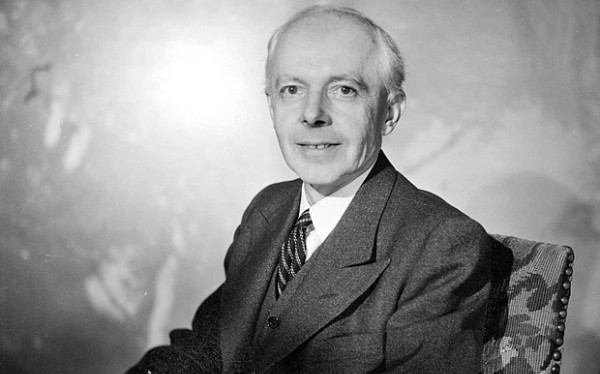
Béla Bartók
This work ended up becoming the most respected solo violin sonata of the century. Its emotional and technical demands are considerable, and it also contains allusions to Baroque solo suites. (For example, the first movement is a Chaconne, which immediately evokes Bach’s D-minor chaconne from his second partita.)
His ability to converse with the past even during the mental fog of his terminal illness is remarkable – and the music reflects it.
Corigliano – Red Violin Caprices
John Corigliano wrote the music for the 1998 film The Red Violin, which traces the history of a fictionalised cursed violin through the centuries.
In 1999, Corigliano adapted some of that memorable musical material for solo violin in his Red Violin Caprices.
Corigliano explained the inspiration behind the project:
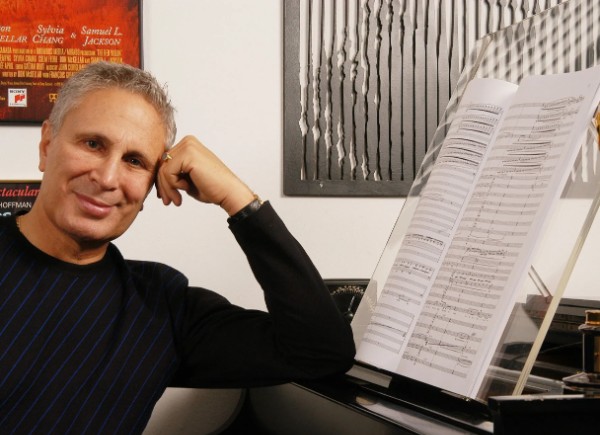
John Corigliano
“The Caprices were created and ordered to reflect the structure of the film, in which Bussotti, a fictional 18th-century violin maker, crafts his greatest violin for his soon-to-be-born son.”
It’s not often you get to hear movie music scored for violin alone, and these caprices don’t disappoint.
Conclusion
The solo violin repertoire is vast, and this list only scratches the surface.
But whether you’re a first-time listener or a lifelong violin enthusiast, these twelve works are the ideal place to start – or to return to, again and again.
From Bach’s towering sonatas and partitas to Corigliano’s cinematic caprices, one thing unites every piece on this list: the violin, completely alone, with nowhere to hide. Sometimes, somehow, that’s all one needs to experience an unforgettable performance.
For more of the best in classical music, sign up for our E-Newsletter