In 2025, the 27-year-old pianist Eric Lu won the International Fryderyk Chopin Piano Competition, a contest described by The Washington Post as “the Olympics of classical music.”
Lu had first competed in Warsaw in 2015 and returned ten years later to take the win. His performances, particularly in the second and third stages, were described as showing “pianistic refinement, great class and culture of sound, technically excellent and deeply sensitive.”
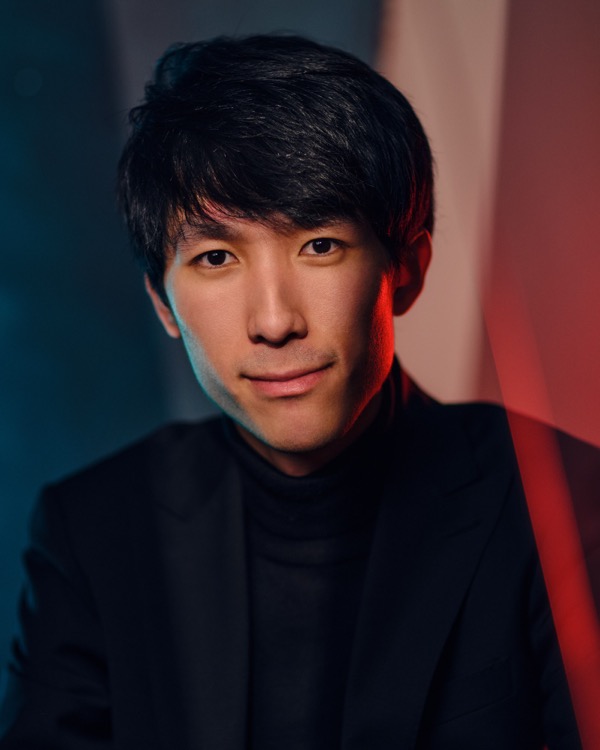
Eric Lu
Now, in August 2026, Lu is back in Warsaw, this time to perform at the 22nd International Chopin and His Europe Music Festival. He kindly shared his time for a brief interview with Interlude.
Eric Lu at the 2025 Chopin Piano Competition (Final Stage)
Back to Warsaw
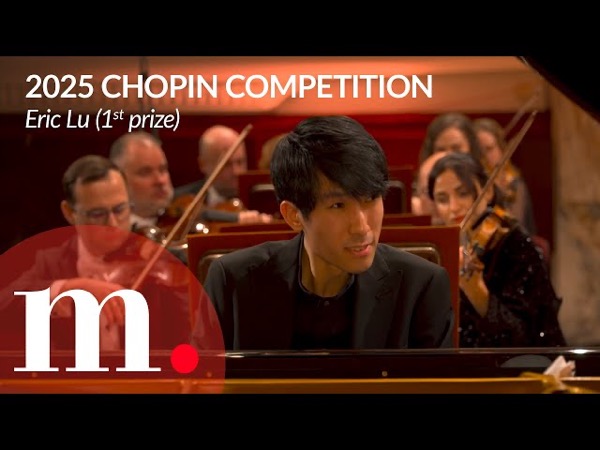
Eric Lu, 1st Prize
For Eric Lu, Warsaw is familiar territory. He first arrived as a 17-year-old competitor and became a prize-winner. Ten years on, he comes back with considerably more experience.
One thing, however, has not changed: the nerves. “Every time I play, I definitely get nervous,” Lu admits. That may be surprising to hear from a pianist who has performed Chopin on some of the world’s most important stages.
Yet it says something about the way he approaches music. Familiarity does not mean going through the motions. Even after all these years, each performance still has an element of risk.
Life Changes the Music
Asked what he understands about Chopin now that he could not have understood at 17, Lu’s answer is wonderfully simple: “life.” His tastes have changed, his musical instincts have developed, and his understanding of performance has deepened.
“Each time I play in public, it’s different, and there is no such thing as autopilot,” he says. It’s not simply about reproducing an interpretation, but rather an act of responding. “It’s very unpredictable,” Lu says, “so I try to live in the moment.”
Trusting the Inner Ear
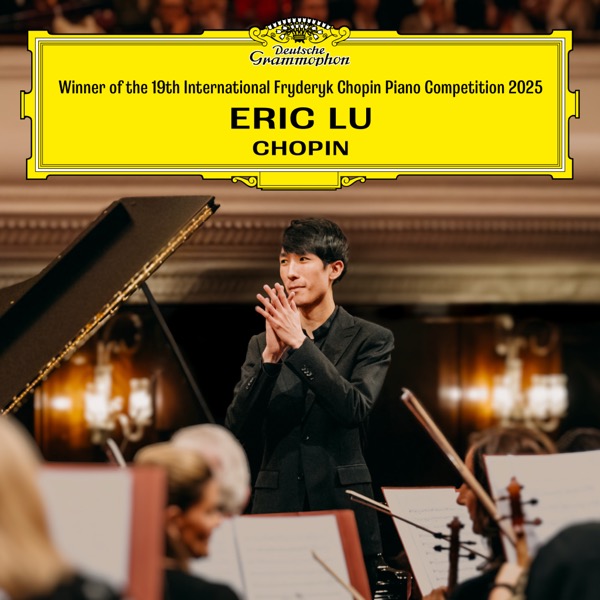
Eric Lu
That idea of listening, and of being prepared to respond, is at the heart of Lu’s approach to Chopin. The music is so familiar that both pianists and audiences can arrive with very definite expectations of how it should sound. Lu is wary of that. For him, interpretation begins somewhere more instinctive.
“First and foremost is the instinctive,” he says, as “interpretation starts with the ‘inner ear’ and innate musical feeling. Historical knowledge and score study support but cannot override instinct.”
It is an approach that perhaps goes back to his childhood. As a young piano student, the music of Chopin seemed very natural to him. He loved its beauty and was particularly attracted to slow movements. With age, however, the music has become more complicated.
“It is very difficult,” he says, “to see Chopin as anything other than a complicated human being.”
Eric Lu at the 2025 Chopin Piano Competition (Second Stage)
Chopin in a European Context
That complexity is also what makes the Chopin and His Europe Festival so interesting, as it places Chopin within a larger European context and as part of a European musical conversation. Lu hears particularly strong connections with Mozart and Bach in Chopin’s understanding of structure, counterpoint, and musical form.
And yet the similarities only go so far. “Chopin was a unique composer and unique person.” That connection between history and sound becomes particularly strong when Lu plays Chopin on period instruments.
The historical pianos in Warsaw open up a completely different sound world and “a particular tone that is very unique to the pianos of his time,” he says. There is a particular warmth and intimacy of sound that cannot be fully replicated on modern pianos. And while Lu is not advocating that we should recreate the past, he suggests that experiencing that historical sound can give us another way of listening.
Freedom to Listen
And listening is especially important in Poland, where Chopin is far more than simply a great composer. He occupies a unique place in the country’s cultural imagination. There is a deep tradition surrounding his music, but tradition sometimes comes with expectation, which can become a burden.
For Lu, “freedom of interpretation should have no boundaries.” The greatest danger in playing Chopin, he believes, is losing sight of the emotional depth and reaching for gestures designed to produce an immediate reaction.
Winning the Chopin Competition inevitably changed the way the world listens to Eric Lu. But it seems to have changed much less about the way he listens to himself. And this, perhaps, is what makes his return to Warsaw so interesting. From teenage competitor to competition winner, the essential question remains the same: what happens when you sit down at the piano and listen?
Chopin remains alive because he must be rediscovered every time he is performed.
Interlude will be on site for the 22nd International “Chopin and His Europe” Festival in 2026, and we are very much looking forward to Eric Lu’s performance of Chopin’s Piano Concerto in E minor, Op. 11, with the Orchestre Symphonique de Montréal under the direction of Rafael Payare.
For more of the best in classical music, sign up for our E-Newsletter