The final movement of a symphony is the moment when everything that has come before it is contextualised and gains new meaning. Like a TV show, the finale of a symphony can make or break the entire work.
Across two centuries, composers have used that finale to solve very different problems: how to slip out of Beethoven‘s shadow, how to rail at fate, how to survive authoritarianism, how to speak about death, or even how to celebrate universal brotherhood.
Today, we’re looking at seven of the greatest symphonic finales ever written and what makes each so memorable.
Mozart – Symphony No. 41, Movement 4
Mozart composed his final three symphonies – Nos. 39, 40, and 41 – in the summer of 1788. Their artistic ambition is breathtaking, and some scholars believe they may have been conceived as a cycle. Astonishingly, it’s unclear whether they were even performed in his lifetime.
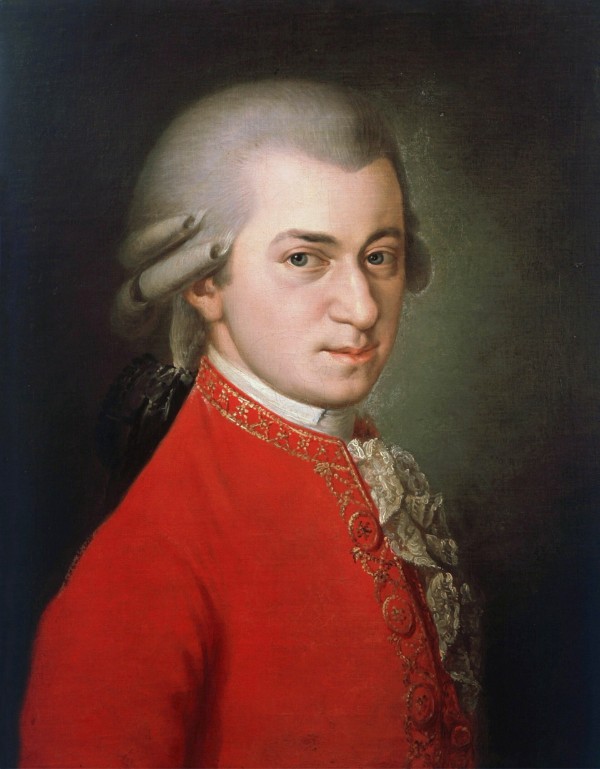
Wolfgang Amadeus Mozart
The finale of the Symphony No. 41, nicknamed Jupiter after the king of the Roman gods, is a mind-boggling tour de force of counterpoint.
In the closing pages, Mozart combines five independent themes at the same time: a feat of technical brilliance that has stunned generations of music lovers. It comes across as so effortless, you’d never guess how hard it is.
This isn’t just emotional catharsis; it’s also intellectual joy. In an era before Beethoven redefined the symphony as philosophical drama, Mozart crowned the Classical symphonic tradition with a complexity and clarity that, combined, were simply radiant.
Tchaikovsky – Symphony No. 4, Movement 4
Tchaikovsky‘s Fourth Symphony was written between 1877–78 during one of the most turbulent years of his life.
A gay man, Tchaikovsky married – then quickly escaped – a disastrous marriage in 1877. Soon after, he suffered a nervous breakdown.
During this time, he relied heavily on emotional and financial support from an enigmatic patroness named Nadezhda von Meck, with whom he communicated entirely through writing.
Their correspondence gave them space to be emotionally honest with each other. In a letter to her, Tchaikovsky described the symphony’s opening theme as portraying “Fate,” an inescapable force hovering over human happiness. In the finale, the fate motif from the first movement returns, but now bursts forth in violently blazing F major.
The finale’s exuberant orchestration and folk-inspired vitality feel defiant, even desperate. Is it a genuine triumph? Or forced exuberance?
In any case, it’s one of the most viscerally thrilling endings in the repertoire.
Brahms – Symphony No. 4, Movement 4
When Brahms premiered his Fourth Symphony in 1885, he was already regarded as Beethoven’s heir: the composer tasked with upholding a century-long symphonic tradition in an era that had been seduced by Wagner‘s revolutionary operas.
Keeping to his role, for the finale to his fourth (and final) symphony, Brahms did something notably old-fashioned.
Instead of finishing with a triumphant Romantic blaze, he wrote a passacaglia: a Baroque form that uses a repeating bass line, in this case taken from Bach‘s Cantata No. 150. He used it to create 30 variations.
It was a nod to Brahms’s career-long preoccupation with the past, and especially the past of Austro-Germanic music.
The result is one of the most severe and architecturally disciplined endings in the repertoire. Rather than offering a cathartic Romantic finale, Brahms delivered an austere, tragic, old-fashioned inevitability instead.
Sibelius – Symphony No. 2, Movement 4
Premiered in 1902, Sibelius‘s Second Symphony quickly became associated with Finnish cultural identity at a time when the country was under Russian rule and Finnish nationalism was on the rise.
Although Sibelius himself resisted an overt political interpretation to the work, audiences heard the finale’s broad D-major theme as a thrilling declaration of independence.
The movement builds organically from fragments introduced earlier in the symphony. Throughout the finale, those fragments appear in bits and pieces, are interrupted, and finally grow in confidence and scale until the majestic ending.
Unlike Tchaikovsky’s theatrical blaze, Sibelius achieves grandeur through long, noble, soaring melodic lines that make the eventual triumph feel huge and inevitable.
Mahler – Symphony No. 2, Movement 5
Mahler began his Second Symphony in 1888 with a single-movement symphonic poem that he called “Funeral Rites.” He eventually added more movements and completed it in 1894.
Its finale unfolds on a massive scale. That movement alone lasts around half an hour. Like Sibelius did in his second symphony, Mahler builds the music by using bits and pieces of the opening movements.
There are then a number of orchestral flourishes, including drumrolls and offstage horn calls.
After apocalyptic orchestral drama, a huge chorus enters almost imperceptibly, growing from a whisper to overwhelming affirmation of the ideas of resurrection and life triumphing over death.
Mahler wrote of the final moments, “The increasing tension, working up to the final climax, is so tremendous that I don’t know myself, now that it is over, how I ever came to write it.” Generations of listeners have wondered the same thing, but have returned again and again.
Shostakovich – Symphony No. 5, Movement 4
In 1936, Shostakovich was denounced in the Soviet newspaper Pravda for his opera Lady Macbeth of Mtsensk.
The opera had been a great success, but Stalin had personally found it distasteful and had left a performance before the end: a terrifying outcome for the rising composer.
The resulting criticism placed Shostakovich’s career – and possibly his life – in danger.
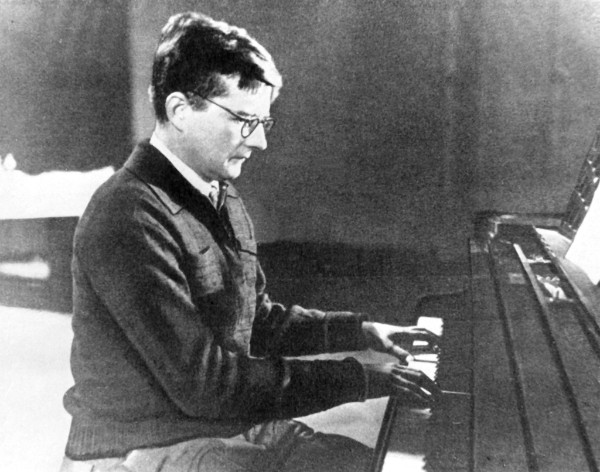
Dmitri Shostakovich
The Fifth Symphony, premiered in 1937, was presented as “a Soviet artist’s creative response to just criticism.” Its finale appears triumphant, ending in blazing D major.
But many listeners hear something unsettling in its relentless, hammering rhythms. Is it meant to be genuinely celebratory, or joy demanded at gunpoint?
Over the years, conductors have argued over whether to take the finale quickly to make it feel genuinely triumphant or more slowly to emphasise its sinister qualities.
Everyone has their own take on this work, and that emotional ambiguity has made its finale one of the most debated – and iconic – of the 20th century.
Beethoven – Symphony No. 9, Movement 4
Up until this point, we’ve gone chronologically, but we saved the most famous final movement for last.
Premiered in 1824, when Beethoven was almost completely deaf, the Ninth Symphony set the standard for every symphonic finale that would come after it.
By introducing vocal soloists and chorus into a symphony, Beethoven redefined not only what a finale could be, but what a symphony itself could be.
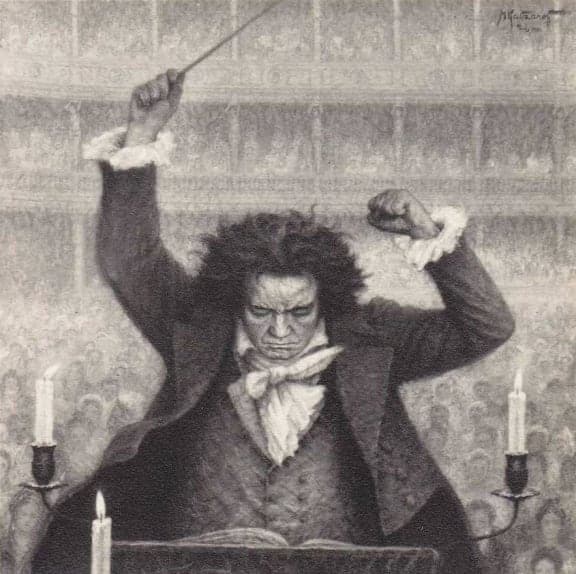
Beethoven conducting
The “Ode to Joy” theme, setting Friedrich Schiller’s poem celebrating universal brotherhood, has since become a global cultural touchstone, performed at historic political events and even adopted as the anthem of the European Union.
But beyond its symbolism, the finale remains dramatically radical. It rejects earlier themes, searches for a melody worthy of resolution, and ultimately explodes into an expression of communal affirmation.
Nearly two centuries later, it still feels like the moment the symphony broke open and changed history. Chances are it will forever remain the most celebrated symphonic finale of all time.
Conclusion
These finales prove that there is no single formula for a great symphonic ending.
A work can close successfully with Baroque severity, Romantic defiance, national affirmation, contrapuntal brilliance, political ambiguity, spiritual resurrection, or a proclamation of human unity.
What unites these great final movements isn’t their style, but their purpose and narrative function.
The greatest finales don’t simply end a symphony; they redefine everything we’ve just heard and determine how the entire work will be remembered.
For more of the best in classical music, sign up for our E-Newsletter