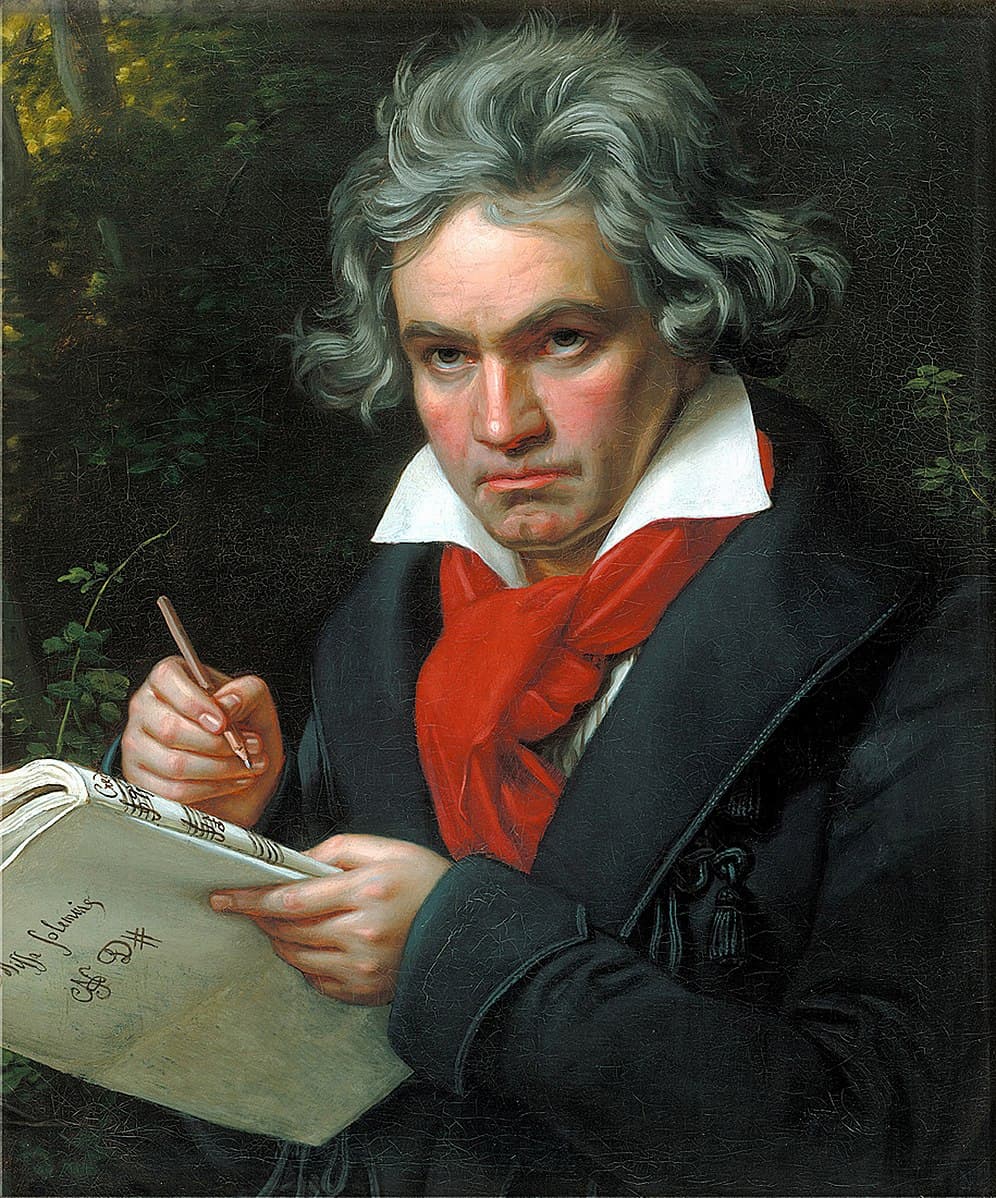
Born in 1833 into the long shadow of Beethoven, then regularly caught in the ideological crossfire between musical conservatives and progressives, Johannes Brahms spent his career proving that tradition had a major role to play in shaping the future of instrumental music.
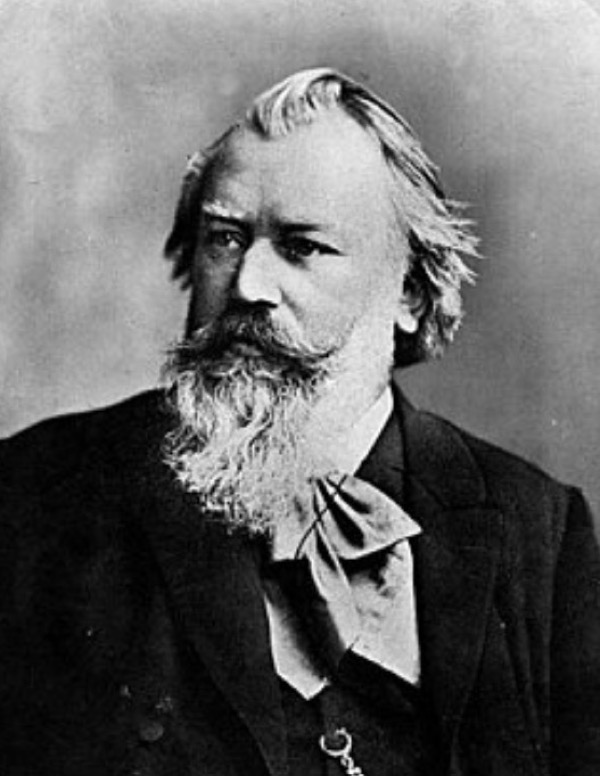
Johannes Brahms
The following hour of music traces that journey across his career. It includes orchestral masterworks, fiery chamber music, and even a nostalgic piano miniature.
Together, these five pieces totalling sixty minutes show why Brahms was the man to carry Beethoven’s legacy into the instrumental music of the Romantic Era – and why he’s often named in the same breath as Beethoven today.
Symphony No. 1 – Movement 1 (16 minutes)
Brahms began sketching his first symphony in the 1850s, but, remarkably, it wasn’t premiered until 1876.
For more than twenty years, he wrestled with the question that haunted every composer after Beethoven’s death: how do you write a symphony that could say something new after Beethoven’s Ninth?
The opening movement of his first symphony is Brahms’s attempt to answer that question: to acknowledge Beethoven’s greatness and influence, while simultaneously charting his own path.
The work opens with a pounding timpani pulse that underpins tense, chromatic lines straining upward with no release.
What follows is a tightly constructed symphonic argument, both intellectually rigorous and emotionally expansive the whole way through.
Critics immediately dubbed the work “Beethoven’s Tenth.” The resemblance to Beethoven’s symphonies is obvious, with its gruff intensity, grand emotional arc, and intellectual rigour.
But there is also a distinctly Brahmsian character here, with the symphony’s themes interwoven and transformed in an instantly recognisable way.
Piano Quintet in F minor, Op. 34 – Movement 3 (7 minutes)
The Piano Quintet has one of the most complicated gestations in Brahms’s catalogue.
It began life as a string quintet, then was rewritten as a sonata for two pianos. It only emerged in its final form for piano and strings in 1864.
The third movement scherzo distills Brahms’s love for rhythmic ferocity into seven concentrated minutes. It is martial and triumphant by turns: two moods that Beethoven often embraced.
Driven by hammering piano chords and jagged string figures, the movement is taut and relentless, and one of his most immediately gripping pieces of chamber music.
Piano Concerto No. 2 in B-flat major – Movement 3 (14 min)
By the time Brahms completed his second piano concerto in 1881, he was in his late forties and a well-established composer at the peak of his creative powers.
Unlike his stormy, sprawling first concerto, written in his twenties, this work radiates both breadth and ease.
Its third movement, Andante, begins with one of the most beautiful cello solos in the repertoire: a noble, arching melody that almost sounds vocal.
The solo piano seems to converse with the other musicians onstage. It’s a remarkable display of intimacy inside a monumental concerto.
Meanwhile, the orchestration is luminous and the lyricism expansive, without ever feeling indulgent.
Intermezzo in A major, Op. 118 No. 2 (6 min)
In his final years, Brahms wrote a number of small piano pieces.
He wrote them with his lifelong friend Clara Schumann in mind. By the 1890s, she was at the end of her life and struggling with playing the piano due to arthritis. These small-scale pieces were Brahms’s offering to and celebration of her.
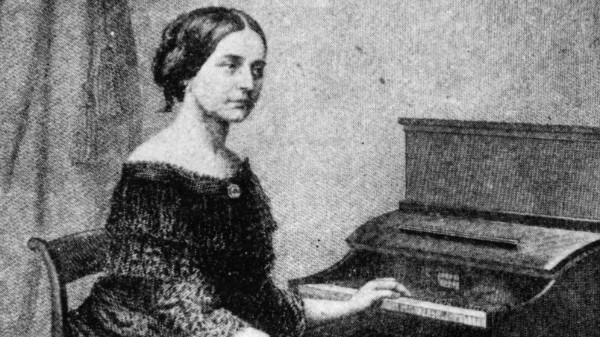
Clara Schumann
The A-major Intermezzo is especially lovely. It unfolds in gentle waves of broken chords. Beneath the calm and warmth of its surface lies a deeply bittersweet nostalgia.
With the emotional tenderness of this intermezzo, Brahms proved that he could do in six minutes what took other composers six hours.
Variations on a Theme by Haydn (18 minutes)
Composed a few years before the first symphony as a way to test his own mastery of orchestration, the Haydn Variations demonstrate Brahms’s obsession with the past – as well as his reverence for it.
Brahms’s orchestration of a noble Classical era theme long believed to be by Joseph Haydn is followed by eight variations and a majestic finale.
Each variation explores a different colour and character, while simultaneously maintaining the work’s structural coherence.
The culminating passacaglia-like finale blossoms into a radiant conclusion.
It is an homage to the past – and a reinvention for the future.
Conclusion
If you’re wondering where to start with Johannes Brahms, this curated sixty-minute program offers one of the most compelling entry points into his music.
Taken together, these works reveal why Brahms remains one of the most important composers of the Romantic era.
Brahms proved that composers who admired Beethoven could continue writing in the forms he’d mastered, and even make those forms relevant to new generations.
For more of the best in classical music, sign up for our E-Newsletter