Few composers in classical music history are as shrouded in mythology as Franz Liszt.
He is the ultimate nineteenth-century showman: a dazzling virtuoso whose thunderous piano works are often dismissed as all flash and ego.
His fame, scandalous love life, and the phenomenon of “Lisztomania” have reinforced the caricature.
But the myths are far from the truth.
Today, we’re examining some of the most persistent myths about Franz Liszt and exploring what the historical record actually reveals about his life, career, and music.
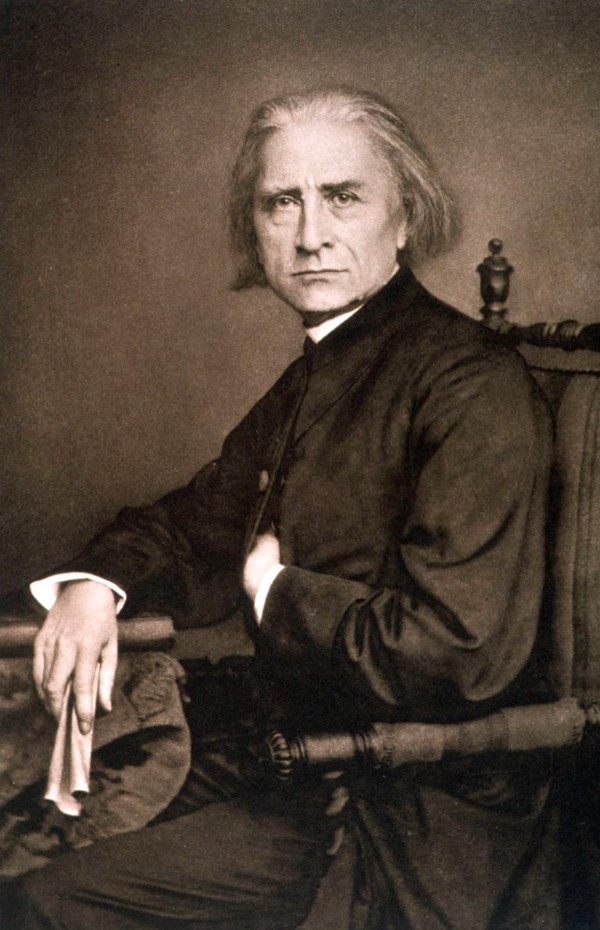
Franz Liszt
Myth: Liszt’s music is all empty virtuosity meant solely to glorify himself.
Liszt’s Piano Sonata in B minor
Liszt’s vast catalogue includes countless innovative compositions that profoundly influenced other composers, such as his Piano Sonata in B minor.
He pioneered the single-movement symphonic poem form, and his bold harmonic experiments paved the way for Wagner, Debussy, and others.
Then, in the early 1840s, when he was just 35 years old and at the height of his fame, he made the surprising decision to quit the lucrative recital circuit.
From that point forward, he devoted himself to teaching, conducting, and composing instead of playing for applause. And when he did make money, he often donated the proceeds to charity, funding monuments, supporting other composers, and providing aid for disaster victims.
Again and again, he demonstrated how concerned he was with causes beyond his own career.
Myth: Liszt was a revolutionary and, therefore, was uninterested in musical tradition.
An excerpt from Liszt’s transcription of Beethoven’s fifth
On the contrary, Liszt was deeply engaged with the musical legacy of the past.
He revered the great masters – famously declaring that “the name Beethoven is holy in art” at the top of his piano transcription of the fifth symphony – and worked tirelessly to honour and propagate their music.
He also ensured Beethoven’s symphonies reached wider audiences by transcribing all nine for solo piano: a mind-bogglingly challenging intellectual and artistic effort aimed at faithfully conveying the originals’ spirit, in an era that relied on quality transcriptions in lieu of recordings.
At the same time, he was performing Beethoven’s works himself. For instance, he popularised the then-neglected Hammerklavier Sonata in 1836.
And Beethoven wasn’t the only giant he championed. Liszt also gave concerts featuring works by Bach, Schubert, and other predecessors he admired.
When composing, he incorporated traditional forms into his own works, even as he transformed those forms in novel ways.
In the end, far from rejecting tradition, Liszt immersed himself in it and built upon it as both a composer and performer.
Myth: Liszt was a musical diva who always wanted to be the center of attention.
Liszt’s transcription of Elsa’s Bridal Procession from Wagner’s Lohengrin
This myth collapses upon examination of the historical record. Liszt was extraordinarily generous in showcasing and supporting the music of his living colleagues.
While serving as Court Kapellmeister in Weimar, he took advantage of the bully pulpit the position offered him, presenting the world premieres of operas like Wagner’s Lohengrin and Berlioz‘s Benvenuto Cellini.
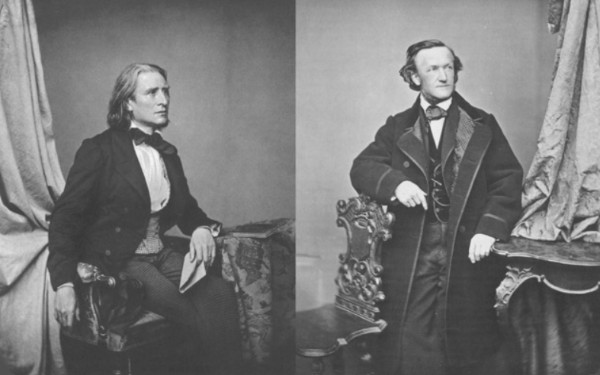
Richard Wagner and Franz Liszt, 1860
He also personally aided fellow musicians. For example, in 1849, Liszt supported Richard Wagner after the latter’s revolutionary rabble-rousing in Dresden led to legal trouble. He even helped Wagner obtain a false passport and escape to freedom, and staged Wagner’s operas and introduced them to the public.
Many composers – from Wagner to Berlioz to Grieg to Smetana and more – benefited from Liszt’s advocacy, mentorship, or friendship.
And those are just the composers! Liszt also taught piano to hundreds of students (in the process, pioneering the masterclass format of instruction), nurturing the next generation of artists.
These choices don’t mesh with the public image of Liszt as a self-centred piano prima donna.
Myth: Liszt just chased after women and was incapable of real emotional commitment in his romantic relationships.
Liszt’s Années de pèlerinage
Liszt’s checkered romantic reputation in his youth (the “Lisztomania” era) has given rise to this myth, but his biography proves that he could – and did – form serious, lasting attachments with his romantic partners.
In 1833, Liszt began a relationship with Countess Marie d’Agoult that lasted about five years.
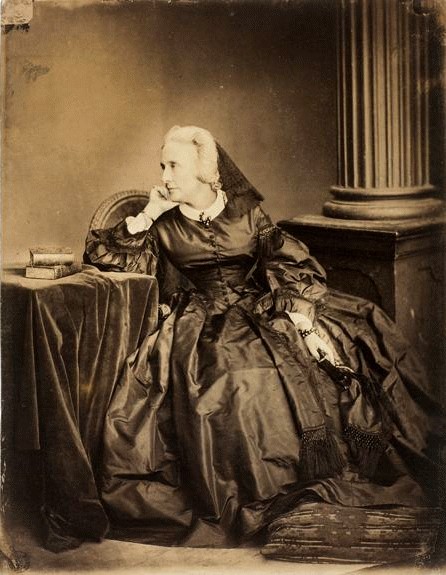
Marie d’Agoult in 1861
They lived together from 1835 to 1839 and had three children together (including Cosima, who would go on to marry Richard Wagner). The couple’s time together inspired some of his finest compositions, including Années de pèlerinage.
After that relationship ended, Liszt fell in love with Princess Carolyne zu Sayn-Wittgenstein in the late 1840s.
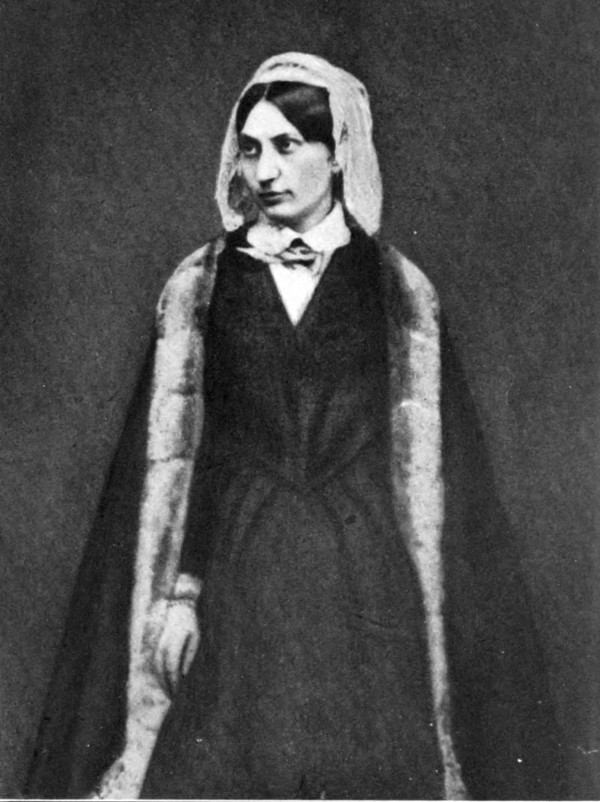
Princess Carolyne zu Sayn-Wittgenstein
His relationship with the princess wasn’t just a fling; it prompted major changes in his life. At the peak of his fame, Liszt retired from the recital circuit in order to settle in Weimar with Carolyne. The two remained devoted partners for over a decade.
They planned to marry after the Princess garnered an annulment from her estranged husband, and the wedding was scheduled for Liszt’s 50th birthday in 1861.
Unfortunately, the annulment never came through, and the wedding was cancelled – but not because of any lack of commitment between the two.
These long, serious relationships with these intelligent, intellectually engaged women make it clear that Liszt was fully capable of deep emotional commitment. Both of his great loves had profound impacts on his life and work.
Myth: Liszt’s compositions were driven by his emotions, not his intellect.
Liszt’s Nuages Gris
It’s true that Liszt was a passionately expressive Romantic, but his compositions were also full of intellect and innovation.
For example, he was one of the composers who developed the idea of thematic transformation – a method of morphing a theme throughout a work to confer unity. He employed this technique to great effect in works like his symphonic poems and the Piano Sonata in B minor.
He also stretched the boundaries of acceptable music theory. Many of Liszt’s later compositions experiment with advanced harmony; some are even cited as precursors to atonality, foreshadowing 20th-century musical developments that would occur decades after his death.
Biographer Alan Walker observes that Liszt’s “audacious handling of form” and daring harmonic experiments mark him as “one of the truly revolutionary spirits in music.”
In short, Liszt fused deep intellectual exploration with emotional expression– and his work was as much the product of deep thought as it was deep feeling.
Conclusion
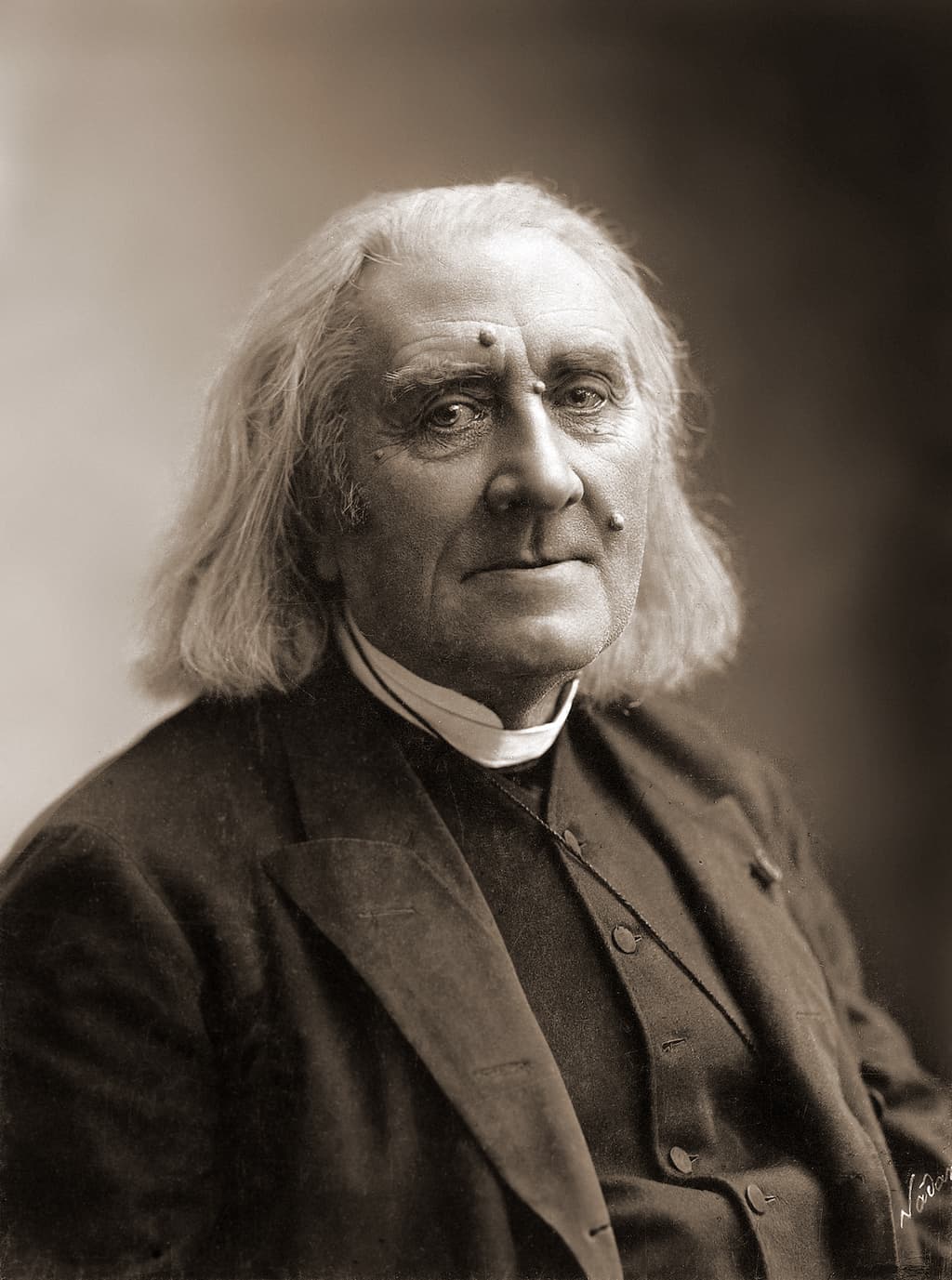
Franz Liszt in 1886
Yes, Franz Liszt was a dazzling virtuoso, a charismatic public figure, and a Romantic artist unafraid of emotional intensity.
But he was also a composer of profound imagination, a lifelong admirer of musical tradition, a generous champion of other composers, and a thinker whose innovations permanently changed the course of music history.
From abandoning the concert stage at the height of his fame, to pioneering new genres like the symphonic poem, to mentoring hundreds of students and advocating tirelessly for figures such as Wagner, Berlioz, and Schubert, Liszt consistently placed music itself above personal glory.
Looking at all this, it is clear that Franz Liszt wasn’t a shallow showman: he was one of the most complex and generous musical minds of the entire Romantic era.
For more of the best in classical music, sign up for our E-Newsletter