Throughout music history, there have been many incredible children who have demonstrated an astonishing, unnervingly early mastery of their art.
Some went on to become the greatest musicians of their age. Others have vanished from our collective memories.
One thing they all have in common is that the stories of their childhoods are all fascinating.
Today, we’re looking at their backgrounds, their education, and the jaw-dropping accomplishments of some of the greatest child prodigies of all time. (More from The Greatest Child Prodigies of All Time, Part 1).
Lili Boulanger
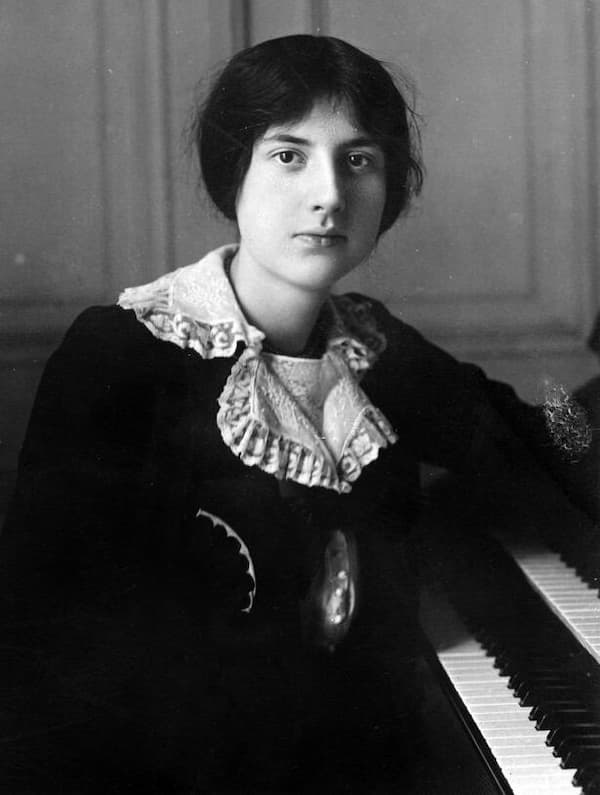
Lili Boulanger
Lili Boulanger was born into a musical family in Paris in 1893.
Her father was a seventy-seven year old Paris Conservatoire professor who had won the prestigious Prix de Rome in composition in 1835. Her mother had also studied music; in fact, that’s how she met her husband. The couple had two daughters, Nadia and Lili.
Lili’s talent became obvious at an early age. When she was just two years old, she began singing melodies that she heard. When she was four, she began following her older sister Nadia to her classes at the Paris Conservatoire.
Soon, Lili was studying piano, violin, cello, harp, and organ, as well as music theory.
Unfortunately, Lili’s health was always poor, and she occasionally had to step back from her formal studies during her childhood. During these times, she continued working with Nadia.
In 1912, she attempted to become the first woman to win the Prix de Rome. To her frustration, illness derailed the attempt. But she returned the following year and won for her cantata Faust et Hélène. She was just nineteen years old.
Tragically, her health continued to decline into her twenties. She died in the spring of 1918, leaving a relatively small output but a hugely impactful legacy behind.
Pepito Arriola
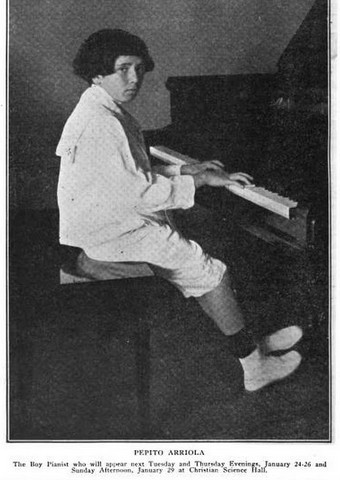
Pepito Arriola
Pepito Arriola was born to a single mother in Ferrol, Spain, in 1895.
One day, when Pepito was two and a half years old, his mother played a piece for him on the household piano. Later, she heard the same piece coming from the piano room. Confused, she turned the corner and was shocked to find her untrained toddler son playing the piece from memory.
Arriola gave his first public performance ten days before his third birthday. Later that month, he performed in front of Spanish royalty, playing his own compositions.
When he was three, still unable to read or write language or music, he created his own notation system. He would take blank sheets of paper and draw a symbol at the top indicating the piece’s genre.
Arriola began touring internationally when he was just a boy.
Habanera by Pepito Arriola
Erich Wolfgang Korngold
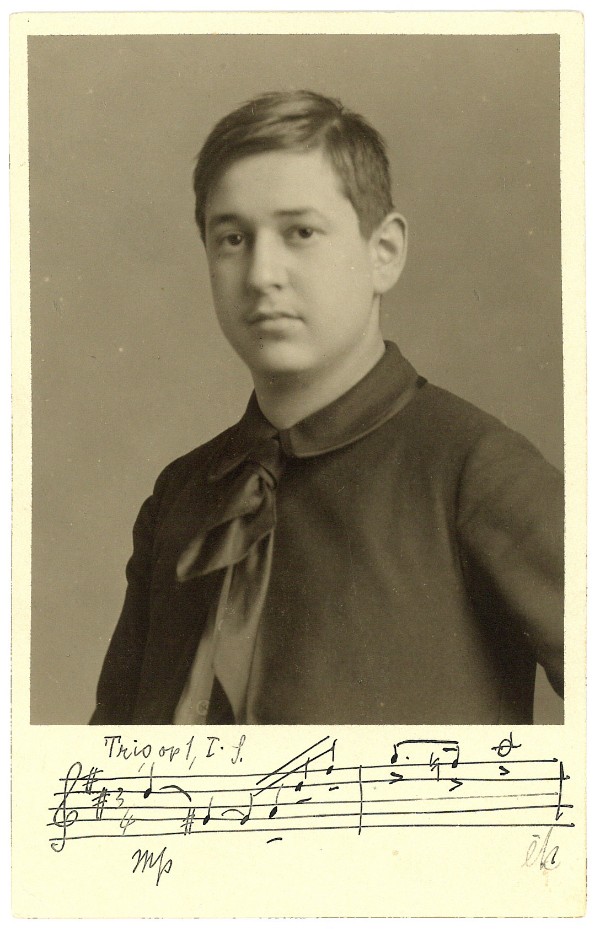
Erich Wolfgang Korngold
Erich Wolfgang Korngold was born in Brünn, now known as Brno in the Czech Republic, in the spring of 1897.
His mother was an amateur singer, and his father, Julius, was a music critic. The musical couple named their son after Wolfgang Amadeus Mozart. The middle name turned out to be prophetic.
Erich began showing musical talent from an early age. By the time he was five, he and Julius were playing four-hand piano duets together. He also began playing melodies he heard on the piano by ear. He was composing his first works by seven.
In 1909, Erich wrote a cantata that he dubbed Gold. Gustav Mahler, after looking it over, dubbed Erich a “musical genius.” He recommended private composition lessons because he’d already absorbed what would traditionally be taught at a conservatory.
In 1910, his ballet Der Schneemann (The Snowman), written a couple of years earlier for piano, was orchestrated by Alexander von Zemlinsky and produced by the Vienna Court Opera, after Julius had sent the score to all manner of musical celebrities. It became a sensation. Erich was only thirteen years old!
Erich Wolfgang Korngold: “Der Schneemann”
The precocious triumphs continued. The first work he orchestrated by himself was his Schauspiel-Ouvertüre, which appeared when he was fourteen.
In the early 1910s, star pianist Arthur Schnabel went on tour with Erich’s recently completed second piano sonata.
Erich Wolfgang Korngold: Piano Sonata No. 2 Op. 2 (1910)
When he was seventeen, he came out with not one, but two operas.
After the rise of the Nazis, Erich would flee Austria and seek refuge in America, where he helped to establish the nascent musical sound of Hollywood. It wasn’t the kind of career path his ambitious father had envisioned, but it certainly made him one of the most culturally significant composers of the twentieth century.
We wrote about Erich Korngold’s childhood.
Jascha Heifetz
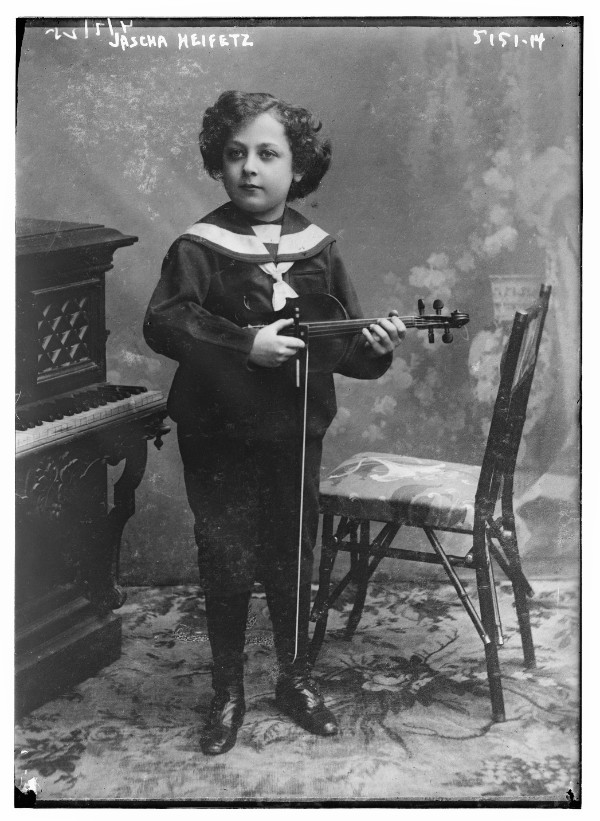
Jascha Heifetz as a child
Jascha Heifetz was born in early 1901 in Vilnius, in present-day Lithuania, between Poland and Latvia.
His father, Reuven, was a violin teacher and an orchestral musician. When his son was a baby, Reuven ran tests to see if Jascha was at all musical. The results were promising, and before his second birthday, Reuven was teaching Jascha how to play the violin.
Jascha enrolled at the music school and made his orchestral debut at seven, playing the Mendelssohn concerto.
In 1910, he moved to St. Petersburg to study at the Conservatory. He would later join the storied studio of Leopold Auer and become his most famous student.
He began performing internationally when he was still a little boy. After one private performance, violinist Fritz Kreisler famously remarked, “We may as well break our fiddles across our knees.”
In 1911, when he was just ten, he played an outdoor concert in St. Petersburg to over 25,000 people. The public reaction was so frenzied that police had to shield Jascha from the crowd.
He made his Berlin Philharmonic debut in 1914. Even though he was just thirteen, he impressed conductor Arthur Nikisch as the greatest violinist he’d ever heard.
Early recordings by Jascha Heifetz from 1917
When the Russian Revolution broke out, the Heifetz family traveled across the Pacific Ocean to San Francisco.
Jascha made his American debut in October 1917 at New York City’s Carnegie Hall. It became one of the most legendary concerts in that venue’s storied history. He was just sixteen years old.
He would go on to become one of the best-loved violinists of the twentieth century.
Yehudi Menuhin
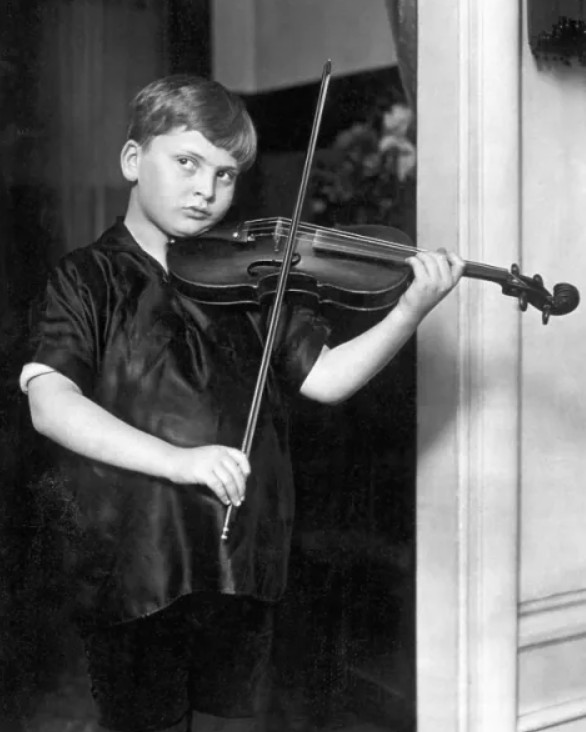
Yehudi Menuhin
Yehudi Menuhin was born in April 1916 in New York City, one of three children born to Moshe and Marutha Menuhin. Yehudi and his sisters all became accomplished musicians, but Yehudi would become the most famous.
He began studying the violin when he was four. His early teachers included Louis Persinger, who would go on to teach several famous American soloists.
In 1925, Yehudi gave his first full-length recital, with Persinger at the piano. He made his orchestral debut with the San Francisco Symphony in 1926, just before leaving America to study in Europe.
By the late 1920s, he was making commercial recordings, again with Louis Persinger appearing on the piano. Recordings were a relatively new technology at the time, and they helped to spread his fame internationally.
Yehudi Menuhin’s recording of the Devil’s Trill Sonata by Tartini, 1932
A few days before his thirteenth birthday, he made an astonishing debut at the Berlin Philharmonic, playing three concertos in one concert: Bach’s E-major violin concerto, the Beethoven concerto, and the Brahms concerto.
One critic described him:
There steps a fat little blond boy on the podium, and wins at once all hearts as in an irresistibly ludicrous way, like a penguin, he alternately places one foot down, then the other. But wait: you will stop laughing when he puts his bow to the violin to play Bach’s violin concerto in E major no.2.
He made his first concerto recording in 1931 when he was fifteen. The following year, he teamed up with Edward Elgar to conduct a recording of his violin concerto.
“The way that boy plays my concerto is amazing,” Elgar wrote to fellow composer Frederick Delius.
Elgar’s violin concerto, conducted by Elgar and played by Menuhin, 1932
Ruth Slenczynska
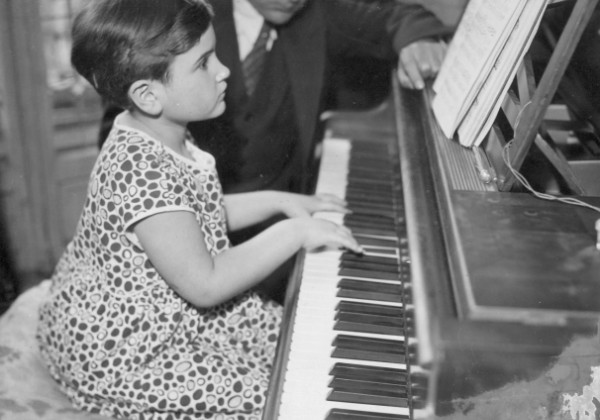
Ruth Slenczynska
Ruth was born on 15 January 1925 in Sacramento, California, to a Polish violinist named Joseph Slenczynska and his wife.
Joseph Slenczynska was bitter that his own performing career never took off. But when it became clear that his baby daughter was musically talented, he began living vicariously through her.
He forced her to practice the piano for hours a day, and if she didn’t, he chased her around their apartment with a stick.
When she was four, the family returned to Europe so Ruth could study with the best teachers. She performed publicly for the first time that year and made her recital debut at the age of six. She made her orchestral debut at eleven in Paris.
At nine, she was asked to step in to play a recital when Sergei Rachmaninoff was indisposed. Astonishingly, she played the same program he had scheduled, with no repertoire substitutions.
Afterwards, she played for him in a kind of informal lesson. (He soothed her nerves by imitating the sounds of his motorboat’s engines.) She’d work with him for two years. As of early 2025, she is considered to be the last Rachmaninoff pupil still living.
When the Slencyznskas returned to the United States, she played at the White House for Harry Truman, who was an amateur pianist himself.
Meet 99-year-old pianist Ruth Slenczynska, Rachmaninoff’s last living pupil | Classic FM
Unfortunately, due in large part to the immense pressure she’d been placed under as a child, she stepped away from piano playing when she was fifteen, and ran away from home. She got married for the first time when she was nineteen.
Luckily for listeners, Ruth would return to music in her adulthood. We wrote more about her extraordinary story here: “Rachmaninoff’s Last Student: 98-Year-Old Pianist Ruth Slenczynska”.
Kit Armstrong
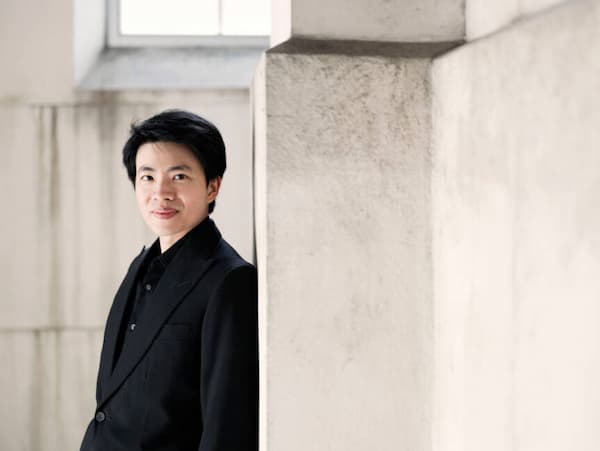
Kit Armstrong © Marco Borggreve
Not all child prodigies were from the eighteenth or nineteenth centuries! Kit Armstrong, for instance, was born in 1992 in Los Angeles, California. His parents had no particular interest in music and couldn’t explain where his passion came from.
When he was five years old, he taught himself how to compose by reading an encyclopedia. He began his formal studies later that year with teachers Mark Sullivan and Michael Martin.
Armstrong’s talents as a child weren’t just musical; they were intellectual, too. When he was just nine years old, he enrolled at Utah State University to study science, math, and music.
He was accepted into the prestigious Curtis Institute of Music in Philadelphia in 2003, when he was eleven.
Kit Armstrong playing Bach’s Prelude and Fugue, BWV 894
The following year, he transferred to the Royal Academy of Music in London. At the same time, he studied mathematics at Imperial College London. He would ultimately graduate with degrees in both music and mathematics.
In 2005, when he was thirteen, he began studying with piano legend Alfred Brendel.
We wrote an article about the teacher-student relationship between Alfred Brendel and Kit Armstrong.
For more of the best in classical music, sign up for our E-Newsletter