One of the oldest instruments we know is the flute. Bone flutes date from the European Upper Palaeolithic era (50,000 to 12,000 years ago). Made from bone and ivory, end-blown flutes with finger holes have been discovered in Germany and are the earliest evidence of musical cultures.
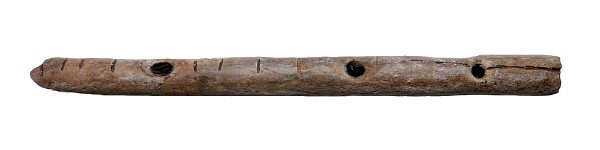
Aurignacian flute made from an animal bone, 43,000 to 39,000 years old, Geissenklösterle, 2007 (photo by José-Manuel Benito Álvarez)
Developments in the flute always focused on sound: making it higher or lower pitched, improving sound quality, changing how it was blown, and so on. The end-blown flute became the modern-day recorder, and the traverse flute (with air blown across a hole) appeared in Greek art around 800 AD, coming from India and Byzantium.
The modern flute is generally known as a silvery tube, closed on one end, with both open and closed holes. Levers have been added to help the player cover holes that are in difficult locations.
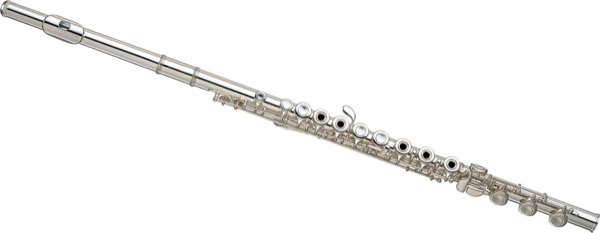
Western concert flute
Frederick II: Flute Sonata in A Minor, SpiF 14: I. Andante ma sostenuto (Claudia Stein, flute; Andreas Greger, cello; Alessandro De Marchi, fortepiano)
In its smallest form, it’s called the piccolo in Italian and has a high, piercing sound.
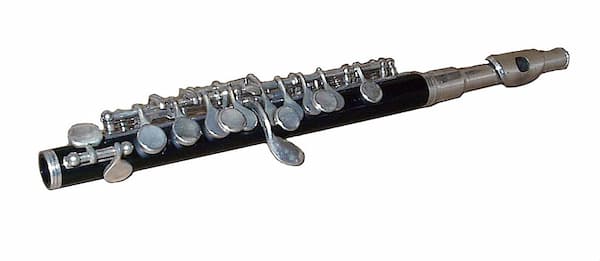
The Piccolo
Boris Papandopulo: Piccolo Concertino: I. Predigra (Francesco Viola, piccolo; Mannheim National Theatre Orchestra; Salvatore Percacciolo, cond.)
The unusual instruments in the flute family are on the lower-pitched side:
The bass flute plays one octave below the concert flute. At 146 cm (57 in), it cannot be a straight flute and must curve back on itself. Because holding such a large instrument suspended in the air is difficult, support rods that reach from the flute to the player’s chair have been developed. Dutch flute maker Eva Kingma created a vertical bass flute that rests on a pin at the bottom.
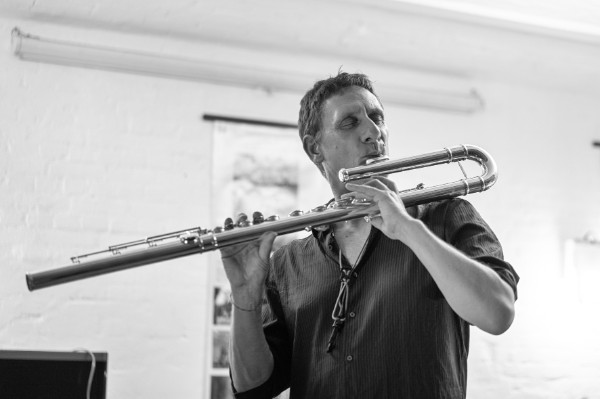
Frank Gratkowski playing a bass flute, 2019 (photo by Alex Kiausch)
Giacinto Scelsi: Maknongan (version for bass flute) (Roberto Fabbriciani, bass flute)
The contrabass flute (or subcontrabass flute) is played vertically. It plays two octaves below a concert flute. Again, the problem is keeping the keys within the player’s finger range, so the flute looks like a reverse number 4, with the piping rising above the player’s head.
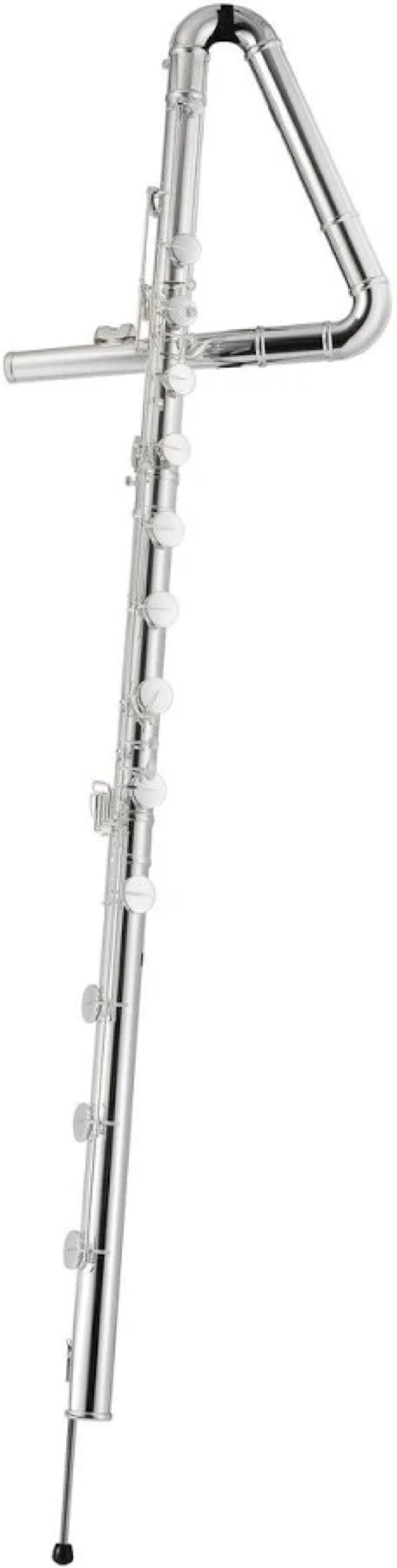
Contrabass flute
Anders Hagberg: Hjärtdjur (Anders Hagberg, contrabass flute)
Lower yet is the double contrabass flute, also known as the octobass flute, which stands 8 feet tall with over 18 feet of tubing. It has the same ‘reverse 4’ shape as the contrabass flute, but now the flute foot is turned back upward as well. You can see the support stand needed to keep this flute upright.
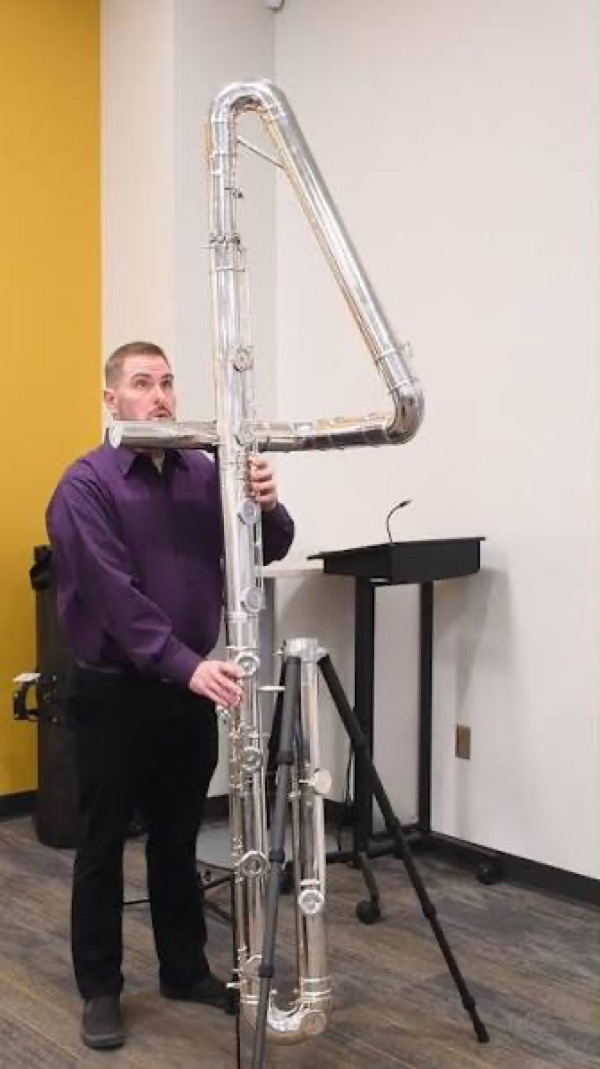
Octobass flute
Giacinto Scelsi: Maknongan (version for octobass flute) (Roberto Fabbriciani, octobass flute)
These specialist bass flutes are quite rare and generally used either as solo instruments or in flute ensembles to provide a necessary bass sound. In this flute ensemble performance of La bohème, we can see piccolos, concert flutes, and alto, tenor, and bass flutes.
La Boheme by Giacomo Puccini for Flute Ensemble
This flute ensemble work includes an octobass flute.
Primals N. 4 – Nhandesy — World Premiere for Double Contrabass Flute & Ensemble (Paris, 2025)
Julián Elvira developed the Pronomos flute to expand the flute’s frequency range, especially in the low register. In this piece by Eduardo Costa Roldán, he plays a regular flute while Julián Elvira plays his Pronomos flute.
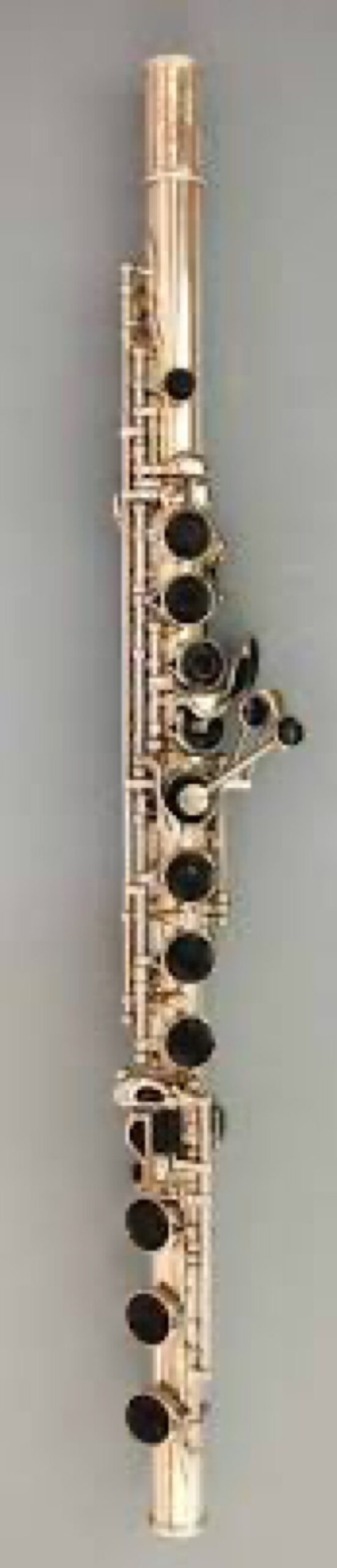
Pronomos Flute
Eduardo Costa Roldán: Dos Imágenes (2019 version): No. 2. Nocturno: Adagio (Julián Elvira, Pronomos flute; Eduardo Costa Roldán, Boehm flute; Sofya Melikyan, piano)
One folk wind instrument that has entered the orchestral realm is the didgeridoo (didjeridu), particularly in Australian music. It is typically made from eucalyptus branches or trunks hollowed out by termites. The bark is then stripped, the outside finished, and the instrument painted. A beeswax mouthpiece is made at the blowing end. It both protects the player’s lips from the wood and helps provide an airtight seal. Playing techniques include changing one’s mouth shape, humming while blowing, and striking the pipe.
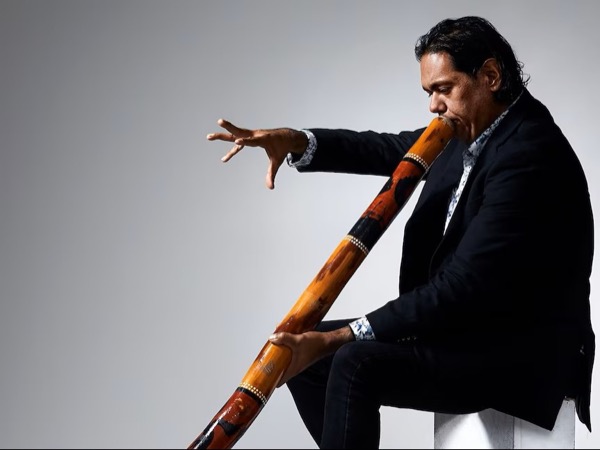
William Barton playing a didjeridu
Peter Sculthorpe: Earth Cry (William Barton, didjeridu; New Zealand Symphony Orchestra; James Judd, cond.)
Other instruments in the orchestra come in a variety of pitches: bassoons are often augmented by contrabassoons, and clarinets can come in alto and bass versions. One of the most interesting clarinets is the basset clarinet, which Mozart called for.
The basset clarinet is longer than the regular clarinet and has extra keys added to play lower notes. The earliest ones come from around 1770 and are associated with the clarinet virtuoso Anton Stadler. Mozart wrote both his Clarinet Quintet in A major, K. 581, and his Clarinet Concerto in A Major, K. 622, for the basset clarinet.
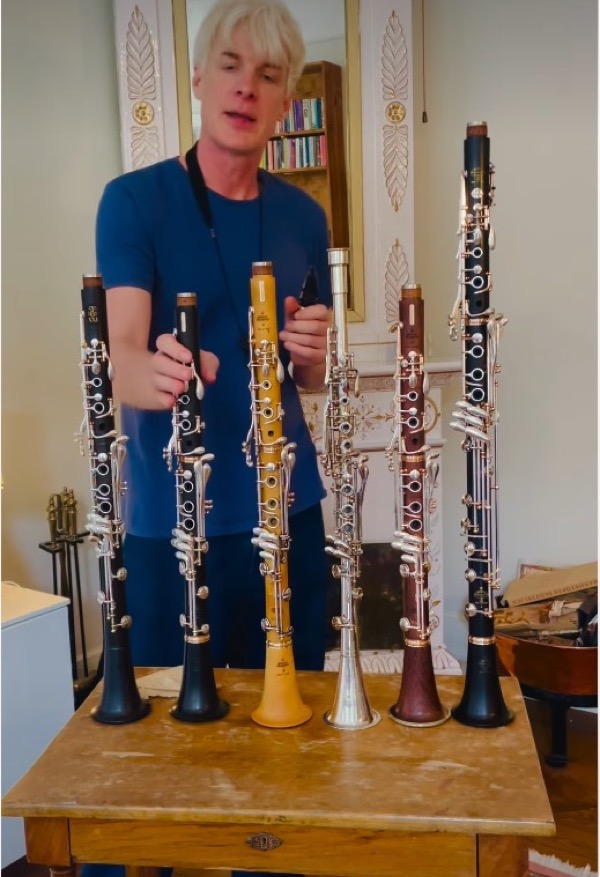
Martin Fröst and his clarinets with the Basset clarinet on the far right
Wolfgang Amadeus Mozart: Clarinet Concerto in A Major, K. 622: I. Allegro (Martin Fröst, basset clarinet; Bremen Deutsche Kammerphilharmonie; Martin Fröst, cond.)
In the oboe family, the regular oboe was augmented in the Baroque period with the oboe d’amore, which might be considered an alto oboe. This so-called ‘love oboe’ is between the soprano oboe and the tenor-voiced English horn. It had a more tranquil tone and was first used in the early 18th century. Bach and Telemann wrote music for the instrument, both for it as a solo instrument and as part of an ensemble.
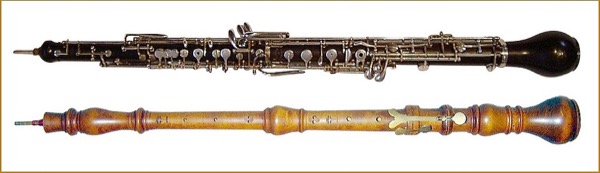
Modern oboe d’amore (top) and Baroque oboe d’amore
After the Baroque period, it fell out of favour until composers such as Richard Strauss, Debussy, Ravel, Delius, and Glass rediscovered it.
Georg Philipp Telemann: Oboe d’amore Concerto in G Major, TWV 51:G3: II. Allegro (Thomas Stacy, oboe d’amore; Toronto Chamber Orchestra; Kevin Mallon, cond.)
Charles Koechlin: 11 Monodies, Op. 216: No. 10. Le Repos de Tityre (Lajos Lencsés, oboe d’amore)
Pitched an octave lower than the oboe, the Heckelphone was developed by Wilhelm Heckel and sons for Richard Wagner. In an orchestra, it’s considered the ‘bass’ instrument of the oboe section.
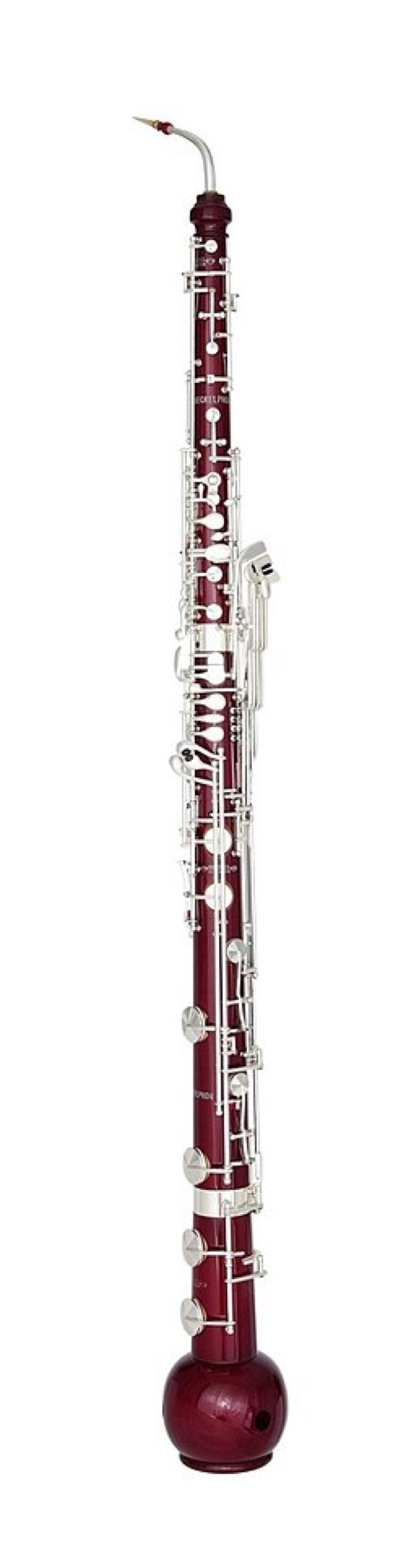
Heckelphone by Wilhelm Heckel
Fabian Müller: Heckelphone Concerto: I. Allegro (Martin Frutiger, heckelphone; Royal Czech Symphonia Hradec Králové; Kaspar Zehnder, cond.)
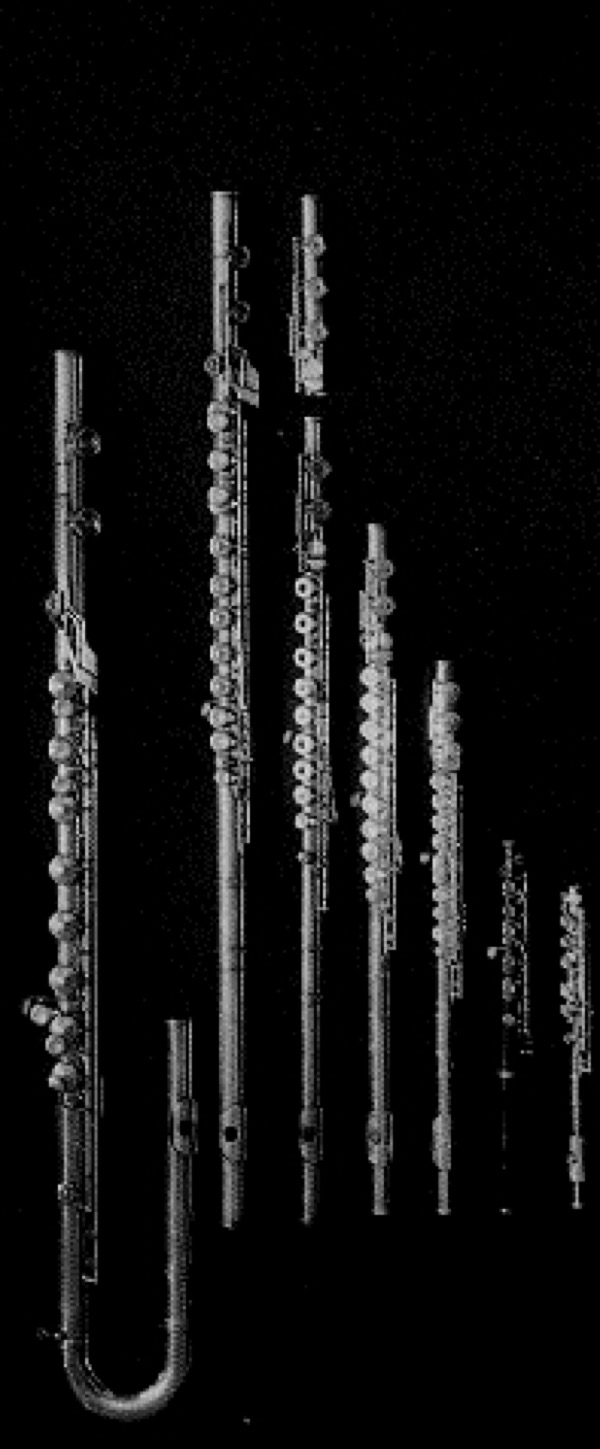
Because wind instruments can be resized, they often appear in families, such as the flute. From right to left, we have the piccolo, the treble flute, the soprano flute, the concert flute, the flute d’amore, the alto flute, and the bass flute.
Flute Family
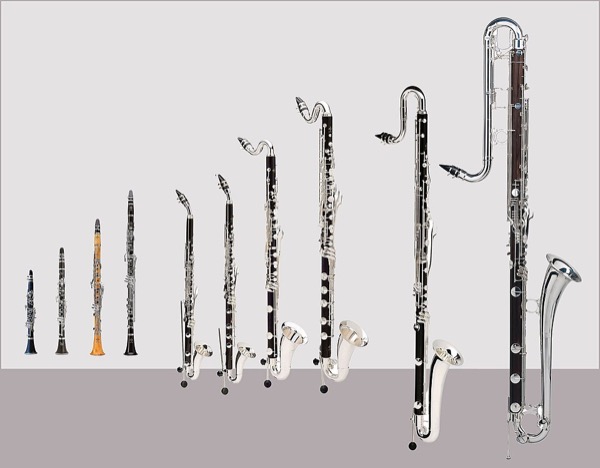
The same goes for the clarinet, here shown from the small Ab clarinet to the contrabass clarinet. The basset clarinet is the fourth from the left.
Clarinet family
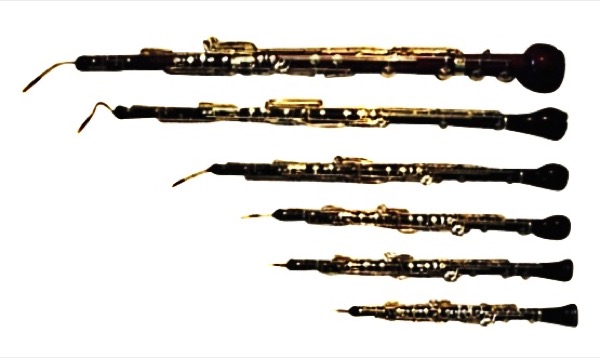
The oboe family comes in a variety of sizes. From the bottom: piccolo oboe, oboe, oboe d’amore, cor anglais (English horn), bass oboe, and Heckelphone.
Oboe family
Next time you’re at a concert—look through the wind section; you might find more instruments than you think!
For more of the best in classical music, sign up for our E-Newsletter