Conductor Sir Charles Mackerras, born on 17 November 1925 in Schenectady, New York, to Australian parents who soon returned to Sydney, was one of the pioneers of historically informed performance.
His entire career was built on the conviction that intellect and emotion are not opposites in music. His conducting scores were famously annotated in painstaking detail, and his performances pulsed with humanity and warmth.
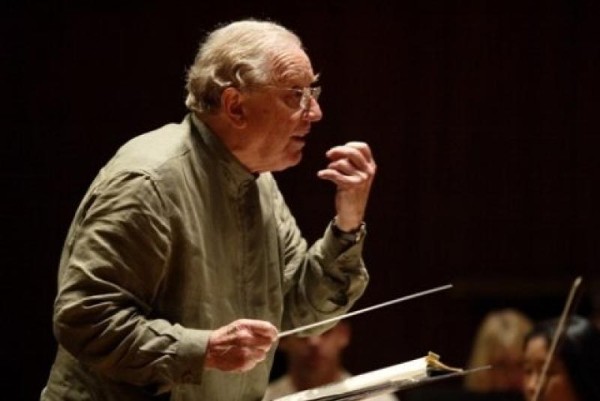
Sir Charles Mackerras
Mackerras was equally at home in Czech opera and Mozart symphonies, and to celebrate his birthday, let’s feature and highlight some of his essential recordings.
Sir Charles Mackerras conducts Mozart (excerpt)
Janáček Interpreter
Mackerras studied piano, oboe, and composition at the New South Wales State Conservatorium, and a pivotal scholarship took him to Prague in 1947. He studied with Václav Talich, then a legendary figure of the Czech musical world.
This apprenticeship opened two lifelong paths. First, it immersed him in Czech repertoire, especially the operas of Leoš Janáček, and second, it fostered a fascination with the historical and linguistic texture of music.
Recorded in March 1981 in Vienna with the Vienna Philharmonic and released in 1982 on the Decca label, Mackerras’ recording of Janáček’s The Cunning Little Vixen is essential listening, as it demonstrates why Mackerras is regarded as one of the great interpreters of this music.
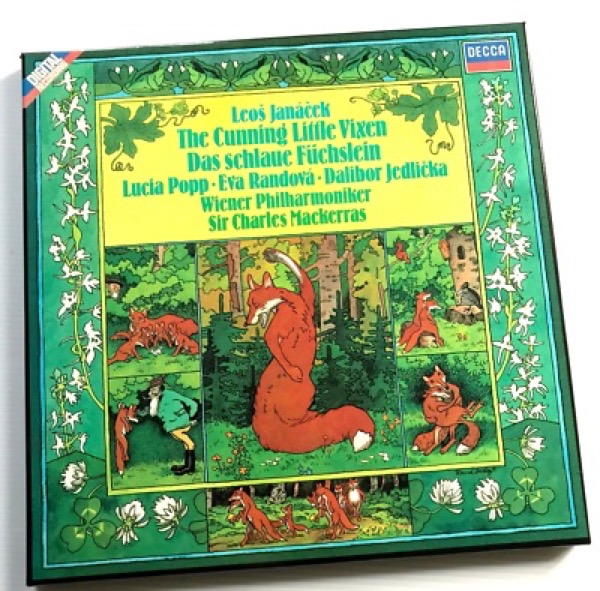
Leoš Janáček: The Cunning Little Vixen – Sir Charles Mackerras (Decca)
Mackerras closely studied the Czech musical traditions and the composer’s manuscript, giving him an almost unique interpretative authority. This was the first recording to use Janáček’s original score, and Mackerras brings together the charming tale of a young fox with the story’s deeply philosophical and moving elements.
Leoš Janáček: The Cunning Little Vixen: Prelude (Vienna Philharmonic Orchestra; Charles Mackerras, cond.)
Leoš Janáček: The Cunning Little Vixen: Act I: Dostaneme bourku (Vienna Philharmonic Orchestra; Charles Mackerras, cond.)
Leoš Janáček: The Cunning Little Vixen: Act I: Kmotrenka zakoncertovala si také? (Vienna Philharmonic Orchestra; Charles Mackerras, cond.)
Leoš Janáček: The Cunning Little Vixen: Act I: Mami! (Vienna Philharmonic Orchestra; Charles Mackerras, cond.)
Leoš Janáček: The Cunning Little Vixen: Act I: Pantomime (Vienna Philharmonic Orchestra; Charles Mackerras, cond.)
Fresh Perspectives on Mozart
Recorded in August 2007, when Mackerras was in his early eighties, this two-disc set of Mozart’s last four symphonies was made at City Halls in Glasgow and released by Linn Records in 2008.
Mackerras was at home in both the world of opera and orchestral music, as well as in historical performance practice. He never tried to make the Scottish Chamber Orchestra sound like a period-instrument ensemble. Instead, he applied his extensive historical research into Mozart’s time to a modern orchestra.
Contemporary reception was remarkably enthusiastic, with critics praising the performances for their dramatic presence and intensity. Anna Picard, writing in The Independent, highlighted the combination of vigour and wisdom and found that this extremely familiar music sounded fresh.
Wolfgang Amadeus Mozart: Symphony No. 38 in D Major, K. 504, “Prague” (Scottish Chamber Orchestra; Charles Mackerras, cond.)
Rediscovering Original Sounds
In the late 1950s, the idea of returning to a composer’s original orchestration was genuinely pioneering, especially when dealing with Baroque composers. Handel’s Music for the Royal Fireworks had been performed in various arrangements for a conventional symphony orchestra.
Mackerras’ landmark recording reconstructs the enormous wind ensemble for which Handel originally conceived the music. For the recording, he assembled 62 wind players and nine percussionists, with musicians gathering at St Gabriel’s Church in London.
With this Handel recording, Mackerras started to question the familiar orchestra tradition and suggested that Baroque music should be performed with close attention to its original instruments and stylistic conventions. His approach was thus an important precursor to later historically informed interpretations.
George Frideric Handel: Music for the Royal Fireworks, HWV 351 (Pro Arte Orchestra; Charles Mackerras, cond.)
Elizabethan Echoes
One of the most important recordings in Mackerras’ operatic discography is his 1992 recording of Benjamin Britten’s opera Gloriana. Recorded with the Welsh National Opera, it was the first complete commercial recording of the work, and it received the 1994 Gramophone Award in the Opera category.
Britten did not write a straightforward historical opera, as he created a musical world that evokes Elizabethan England. And while the music contains some of Britten’s most beautiful vocal writing, the instrumental colour suggests the sounds of Renaissance England.
Mackerras had been committed to this neglected work, conducting it as early as the 1970s. Importantly, he never lets the historical atmosphere become decorative, as the dances retain great vitality. The recording was also nominated for a 1994 Grammy Award for Best Opera Recording, but did not win.
Benjamin Britten: Gloriana, Op. 53: Act I Scene 1: Prelude (Welsh National Opera Orchestra; Charles Mackerras, cond.)
Benjamin Britten: Gloriana, Op. 53: Act I Scene 1: The Tournament: What champion rides? (Cuffe, Essex, Mountjoy, Page, Chorus) (Welsh National Opera Orchestra; Charles Mackerras, cond.)
Benjamin Britten: Gloriana, Op. 53: Act I Scene 1: Recitative and Fight: Twas you, my lord Mountjoy, that won the crowd? (Essex, Mountjoy) (Welsh National Opera Orchestra; Charles Mackerras, cond.)
Benjamin Britten: Gloriana, Op. 53: Act I Scene 1: Entrance of the Queen: Heaven, what have we here? (Queen, Chorus) (Welsh National Opera Orchestra; Charles Mackerras, cond.)
Benjamin Britten: Gloriana, Op. 53: Act I Scene 1: Recitative: The Earl of Essex hangs his head (Queen, Chorus) (Welsh National Opera Orchestra; Charles Mackerras, cond.)
Benjamin Britten: Gloriana, Op. 53: Act I Scene 1: The Two Lords Explanation: The honour done him by your Grace (Essex, Mountjoy, Queen, Raleigh, Chorus) (Welsh National Opera Orchestra; Charles Mackerras, cond.)
Benjamin Britten: Gloriana, Op. 53: Act I Scene 1: Raleigh’s Song: Both lords are younglings (Raleigh, Essex, Mountjoy) (Welsh National Opera Orchestra; Charles Mackerras, cond.)
A Czech Farewell
Mackerras crowned his lifelong devotion to Czech music with a recording of Dvořák’s Symphonic Poems late in his career. Released in January 2010, it was among his final major recording projects and the culmination of his relationship with Czech music, which stretched back more than six decades.
The recording received the 2010 Gramophone Award in the Orchestral category, and contemporary reviews were particularly enthusiastic. Mackerras was praised for the lucidity of his performances and his ability to bring out the dramatic structure of each narrative. A master storyteller, Mackerras skilfully matched the musical structure with the unfolding stories.
As one of his essential recordings, this set was a fitting musical farewell for a remarkable musician who combined scholarly curiosity with an instinctive understanding of dramatic and emotional possibilities.
He never accepted familiar interpretations simply because of established traditions, and he had the wonderful ability to make familiar masterpieces sound fresh and new. His lifelong devotion to Czech music remains one of the important aspects of his legacy.
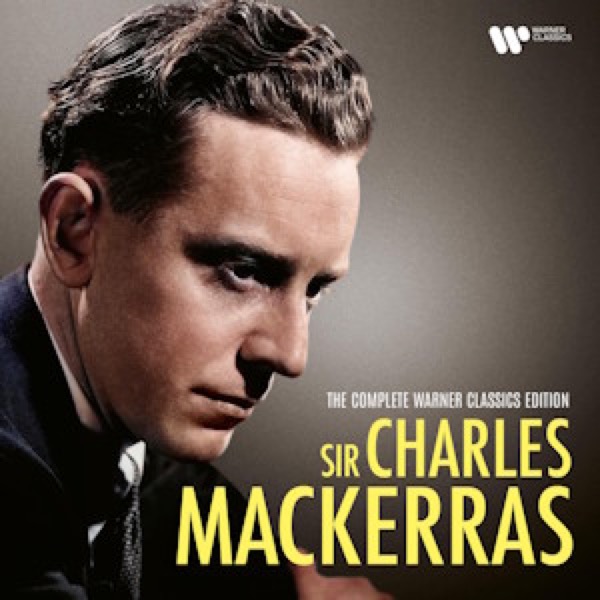
Sir Charles Mackerras: The Complete Warner Classics Edition
For more of the best in classical music, sign up for our E-Newsletter
Antonín Dvořák: The Noon Witch, Op. 108, B. 196 (Czech Philharmonic Orchestra; Charles Mackerras, cond.)