The role of the concertmaster has been continually evolving for over three centuries.
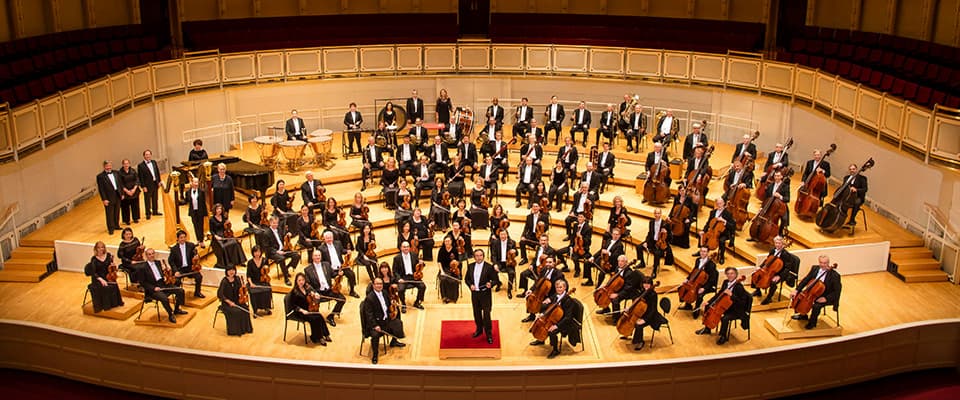
Nowadays, a concertmaster’s role is to sit at the front of the first violin section, play solos, and communicate feedback from the string section to the conductor – plus more.
Those responsibilities have shifted over the centuries. During the Baroque and Classical eras, a concertmaster was a violin-playing leader whose role was similar to a modern-day conductor.
Later, during the Romantic era, as repertoire grew more complicated and technically demanding, the concertmaster role evolved to something closer to a concerto soloist embedded inside the orchestra.
The tension of that duality – someone who leads without conducting, serving as both section leader and soloist – makes the complicated history of concertmaster repertoire incredibly interesting.
Today, we’re looking at some of the best solo parts for concertmasters in classical music history – and what makes each one so memorable.
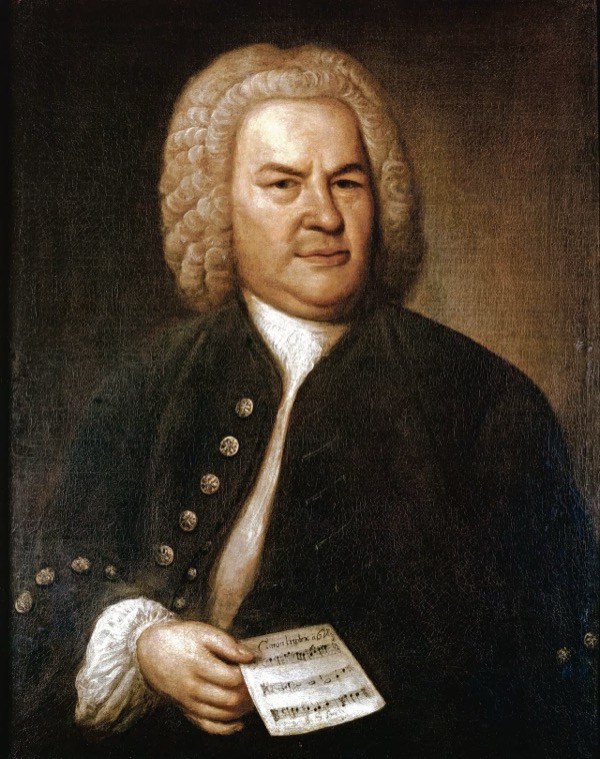
Johann Sebastian Bach – “Erbarme dich” from St. Matthew Passion
Composed for Leipzig’s 1727 Good Friday services, Bach‘s St. Matthew Passion is the pinnacle of Lutheran sacred drama.
The aria “Erbarme dich” (“Have mercy”) follows Peter’s denial of Christ after his arrest – one of the most human moments in the entire Passion narrative.
The violin seems to weep as it accompanies the alto soloist. The long, circling, sorrowful phrases embody emotions of guilt and regret.
This part may not be virtuosic by modern standards, but that doesn’t mean it isn’t vitally important. In fact, its heavenly dialogue with the vocal soloist is one of the most moving passages in the entire Passion.
Richard Strauss – Ein Heldenleben
By 1898, Richard Strauss was at the height of his creative power. He had turned the orchestra into a massive musical machine that he used to explore human psychology, both others’ and his own.
Ein Heldenleben (A Hero’s Life) is a case in point. This grandiose tone poem follows the trials and triumphs of a nameless hero. It also quotes Strauss’s own works, which of course led others to assume that Strauss himself is the eponymous hero. (Strauss denied the accusation.)
Despite that denial, he did cheerfully admit that the concertmaster’s solo in the “The Hero’s Companion” section of the tone poem was meant to be a portrait of his strong-willed soprano wife, Pauline, whom he was madly in love with.
Unlike Bach’s carefully scaled concertmaster duet in St. Matthew Passion, Strauss’s writing encourages the concertmaster to have as big a solo personality as possible. The violin interrupts, teases, seduces, and even argues with the orchestra.
The score indicates that the violinist is embodying “the hero’s companion,” but the dynamism of the solo part suggests that the “companion” might actually be the real hero in the relationship.
Nikolai Rimsky-Korsakov – Scheherazade
Premiered in 1888, Nikolai Rimsky-Korsakov‘s tone poem Scheherazade draws on tales from the folk tale collection One Thousand and One Nights.
The framing device that links the story together is the tale of a Persian king. After he is cheated on, he vows vengeance by killing each of his new wives after spending a single night with them.
To avoid the fate of her predecessors, one wife named Scheherazade tries a clever tactic: she tells her new husband a story – then trusts that his curiosity will cause him to postpone her execution to the next day, so he can hear the next installment.
In his musical telling of the story, Rimsky-Korsakov also uses a framing device. The solo violin, representing the voice of Scheherazade, recurs again and again.
This solo violin part floats freely above shimmering orchestration, simultaneously inviting and improvisatory.
This challenging excerpt has become a fixture at concertmaster auditions; it tests a player’s storytelling power as well as their technique.
Edvard Grieg – Rigaudon from Holberg Suite
Written to celebrate the bicentenary of legendary Norwegian writer Ludvig Holberg, Edvard Grieg‘s Holberg Suite looks backward to Baroque dance forms and interprets them through a Romantic-era lens.
Today, it is sometimes played without a conductor: a throwback to the old Baroque-era role of the concertmaster. Consequently, it demands a concertmaster who is comfortable with the unusual style of playing Romantic-era music inspired by the Baroque.
The Rigaudon movement in this suite is brisk and buoyant, demanding crisp articulation and a sharp sense of rhythm from its performers – especially the concertmaster.
Camille Saint-Saëns – Danse macabre
When Danse macabre premiered in 1875, audiences were startled by its eerie opening.
The concertmaster’s solo violin, its top string tuned a semitone lower than normal, plays a screeching tritone – an interval historically associated with everything diabolical.
The Danse portrays Death fiddling at midnight on Halloween, summoning the dead from their graves to dance until dawn.
The concertmaster is asked to sound sardonic, seductive, and skeletal, with an aura of grotesque glee.
And yet, despite Death’s sinister character, you can’t deny that the soloist appears to enjoy every moment of their part.
Pyotr Ilyich Tchaikovsky – Pas de deux from Swan Lake
Tchaikovsky took the composition of ballet music as seriously as he took the composition of symphonies. You can tell he poured his heart and soul into this music.
In the “Pas de deux” from Swan Lake, the violin sings with lyrical intensity, mirroring the dancers’ intimacy and longing.
The concertmaster must also balance the demands of the music with the demands of the dancers, who are busy creating their own art onstage at the same time.
To fit the choreography, the concertmaster may even be asked to adjust their own interpretation. It’s another example of how the best concertmasters must demonstrate responsive leadership.
Gustav Mahler – Symphony No. 4, Movement 2
Like Saint-Saëns, Mahler took inspiration from the idea of re-tuning the concertmaster’s instrument to create a creepy mood.
As a result, in the second movement of his Fourth Symphony, Mahler asks the concertmaster to retune their highest string a whole tone higher – creating a brittle, uncanny sound.
Similar to the Danse macabre, this concertmaster solo represents “Freund Hein” (“Old Friend,” a German-language euphemism for the personification of Death).
But unlike Saint-Saëns’ gleeful dance, Mahler’s interpretation of the character is genuinely grotesque, repellent, and maybe even terrifying.
It can also be a technically challenging role for the concertmaster, since they are playing on a re-tuned instrument for just one movement, out of four. (At least Danse macabre is only one movement long!)
Depending on the skill of the player, switching back and forth isn’t always easy. Some violinists actually keep a backup violin nearby so they don’t have to retune their instrument between movements.
Maurice Ravel – Daphnis et Chloé Suite No. 2
One of Maurice Ravel‘s great masterpieces is his ballet Daphnis et Chloé. To make the music more accessible, he arranged the music for the concert hall in his two Daphnis et Chloé Suites.
In Suite No. 2, the violin emerges from the heavenly texture during the “Lever du jour” (“Sunrise”) with perfectly judged aplomb.
The challenge for the concertmaster here is less showy virtuosic playing and more a matter of balance: a fitting challenge for a composer like Ravel, who was famously detail-oriented and obsessed with orchestral colour and the combination of instruments.
In performance, the solo concertmaster part must shimmer inside the seductive orchestral haze, neither dominating nor disappearing. It’s a more difficult balancing act than you’d think – and one that sets the great orchestras and concertmasters apart from the merely good ones.
Conclusion
From Bach’s sacred lament to Ravel’s iridescent portrait of dawn, the concertmaster’s role has transformed dramatically throughout the history of classical music.
The violin has played an astonishing range of roles: penitent disciple, coquettish wife, Arabian storyteller, Baroque revivalist, skeletal trickster, romantic lover, ironic death-figure, and Impressionist beam of light.
Taken together, these works remind us of the many roles a great concertmaster is asked to play over the course of their career, across such a wide variety of repertoire.
For more of the best in classical music, sign up for our E-Newsletter